If you need a Care Labels Supplier Quote for electronics sellers, price is only the first line on the page. The real question is whether the label survives handling, transit, shelf time, and the customer who folds the pouch, peels the seal, or washes the accessory bag without reading the fine print. A label that smears, curls, or falls off rarely fails dramatically; it fails quietly, then shows up later as a return, a complaint, or a brand impression that feels unfinished.
That risk is easy to underestimate in electronics. The main product may be a charger, speaker, keyboard, or cable set, but care and instruction labels often live on accessory pouches, textile sleeves, bundled apparel, microfiber cloths, cable ties, and retail inserts. In those cases, the quote has to cover legibility, adhesion, durability, and compliance, not just print price. Buyers comparing vendors on unit cost alone usually miss the expensive part.
For sourcing teams, the useful metric is total cost of ownership. A label may cost a fraction of a dollar, yet one failed run can trigger reprints, support tickets, and inventory delays that are far more expensive than the original order. That is why the best quote is the one that reveals the production realities upfront instead of hiding them behind a single neat number.
“The cheapest label is rarely the lowest-cost label once returns, reprints, and complaints enter the picture.”
Why electronics sellers need care labels that survive real use
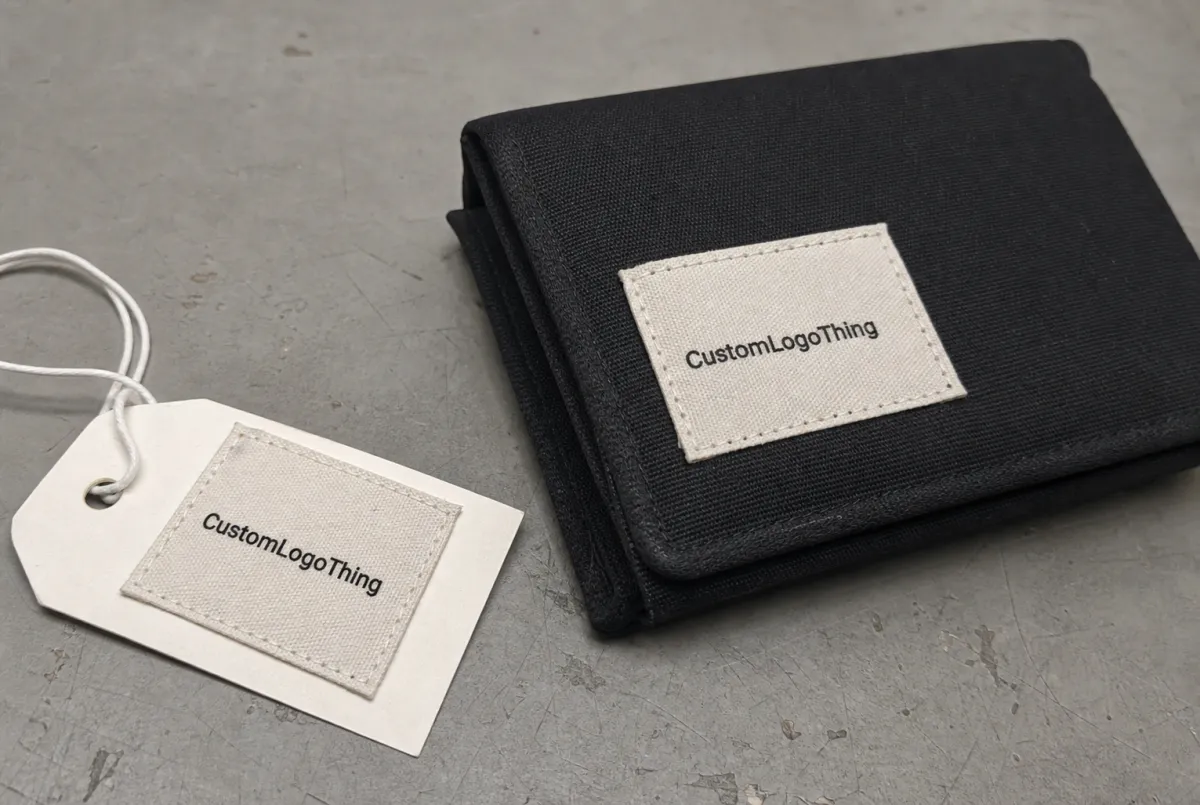
Many electronics sellers start with cartons and warning cards, which makes sense. But the label system usually extends further than the outer box. Accessory kits, branded pouches, headset wraps, textile sleeves, and promotional apparel can all need care instructions, handling warnings, fiber content, or country-of-origin details. If those details are missing or unreadable, the problem is not cosmetic. It creates friction for the buyer, the marketplace operator, and anyone handling returns or claims.
Labels also fail for reasons that do not show up in a proof. Weak adhesive, poor abrasion resistance, ink that rubs off under friction, and substrates that curl under humidity are common issues. Retail lighting adds another layer. Low contrast print can disappear on dark material or glossy packaging, especially under bright shelving lights or when the product is packed tightly with other items. That is why a Care Labels Supplier Quote for electronics sellers should specify the end use, the surface, and the environment, not just the dimensions.
There is a straightforward financial comparison here. A label might cost a few cents, but a single bad production run can trigger customer service time, replacements, and a second order that arrives too late for the selling window. In practice, the cost of failure usually dwarfs the savings from choosing the lowest quote. Buyers who track only the first invoice miss that part of the equation.
Suppliers with real experience tend to ask practical questions before pricing: Is the label exposed to heat, moisture, rubbing, or repeated folding? Will it be attached to fabric, coated plastic, cardboard, or polybag film? Does it need to stay legible after warehousing, retail handling, or customer washing instructions? Those answers shape the quote because they shape the construction.
For private-label sellers, the label is also part of the brand system. Consistent sizing, stable color, and clean typography help a product line look organized across multiple SKUs. That sounds like presentation only, but it has a measurable effect on trust. Marketplaces compress decision time, and shoppers often compare several listings in seconds. Small inconsistencies can make a brand feel less settled than the competition.
Product options and materials that fit electronics packaging and accessories
There is no single label format that works for every electronics seller. The right choice depends on where the label lives, how it is applied, and how long it needs to last. Buyers usually see the best results by matching the format to the surface rather than trying to force one material across the whole product range.
- Woven labels for fabric sleeves, cases, pouches, and other soft accessories.
- Printed satin labels for a smoother, more polished finish on textile items.
- Heat-transfer labels for garments or textile add-ons where a sewn seam is not practical.
- Adhesive labels for cartons, polybags, and accessory packaging.
- Hang tags with care instructions for retail presentation and handling guidance.
- Seal labels for accessory kits, tamper indication, or branded closure points.
For electronics sellers, the most efficient setup is often a combination: an adhesive label for the outer pack and a woven or printed care label for the soft component. That split keeps branding visible while preserving function. It also lets buyers control cost more precisely, because not every surface needs the same durability.
Material choice matters more than many first-time buyers expect. Polyester is widely used because it resists fraying and carries print well. Nylon is softer and can suit apparel-linked accessories, though it is not always ideal for crisp, high-definition branding. Satin gives a cleaner retail look for premium goods, but it is not the toughest option in rough handling. TPU works when a flexible, modern feel is needed. Coated paper is fine for short-life packaging labels, but it is the wrong answer for abrasion-heavy applications.
Printing method changes both appearance and lifespan. Thermal transfer is a practical choice for barcode-heavy jobs and variable data. Screen printing can hold color strongly on some substrates. Digital print helps when runs are shorter or artwork changes often. Matte versus gloss, and whether the surface is laminated, also influence durability and how the label reads under store lighting.
| Label format | Best use | Typical strength | Typical cost impact |
|---|---|---|---|
| Woven label | Soft goods, cases, pouches | Very durable, clean edge retention | Higher setup, better for recurring runs |
| Printed satin label | Premium textile accessories | Good comfort and presentation | Moderate; depends on color count |
| Adhesive label | Cartons, polybags, accessory kits | Depends on adhesive and surface | Usually the lowest entry cost |
| Heat-transfer label | Clothing add-ons, textile branding | Excellent for wash and wear use | Higher than simple paper labeling |
| Hang tag | Retail instructions and branding | Good for display, not abrasion | Mid-range with finishing choices |
Customization variables should be part of the first request, not the third email. Size, fold type, cut shape, color count, adhesive strength, backing paper, barcode placement, and instruction text all affect the price and the production method. For sourcing teams looking for a broader reference point on packaging formats, the Packaging Association and the EPA provide useful background on materials and compliance where relevant.
Specifications buyers should confirm before requesting a quote
A strong quote starts with clean input. Vague notes force a supplier to guess, and guessing usually creates revisions. The most efficient buyers send a request that covers five essentials: dimensions, material, artwork format, quantity, and application method. That alone removes a surprising amount of friction.
Durability requirements need to be explicit as well. Will the label face moisture exposure, repeated folding, or friction against foam inserts, cable wraps, or fabric? Does it need to stay readable after warehouse handling? For accessory kits and soft goods, abrasion resistance is often more important than the initial finish. For carton labels, adhesive performance on coated and uncoated surfaces may matter more than the face stock.
Compliance is another filter. Many electronics sellers need care symbols, multilingual instructions, country-of-origin notes, or warning statements. If the same SKU is sold in several markets, the label should be designed for the strictest version rather than the simplest. That reduces rework when the product expands into a new region or retail channel.
Ask for a proof or sample before approval. For a small order, a digital proof may be enough if the layout is simple. For a larger private-label run, a physical sample or a production-equivalent mockup is safer. If a supplier pushes back on that request, it is usually a warning sign rather than an inconvenience.
- Dimensions: exact finished size, not approximate.
- Material: polyester, satin, nylon, TPU, paper, or coated stock.
- Attachment method: sew-in, adhesive, heat transfer, hang tag, or seal.
- Artwork: vector file preferred, with fonts outlined.
- Regulatory text: symbols, warnings, country-of-origin, language needs.
The more precise the spec sheet, the better the quote comparison. It also shortens revision cycles because the supplier can price the work properly the first time. That is why a useful care Labels Supplier Quote for electronics sellers looks detailed rather than generic.
Cost, pricing, MOQ, and what drives unit cost
Pricing for care labels follows a predictable pattern. The main drivers are label size, material, print complexity, quantity, and finishing. Adhesive performance, custom die-cut shapes, and added variable data can also move the number. If the design includes special inks, lamination, or multiple folds, the quote rises. That is normal, not a surcharge invented for the sake of it.
MOQ is often the first surprise. Woven and custom-printed labels typically require more setup than plain adhesive products. Some suppliers will take a small trial run, but the unit cost may stay high until the order reaches a better volume band. That tradeoff makes sense for a new launch, where testing matters more than perfect unit economics. Once the artwork is final and the product is stable, bulk pricing usually becomes the better move.
For planning purposes, it helps to separate runs into three broad buckets.
| Order type | Typical advantage | Typical tradeoff | Best fit |
|---|---|---|---|
| Small run | Lower commitment, easier testing | Higher unit cost | New product launches, design trials |
| Mid-volume run | Balanced cost and flexibility | Still sensitive to artwork changes | Stable SKUs, seasonal launches |
| Bulk run | Lowest unit cost | More cash tied up upfront | High-turn private-label lines |
Hidden costs matter. Ask whether the quote includes plates or tooling, sampling, rush fees, color matching, proof revisions, and freight. A quote that looks 8% cheaper can end up more expensive once those extras are added. That gap is large enough to matter on mid-volume runs and very noticeable once an order repeats.
A simple adhesive care label may sit in a low per-unit range on a large run, while a multi-color woven label with custom folding can cost several times more. The difference is not just print complexity. It is also setup, material yield, and how much manual work is involved in finishing. Buyers get a clearer picture when the supplier provides a line-by-line breakdown rather than one flat number.
Freight deserves the same scrutiny. A good factory price can disappear if the supplier is far from your fulfillment point, if the shipment is split into multiple cartons, or if the order misses a replenishment window. Ask for landed cost, not just ex-factory cost. That is the number that actually reaches your margin.
Process and timeline: from artwork review to delivery
The production sequence is usually straightforward: inquiry, spec confirmation, artwork review, proof, sample approval if needed, production, quality check, and shipping. The bottleneck is rarely the machine time. It is usually the back-and-forth over files, text corrections, symbol changes, or barcode cleanup.
For a simple label order, proofing can move quickly if the artwork is already clean. If the design needs corrections, translation checks, or better barcode sizing, the timeline stretches. A supplier that catches problems early saves more than time; it protects inventory planning. A supplier that waits until the final stage usually creates a more expensive problem.
Working ranges vary by format, but a practical expectation is this: proofing often takes 1 to 3 business days, sampling can add several more days, and production commonly takes 5 to 15 business days after approval depending on order size and complexity. Shipping is separate. International transit can add another week or two, and busy seasons can stretch that further.
Rush orders are possible, though speed can limit finishing options, raise cost, or change minimum quantity. If you have a firm launch date, ask for a written delivery window that includes production and transit. A ship-by date is not the same as a delivered-by date, and replenishment teams know the difference well.
Good suppliers also check file readiness before production starts. They confirm whether fonts are outlined, whether artwork is in vector format, whether Pantone references are clear, and whether the barcode is sized to remain readable after printing. That is basic discipline, but it is not universal. The checks reduce reprints and avoid arguments later about what was approved.
“A solid label schedule is built on proof approval, not optimism.”
If the same label will be reordered later, ask the supplier to record the exact approved specification. Six months from now, nobody wants to reconstruct a fold type or color reference from memory. A repeat order should be built on a document trail, not a vague recollection.
What separates a reliable label supplier from a low-price quote
Low price is easy to quote. Reliability takes process. Suppliers worth keeping tend to answer technical questions clearly, send useful proofs, and hold color consistency across repeat runs. If a supplier cannot explain the difference between temporary and permanent adhesive, or between a textile label and a packaging label, the quote is probably the least interesting thing about them.
For growing electronics sellers, repeatability matters more than a one-time discount. A label that matches the previous run avoids packaging drift, which becomes a problem when multiple SKUs share one brand system. Reorders expose weak suppliers quickly. If the second run looks different from the first, the issue is not just appearance; it affects customer confidence and can create avoidable support work.
Reliable suppliers tend to show the same traits over and over:
- Consistent color matching across reorders.
- Responsive sampling when a check is needed before volume.
- Clear documentation of specs, materials, and approved artwork.
- Stable capacity for standard and seasonal demand.
- Fast communication when revisions or shortages come up.
Mixed product lines are another test. If your catalog includes accessories, apparel add-ons, and bundled kits, the supplier should be comfortable with multiple formats and multilingual text. That matters when one brand needs different constructions for different surfaces. It is also where a strong Care Labels Supplier Quote for electronics sellers starts to show its value: not merely in price, but in operational fit.
Some buyers also need standards-based alignment for packaging or textile requirements. For packaging durability and transport considerations, ISTA is a useful reference. If paper sourcing is part of the decision, FSC can help frame material choices. The point is not to collect logos. It is to verify that the supplier understands the requirements that govern the order.
In short, a reliable supplier is not just a printer. It is a repeatable process with accountable output. That matters more as order volume grows.
Next steps to request the right quote and move into production
Before sending a request, gather the essentials: artwork files, label dimensions, quantity, material preference, attachment method, and target delivery date. If you already know the end surface, include it. A polybag, a nylon pouch, and a cotton-blend sleeve do not behave the same way under adhesive or stitching.
Ask for two quote scenarios if possible. One should match the preferred spec. The other should be a cost-saving alternative. Seeing the tradeoff side by side makes the decision easier. Sometimes the premium is justified by durability or presentation. Sometimes the simpler version is enough. The key is to make the difference visible before production begins.
It also helps to request samples, a proof, and a written lead-time estimate before approval. If shipping affects replenishment, ask for the transit estimate in the same message. Reorder terms are worth confirming too, especially if you expect to place the same SKU multiple times.
If your label system is still taking shape, it may help to review broader packaging and tag options through our Custom Labels & Tags page. If you need help with specs or timing, use Contact Us and send the details in one message rather than splitting them across several emails.
Most of all, treat the quote like a production document, not a sales reply. A precise care labels supplier quote for electronics sellers should tell you what you are buying, what it will cost, how long it will take, and what could change the number. That is the kind of quote that supports buying decisions instead of creating more questions.
FAQs
What should I include in a care labels supplier quote request for electronics sellers?
Include label size, material, print method, quantity, artwork files, attachment type, and required delivery timing. Add any durability needs such as moisture resistance, abrasion resistance, or heat exposure. State whether you need samples, a proof, or multilingual instructions.
Do electronics sellers need care labels if the product is not clothing?
Yes, many sellers use care or instruction labels on accessory items, soft goods, branded apparel, and bundled products. They can also support handling instructions, brand compliance, and product warnings. The right format depends on the item and where the label will be attached.
What affects the price of custom care labels the most?
Material choice, label size, print complexity, quantity, and finishing options have the biggest impact. Adhesive performance, sampling, rush service, and shipping can also change the total cost. Unit cost usually drops as order volume increases.
How long does production usually take after approval?
Timing depends on label type, order size, and artwork readiness. Proof approval is often the main step that changes the schedule. A supplier should give both production time and shipping estimates in writing.
Can I order a small MOQ first and reorder later?
Yes, many suppliers offer lower introductory quantities for testing designs or new SKUs. Reorders are often faster if the artwork and specs stay unchanged. Ask whether the supplier stores your files and repeat-order specifications.


