Getting a Care Labels Supplier Quote for restaurant groups looks straightforward until the same label has to work across chef coats, server shirts, aprons, and seasonal uniforms in multiple locations. The quote is only the starting point. The harder part is making sure the label survives commercial laundering, abrasion, pressing, and the stop-start reality of foodservice operations where uniforms get replaced, reassigned, and washed far more often than most office apparel.
Buyers who handle uniforms well usually treat labels as a production component, not an afterthought. That means specifying the right material, keeping artwork clean, and understanding how a small change in fiber content or garment use can affect the final quote. A label that looks fine on screen can fail once it goes through repeated wash cycles, and that failure is usually more expensive than choosing the stronger construction from the start.
Restaurant groups also tend to order in phases. One concept may launch first, another may follow three months later, and a seasonal refresh can create a second round of orders before the first is even fully deployed. That makes version control and repeatability more valuable than chasing the lowest price on a single run.
Why restaurant groups order care labels differently than single locations
Single-site operations often buy labels as replacements. Restaurant groups buy systems. They need one standard that works across multiple stores, multiple roles, and sometimes multiple brands under one corporate program.
A Care Labels Supplier Quote for restaurant groups has to allow for centralized purchasing while still handling variation. A chef coat may need a sewn-in woven label that stands up to repeated commercial laundering. A front-of-house shirt may be better served by a softer satin-printed label or a tagless heat-transfer mark to reduce irritation. Aprons, housekeeping uniforms, and expo shirts each bring a different balance of durability, comfort, and appearance.
The cost impact of small changes is easy to underestimate. If the fabric blend changes from 65/35 poly-cotton to 100% cotton, care instructions may need to be revised. If the logo file changes, prepress may need another round of cleanup. If one region needs bilingual text and another does not, the program may require separate versions. None of those changes is complicated on its own, but each one can move the quote, the proof schedule, and the lead time.
Centralized purchasing works best when the base spec is standardized first and variations are limited to what truly needs to change. One approved label size. One attachment method. One clear text hierarchy. Then, if necessary, role-based language or regional compliance text can be layered in without turning the program into a series of one-off orders. That approach usually cuts down on inventory errors and makes repeat ordering less painful.
“The most efficient uniform label programs are the ones with fewer moving parts. Standardize the construction first, then vary only the text that has to change.”
Care label constructions, materials, and print methods that hold up in service
For restaurant uniforms, the material matters as much as the message. Woven labels are durable and give a polished, textile-forward look, but they are not always the softest choice for necklines or inner seams. Satin-printed labels usually provide a smoother hand feel and enough surface area for care instructions, fiber content, and size information. Heat-transfer labels are the lowest-profile option and can work well for tagless garments where comfort matters more than a traditional sewn-in label.
Commercial laundering is the real test. Restaurant uniforms see frequent wash cycles, heat, detergent, occasional bleach, and pressing. A label that fades, curls, or loosens after a few cycles is a production problem, not just a cosmetic one. The order should be evaluated first for durability, second for comfort, and third for brand presentation.
Common print methods each fit a different need:
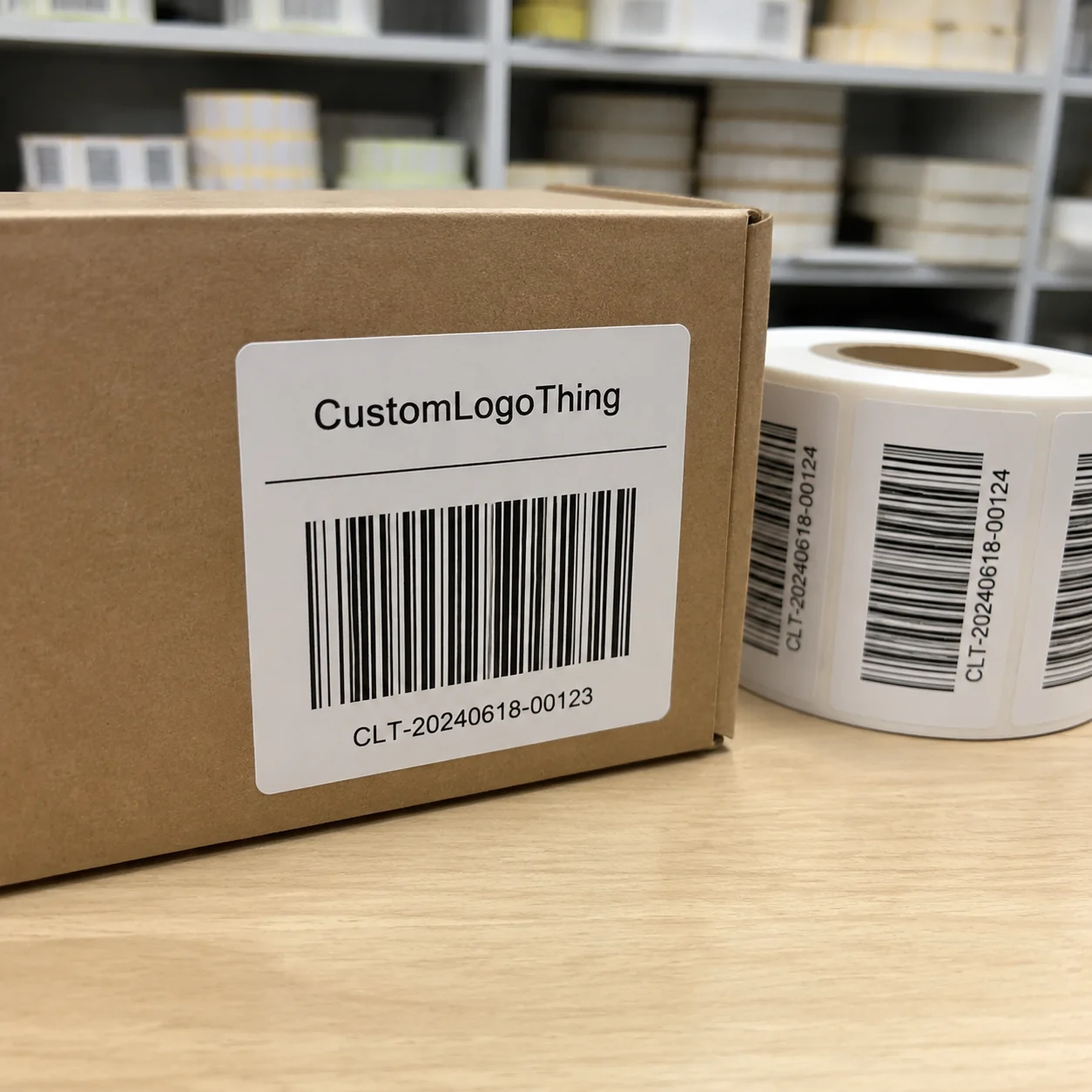
- Thermal transfer works well for variable information, barcodes, and clear black text on satin or similar substrates.
- Flexographic printing suits longer runs where the same text and symbols repeat across thousands of labels.
- Woven jacquard is best when the mark itself needs to feel integrated into the fabric and the brand wants a more finished appearance.
Fold style changes both appearance and manufacturability. End fold, center fold, loop fold, and straight-cut formats sit differently inside a garment and affect how the sewing team installs the label. If the seam allowance is narrow, a bulky fold can create problems. If the label goes into a side seam or neckline, the edge finish should be specified clearly so the sewing room does not have to guess.
Attachment method should be chosen for the garment and laundry environment, not just for convenience. Heat-transfer labels can be excellent in some programs, but stitched labels are usually the safer long-term choice when uniforms are washed and pressed repeatedly. If a buyer expects the garment to stay in circulation for a full service season or longer, a more durable attachment method often pays for itself in fewer replacements.
For buyers comparing durability standards and broader packaging concerns, resources from industry organizations such as ISTA and the EPA can help frame testing, transport, and sustainability considerations, especially when the uniform program has reporting or material-reduction goals tied to it.
| Label type | Best use | Typical strengths | Watch-outs |
|---|---|---|---|
| Woven label | Chef coats, premium uniforms | Durable, upscale look, abrasion resistance | Can feel bulkier; less ideal for soft hand feel |
| Satin-printed label | Shirts, aprons, general uniform programs | Soft touch, clear care text, good cost control | Needs solid ink coverage and laundering-spec review |
| Heat-transfer mark | Tagless front-of-house apparel | Low profile, comfortable, clean appearance | Requires proper application and wash testing |
Specifications to include in a quote request for consistent uniform labeling
A useful quote request gives the supplier enough information to price accurately on the first pass. That cuts back-and-forth and reduces the chance of discovering a missing detail after artwork has already been reviewed. For a Care Labels Supplier Quote for restaurant groups, the basics should include garment type, fiber content, care instructions, logo or brand mark, label size, attachment method, and quantity by location or program phase.
Start with the garment list. Restaurant groups often need labels for chef coats, server shirts, bar aprons, hostess blouses, kitchen pants, and cleaning uniforms. Each category can carry a different fiber blend and a different wear pattern, which affects the care language and sometimes the recommended label construction. A label meant for a poly-cotton shirt may not be the right call for a heavy cotton apron or a performance-fabric front-of-house shirt.
Then define the text. If the label needs care symbols, fiber content, sizing, country-of-origin language, or internal SKU codes, include that copy in a clean document. Larger operators sometimes add barcodes, QR codes, or inventory identifiers to support tracking and replenishment. Those can be helpful, but they should be built into the spec up front rather than added after proofs are circulating.
Legibility is a common weak spot. Small type can become unreadable after repeated washing if contrast is low or the font is too thin. Symbols matter too, especially when the label carries wash, dry, iron, or bleach guidance. The request should specify whether the artwork needs to remain readable after laundering, not just look sharp on a screen.
If the group operates across regions, compliance language may vary. Care and fiber labeling requirements can differ by market, and the supplier should know whether the order needs one version or several localized versions. If that information is missing at the quotation stage, the first price can be misleading. The revision may be small, but it can still alter the timing and the total cost.
Print-ready artwork helps. If that is not available, a clean vector file is far better than a low-resolution image copied into an email. Better files mean fewer proof rounds, fewer corrections, and less risk that the opening rollout will slip because the logo had to be rebuilt before production.
Care labels supplier quote: pricing, MOQ, and what changes the unit cost
Pricing for Custom Care Labels tends to follow a few predictable drivers, which is helpful because buyers can compare quotes against the same spec rather than against vague descriptions. Quantity is the biggest factor. As the run gets longer, the unit price usually falls because setup costs are spread across more pieces. That matters for restaurant groups that may be choosing between a pilot order for a handful of locations and a full rollout across dozens.
Material choice is next. Satin-printed labels often cost less than woven constructions, while specialty finishes, custom backings, or higher abrasion resistance can raise the unit cost. More colors add complexity. Larger labels use more substrate. Folding and finishing also matter, especially when the label has to be cut, folded, or sewn in a particular way.
Here is a practical comparison buyers can use while reviewing a care labels supplier quote for restaurant groups:
| Quote factor | Lower-cost option | Higher-cost option | Typical impact |
|---|---|---|---|
| Quantity | 5,000 pieces | 500 pieces | Smaller runs usually carry a higher unit price |
| Construction | Single-sided satin print | Woven or specialty heat-transfer | More complex constructions raise material and setup cost |
| Color count | One-color black text | Multi-color logo plus text | Additional colors increase print setup and alignment effort |
| Finishing | Straight cut | Folded, sewn, or custom die-cut | More finishing steps add labor and inspection time |
| Schedule | Standard production window | Rush turnaround | Accelerated schedules can raise the quoted price |
Minimum order quantity, or MOQ, should be asked about early. A lower MOQ is useful for testing a new uniform program before it rolls out to every store. That is especially practical when a group is changing vendors, changing garment styles, or introducing a revised brand standard. The per-label price may be higher on a small run, but a smaller test can still be cheaper overall if it prevents a costly overbuy of the wrong version.
Setup fees, plate charges, prepress work, and sample costs should also be visible. Some quotes hide those line items until late in the process, which makes comparison difficult. A lower headline price can turn into a higher total if artwork cleanup or sample approval was not included from the beginning. The cleanest quote is the one that shows the full landed cost logic, not just the sticker price.
For broader custom labeling needs tied to uniforms or packaging, our Custom Labels & Tags page is a useful reference, and if the spec is moving quickly, you can always Contact Us.
Process and timeline: from quote approval to delivered labels
The process usually begins with a spec review. The supplier checks garment type, label construction, artwork, quantity, destination, and schedule. Once that is confirmed, the quotation goes out. The buyer reviews unit price, setup charges, and any options for samples or alternate constructions. After approval, the art team builds the proof and checks that the text, symbols, and proportions match the request.
Most delays happen in the same places. Missing fiber content slows the care text. A low-resolution logo needs cleanup. A label size that sounded fine in an email can look cramped once the proof is built to scale. These are ordinary issues, but they add time if the file set is incomplete.
For standard production, timelines often land around 12 to 15 business days from proof approval, although the exact window depends on label method, order size, and finishing requirements. Simple printed labels and some heat-transfer programs may move faster. Woven constructions and more detailed finishing can take longer. Rush work is sometimes possible, but material availability and the complexity of the build set the ceiling.
Pre-production samples and digital proofs protect restaurant groups from avoidable mistakes. A proof is where reversed care symbols, typos, spacing issues, and unreadable text are caught before the whole order is released. That review is especially valuable for chain-wide launches, because a small error multiplied across dozens of locations becomes expensive fast.
Split ship-to addresses are another practical point. Restaurant groups often need labels sent to a central warehouse, a uniform distributor, or multiple store locations. Those instructions should be settled before production ends, not after. Seasonal hiring can also affect timing. A spring opening or holiday refresh can squeeze the calendar in ways that make an extra week of lead time feel very short.
If the supplier also manages other packaging or branded inventory, the program often stays better organized. Artwork history, reorder notes, and version control live in one place instead of being spread across separate vendors. That does not eliminate mistakes, but it does reduce the chance that a new location receives an outdated label version because nobody knew which file was current.
Why working with a packaging manufacturer helps uniform programs stay organized
Restaurant groups do not just need labels; they need a repeatable process. A packaging manufacturer that handles custom production work usually brings more discipline to file control, proofing, and version management than a supplier treating every order as a stand-alone print job. That matters when one buyer is managing several concepts, multiple stores, and a steady stream of reorders.
The benefits show up in small but meaningful ways. Retained specs make reorders faster. Quality checks on print clarity, fold accuracy, and cut consistency reduce the chance of a bad release. Clear documentation keeps the label version aligned with the garment version. None of that is flashy, but it keeps the program from drifting into chaos after the first successful rollout.
Direct technical guidance also matters. A buyer may know they need a care labels supplier quote for restaurant groups, but not know whether woven, satin, or heat-transfer is the right fit. A supplier with production experience can usually tell whether the better choice is a sewn-in label, a folded satin label, or a tagless application based on garment fabric, wash frequency, and hand-feel requirements.
That type of advice reduces revisions. It also helps when several stakeholders are involved, because the recommendation is tied to how the label will actually perform, not just how it looks in a mockup. In a restaurant environment, appearance matters, but survival in the laundry matters more.
Next steps to request the right label quote for your restaurant group
Before requesting pricing, gather the garment list, estimated counts, fiber content, preferred attachment method, and the exact label text. If there are different concepts or language versions, organize them in one file so the supplier can price each version correctly. That alone can remove several rounds of clarification.
It also helps to prepare brand artwork, care instruction text, and any compliance language together. A cleaner package usually means a faster quote and fewer proof corrections. If you already know you need both a pilot run and a larger rollout estimate, ask for both in the same request. Comparing test pricing against rollout pricing gives a much clearer picture of the program’s real cost.
When the quote comes back, compare more than unit price. Check MOQ, proofing steps, sample policy, lead time, and shipping options. If the label size, fold, or print method changes later, ask for a revised quote rather than assuming the original number still applies. That is the simplest way to keep budget control intact and prevent surprises once the order is in motion.
For restaurant groups, the best outcome is not just a low number on a page. It is a label program that stays consistent, readable, and easy to reorder across every location. The most reliable quotes are the ones built from the actual uniform spec, not from a generic template copied across unrelated garments.
FAQs
What should I include when requesting a care labels supplier quote for restaurant groups?
Include garment type, fiber content, label size, print text, logo artwork, fold style, attachment method, and estimated quantity. Add ship-to locations and any compliance language upfront so the quote does not need multiple revisions.
Do restaurant groups usually need woven or printed care labels?
Printed labels are often better for detailed care information and lower-profile comfort on uniforms. Woven labels can be a better fit when the brand wants a more premium finish or extra abrasion resistance.
What affects the unit cost of custom care labels the most?
Order quantity, material choice, print complexity, number of colors, label size, and finishing style are the biggest cost drivers. Rush production and special compliance requirements can also raise the unit price.
How long does production usually take after quote approval?
Timing depends on label method, artwork readiness, and order size. Standard orders often fall in the 12 to 15 business day range after proof approval, while rush options depend on material availability and production complexity.
Can I order different care label versions for different restaurant concepts in one program?
Yes. Many restaurant groups use one base construction with variations in text, language, or garment-specific instructions. Keeping the core spec consistent makes reorders and inventory control easier.