A boutique garment can look carefully finished on the rack and still disappoint the customer if the inside label is vague, scratchy, unreadable, or wrong. That is why a care labels Wholesale Supplier for Boutique brands is more than a convenience source. The label is a small part with a surprisingly large job: it has to carry compliance information, survive washing, match the brand’s visual standard, and do it all without adding friction to production.
Buyers sometimes underestimate how much the care label influences the final impression of a garment. Shoppers may not notice a good label, but they notice a bad one quickly. A label that frays after one wash or fades to the point of becoming unreadable can undermine an otherwise strong product, and the cost of fixing that problem lands in returns, rework, and lost confidence. For boutique collections, where each unit matters more, there is little room for those errors.
Why boutique labels need wholesale consistency, not guesswork
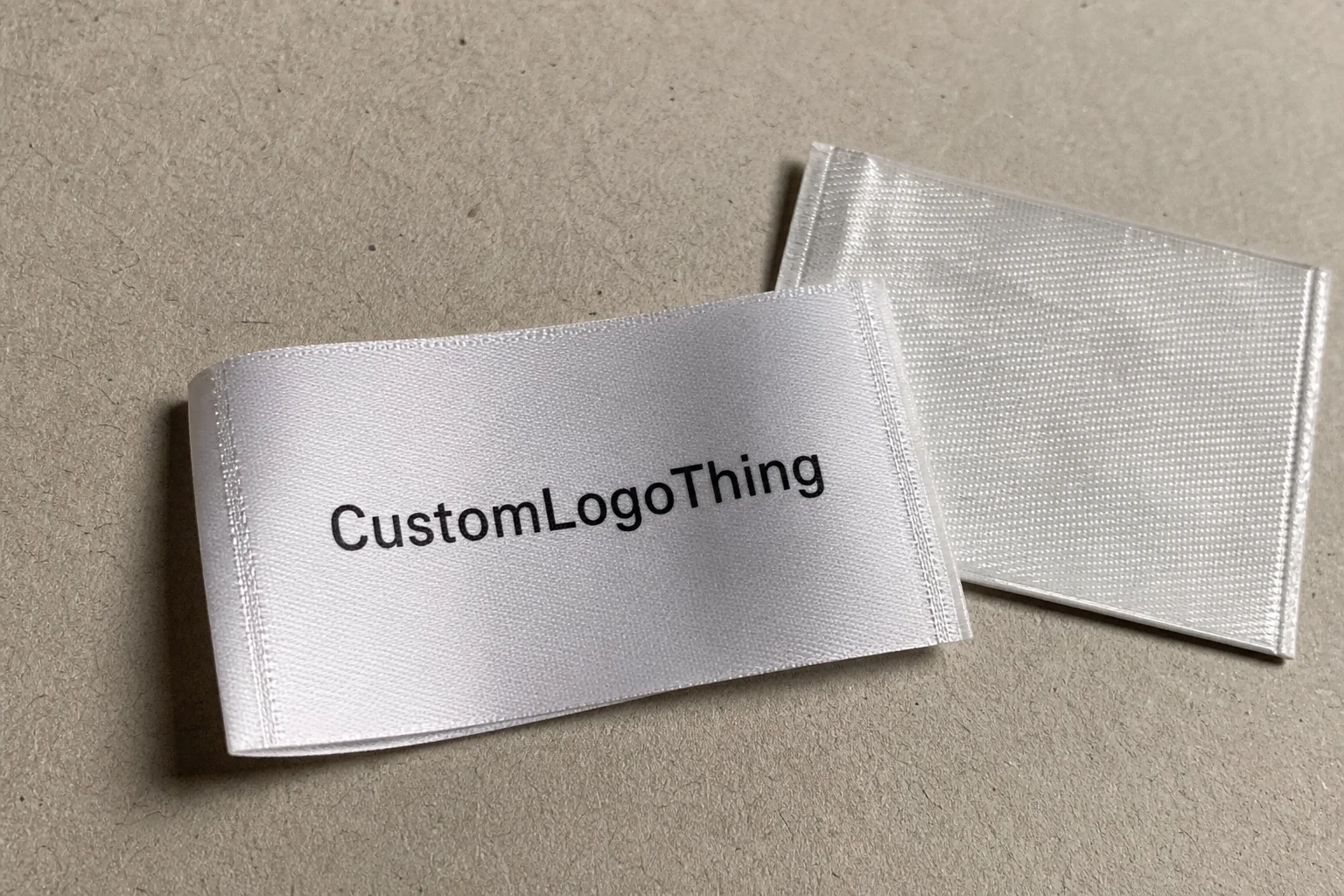
Small-batch apparel is often treated as if it can be sourced casually, as though lower volume automatically means lower standards. That assumption causes trouble. A boutique run may be 50 pieces or 500 pieces, but every unit still needs the same repeatable output, the same approved artwork, and the same material behavior from batch to batch. A reliable care Labels Wholesale Supplier for boutique orders should be able to reproduce the same fold, the same print density, the same cut, and the same color tone without asking you to rework the file every time.
The hidden cost of inconsistent sourcing is not dramatic at first. One order comes in with a different trim, the next with a lighter print, and another arrives late because the supplier had to reconstruct the artwork file. On paper those are small issues. In a launch calendar, they can stop sewing, delay packing, or push delivery past the selling window. The label itself may cost cents, but the interruption around it is much more expensive.
Care labels also serve as a compliance record. They typically carry fiber content, country of origin, and washing instructions, and in some markets they need to appear in a specific language or format. That makes the label part brand touchpoint and part regulatory document. If the information is incomplete or illegible, the garment may not move cleanly through retail receiving, and the customer may end up with a product that feels unfinished.
A strong care label is a tiny line item with an outsized effect. It protects the garment, the brand, and the buyer’s margin.
Wholesale supply matters because consistency matters. Not volume for volume’s sake, but the ability to reorder the same spec without introducing new variables each time. Boutique brands often grow style by style, so a label system that can be repeated cleanly across collections is worth more than a one-off low quote.
For brands building out a new range, it helps to think beyond the current style set and toward future reorders. Suppliers that also handle Custom Labels & Tags and broader Wholesale Programs usually understand how one label structure has to work across several SKUs without constant intervention.
There is also a straightforward cost argument. A better spec may reduce reprints, reduce waste, and prevent garment rework. That matters more in boutique production because small runs absorb mistakes poorly. A 2% error rate in a small order is not a rounding issue; it is visible inventory.
Care label formats, materials, and print options for boutiques
Not every boutique line needs the same label format. The best choice depends on garment weight, skin contact, price position, and the way the product is finished. A good care Labels Wholesale Supplier for boutique collections should offer multiple constructions rather than a single standard template.
The most common options are straightforward:
- Woven labels for a premium sewn-in look and strong brand presentation.
- Satin labels for softness, especially on garments worn close to the skin.
- Cotton labels for natural, artisan, or heritage positioning.
- Heat-transfer labels for a tagless feel on activewear, children’s wear, and sensitive fabrics.
- Printed tear-away care labels for flexible, lower-cost production and fast finishing.
Material choice changes the customer experience in a practical way. It affects handfeel, wash durability, legibility, and how the garment sits against the body. A woven label can create a more finished appearance, but on a lightweight knit or a soft blouse, a satin or printed label may be the better choice because it reduces irritation. Heat-transfer labels go a step further by removing the sewn-in edge entirely, which is one reason they are common in activewear and babywear.
Print format should match the product strategy. The cleanest option is usually black text on a light background, because it gives the best contrast and the easiest reading after repeated washing. But there is room for more than that. Some brands need logo placement, size callouts, QR codes, or standardized wash symbols. If one label template can support multiple styles with only a small text change, that usually lowers the risk of artwork errors and keeps the order moving faster.
In practice, the strongest options by use case look like this:
| Label type | Best for | Typical feel | Approximate cost impact |
|---|---|---|---|
| Printed tear-away | Simple boutique basics | Light, flexible | Lowest |
| Satin sewn-in | Fashion tops, dresses, soft garments | Smooth, comfortable | Low to moderate |
| Woven label | Premium branding, knits, outerwear | Structured, branded | Moderate |
| Heat-transfer | Activewear, seamless apparel, kidswear | Tagless, soft | Moderate to higher |
| Cotton label | Natural, heritage, artisan positioning | Textured, soft | Moderate |
Luxury knits usually justify woven labels because the texture and visual finish support the price point. Seamless apparel and performance pieces tend to do better with heat-transfer construction because comfort matters more than a sewn-in edge. A boutique brand does not need to use the most expensive format to look premium; alignment matters more than overspending.
One practical move is to standardize labels across a collection. If the brand has six tops, two skirts, and a jacket in one drop, a single master artwork file with controlled variations is usually cleaner than six separate builds. Fewer moving parts means fewer errors, which is especially useful when a small label mistake can affect an entire production run.
Specifications that matter before you approve artwork
Artwork approval is one of the most common failure points in label sourcing. Usually the design is not the problem; the missing technical detail is. Before you sign off with a care labels wholesale supplier for boutique garments, check the spec line by line rather than relying on the proof image alone.
The first items to lock down are folded size, trim size, label orientation, stitch allowance, and edge finish. A label that looks fine on a screen can become cramped or unreadable once it is reduced to a small sewn-in format. That matters more than many buyers expect. Text needs to remain legible under retail lighting and after the label has been folded, stitched, and laundered several times.
Material fit comes next. Delicate fabrics usually need softer label constructions, or the label itself becomes the complaint. Heavy outerwear can support larger woven labels and bolder copy. Lightweight satin or printed tagless labels make more sense for silk blends, babywear, and garments worn close to the neck.
Compliance details should be confirmed before production, not after. Typical requirements include:
- Fiber content
- Country of origin
- Care instructions
- Language requirements for the sales market
- Wash symbol accuracy where symbols are used
Those care symbols are not decoration. They should be standardized, readable, and consistent with the garment’s actual cleaning needs. If the label says one thing and the fabric behaves differently, customers notice quickly, especially after the first wash. That kind of mismatch is difficult to recover from because it reads as carelessness rather than a simple production mistake.
Ask for a proof at actual size. Digital proofs are useful, but they can hide spacing and legibility problems because the screen is forgiving. If the label is compact, a physical sample or a scale-accurate mockup is much more reliable. It helps catch thin type, broken line breaks, and poor contrast before the order enters production.
For durability, ask how the supplier checks wash performance. A label should not fade, crack, or fray after normal laundering. Buyers do not always need a full lab report, but they do need to know that the label construction has been tested for the garment’s expected life. Standards such as ASTM textile testing methods and broader guidance from industry bodies like ISTA are useful references because they help buyers ask better questions. If the label cannot survive the use case, the spec is too weak.
Care label pricing, MOQ, and unit cost factors
Pricing for boutique labels is usually straightforward once the quote is broken into parts. A dependable care labels wholesale supplier for boutique orders should show what is included: material, print complexity, setup, finishing, packaging, and shipping. A single bundled number can hide a lot of assumptions.
The main cost drivers are easy to identify:
- Label type — woven, printed, satin, cotton, or heat-transfer
- Number of colors — more colors usually mean more setup work
- Copy complexity — dense care text takes more formatting time
- Finish — folded, cut, heat-applied, or trimmed edges
- Packaging method — rolled, stacked, bagged, or individually sorted
MOQ, or minimum order quantity, matters because the setup time exists even for small orders. For boutiques, the useful balance is usually a minimum that keeps the unit price reasonable without forcing unnecessary inventory. Some suppliers will accept lower runs, but the per-piece cost rises. Others set a higher MOQ and offset that with more efficient pricing. There is no universal formula; the format and the supplier’s production method determine the answer.
As a general guide, simple Printed Care Labels sit at the lower end of the price range, while woven labels and specialty finishes cost more. A small boutique order can often fall into the following ranges:
| Order profile | Typical unit cost range | Notes |
|---|---|---|
| Basic printed care label, 5,000 pcs | $0.03-$0.08 each | Depends on print coverage and folding |
| Satin sewn-in label, 5,000 pcs | $0.06-$0.14 each | Soft handfeel, moderate finishing |
| Woven label, 5,000 pcs | $0.08-$0.20 each | Higher setup, more premium finish |
| Heat-transfer label, 5,000 pcs | $0.10-$0.25 each | Comfort-focused, depends on application method |
Those ranges are directional rather than universal. Print coverage, edge finishing, artwork complexity, and packaging can move the price in either direction. Still, the comparison is useful. If a supplier offers one number without explaining what is included, it is worth asking again before comparing that quote to others.
Ordering a slightly higher quantity can sometimes improve margin more than it increases spend. That is especially true if the same label will be reused across multiple styles or a replenishment drop. An extra 1,000 or 2,000 pieces may lower the unit cost enough to justify the inventory, particularly for a hero style that sells in repeat cycles. For boutique brands with limited room for error, that calculation can be more useful than chasing the lowest initial quote.
Always ask for a quote that separates artwork fees, sampling, shipping, and any rush charges. A low unit price can look attractive and still become expensive once add-ons appear. Clear pricing is easier to compare and easier to defend internally.
Production steps, timeline, and turnaround expectations
The production path for care labels is usually predictable, which is helpful for small brands planning around a launch. A solid order flow typically moves from inquiry to specs review, then artwork submission, proofing, production, inspection, and delivery. The buyer’s job is to keep the information clean enough that each step can move without a correction round.
Turnaround depends on the label type and how many revisions are needed. A simple printed label with clear copy can move faster than a woven design with special folding or custom finishing. If the label includes compliance text in multiple languages, the timeline should be extended a little for review. Peak season can stretch the calendar even further.
Many boutique buyers should expect the following planning window:
- Proof preparation: 1-3 business days
- Proof revision and approval: depends on buyer response time
- Production: often 7-15 business days after approval for standard runs
- Shipping: varies by method and destination
For custom or specialty work, the window can easily stretch beyond that. A practical buffer is usually two to four weeks from final artwork approval to receipt, especially if the order involves woven construction, heat-transfer testing, or a new compliance format. That is not a worst-case estimate; it is a realistic one when the label must be correct the first time.
Ask for milestone dates: proof date, production start date, estimated completion date, and shipping method. If those checkpoints are vague, the order is already at risk. Not every supplier needs to behave like a software company, but a clear schedule is not optional when the labels are tied to packing and release dates.
If the garments will be finished, folded, and packed on a fixed schedule, the label order should be back-planned from that date, not from the day you remembered to request a quote.
What to compare when choosing a label supplier for boutique brands
Many suppliers can print a label. Fewer can support boutique buying patterns well. That is why the real comparison is not simply price against price. It is evidence against promises. A trustworthy care labels wholesale supplier for boutique brands should be able to show sample photos, specification sheets, proof examples, and clear answers to technical questions.
Compare these points side by side:
- Material range — can they offer woven, satin, cotton, printed, and heat-transfer options?
- Reorder consistency — can they repeat the exact spec without change?
- Artwork handling — do they correct file issues or simply print what is submitted?
- Quality control — do they check trim accuracy, legibility, and finish?
- Communication speed — how fast do they answer spec questions?
- Policy clarity — what happens if the proof is wrong or the run needs a reprint?
A boutique brand also needs a supplier who understands small-batch economics. A partner who only thinks in large-volume terms may not understand why 300 pieces of one style and 120 of another need careful scheduling. Margins are tighter at boutique scale, so the impact of a mistake is larger and the value of a clean process is higher.
Scalability matters as well. A good supplier should handle the first production run and the reorder without forcing a new approval cycle unless the spec changes. That becomes especially useful when a style sells better than expected and you need replacement labels quickly. Reorders should be boring. That is a compliment.
Quality-control habits should match apparel reality: color matching under retail lighting, edge finish consistency, correct stitch allowance, and text that stays readable at final size. If the label looks crisp in a mockup but muddy in the finished sample, the supplier missed the details that matter most to the buyer.
For buyers balancing label sourcing with broader packaging work, suppliers tied into Custom Labels & Tags and Wholesale Programs can sometimes reduce back-and-forth because they already work with repeatable order structures.
It also helps if the supplier understands standards and certification language. If the brand needs FSC-linked paper components, or if sustainability claims will appear in marketing, the supplier should know the difference between recyclable, certified, and loosely described “eco-friendly” materials. For paper-based elements, the FSC framework is a useful reference point. It does not solve every materials question, but it sharpens the conversation and reduces vague claims.
Next steps for placing a boutique care label order
Before requesting quotes, prepare the basic information first. The cleaner the brief, the cleaner the quote and the fewer follow-up questions. A strong brief should include garment type, label dimensions, copy text, logo files, preferred material, quantity, and target delivery date. If the sale market is already defined, include the compliance text required for that region as well.
It is smart to request two or three format options. For example, compare a printed satin label, a woven label, and a heat-transfer version if the garment allows it. That gives a better picture of comfort, durability, and cost. Sometimes the cheapest option is not the best margin decision once sewing time, customer perception, and reorder risk are included.
Final artwork should not be approved until the care symbols and compliance text have been checked carefully. This is the stage where rushed orders fail most often. One missing fiber line or one typo in a country statement can push the job back several days, and that delay can be enough to disrupt a boutique launch.
If the new collection is premium, request a sample or proof before the full run. The extra step is worth it when the label will be visible on the garment or when the finish needs to feel elevated. A sample shows density, handfeel, and readability under actual light, which is more reliable than looking at a PDF on a monitor.
A practical order sequence looks like this:
- Gather specs and compliance text.
- Request a quote with clear inclusions.
- Review the proof at actual size.
- Approve production only after final sign-off.
- Schedule delivery before packing begins.
That sequence sounds basic because it is. Basic process discipline is what keeps boutique projects profitable. A small label error can cost more than the label itself because it affects production timing, garment presentation, and customer trust all at once.
If you are choosing a care labels wholesale supplier for boutique orders, buy for repeatability first and price second. The right partner will help protect the garment, the brand, and the launch schedule.
FAQ
What should I ask a care labels wholesale supplier for boutique apparel?
Ask about material options, MOQ, proofing timeline, compliance support, and whether they can repeat the exact spec on future orders. Also ask what is included in the quote so you can compare pricing fairly.
Which label type is best for boutique clothing lines?
It depends on the garment. Woven labels suit premium branding, printed labels are good for clarity and cost control, and heat-transfer labels work well for soft, tagless comfort on sensitive fabrics.
How do MOQ and unit cost affect boutique care label orders?
Lower MOQs help small collections get started, but the unit cost may be higher. Larger quantities often reduce per-piece pricing and can improve margin if the label will be reused across multiple styles or replenishment runs.
How long does production usually take for custom care labels?
Simple labels can move fairly quickly after proof approval, while custom materials, revisions, and busy production periods can extend the timeline. A two to four week planning buffer is often safer for boutique launches.
What information do I need before requesting a quote?
Prepare your label text, dimensions, logo files, preferred material, quantity, delivery address, and any compliance details required for your market. If possible, include the garment type too, because that helps the supplier recommend the right format.


