A clothing Labels Wholesale Supplier for apparel should do more than quote a low unit price. The label is small, but it sits at the point where branding, comfort, compliance, and production speed all meet. If the fold is wrong, the edge is rough, the care copy is incomplete, or the backing does not hold up in sewing, the cost of fixing the error usually lands on the garment team, not the label vendor.
Wholesale sourcing is really about repeatability. A supplier that controls printing, weaving, finishing, folding, and packing in one workflow is less likely to introduce variation between lots. That matters for brands that reorder the same style across seasons, run multiple colorways, or need the same trim spec shared across several factories. Fewer handoffs means fewer chances for the label to drift away from the approved sample.
For teams comparing ranges or building a new trim package, it helps to look at the label as part of the garment system rather than a standalone accessory. A good starting point is the product range at Custom Labels & Tags and the order structure in Wholesale Programs.
Why a Clothing Labels Wholesale Supplier for Apparel Cuts Rework
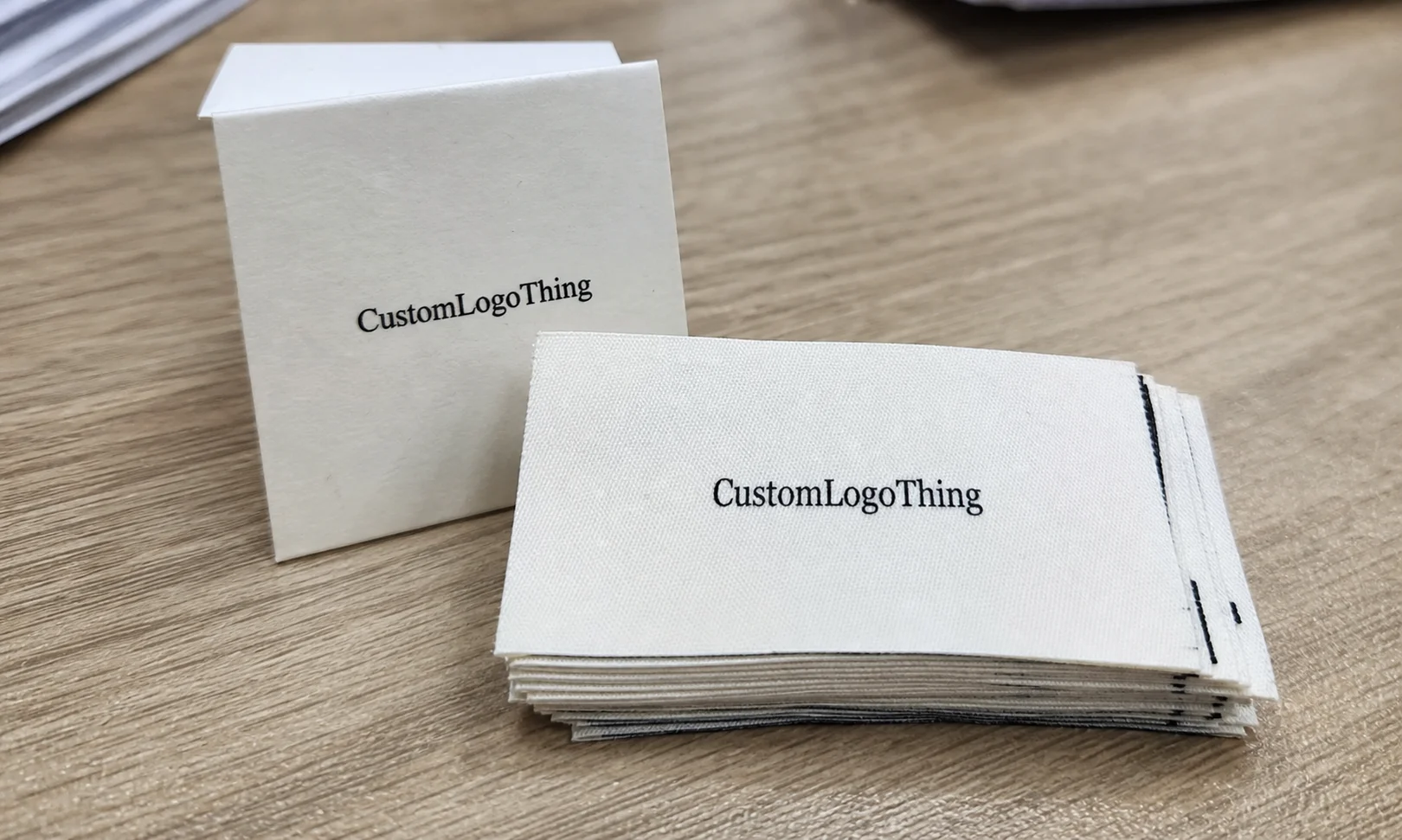
Relabeling is one of those costs that looks minor until it starts affecting labor. A label might cost only a few cents, but a mistake can trigger seam ripping, retagging, carton repacking, reinspection, and delayed shipments. That is why the real value of wholesale sourcing is not the lowest quote. It is getting the spec right early enough that the label disappears into the garment process instead of interrupting it.
There are three failure points that show up again and again. First, artwork is interpreted inconsistently, so the size, care line, and brand mark shift from one reorder to the next. Second, the finishing method is not locked before production, so the edge, fold, or backing does not match the garment construction. Third, the packing standard is loose, which creates problems when labels are fed into sewing lines at speed or sorted by size in the packing room.
A clothing Labels Wholesale Supplier for apparel should reduce those risks by controlling the full specification, not just producing a decorative strip of material. That means clear file review, fixed version control, and a production record that can be repeated without guesswork. If a supplier cannot explain how they preserve the approved version, the buyer is carrying more risk than the pricing sheet shows.
Buyer reality: the cheapest label often becomes the most expensive line item once labor, downtime, and rework are counted.
For multi-style programs, the other hidden benefit is consistency across repeats. The same approved label can be reused for seasonal refreshes, capsule drops, or private-label variations without rebuilding the brief every time. That saves approval cycles and keeps inventory planning cleaner. It also reduces the chance that a last-minute substitution changes the feel or appearance of the garment in a way customers notice.
There is another practical advantage that gets overlooked: suppliers that work at wholesale volumes tend to understand production discipline. They know that a label does not need to be impressive on its own; it needs to hold up under sewing tension, wash cycles, and repeated handling. That perspective usually leads to fewer surprises after order placement.
Material and Finish Options That Match Garment Use
Label material should follow garment use, not the other way around. Buyers often begin with appearance, which is understandable, but the better filter is how the garment will be worn, washed, and touched. A premium jacket, a toddler tee, a performance base layer, and a work shirt all ask for different label behavior.
Woven labels are still the default choice for many brands because they hold detail well and feel integrated into the garment. Damask woven labels are the refined version of that option, with tighter weave structure, cleaner detail at small sizes, and better definition in logos or tiny type. Printed satin works well when the goal is a soft handfeel and more data on a smaller surface, especially for care instructions, size lines, or multi-language copy. Cotton labels suit natural, heritage, or lower-gloss brand positions, though they should be checked for edge stability and wash performance rather than chosen only for appearance. Heat-transfer labels are often the right answer for activewear and children’s apparel where irritation must be kept low. Tear-away options help reduce scratchiness in base layers and garments worn close to skin.
Finish changes perception quickly. A satin label with a clean cut edge reads differently from a matte cotton label with a soft sewn-in border. That sounds minor until you handle a full order, because customers touch labels more often than many teams expect, especially in premium knitwear, babywear, and athletic apparel. Gloss can suggest polish, while a matte finish often signals utility, softness, or natural content. Neither is better in every case; the point is to align finish with the garment story.
Durability matters more than visual novelty on garments that see repeated wash cycles. Buyers should ask about colorfastness, stitch retention, edge fray, and how the label behaves after laundering. If a garment has direct skin contact, softness and low abrasion matter more than sharp visual detail. If the brand is making a sustainability claim, ask what the substrate actually is, whether any paper components are FSC-certified, and what that certification covers. Certification names are often used loosely, so it is worth checking the scope rather than relying on a label on the quote sheet. The FSC resource center at fsc.org is a useful reference point for that conversation.
The practical rule is simple: match the label to the garment environment. Activewear needs stretch tolerance and low irritation. Kidswear needs softness, wash durability, and clean edges. Workwear needs abrasion resistance and stable construction. A clothing Labels Wholesale Supplier for apparel should be able to talk through those tradeoffs in plain terms, not hide behind broad claims.
There is also a packaging angle. If labels are shipped pre-folded, stacked, or bagged for line-side use, the material choice affects how well the labels stay sorted. A soft substrate may feel better on skin but require more careful packing to keep the edges aligned. A stiffer label may be easier for operators to handle, but it can feel harsh if the garment sits against the neck or waist. That tradeoff belongs in the spec discussion before purchase order approval.
Construction Specs That Keep Labels Comfortable and Durable
Specification discipline saves more orders than decorative artwork ever will. Before a run is approved, lock down width, height, fold type, stitch method, placement, backing, and cut tolerance. If any one of those fields is vague, the label may still look acceptable on a screen and fail in production.
Fold style is one of the biggest decision points. A center fold usually suits neck labels because it sits cleanly in a seam. End fold works for side seams and many care labels. Loop fold gives a hanging attachment point and can support more complex brand treatment. Straight cut is common where the label is sewn into a seam allowance or packed separately. Heat-seal constructions reduce sewing labor on some knits and performance garments, but they should always be tested against the target fabric and wash standard before a full order is released.
Artwork quality matters just as much as construction. Send vector files when possible. Use Pantone references if color matching matters. Separate care symbols from size hierarchy so the printer can keep the small type legible. If barcode or SKU data is required, define the code standard before proofing begins. A supplier should not have to guess whether the label carries branding, care instructions, inventory data, or all three.
The proof stage is where buyers can save themselves the most trouble. Ask for a strike-off or sample when the order is new, the fabric is unfamiliar, or the fold is unusual. A flat mockup can hide a lot: how a folded edge behaves, whether a satin surface reflects too much light, or whether a woven label feels thicker than expected in the seam. Once the first run is cut, those issues are harder and more expensive to fix.
Quality checkpoints should be easy to verify. Ask how the label reads after washing, whether cut edges stay clean, whether inks bleed, and whether repeat lots hold the same dimensions. On many woven items, a tolerance window around 1 to 2 mm may be acceptable, but only if the garment and fold allow it. On printed labels, clarity at small type sizes often matters more than ornamental detail. A reliable clothing Labels Wholesale Supplier for apparel will tell you where the practical limits are before you commit.
There is also a sewing-room reality that spec sheets often ignore. If the label is too thick, too stiff, or too wide for the seam allowance, operators will either slow down or improvise. Neither outcome is ideal. Well-managed label specs account for the garment construction itself, not just the design file. That is especially important on lightweight knits, narrow neck seams, and children’s apparel where comfort issues are noticed quickly.
If a brand is building a long-term trim library, the approved spec should be saved with the final artwork, the stitch placement, and the sample reference. That record is more valuable than a one-time proof approval because it reduces ambiguity on repeat orders. In wholesale production, ambiguity usually turns into cost.
Pricing, MOQ, and Unit Cost: What Changes the Quote
Quotes vary because the bill of materials is only part of the cost. Material choice, color count, finishing method, fold style, backing, packaging, and freight all move the number. A single-color satin label with a standard fold is one job. A multi-color damask label with custom packing, a specialty fold, and rush shipping is a different job entirely.
Minimum order quantity is where many buyers feel the first tension. Lower MOQ usually means a higher unit price because setup time is spread over fewer pieces. Standard specs, repeat artwork, and common materials usually price better. Specialty folds, narrow widths, unusual sizes, or premium substrates can push the minimum up. That is normal, and it is better to know it early than to learn it after sample approval.
| Label option | Typical use | Indicative unit cost at 5,000 pcs | What drives the price |
|---|---|---|---|
| Printed satin | Care labels, size labels, soft-hand branding | $0.05-$0.12 | Color count, print coverage, fold style, packing method |
| Woven damask | Premium brand labels, outerwear, denim | $0.08-$0.18 | Thread density, detail level, border finish, size |
| Cotton label | Natural or heritage positioning | $0.10-$0.20 | Base fabric, print complexity, wash testing, edge handling |
| Heat-transfer | Activewear, kidswear, low-irritation interiors | $0.12-$0.28 | Material system, application method, performance testing |
| Custom woven with specialty fold | Higher-end apparel, layered branding | $0.14-$0.30+ | Construction complexity, labor, inspection time, packaging |
Those numbers are estimates, not a promise. A tighter artwork spec, fewer colors, and standard packing can move a quote down. More inspection, smaller runs, or unusual materials can push it up. The hidden costs matter too: relabel labor, scrap, rush freight, and dead stock all belong in the comparison. A label that is two cents cheaper can still be the wrong buy if it adds an hour of correction work later.
Ask every clothing Labels Wholesale Supplier for apparel for the same quote inputs so you can compare fairly: exact production spec, setup fee, sample fee, lead time, and remake policy. If one supplier does not show those clearly, the price is incomplete. It may be a fair quote, but it is not yet a usable one.
The most useful buying habit is to compare total landed value, not just the item cost. That means unit price, freight, inspection, approval time, and the likely cost of errors. Brands that buy this way usually make better repeat decisions because they see how the label behaves inside the broader production schedule.
Process and Timeline: From Artwork to Shipment
The production path should be visible before the order is placed. Inquiry, file review, proof, sample or strike-off, approval, production, packing, and dispatch are the usual steps. If a supplier skips over any of them, expect avoidable delays later.
Most timeline problems come from the same few issues: missing measurements, late approval, a material swap after proofing has started, or a color change after the first version is already under review. Each of those creates a new round of checks, and every round adds calendar time. Small labels can still become the bottleneck if the schedule is tight.
For straightforward label runs, lead time often falls in the 10 to 15 business day range after approval. Custom finishes, special backings, or complex fold constructions can stretch that further. Rush service may shorten the calendar, but only if the artwork is final and the spec is already standard. If not, a rush request simply compresses the error window.
Build buffer time into the schedule before a launch, photo shoot, retail receiving date, or factory start date. That advice matters most for brands with multiple trims sharing one production window. A label order that looks small on paper can still delay an entire garment shipment if the approval lands too late. A clothing labels wholesale supplier for apparel should be able to help sequence the order so the trim does not hold up the garment.
The more complete the brief, the more reliable the timeline. Send the artwork, quantity, fabric use, placement, dimensions, fold preference, and shipping destination at the start. If care text changes between regions, make that clear before proofing, not after. The schedule usually slips when key decisions are still open while production is already being priced.
For teams managing broader packaging and compliance details, it helps to keep standards visible. The International Safe Transit Association publishes testing resources at ista.org, which is useful when labels are shipped with broader pack-out programs and need to survive distribution without damage. That is especially relevant when labels are packed with hangtags, stickers, or other small components that can arrive bent or scattered if the carton spec is weak.
What Separates a Reliable Apparel Label Partner from a Middleman
The difference is accountability. A direct producer usually has better control over repeatability because the same team manages the spec, the equipment, and the packing standard. A middleman may still deliver usable labels, but the chain of responsibility is longer, and that often means more room for surprises when a reorder lands.
Documentation discipline is one of the strongest signals. Look for approved samples, retained spec sheets, order history, and the exact version that was signed off. If a supplier cannot tell you which construction was used on the last run, you are relying on memory instead of production control. That is a weak position for any buyer who needs consistent branding across seasons.
Communication around defects matters too. Ask how shortages are handled, what happens if a batch misses the agreed tolerance, and whether remakes are available for verified errors. A supplier with a real quality process will answer directly. A reseller often has to go back and forth before anything gets resolved.
What most buyers miss: the lowest quote often omits something important. It may exclude proofing, packing detail, inspection, or the labor required to keep the spec stable. Once those items are added back in, the quote that looked expensive can be the better value.
There is also a continuity test that reveals a lot. Can the supplier reproduce the exact same item six months later without asking you to rebuild the brief? If the answer is yes, you are dealing with a real partner, not just a transaction source. That is the standard worth demanding from a clothing labels wholesale supplier for apparel.
Middlemen are not automatically a bad choice, but they are a weaker fit for programs that depend on precise repeatability. If your labels are tied to compliance data, premium branding, or fast reorders, the fewer layers between you and the factory, the better the odds of a clean run.
Next Steps to Request Samples, Approve Artwork, and Place the Order
Start with a clean intake brief. Include the label type, dimensions, fold, quantity, garment category, artwork files, target hand-in date, and shipping destination. If you already have brand standards, send Pantone references, care copy, and any packaging constraints. That gives the supplier enough information to price the correct spec instead of guessing.
Request either a sample pack or a digital proof before approval. Seeing the construction in hand catches problems that a flat mockup cannot show, especially with fold behavior, edge finish, and perceived scale. For new programs, a strike-off is often worth the extra day or two because it reduces expensive mistakes later.
Before reordering, save the approved spec sheet, archive the final artwork, and keep the supplier’s version number or reference code. Those small habits make future production faster and help preserve consistency across repeat runs. If your catalog includes multiple trims or private-label styles, keep the label record with the garment record instead of burying it in a general folder.
It also helps to define which details are fixed and which can move. For example, a brand may want the logo, dimensions, and fold to stay identical while accepting a slight change in thread shade or backing style if stock changes. That kind of rule reduces confusion when the next reorder is placed and keeps the supplier from making assumptions that do not fit the brand standard.
If you need a supplier that can handle proofing, sampling, and repeat production without losing the spec, start with the product range at Custom Labels & Tags and the ordering structure in Wholesale Programs. The right clothing labels wholesale supplier for apparel should make the next order easier than the first, not harder.
What should I include in a quote request to a clothing label supplier for apparel?
Include the label type, size, fold style, quantity, artwork files, and the garment category so the supplier can price the correct construction. Add your target in-hand date, shipping destination, and whether you need samples or a production proof before approval. If you already have brand standards, send Pantone references, care copy, and any packaging requirements to avoid quote revisions later.
What is the usual MOQ for wholesale clothing labels?
MOQ depends on material, print method, and finish, so woven and specialty labels often start higher than basic printed options. Standard specs usually price better at higher quantities, while custom folds, unusual widths, or premium finishes can push the minimum up. If you need a low run, ask whether the supplier offers stock materials or shared production setups that reduce the threshold.
How long does clothing label production take after approval?
Timeline usually starts after artwork and proof approval, not after the first inquiry, so the approval step is the main schedule trigger. Simple runs move faster than custom finishes, color matching, or multi-step constructions, which can add time to production and packing. Ask for the supplier’s estimated lead time in writing and confirm whether rush service is available before you lock a launch date.
Can a supplier match brand colors and garment feel across repeat orders?
Yes, if the supplier keeps the approved spec sheet, final artwork, and production reference from the original order. For color control, provide Pantone references and request a proof or strike-off before the full run begins. For feel consistency, keep the same material family and finish instead of switching suppliers or label constructions midstream.
What are the most common mistakes when ordering apparel labels wholesale?
The most common errors are missing care details, wrong fold specs, unclear artwork, and approving a proof without checking measurements. Many buyers also compare only unit price and ignore setup fees, shipping, remake policy, and the labor cost of fixing mistakes later. Another frequent issue is changing the spec after approval, which resets the timeline and increases the chance of batch inconsistency.


