Finding a Custom Retail Hang Tags wholesale supplier for boutique orders is less about choosing the prettiest card and more about getting a small, hard-working piece of packaging that supports the sale before the customer ever reaches for the garment. If the tag looks flimsy or off-brand, the product can feel less valuable in an instant. That reaction happens fast on a sales floor, and it is usually based on texture, print quality, and finish long before anyone reads the copy.
In practice, a hang tag carries more than price. It may also hold brand messaging, fiber content, care instructions, barcode data, QR codes, and a few visual cues that tell the customer whether the item belongs in a boutique or a bargain bin. That is a lot of responsibility for a rectangle of paperboard, which is why material choice, print method, and assembly details matter so much.
For boutiques, the tag is part of the product experience, not an afterthought. It sits alongside labels, tissue, inserts, and display styling, and it often does more visible branding than a sewn-in label can manage. Good hang tags make the product feel finished. Poor ones make the whole presentation feel rushed.
Why boutique hang tags do more work than most labels
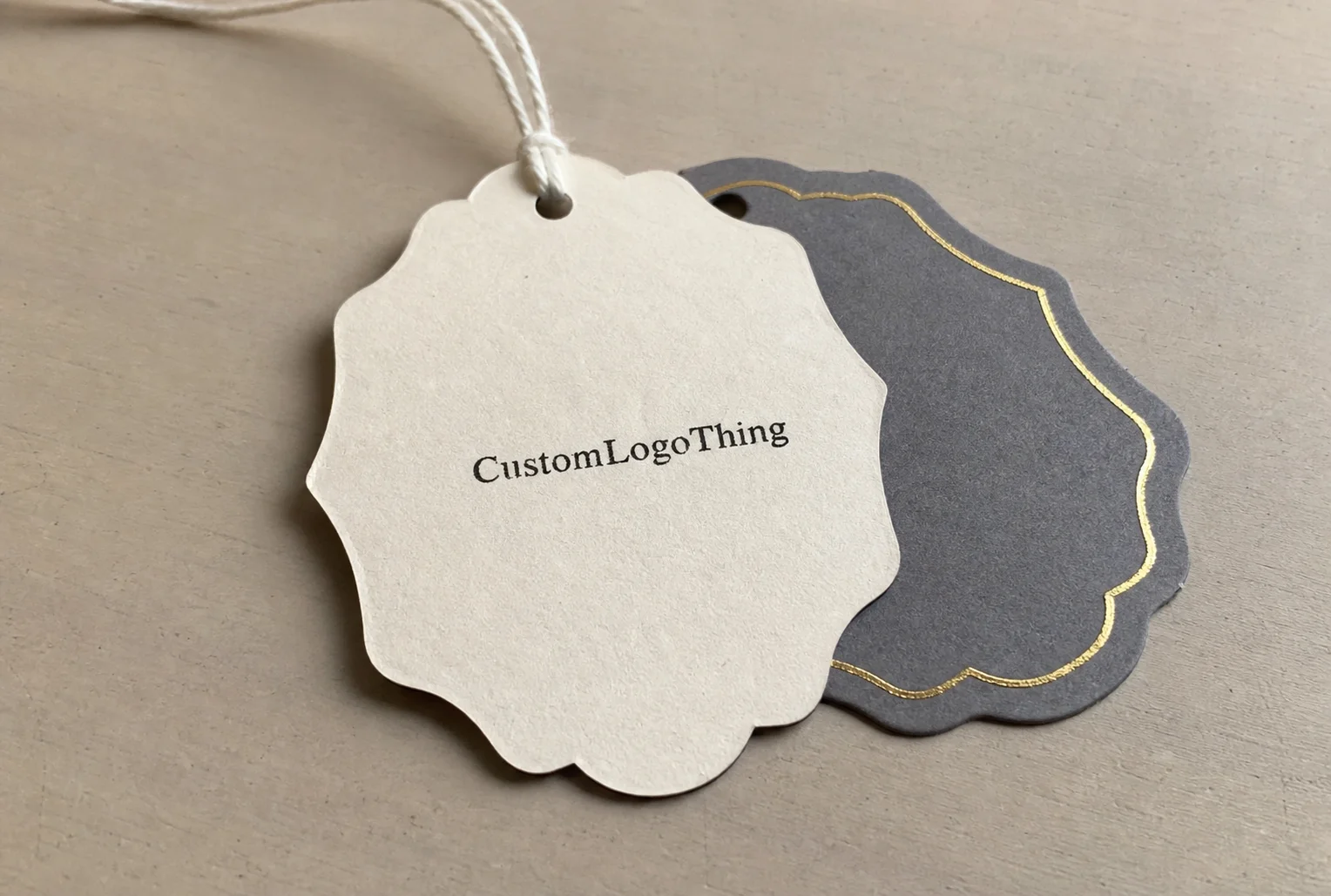
Boutique shoppers notice presentation quickly. Before they touch the fabric or smell the candle, they see the tag, the cord, the fold, the color consistency, and whether the piece looks intentional. That first impression can support a higher price point or quietly work against it. Same item, very different perception.
Generic tags are one of the easiest ways to make a carefully curated product look mass-produced. That does not mean every tag needs foil, embossing, or a luxury board. It means the tag should match the product and the store. A natural, uncoated stock suits an earthy or handmade brand. A coated board with crisp graphics may fit a more fashion-forward boutique. The right choice is usually less dramatic than people expect, but far more effective.
That is why working with a Custom Retail Hang Tags Wholesale Supplier for Boutique programs is valuable. Boutique orders are often smaller than chain retail runs, yet they still need consistent color, accurate cutting, and repeatable results when it is time to reorder. A supplier should be comfortable with a 500-piece test run, then able to repeat the same result months later when the next season launches.
The tradeoff is straightforward. Premium materials and finishes raise cost, while simpler specs keep pricing under control. The best balance depends on your margin, the product’s shelf price, and how much the tag contributes to perceived value. A $20 accessory usually does not need the same spec as a $120 jacket, but both still need to look deliberate.
“A hang tag does not have to be expensive to look considered. It does have to look like it belongs on the product.”
For buyers comparing Custom Labels & Tags with other forms of retail packaging, hang tags sit in a useful middle space. They are more visible than a sewn-in label and usually less costly than printed boxes. That makes them one of the most flexible branding tools in boutique retail.
If sustainability claims are part of the brand, the paper choice should support them honestly. FSC-certified paper can help with responsible sourcing goals, and recycled or uncoated stocks can match a more natural look without forcing the conversation into greenwashing. If you need a reference point for paper sourcing claims, FSC is a reliable starting place.
Custom hang tag options that fit boutique branding
Not every boutique needs the same tag structure. Jewelry, apparel, candles, and accessories each ask for different proportions, different amounts of text, and different handling during packing. A tag that works beautifully for a sweater can look clumsy on a bracelet card, and trying to force one format across every product line usually leads to crowded layouts or unnecessary cost.
Common formats that work well
Single-card tags are the standard for most apparel and accessories. They are simple, cost-efficient, and easy to print in full color. Folded tags give room for story copy, care instructions, or SKU information without crowding the front. Thick luxury tags use heavier board and often create a more substantial hand feel, which suits premium fashion, giftable goods, and higher-ticket items.
Soft-touch coating can make a tag feel refined immediately, especially on apparel and beauty packaging. Recycled uncoated stock creates a warmer, less polished look that suits handmade or eco-conscious brands. Specialty shapes such as rounded corners, scallops, or custom die-cuts can help a product stand out, though they should still be practical for punching, stringing, stacking, and packing.
Attachment options matter more than they seem to
The tag is only part of the package. The attachment can change the whole impression. Cotton cord feels natural and works well for artisan or organic brands. Elastic loops are fast during packing and are often used when labor time matters. Plastic fasteners are functional for higher-volume jobs, though they read less premium. Pre-punched holes keep application simple and reduce errors when the tags are attached in-house.
- String or cotton cord: good for boutique apparel, handmade goods, and softer presentation
- Elastic loop: useful when packing speed matters
- Plastic fastener: efficient, but less refined visually
- Pre-punched hole only: useful if the attachment is added separately
Product category still drives the decision. Apparel usually benefits from a slightly larger, sturdier tag with clear typography. Jewelry tags should stay compact and easy to read. Candles often use folded tags or swing tags that leave enough room for scent notes, burn instructions, and safety information. Accessories and gift items can handle more decorative choices, as long as the tag does not overpower the product itself.
The most common mistake is overdesigning the piece just to make it look premium. Tiny logos, too many fonts, heavy foil on every surface, and a paragraph of copy can turn a useful tag into a crowded one. Clarity comes first. The customer should be able to identify the brand, read the price or code, and understand the product quickly.
Specs that matter: stock, size, finish, and attachment
Specs decide whether a tag feels sharp or awkward. Strong artwork cannot compensate for poor paper choice, weak cutting, or a finish that fights the brand. For buyers, the spec sheet should answer four questions quickly: what it is made of, how large it is, how it is finished, and how it attaches.
Stock thickness is usually the first decision. Standard retail tags often use 300–400 gsm cardstock. For a more substantial feel, 450–700 gsm board can work well, especially on premium apparel or gift items. Heavier board adds rigidity and presence, but it also raises cost and may need better scoring or die-cutting to keep folds from cracking.
Size should follow the amount of information, not the desire to fill space. Jewelry tags are often around 1.5" x 2.5" to 2" x 3". Apparel tags commonly land around 2" x 3.5" or 2.5" x 4". Larger tags can be useful when care notes, QR codes, or brand storytelling need room, but they should still sit comfortably on the product without becoming bulky.
Finish changes both appearance and handling. Matte or uncoated stock feels natural and is easier to write on. Gloss and satin coatings improve color depth and can help resist scuffs. Soft-touch lamination gives a velvety surface that often suits fashion and beauty brands. Foil stamping, embossing, spot UV, and debossing add texture or shine, although each one increases cost and usually extends production time.
There are also small production details that matter more than many first-time buyers expect. Hole size and hole position need to be consistent. Rounded corners should be confirmed before the dieline is approved. One-sided and two-sided printing change both price and layout. Barcode placement needs enough quiet zone to scan cleanly. If the attachment is being supplied separately, that should be clear before production begins.
- Hole size and position
- Rounded corners or square corners
- One-sided or two-sided print
- CMYK or Pantone color mode
- Coating or lamination type
- Barcode space and quiet zone
- Whether the attachment is included or separate
A tag problem caught after 2,000 pieces are packed is a costly problem. The fewer assumptions made during approval, the better the final result tends to be. Clear specs are not paperwork for its own sake; they prevent slowdowns, reprints, and small inconsistencies that show up immediately on a retail display.
For boutiques building a broader packaging system, many of these decisions carry over into other items in the line, including Custom Packaging Products. Paper weight, print method, and finishing all affect price and presentation, and those choices should feel aligned across the full package.
| Tag style | Typical stock | Best use | Visual effect |
|---|---|---|---|
| Standard printed tag | 300–400 gsm | Apparel, accessories, seasonal goods | Clean, budget-friendly, easy to reorder |
| Premium thick tag | 450–700 gsm | High-ticket fashion, candles, gift items | Rigid, substantial, more upscale |
| Special finish tag | 400–600 gsm with foil, emboss, or spot UV | Launches, premium collections | Highly polished, higher cost, longer production |
| Eco-style tag | Recycled or uncoated board | Natural, handmade, sustainable brands | Warm, honest, less reflective |
Cost, pricing, and MOQ for boutique wholesale orders
Pricing for boutique hang tags usually comes down to stock thickness, size, print coverage, finishing, custom shapes, and any attachment add-ons. That part is predictable. Simpler jobs cost less; complicated jobs cost more. Paper and finishing costs do not care how beautiful the mockup is.
For realistic planning, standard printed tags in a 5,000-piece run often fall around $0.08–$0.20 per unit, depending on size, coverage, and stock. Add foil, embossing, soft-touch lamination, or a custom shape, and the range can move into $0.18–$0.45 per unit or higher. Smaller runs usually cost more per piece because setup is spread across fewer units.
MOQ varies by supplier and by specification. A boutique-friendly entry order may begin around 250 to 500 pieces for simple printed tags. More often, 1,000 pieces is a practical MOQ for standard custom work, while premium finishes can push the minimum to 2,000 pieces or more. If you need separate tags for multiple SKUs, ask early how split designs affect the minimum. Some suppliers can combine versions. Some cannot.
When comparing quotes, the structure matters as much as the total price.
- Low base price: may exclude setup, finishing, or attachment
- Mid-range quote: often the best balance of cost and quality for boutiques
- Premium quote: usually includes better board, a stronger finish, and tighter QC
It helps to compare identical specs. A 350 gsm matte tag is not the same product as a 500 gsm soft-touch tag with foil, even if the artwork looks similar. If one quote is far cheaper, check whether it has quietly removed a feature you actually wanted. That is one of the most common surprises in packaging buying.
For ongoing programs, reorder consistency can be just as important as first-order price. A slightly higher unit cost sometimes makes sense if the supplier keeps color, cut, and finish stable across repeats. That matters especially for boutiques with recurring seasonal lines or multi-location retail displays. Packaging should hold its shape and tone from one restock to the next.
For teams building a recurring sourcing plan, a Wholesale Programs structure can help with reorder pricing and lead-time predictability. Stable repeat ordering is often where a supplier proves whether they understand retail reality or just know how to quote one job.
Production steps, proofing, and turnaround expectations
A clean order process saves time, money, and a lot of frustration. The usual path is simple enough: inquiry, spec confirmation, artwork review, digital proof, sample if needed, production, and packing. If a supplier skips proofing or encourages approval without checking details, that is not speed. That is risk.
Most delays come from missing dieline files, unclear copy, incorrect color references, or special finishes that need extra setup. Slow approvals can also stretch the timeline. The fastest jobs are usually the ones where the buyer sends complete information at the start.
Typical timelines look something like this:
- Digital proof: often 1–3 business days after artwork is received
- Sample or prototype: about 5–10 business days for standard specs; longer for specialty finishes
- Bulk production: commonly 10–15 business days after proof approval for standard printed tags
- Complex premium runs: often 15–25 business days, sometimes longer for foil, embossing, or custom die-cuts
Shipping is separate from production, and the two should never be blended into one vague deadline. Manufacturing time and transit time move on different clocks. If a store launch or seasonal delivery window is fixed, build in enough buffer for freight, customs if applicable, and receiving time at the warehouse or store.
Before requesting quotes, it helps to have the basics ready.
- Exact tag size
- Quantity
- Stock preference
- Print sides and colors
- Finish preference
- Attachment type
- Barcode or QR needs
- Required delivery date
That checklist makes it easier for a supplier to quote accurately the first time. It also reduces back-and-forth, which matters more than people think when several product lines are being scheduled at once.
If a product is being shipped with other packaged goods or packed into larger cartons, it can also help to understand transit and handling expectations. For packaging and shipping performance references, ISTA offers testing standards that are widely used in the industry. Not every hang tag needs laboratory testing, of course, but knowing the framework can help when packaging has to survive distribution, storage, or carton loading.
How to choose a supplier that actually understands boutique retail
A general printer can make a tag. A supplier that understands boutique retail can make a tag that fits the brand, the packing process, and the sales floor. That difference shows up in the details: proof quality, finish consistency, color control, and whether the final stack is packed and delivered in a usable way.
Look for a supplier who can explain material choices in plain language. If the answer is only “we can do it,” keep asking until the paper, finish, and process are clear. You want practical guidance on whether 350 gsm uncoated stock is enough for a handmade candle line, or whether 500 gsm soft-touch stock makes better sense for a premium apparel release. You also want a clean dieline instead of guesswork.
Good suppliers help with artwork adjustments, not just file receipt. They should flag tiny text, thin lines near a fold, barcode placement problems, and color risks before printing starts. That is standard professional practice, not a favor.
A useful supplier should be able to provide:
- Sample photos of actual printed work
- Available stock and finish options
- Clear MOQ by spec
- Proofing process details
- Examples of retail or boutique use cases
- Reorder consistency plan
Consistency matters most for seasonal buyers and multi-location boutiques. If spring uses one tag and fall needs a repeat order, the color and cut should stay close enough that the rack looks unified. Mismatched tags on the same line can make a display feel pieced together, even if the products themselves are strong.
The best suppliers also understand that hang tags do not live alone. They sit within a wider branded package that may include tissue, labels, inserts, and sometimes custom printed boxes. If someone can speak clearly about how the tag supports the rest of the packaging, they are usually thinking like a retail partner rather than a paper seller. That is the practical difference buyers tend to remember.
Next steps to place a custom boutique hang tag order
If you want a smooth order, start with specifics and keep the scope tight. Gather the tag size, quantity, stock preference, print method, finish, attachment style, and delivery target before asking for a quote. That alone removes most of the guesswork from the first round.
Request two or three quote options if possible, then compare them by spec rather than by headline price alone. One quote may be lower because it uses lighter board. Another may cost more because it includes a finish that supports your shelf price better. Those are real tradeoffs, and they should be evaluated as such.
If a boutique is testing a new line, start with a sample or a short run. That is the easiest way to check color, texture, readability, and how the tag looks under actual store lighting. A sample can expose problems that look invisible on a screen, especially with foil, matte coatings, or fine typography.
Before sending artwork, make sure you have these ready:
- Logo files in vector format if possible
- Final copy for the tag front and back
- Barcode or QR code requirements
- Brand color references, ideally Pantone if accuracy matters
- Any legal or care copy that must appear
The goal is not just to get tags printed. The goal is to receive tags that suit the product, the shelf, and the margin without creating extra work during packing. That is the practical value of working with a custom Retail Hang Tags wholesale supplier for boutique orders that understands what boutiques actually need.
FAQs
What is the typical MOQ for custom retail hang tags wholesale supplier for boutique orders?
MOQ depends on size, stock, and finishing, but boutique-friendly runs often start lower than large retail programs. Simple printed tags usually have the lowest MOQ, while foil, embossing, or custom die-cuts can raise it. It is best to ask for options by spec so you can compare entry pricing against premium finishing without guessing.
How much do boutique custom hang tags usually cost per unit?
Unit cost varies by paper thickness, print coverage, and finish. Standard printed tags are usually the most budget-friendly, while thick board and specialty finishes cost more. Higher quantities typically reduce unit price, but setup and finishing charges can change the overall math quickly.
What is the usual turnaround time for retail hang tag production?
Standard turnaround depends on whether artwork is ready, proofs are approved quickly, and the finish is simple or premium. Plain printed tags are faster than tags with foil, embossing, or custom shapes. Shipping time is separate, so production and delivery should always be planned as two different steps.
Which hang tag materials work best for boutique apparel and accessories?
Thicker cardstock works well for apparel and fashion accessories because it feels more substantial. Recycled or uncoated stocks suit natural, eco-conscious, or handmade brands. Specialty finishes should match the product price point; not every boutique item needs a luxury finish.
Can I order different designs in one wholesale hang tag run?
Often yes, but it depends on quantity, setup method, and whether the supplier allows split designs. Multiple designs can increase complexity and may affect pricing or minimums. If you need seasonal or SKU-specific tags, ask how the supplier handles versioning before approving artwork.


