Ceramic embroidered beanies material sample guide for buyers
A ceramic embroidered Beanies Material Sample guide is the fastest way to find out whether a product will hold up outside a mockup. The embroidery can look precise on a screen and still behave badly once it meets a knit surface, a head shape, and a few hours of wear. Beanies expose weak construction quickly. Stretch changes stitch tension. Soft yarns change edge definition. A sample tells you which side of that line your order sits on.
That is why sample approval is not just a visual check. It is a technical checkpoint for fabric behavior, logo clarity, comfort, and repeatability. A supplier can make one attractive piece in almost any category. The question is whether that result can be repeated across a full run without the logo drifting, the cuff loosening, or the interior feeling scratchy after the first wear.
A sample is not a reward. It is a filter.
Ceramic embroidered beanies sample: what it reveals
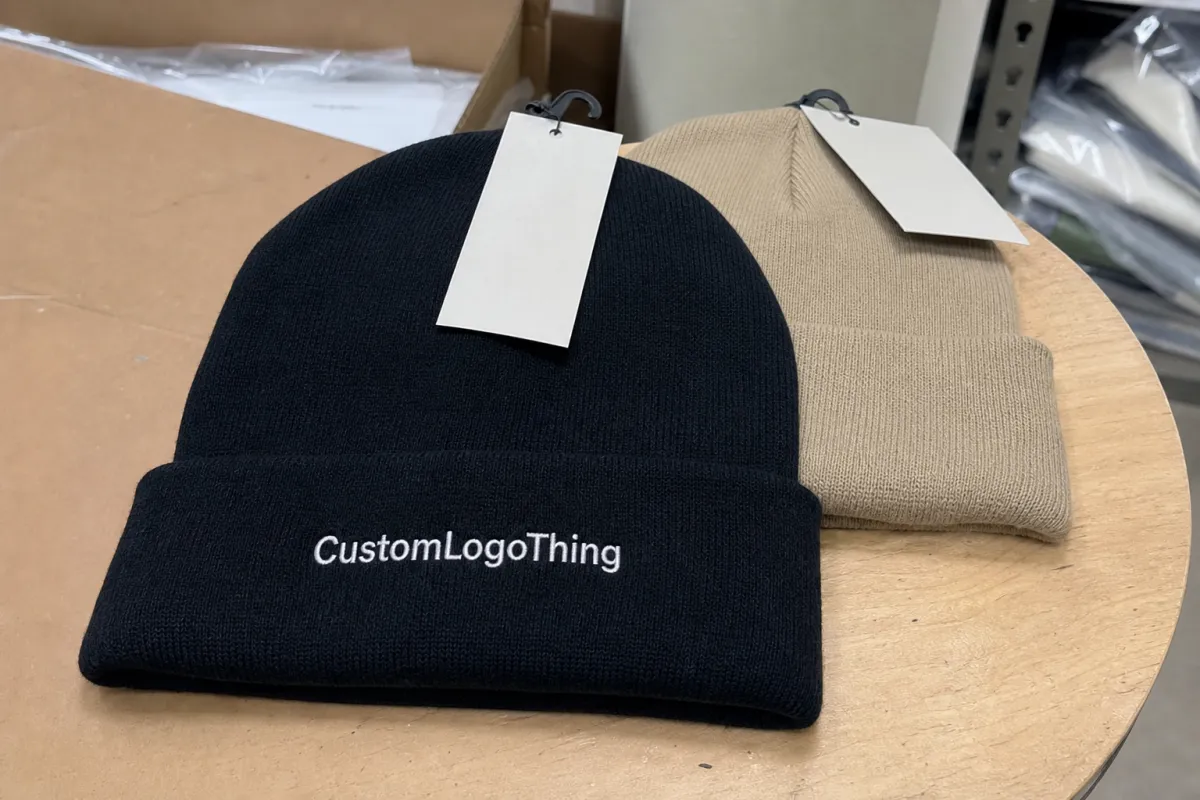
The same embroidery file can behave very differently depending on the knit beneath it. A tighter rib usually gives cleaner edges. A looser structure can let the thread sink, which softens the logo and can make even a strong design look underfinished. That is why beanies need to be judged as a material system, not as two separate pieces with a logo attached at the end.
Fabric choice matters before the thread ever touches the surface. Acrylic is common because it is stable, affordable, and easy to source in consistent colors. Polyester blends tend to hold shape well and usually handle repeated wear better than a very soft, low-density knit. Wool and wool blends offer warmer handfeel and a more premium impression, but they can raise cost, increase shrink risk, and require better care instructions. Recycled yarns are increasingly common, though handfeel and dye consistency can vary more than buyers expect. A sample exposes those differences early.
Fit is not a side note. One-size beanies sound convenient until you measure finished circumference and recovery after stretch. A beanie that fits a display head can still feel too tight on a larger wearer or too loose once the knit relaxes. Cuffed styles also need attention around fold depth, crown height, and seam placement. A few millimeters do matter here. On a stretch product, they change the silhouette more than they would on a flat textile.
Embroidery also has a comfort cost. Dense stitching can look crisp but create a stiff patch on the front panel. Backing materials can help the embroidery hold shape, yet the wrong backing can scratch the forehead or make the interior feel harsh. Polyester thread is usually the safer choice for colorfastness and abrasion resistance. Rayon can look brighter, but it is less forgiving in repeated wear. If a sample looks polished and feels rough, do not assume the handfeel will improve later. Bulk production usually amplifies the same issue.
For buyers, the sample answers a simple question: does this material support the design, the fit, and the use case you promised? Retail drops need consistency. Employee gifts need comfort. Event giveaways need enough durability to survive a week in a coat pocket. A sample that passes only under studio lighting is not doing enough work.
Look at the product under daylight, office LEDs, and close range. Dark yarns can hide puckering. Warm lighting can make a cheap finish seem richer than it is. A sample should still hold up when the flattering light disappears.
What a ceramic embroidered beanies material sample guide should prove before bulk order
The first thing the guide should settle is the base fabric. Check knit gauge, thickness, stretch recovery, and surface density. A 1x1 rib often behaves differently from a 2x2 rib, and a double-layer cuffed beanie will carry embroidery differently from a thinner single-layer cap. If the fabric has weak recovery, embroidery may warp after wear. If the knit is too dense, the logo can sit heavy and flatten the surface.
Next comes embroidery compatibility. The sample should show stitch density, edge sharpness, thread sheen, and backing choice together. Too many stitches in a tight area can cause puckering. Too few leave open edges that look unfinished. A clean sample usually has enough density to define the logo without forcing the knit to buckle. That balance is mechanical, not cosmetic.
Placement should be checked on-head, not only flat. A logo that looks centered on a table can drift once the cuff folds or the knit stretches across a brow. Check front placement, side seams, crown height, and cuff width after a few minutes of wear. A beanie that looks balanced in a photo can feel oddly tall, too shallow, or twisted once worn.
Interior finish deserves the same scrutiny. Run a hand inside the hat. Feel for loose thread tails, sharp backing, and seam ridges. Rub the inside lightly against skin. If the sample irritates in a quick test, it will probably bother someone during actual use. Pilling is another early warning sign. When a yarn pills under moderate rubbing, that is not a one-off issue. It is the yarn telling you how it behaves.
For repeat buying, a simple checklist keeps the comparison honest:
- Fabric behavior: stretch recovery, thickness, shape retention
- Embroidery quality: stitch clarity, edge control, and density balance
- Comfort: seam feel, backing feel, and cuff softness
- Appearance: color match, logo placement, and overall finish
- Repeatability: whether the result can be copied without drift
If packaging is part of the order, review that at sample stage too. Beanies folded into a carton too small for the shape often come out creased and tired before anyone opens the box. Corrugated cardboard is usually the safest shipping base. Kraft paper wraps keep presentation cleaner than loose polybags. FSC certified board or recycled materials can fit brands with sustainability targets, but the material needs to suit the shipping lane as well as the brand story. If transit damage matters, compare the plan against ISTA test logic instead of guessing.
Process and timeline: from brief to approved sample
Start with a brief that removes ambiguity. Send artwork in a usable file format, note Pantone references, define the target audience, and say what the beanie must feel like. If you want a softer hand, say so. If the cuff needs to hold a structured look for retail display, say that too. Vague input usually creates a vague first sample, and vague samples create extra rounds.
The first sample phase usually includes file review, knit-base selection, digitizing, and prototype production. A good supplier will flag problems early: a logo that is too detailed for the knit, too many thread colors for the budget, or a backing choice that will feel stiff in wear. Those warnings are helpful. They save time and often improve the final product more than a blind approval would.
Revisions need discipline. A small adjustment such as thread color or placement can often be handled in one round. Bigger changes, such as switching knit structure or changing crown construction, may require a fresh sample. In many sourcing programs, a first sample takes about 5-10 business days, while a revision can land in 3-7 business days if the factory already has the materials. Add time if the knit base changes. Physics does not speed up because a launch date is close.
Pre-production approval is where many buyers lose time. Internal signoff often takes longer than the sample itself. One person wants the logo darker, another wants the cuff shorter, and a third only checks messages twice a week. Build that into the schedule. A fast factory paired with slow approval still produces a slow order.
For time-sensitive orders, a pre-production sample is more valuable than a rushed bulk signoff. That stage is where you catch the last small issues: a logo drifting a few millimeters, a cuff measuring slightly wide, or thread color that reads differently in daylight than it did in the first photo. Each problem is small. Together, they can make a finished run look careless.
Cost, MOQ, and unit price: what changes the quote
Sample pricing and bulk pricing do not follow the same logic. A prototype includes setup, digitizing, and material waste, so it almost always costs more per piece than the finished order. For a custom embroidered beanie, sample cost often falls around $35-$120 depending on artwork complexity, knit changes, thread count, and whether the supplier needs to build a new embroidery program. That is normal. A sample is built to prove the process, not to be cheap.
MOQ changes the math immediately. Many suppliers can quote a simple embroidered beanie at 100-300 pieces, though more custom work can push the minimum higher. When the quantity drops, setup costs spread across fewer units, so unit price rises. A run of 300 pieces may cost noticeably more per unit than 3,000 pieces even if the material and logo are unchanged. Common bulk pricing for a standard cuffed embroidered beanie often lands around $3.20-$7.50 per unit. Wool blends, premium thread work, or custom packaging can push the number above that.
The main cost drivers are usually unglamorous: yarn type, color count, embroidery coverage, backing material, packaging, and revision count. A small front logo on acrylic is one thing. A larger patch-style mark on a recycled blend with woven label, custom wrap, and individual cartons is another. Labor and materials explain the difference better than any quote sheet language does.
| Sample option | What it proves | Typical cost impact | Best for |
|---|---|---|---|
| Flat knit swatch | Fabric feel, stretch, and color consistency | Lowest | Early material screening |
| Finished sales sample | Fit, embroidery clarity, and presentation | Moderate | Buyer review and client approval |
| Pre-production sample | Final spec before mass production | Highest | Launches, retail programs, final signoff |
There are real ways to control cost without weakening the product. Keep the logo size efficient. Reduce thread color changes when possible. Avoid custom construction unless the design needs it. Packaging matters too. FSC certified kraft paper wraps or simple recycled-material inserts are usually less expensive than full custom boxes. Biodegradable packaging can make sense, but only if it matches the shipping method and the product’s actual handling needs. For packaging standards and material references, FSC is a useful place to start.
A cheap quote is not automatically a good one. If the number is far below market, check what was removed to get there. It is usually stitch coverage, backing quality, packaging, or revision support. Saving a few cents per piece is not a win if the result needs rework before it can ship.
Common mistakes buyers make when approving samples
The most common mistake is approving from photos alone. Images can hide loose threads, a rough backing, or a logo that shifts once the knit stretches. A beanie needs to be touched, flexed, and worn before approval. If the supplier only sends flattering pictures, treat them as reference material, not proof.
Another frequent error is testing only one head size. Beanies are forgiving, but not infinitely so. A sample that fits one wearer well may feel too snug or too loose on another. That matters if the product is going to a mixed team, a retail audience, or a broad event list. “One size” is a label, not a measurement.
Washing and wear behavior are easy to ignore and expensive to miss. A backing that feels acceptable on day one can stiffen or shift after handling. Yarn can pill. Thread tension can relax slightly after repeated stretch. If the beanie will be resold, gifted, or worn often, ask how it behaves after use, not just after unpacking.
Lighting causes more false disagreements than most teams admit. Warm indoor light can make a charcoal knit look richer and a navy look cleaner than it really is. Compare samples in the same light source, and check them near daylight if possible. Otherwise you are arguing with the room.
The last mistake is treating the sample as a marketing prop instead of a production checkpoint. A sample is supposed to reveal weaknesses. That is the point. If it looks perfect but tells you nothing about fit, finish, or repeatability, it has done half the job.
The best sample usually makes a buyer slightly stricter, not less.
Expert tips for cleaner revisions and better bulk results
Use a simple scorecard for every sample. Four checks are enough: fit, feel, stitch clarity, and color. That keeps feedback grounded. “Looks off” does not help production. “Logo sits 6 mm too low and the cuff feels stiff” does. Factories can act on that without guessing at your intent.
If a second physical sample is slow to arrive, ask for close-up photos, a flat lay, and an on-head image from the same piece. Consistency matters more than quantity. If each image comes from a different unit, you are not reviewing a sample. You are reviewing drift.
Keep revision notes to one change at a time when possible. Adjust the thread color first, then review placement, then check the backing. If three variables move at once and the result improves, you will not know which change mattered. That is how teams end up repeating luck instead of repeating process.
Ask for tolerances in writing. Crown height, cuff width, logo placement, and finished circumference should each have an acceptable range. A few millimeters can change the shape of a knit cap enough to affect buyer perception. If the supplier will not define tolerances, they are asking you to trust memory. That is a weak control method for any textile order.
For higher-value runs, request a signed spec sheet after approval. The signed sample should become the reference point for bulk production, not a chat screenshot or a loose photo buried in email. If the order includes packaging, lock that down too: plain polybag, kraft paper wrap, or a printed insert inside corrugated cartons. Product and pack-out need to follow the same logic, especially if the brand claims recycled materials or another sustainability standard.
QC should not stop at the sample. Before bulk production, confirm that the approved material, embroidery placement, thread color, and packaging all match the signed reference. Small slippage is how apparently well-run orders go sideways.
What to do after approval: lock specs and move forward
Once the sample is approved, freeze it against a written spec sheet. Include material composition, knit gauge if the supplier provides it, embroidery placement, thread colors, finished measurements, packaging details, and any accepted tolerance. That document is your best protection against drift once production starts.
Confirm the production plan before the order is released. You should know the quantity, ship window, and whether the run needs buffer stock for seasonal demand, retail replenishment, or event distribution. If the order is tied to a launch, ask for final production photos or a pre-shipment check. A few extra images cost far less than a return issue after delivery.
Store the approved sample, the spec sheet, and the feedback notes in one place. A single folder beats scattered messages and half-remembered comments. Reorders depend on clear records more than most teams want to admit. If the second run is supposed to match the first, the first run needs to be documented properly.
That is the practical value of a ceramic embroidered Beanies Material Sample Guide: it turns taste into repeatable criteria. It helps buyers separate surface appeal from production reality. It also keeps the order from drifting into “close enough,” which is usually the most expensive phrase in apparel sourcing.
What should be included in a ceramic embroidered beanies sample?
The sample should show the actual knit base, embroidery placement, thread colors, and backing that will be used in production. Ask for measurements, fit notes, and close-up images so you can judge structure, not only the logo. If packaging affects presentation, request the final fold or label setup as well.
How long does a beanie sample and revision usually take?
A first sample often takes about 5-10 business days, depending on artwork complexity and material availability. Straightforward revisions can move faster, while knit changes, color matching, or embroidery rebuilds usually add more time. Build internal review time into the schedule so approval does not become the bottleneck.
Is sample cost credited back on bulk ceramic embroidered beanies orders?
Sometimes, but only if the supplier says so in writing. Sample fees, digitizing fees, and setup charges are handled differently from one factory to another. Ask what gets credited, what stays separate, and whether the credit depends on meeting a minimum order quantity.
How do I compare two material samples without guessing?
Use the same lighting, the same head size, and the same checklist for both samples. Score stitch clarity, handfeel, stretch recovery, color match, and logo placement instead of relying on a quick glance. If possible, wear-test both pieces for a short period and check for scratchy backing or shape loss.
Can a sample guarantee the final production quality?
No sample can guarantee perfection, but it should show whether the chosen material and embroidery method are production-ready. Bulk consistency still depends on tolerances, workmanship, and quality control. A signed sample plus a clear spec sheet gives you the best chance of matching production to approval.


