The supplement Woven Label Beanies material sample guide exists for a simple reason: a label that is only a few centimeters wide can change how the whole beanie is judged. Buyers often focus on logo accuracy first, then discover that the sample feels stiff against the cuff, looks muddy at the edges, or sits awkwardly on a stretchy knit surface. That is a small miss on a spreadsheet and a visible flaw in the finished product.
For retail merch, team apparel, and gift programs, the label is part of the product experience, not a side detail. A beanie can have solid yarn, tight construction, and good color, but if the trim feels cheap, the whole piece reads that way. The reverse is also true: a clean woven label can lift a basic beanie into something that feels ready for a shelf, not a giveaway table.
That is why sample approval is less about decoration and more about risk control. It shows whether the woven detail can handle the actual fabric, whether the placement makes sense in hand, and whether the finish will survive wear, folding, and washing without turning into a hard ridge.
Why a woven label sample changes a beanie buyer's decision
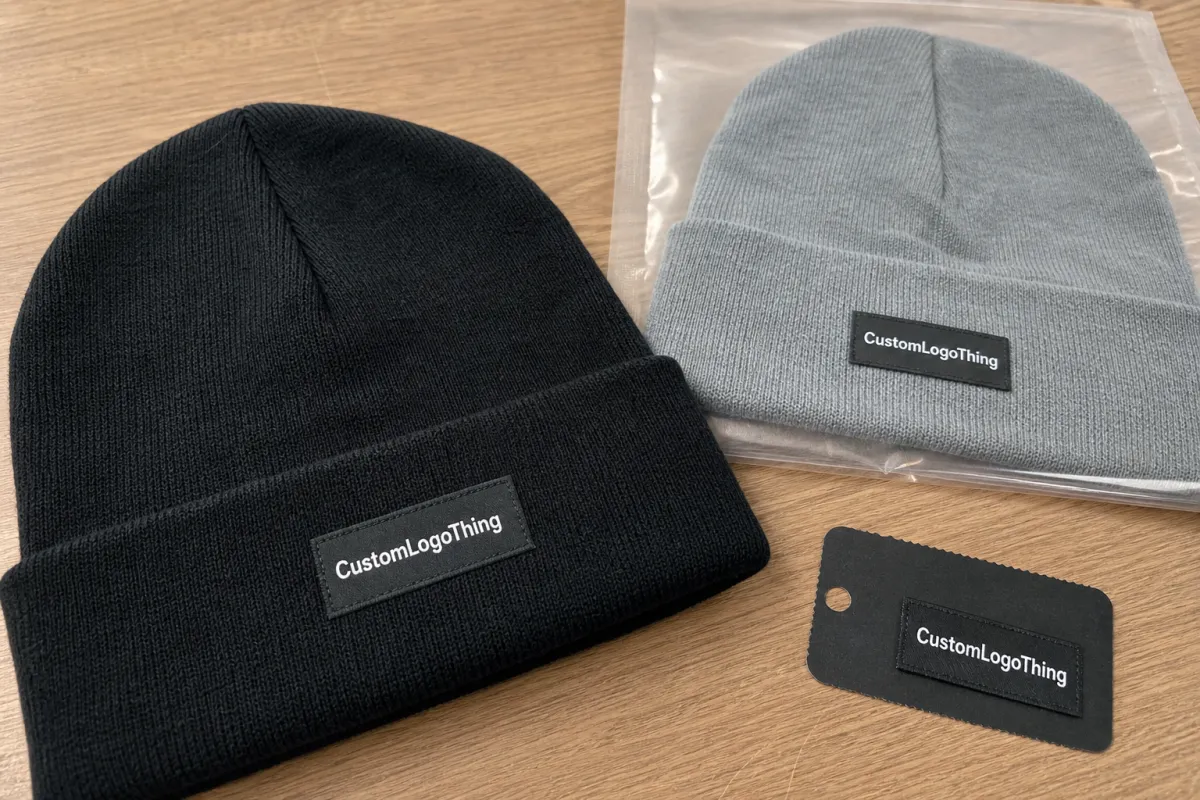
The label is where the visual and tactile decisions collide. A mockup can make a logo look sharp, balanced, and expensive. A physical sample can tell a very different story: edges may be too firm, thread sheen may shift the color, or the weave may lose definition once the label bends around a cuff seam.
That difference matters because the buyer is not only approving artwork. They are approving hand feel, placement tolerance, and the way the label behaves under tension. On a beanie, which is soft, flexible, and often worn close to the skin, those details carry more weight than they would on a rigid garment tag.
There is a useful comparison here. A good woven label works a little like good type on a printed page: the text may be correct, but if the stroke weight is wrong, the whole thing looks off. Small changes in density and edge finish can be the difference between crisp and crowded.
Programs that depend on repeatability feel this most sharply. Seasonal retail runs, event merch, and bundled apparel sets all need the label to look the same across colors and production lots. If one run feels scratchy and another feels soft, buyers notice. End users notice even faster.
"A woven label that looks clean on screen can still feel wrong on the cuff."
The sample is the checkpoint that catches those problems before bulk production starts. If the label is too dense, too rigid, too glossy, or too small to read after stitching, the sample should stop the order. That is not a setback. It is the cheapest time to discover the mismatch.
How the supplement woven label beanies material sample guide works
The sample path usually starts with artwork review and technical feedback. Then comes thread matching, label construction, and a physical sample that should mirror the final beanie as closely as possible. The useful version is not the prettiest proof. It is the one that answers the real questions: how does it sit on knit, how does it feel in the hand, and how does it read from arm's length?
A flat swatch helps, but it is only a partial answer. A label that looks precise on a card may behave differently once it is stitched onto rib knit or folded over a seam. Beanies are especially unforgiving because the surface is elastic and textured, so the label cannot rely on a flat backdrop to look right.
Three sample formats are worth separating:
- Flat label sample - best for color, thread direction, weave clarity, and first-pass art review.
- Sewn-on sample - best for checking placement, drape, bulk, and comfort against the fabric.
- Production reference sample - best for reorders, seasonal repeats, and matching exact construction later.
The guide should also include practical specs, not just a picture. Buyers need label dimensions, fold type, thread count or weave density, backing type, and a note on where the label sits on the beanie. If that information is missing, the sample becomes hard to compare and even harder to repeat.
Color is another place where paper and screen can mislead. Woven labels shift slightly under warehouse fluorescents, daylight, and retail LEDs. That is normal. What matters is whether the supplier gives a thread reference, a clear PMS target if available, or a written tolerance so the buyer knows how far the final result can move.
Some sample kits arrive in recycled mailers, kraft envelopes, or corrugated cartons with post-consumer waste content. That packaging does not change the label itself, but it does hint at process discipline. If a brand is requesting lower-impact packaging, this is usually the point to ask for it, not after the order is already moving.
If you are comparing label structures for more than one headwear style, it helps to review broader Custom Labels & Tags options before locking the sample. A straight-cut label, a folded label, and a center-fold label do not behave the same way once they are sewn into a cuff. That is where many early approvals go sideways.
Material variables that change feel, stretch, and wash life
The first material decision is usually yarn. Polyester is common because it holds detail well, keeps color stable, and handles fine borders without fraying into visual noise. Cotton blends can feel softer at first touch, but they do not always preserve tiny text as cleanly. Specialty yarns can improve hand feel or create a more premium look, though they can also raise price and reduce the amount of copy the label can hold.
Weave density matters just as much. A tighter weave can sharpen logos, borders, and small type, especially when the design includes thin lines or multiple colors. The tradeoff is firmness. More density usually means more structure, and more structure can create a ridge when the label crosses a beanie fold. On a thick cuff, that ridge is easy to miss in a photo and obvious in hand.
Backing determines how the label feels after it is attached. Sew-on construction usually gives the most flexibility and the least bulk. Heat-activated or iron-on backing can speed application in some programs, but it may add stiffness and is not always the best match for knit accessories that move a lot. No-back labels can feel lighter, although they depend on careful stitching and good placement to stay secure.
Edge finish is another detail that buyers tend to underestimate. Clean-cut or well-finished edges help the label lie flatter. Bulky edges can create a noticeable seam line, especially on rib knits where the surface already has texture and depth. That is why the sample should be felt, not just viewed.
There is also a line that shows up fast in woven labels: once the text gets too small, the weave starts to do the reading for you. Very fine copy below roughly 2 mm in cap height often turns soft after folding and stitching. If the logo depends on tiny legal copy or a long slogan, the sample should prove that the message still survives the actual construction.
Wash and wear behavior deserves a direct check. Stretch the beanie. Let it relax. Look for edge curl, thread pull, and any loss of clarity where the label bends. If a supplier references testing, ask whether they are using a basic internal check or a formal method. For packaging-related transit checks, many brands look to ISTA test methods; for paper-based inserts and cartons, they often ask whether the materials are FSC certified.
The practical question is blunt: will this label still look acceptable after a few wears and washes? That answer matters more than a polished mockup.
Cost drivers, MOQ, and unit pricing for sample approval
Pricing is easier to understand once the moving parts are named. Size is the starting point. Then come weave complexity, thread color count, backing choice, folding method, and any custom packing or presentation request. A simple one-color woven label sits in a very different cost bracket from a multicolor label with tight type, soft backing, and custom folding.
| Sample Type | What It Proves | Typical Cost Range | Best Use |
|---|---|---|---|
| Flat swatch sample | Color, weave clarity, thread density, basic feel | $15-$40, often credited at volume | Early art and thread review |
| Sewn-on beanie sample | Placement, drape, comfort, seam behavior | $25-$75 depending on setup and revisions | Final buyer approval before bulk |
| Production reference sample | Closest match to the final order spec | $40-$120 if made as a one-off | Repeat orders and color-sensitive programs |
MOQ changes the math quickly. Smaller runs carry more setup cost per piece because weaving, matching, and finishing are spread across fewer units. Larger runs usually improve unit pricing, but only if the artwork is final and the order is stable. If the design is still moving, a lower MOQ can be the safer choice even when the per-unit price looks higher.
Sample fees can be structured in three common ways: a one-time charge, a creditable setup cost, or a free sample tied to a confirmed production order. The wording matters. A free sample with expensive bulk pricing can cost more than a paid sample with better production economics.
Rush changes are another hidden line item. Revised proofs, second thread-match requests, or placement shifts can add cost quickly. Quotes are more useful when they show what is included and what triggers a revision charge. Vague pricing usually becomes expensive later.
Buyers comparing suppliers should think in landed value, not sticker price. That means sample cost, production price, freight, correction risk, and the chance of rework. A label that saves a few cents but comes back with a stiff edge or poor legibility is not saving money.
If the beanie program includes other trims or retail details, it helps to compare label options alongside woven label finishing options so the sample decisions stay aligned across the order instead of drifting one by one.
Process and lead time from artwork to final shipment
The process is fairly linear, but every step depends on the one before it. First comes artwork submission. Then the supplier checks whether the line work is thin enough to weave, whether the text can survive the chosen scale, and whether the color count fits the construction. After that, thread matching begins and the sample is made. Only then does the buyer see whether the idea works in the real material.
A practical timeline often looks like this: digital proof in 1 to 2 business days, physical sample in about 5 to 7 business days, and bulk production in roughly 12 to 15 business days after approval. Those numbers move with season, factory load, shipping lane, and the number of revision rounds. They are useful as planning anchors, not promises carved in stone.
Most delays come from basic input problems. Low-resolution artwork slows technical review. Unclear color targets create extra thread matching. Missing placement notes force the supplier to guess where the label should land on the cuff or crown. Guessing is the most expensive kind of communication.
Seasonality can stretch everything. Beanie orders tend to stack up when temperatures drop, and once that happens, lead times can expand quietly. If the project has a retail date or a holiday deadline, reserve the sample window and the production slot together. Approval without capacity is only half a plan.
A written checkpoint list keeps the process from drifting: proof approved, sample approved, bulk approved, ship date confirmed. It sounds plain because it is plain. Plain works when a seasonal accessory has to arrive on time.
Common mistakes when approving woven label samples
The first mistake is approving from a screen alone. Color on a monitor is affected by brightness, calibration, and the surrounding light. Thread sheen adds another layer of distortion. A woven label can look saturated in a file and flatter in hand, or the opposite. If the decision is based only on a JPEG, the buyer is approving a guess.
The second mistake is skipping the actual beanie body. A label can look balanced on a flat card and still crowd a crown seam, wrinkle at the cuff, or distort once stitched into rib knit. That is especially common with larger labels, narrow borders, and designs packed with small text.
Price fixation causes a different kind of error. Buyers sometimes accept the cheapest sample because it feels efficient, then discover the edge is too hard, the backing shows through, or the label rubs more than expected. The cheapest sample is not the cheapest outcome if it creates complaints, corrections, or rework.
Wash and stretch testing should not be optional for a wearable accessory. Pull the beanie gently. Let the fabric recover. Look at the label after movement. Check for curl, fraying, lost clarity, or any thread ends that become visible once the knit flexes. If the sample fails here, it will fail faster in real use.
Another common problem is vague revision feedback. “Make it better” does not give production a direction. “Reduce the label width by 3 mm, soften the edge finish, and lower placement by 5 mm on the cuff” does. Precise feedback shortens the loop and reduces avoidable revision rounds.
"The best sample feedback is measured, not emotional."
One more issue shows up in multi-color programs: buyers approve one colorway and assume the rest will behave the same way. Dark beanies, heathered knits, and lighter seasonal colors can all change how the label reads. The same woven label may look crisp on charcoal and too harsh on cream, or nearly disappear on navy. Placement and contrast need their own check.
Next steps before you lock the beanie order
Before release, build a final approval list and keep it short. Confirm size, backing, thread colors, label placement, MOQ, and Lead Time. If one of those is missing, the order is not ready. It is just nearly ready, which is not the same thing.
If the label will be used across several beanie colors, ask for one last sewn reference photo or short video. Contrast changes can surprise even experienced buyers. A label that looks balanced on one colorway can read too bold or too faint on another.
Save the approved sample record with the artwork file. Future reorders go smoother when the supplier can match the exact thread map, backing type, fold style, and placement note without rebuilding the spec from scratch. Loose documentation is where repeat orders drift.
A reorder buffer is worth planning for on seasonal programs. Beanies often move from test order to repeat order faster than expected, and the best production slot is usually the one reserved before the weather shifts. The sample is the gate, not the afterthought.
Handled well, the supplement Woven Label Beanies material sample guide keeps the order grounded in how the product will actually feel, wear, and present on the shelf. That means fewer surprises, fewer corrections, and a much cleaner handoff from approval to bulk production.
What should a supplement woven label beanies material sample guide include?
It should include label size, weave type, backing, thread color references, and placement notes. A sewn-on sample or placement mockup matters just as much as the flat label because the beanie surface changes how the label reads.
How do I compare woven label samples for beanies before approving production?
Check the label at arm's length, then feel the edge against the knit to see whether it is soft or abrasive. Stretch the beanie lightly and inspect whether the label distorts, curls, or loses clarity after movement.
What affects the cost most in a supplement woven label beanies sample order?
Label size, weave complexity, color count, backing type, fold style, and rush timing are the biggest drivers. MOQ also matters because smaller runs spread setup cost across fewer pieces, which raises the unit price.
How long does the sample and approval process usually take?
Digital proofing is usually quick, but a physical sample often takes about a week once thread matching and production start. Any revision round can extend the timeline, so it helps to confirm the approval window before the bulk run is needed.
What is the most common mistake when ordering woven label beanies material samples?
The most common mistake is approving from a flat image instead of checking the sample on the actual beanie fabric. Another frequent miss is overlooking texture and edge feel, which can turn a good-looking label into a poor wearing experience.


