The restaurant Cuffed Knit Beanies material sample guide matters because a real sample exposes details that a yarn swatch never will: fit, cuff recovery, stitch density, logo visibility, and whether the beanie still looks intentional after a few hours of wear. On paper, two options can seem nearly identical. On a head, one stays neat and the other slowly turns into something staff stop wearing.
That gap is bigger than most buyers expect. A beanie that looks fine in a product photo may feel scratchy after ten minutes, stretch out around the ears, or flatten the logo once the cuff is folded. For restaurant teams, those are not cosmetic flaws. They affect comfort, presentation, and whether the item actually gets used.
"A sample should answer one practical question: will this beanie still look right after a real shift, or only under perfect lighting and zero movement?"
What the sample really shows
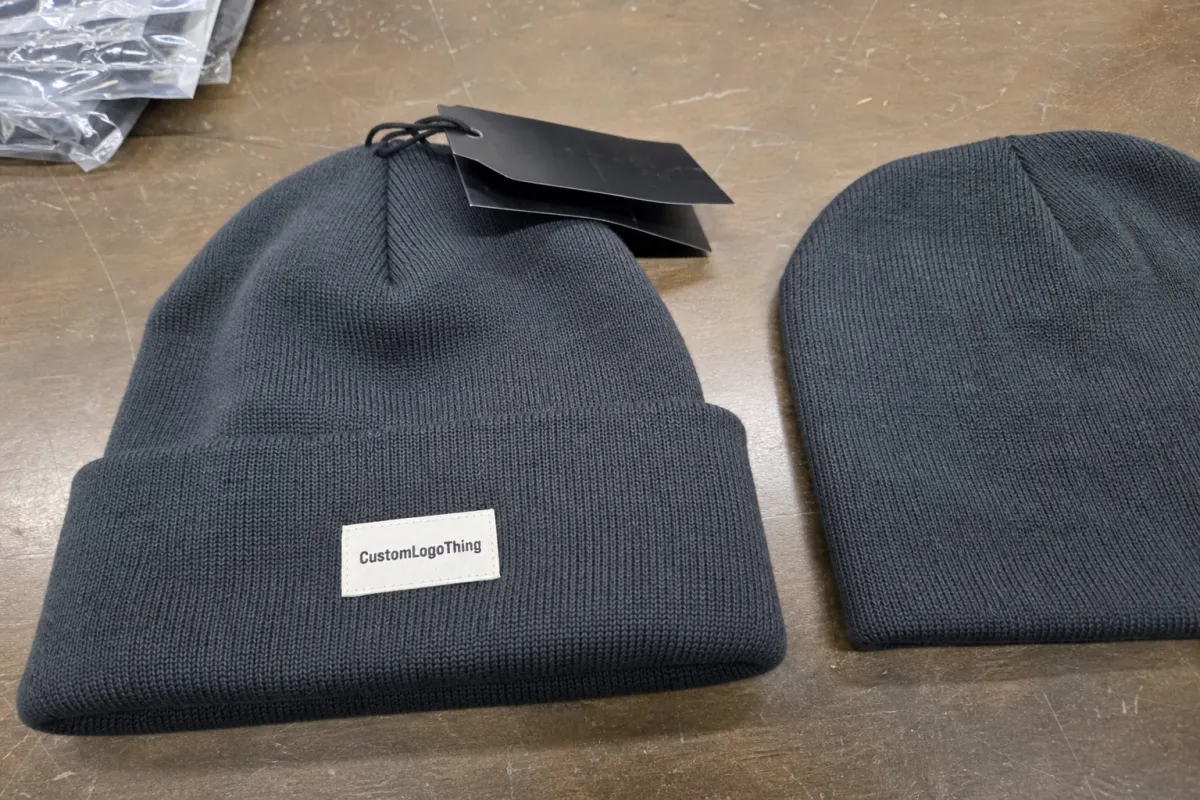
The first mistake is treating a sample like a color approval alone. Color matters, but it is only one piece of the decision. The sample also reveals how the knit behaves when stretched, whether the cuff springs back, and whether the crown keeps its shape after it has been folded, stuffed in a bag, or worn under pressure for several hours.
That is especially relevant for restaurant teams. Staff are moving, lifting, reaching, stepping into cold storage, then back onto the floor. A beanie has to sit well during that kind of use. If the cuff rides up, the front edge scratches the forehead, or the body feels too loose, the item will spend more time in a locker than on a head.
Logo readability is another place where samples earn their keep. Embroidery, woven patches, and knit-in branding all behave differently on a curved, stretchy surface. A mark that looks crisp on a flat mockup can warp once the beanie is worn. Fine details may disappear on dark yarn. Thick thread can make a small logo feel oversized on lighter colors. None of that shows up in a spec sheet.
One more thing buyers often miss: the sample shows the factory's real construction habits. You can learn a lot from the seams, the consistency of the gauge, and how cleanly the cuff returns after being pulled. If the sample looks polished at first glance but falls apart under handling, that is a warning, not a minor imperfection.
In practice, the sample is less about deciding whether the beanie is attractive and more about deciding whether it can survive the job. That is the useful lens.
How the request process and timeline work
A useful restaurant Cuffed Knit Beanies material sample guide starts with a clear brief. Send the supplier the logo file, preferred color references, target quantity, cuff preference, and whether you want a stock knit or a custom build. If you leave those points vague, the factory has to fill in the blanks, and blanks tend to show up later as wrong yarn, wrong cuff depth, or the wrong branding method.
For simple stock samples, turnaround can be quick, sometimes only a few business days before shipping. Custom color matching, special yarn sourcing, embroidery revisions, or patch development usually add time. A realistic window for a more tailored sample is often 1-2 weeks before it is ready to review, plus shipping time on top of that. If the sample must cross borders, customs and transit add another layer of delay.
The production path is usually predictable. The supplier confirms the brief, recommends a yarn base, sends a digital proof or preliminary image, knits the sample, finishes the branding, then ships it for review. Revisions are common. Keep them specific. "Softer" is not useful feedback. "Reduce cuff height by 0.5 inch, keep the logo centered, and tighten the band recovery" gives the factory something measurable.
Most delays come from a few familiar places. Color references are incomplete. Artwork changes after knitting has started. People ask for another round without deciding who has final sign-off. That last one costs the most time because it creates a loop with no endpoint. More options do not always create better control. Sometimes they just create more waiting.
Shipping and presentation deserve a quick look too. If the sample arrives in corrugated cardboard packaging with a protective wrap or insert, that is usually enough. You do not need theatrical packaging for a beanie sample. In many cases, kraft paper, recyclable mailers, and an FSC certified insert are cleaner choices than glossy extras nobody asked for. If the supplier uses recycled materials or post-consumer waste content, good. If not, that should not distract from the actual beanie spec.
For transit protection, some suppliers test packaging using ISTA methods or similar shipping checks. That matters if the sample needs to arrive uncrushed and readable, especially when you are judging shape, cuff memory, and logo placement.
Material factors that change comfort, warmth, and appearance
Fiber blend is usually the first big decision. Acrylic is common because it is affordable, color stable, and easy to source in volume. It also tends to hold dye well, which helps when you need a consistent brand color across a larger order. The downside is hand-feel. Low-grade acrylic can feel flat or plasticky. Better yarns are softer, but they still need to be tested, not assumed.
Wool feels warmer and often reads as more premium. It also raises the price and can bother wearers who are sensitive to itch. That matters more than many buyers expect. If the beanies are for back-of-house staff or outdoor pickup teams, a scratchy knit may be tolerated for five minutes and rejected after that. A warm item that nobody wants to wear is not useful.
Polyester blends can improve durability and shape retention. They can also help with color consistency and reduce the chance of the knit relaxing too much over time. The tradeoff is that the hand-feel depends heavily on yarn quality and finish. Cheap polyester can feel harsh. Better blends feel smoother and hold their form more reliably. That is why the sample should be touched, stretched, and worn, not just inspected visually.
Knit gauge changes more than people think. A tighter gauge usually gives a cleaner surface, better logo clarity, and stronger structure. A looser gauge may feel softer and more relaxed, but it can stretch faster and show the shape of the head more obviously. For restaurant use, tighter is often safer, especially when the beanie will be branded. A clean surface makes embroidery and patches look more deliberate.
Cuff height is another practical lever. Many restaurant orders land in the 2.5 to 3.5 inch range because that gives enough room for branding without crowding the face. Too short and the beanie can look flimsy. Too tall and it may press awkwardly under headphones, a headset, or a hood. Cuff memory matters too. A cuff that rolls, twists, or refuses to sit flat makes the whole piece look cheaper than it should.
Then there is the surface itself. Pilling, color fade, loose stitch lines, and weak seam tension are the problems that show up after the sample leaves the table. Dark yarn can hide dirt better, but it can also swallow fine branding. Light yarn makes logos easier to read, but it shows wear sooner if the fiber quality is poor. That tradeoff is real, and a good restaurant Cuffed Knit Beanies material sample guide should force you to look at it in daylight, indoors, and under handling.
Standards and repeatability matter here. If a factory can tell you the yarn blend, knit gauge, and stretch recovery behavior, you are talking to a supplier that understands process. If the answer is vague, the risk goes up. You do not want to approve a beanie based on a sample that cannot be traced back to the same material and build logic used in production.
One practical testing note: if the final beanies will be washed, even occasionally, test at least one sample for care behavior. Not every beanie is meant for aggressive laundering, but shrinkage, edge distortion, and fuzzing can show up quickly once moisture and heat enter the picture.
Cost, pricing, and MOQ tradeoffs before you order
The restaurant cuffed knit Beanies Material Sample guide should help you budget the whole decision, not just the sample fee. A real quote usually includes the sample itself, setup, yarn selection, branding method, finishing, packaging, and shipping. Buyers often focus on the base unit price and then act surprised by the rest. That surprise is avoidable if the request is detailed enough.
For planning, a stock-style sample often lands around $25-$60. Once the order moves into custom color matching, special yarns, knit logo development, or multiple revisions, the sample can move into the $60-$150 range or higher. That spread is normal. What matters is whether the sample is representative of what you would actually approve for bulk production.
MOQ changes the economics. Lower minimum order quantities help smaller restaurant groups, pilots, or seasonal programs, but the unit price usually rises because setup costs are spread across fewer pieces. A 200-piece order can be practical. A 1,000-piece order may deliver a noticeably better per-unit price. The right choice depends on whether the priority is testing demand or locking in a lower cost per unit.
| Sample Type | Typical Cost Range | Best For | Watch For |
|---|---|---|---|
| Stock yarn sample | $25-$60 | Fast fit and feel check | May not match final yarn exactly |
| Custom color sample | $60-$120 | Brand-matched restaurant programs | Color approval can add lead time |
| Logo or trim revision sample | $80-$150+ | Final approval before bulk order | Extra rounds can slow production |
A cheap sample only helps if it reflects the final run. If the sample uses a different yarn lot, a simplified knit, or a lighter cuff than the production order, the approval is less meaningful than it appears. That is false economy. Saving a few dollars on the front end is not worth signing off on something that changes materially later.
Packaging costs deserve the same blunt treatment. A sample in a simple kraft paper mailer with a clean insert often communicates more care than an overdesigned box with extra print work. If the supplier includes biodegradable packaging elements or recycled content, that is fine, but it should not mask the actual beanie quality. For restaurant buyers, presentation matters only after the item itself makes sense.
Step-by-step checklist for comparing samples side by side
Start with measurement. Write down cuff depth, band width, crown height, and stretch recovery. Memory is unreliable once several samples sit on the table together. A buyer who says "these feel about the same" is usually missing the small differences that matter most in bulk.
Then test fit. Wear the sample under normal indoor conditions, not just while holding it in your hand. Notice the pressure at the forehead, how the cuff sits above the ears, and whether the beanie shifts when you move your head. If your team wears headsets, test that too. A beanie can look tidy and still be annoying in service.
Now look closely at the construction. Check stitch alignment, seam finish, yarn consistency, and how clean the fold line stays after the cuff is worn and reset. Inspect the logo from a normal viewing distance, then again after the beanie has been stretched. A mark that looks sharp at rest but drifts off-center when worn is a real problem, even if it is subtle in a product photo.
It helps to use a simple scorecard. That keeps the review from turning into a memory contest two days later.
- Comfort: Does it feel soft without becoming floppy or thin?
- Durability: Does the knit hold shape after handling and wear?
- Branding clarity: Is the logo readable at normal distance?
- Fit: Does the cuff sit where you want it?
- Value: Does the sample support the bulk price?
If packaging is part of the approval, keep that review simple too. A sample in corrugated cardboard with an FSC certified insert is usually enough to show the supplier understands clean presentation. The point is not luxury. The point is removing distractions so the beanie itself can be judged properly.
Common sample mistakes that waste time and money
The biggest mistake is approving the beanie body without confirming the branding method. A blank knit sample can look excellent and still fail once embroidery, a woven label, or a patch is applied. The surface changes. The drape changes. Placement shifts. If the logo is not evaluated on the actual sample, the approval is incomplete.
Another easy trap is judging color from one photo. Lighting changes everything. Natural daylight, fluorescent kitchen light, and warehouse lighting can make the same yarn appear like three different shades. Ask for multiple images if the sample is not being reviewed in person, and make sure the beanie is shown flat, stretched, and worn. A photo that hides the cuff tells you very little.
Comfort can be misleading as well. A very soft sample may feel excellent on first touch and then pill, stretch out, or lose body after a few wears. That may be acceptable for a giveaway. It is much less acceptable for a restaurant uniform item that needs to stay presentable through repeated shifts. Soft is not the same as durable.
The most expensive mistake is failing to confirm that the sample uses the same yarn, gauge, and cuff specification planned for production. If the sample is built one way and the bulk order another, the approval does not mean much. You are not signing off on the final product. You are signing off on a close relative.
Another issue is unclear revision control. If three people are sending changes and nobody is tracking what changed between versions, the sample process starts to drift. The factory may be following the latest note, while the buyer is remembering the first one. That mismatch causes preventable errors. One written approval point solves more problems than another round of casual comments.
Actionable next steps before you approve production
Before sign-off, create a one-page approval sheet. Include feel, fit, logo placement, price ceiling, delivery window, and any packaging requirement. That sheet becomes the anchor when opinions start to wander. It also keeps the review focused on the things that actually affect the final order.
If the first sample is close but not right, ask for controlled changes, not a complete restart. A tighter cuff, a different yarn blend, or a cleaner label placement may solve the problem. Change one variable at a time so the result is readable. If too many things change at once, you lose the ability to tell what improved and what did not.
Confirm these points before moving into bulk:
- Yarn type and color reference
- Knit gauge and stitch density
- Cuff height and fold behavior
- Logo method and placement distance from the edge
- Packaging and insert material
- Shipping window and final approval deadline
If the supplier is using recycled inserts, document it. If the packaging includes biodegradable packaging components, document that too. Those details are only useful if they are specific. A restaurant buyer needs proof, not a vague sustainability line that disappears the moment the carton is opened.
The cleanest use of a restaurant Cuffed Knit Beanies material sample guide is simple: treat the sample as the final checkpoint before production, not a courtesy item. If the beanie feels right, fits right, and keeps the branding readable, the order has a solid path forward. If it misses on comfort, structure, or consistency, fix it before the bulk run locks in the mistake. Cheap regrets tend to get expensive quickly.
FAQ
What should I check first in a restaurant cuffed knit beanie sample?
Check fit, cuff stability, and stretch recovery before you focus on color or branding. Then wear it for a few minutes, because restaurant staff notice pressure, itch, and slippage faster than they notice a flattering photo.
How long does a cuffed knit beanie sample usually take to arrive?
Stock-style samples can move quickly, while custom yarn, logo, or trim changes usually add a few extra days or a couple of weeks. Ask for the timeline in writing so you can separate knitting time from finishing and shipping time.
What does a sample usually cost, and is it refundable?
Expect a sample fee plus shipping, with higher pricing when the beanie uses custom colors, specialty yarns, or branded trims. Some suppliers credit the fee back after bulk approval, but that is a supplier policy, not a standard rule.
Can I verify logo placement on a knit beanie sample before production?
Yes, and you should. Knit surfaces stretch, so logo placement can shift once the cuff is folded and the beanie is worn. Compare the logo at rest and under wear, then confirm the distance from the cuff edge before approving production.
What if the sample feels too loose, itchy, or thin?
Treat that as a spec problem and request a tighter gauge, different blend, or deeper cuff. If the sample is already far off on comfort, do not talk yourself into it because the unit price looks attractive on paper.


