Cheap Custom Canvas Tote bags can be a smart purchase when the goal is repeated brand exposure rather than a premium gift-box presentation. A tote has to do three things well: carry useful weight, show the artwork clearly, and survive enough reuse to stay visible. If those basics are handled well, a low-cost bag can outwork more expensive branded items simply because people keep using it.
Most of the cost difference in a tote order comes from choices that are easy to control. Fabric weight, bag size, handle construction, print color count, and order quantity all have a direct effect on the final number. Buyers who understand those levers usually end up with a bag that feels appropriate for the job instead of one that is overbuilt for a giveaway or too flimsy for regular use.
The best budget tote is rarely the absolute cheapest build on paper. It is the one that gives enough structure for the contents, enough print quality for the logo, and enough consistency that the order can be used confidently across events, packaging programs, and retail handouts.
Why budget canvas totes still deliver real brand value
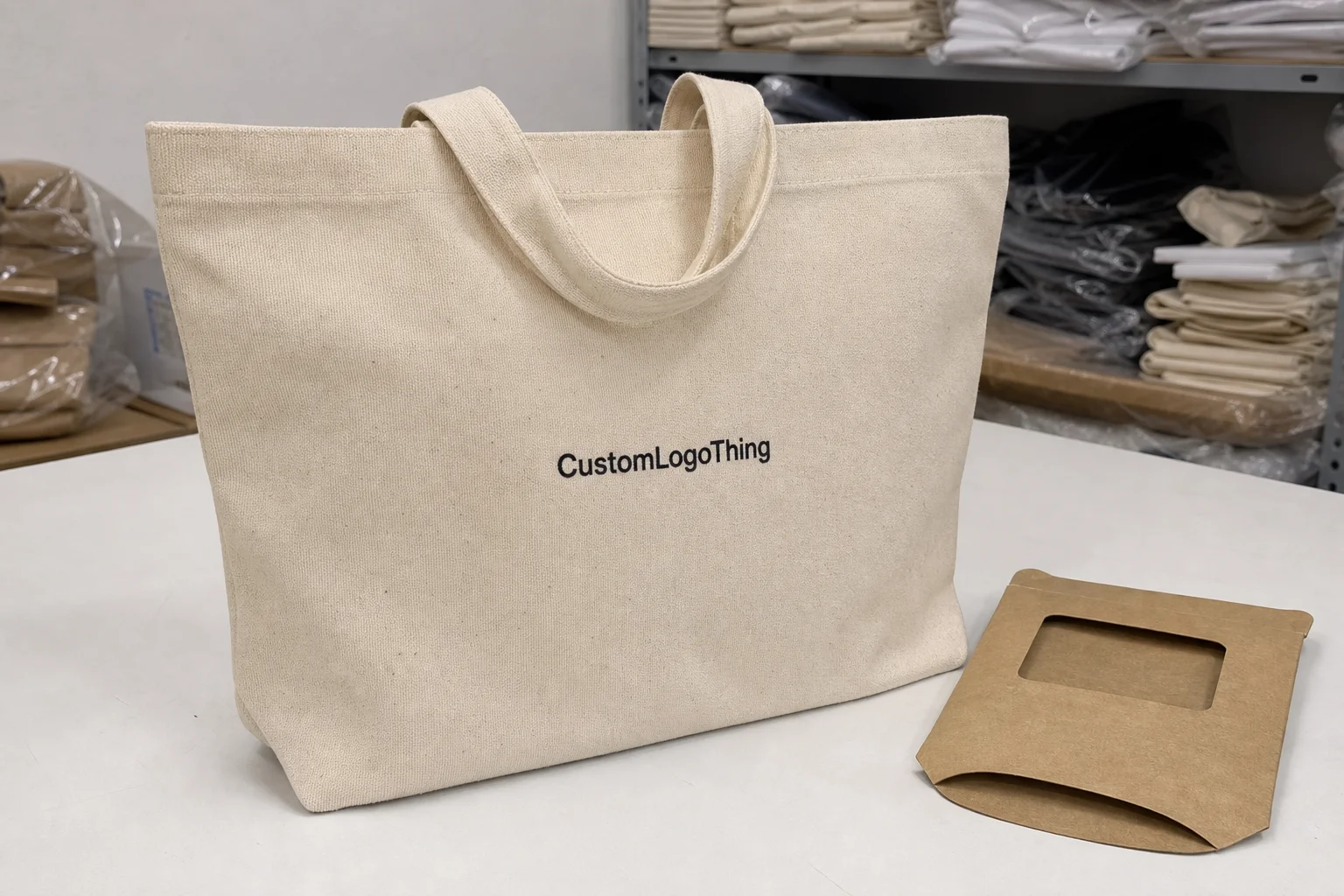
A low price does not automatically mean a weak result. In practical terms, a canvas tote succeeds when the brand mark is readable, the seams hold, and the bag feels useful enough that people keep it. That makes cheap custom Canvas Tote Bags a strong fit for promotional programs, retail packaging support, and employee kits where quantity matters as much as appearance.
The value comes from repetition. A tote that gets used for groceries, travel, commuting, or storage keeps a logo in circulation far longer than a one-time giveaway. That is why buyers often favor a restrained spec sheet instead of extra decoration. Standard dimensions are faster to cut and sew, lighter canvas keeps the unit price down, and a simple one-color print usually delivers the cleanest result for the money.
There is also a practical packaging angle. A tote can act as a reusable outer layer for product bundles, launch kits, or store carryouts, which makes it part of the broader branded packaging system rather than an isolated item. For brands already investing in custom printed boxes, inserts, or paper carriers, the tote can extend the same visual identity into a reusable format.
“The tote that gets reused ten times is usually worth more than the prettier bag that stays in a drawer.”
That said, low-cost does not mean indifferent quality. A buyer still needs to know where the compromises are acceptable and where they are not. Thin fabric may be fine for light collateral, but a tote intended for boxed items needs more structure. A tiny print may keep costs down, but it can disappear visually once the bag is in use. The right budget order keeps those tradeoffs visible from the start.
Canvas tote construction, fabric options, and print methods
Fabric weight is one of the first things to review because it shapes both the feel and the cost of the bag. Lightweight promotional canvas often sits around 8 oz, which works for paper items, event literature, or soft goods that do not create much stress on the seams. Midweight options, often around 10 oz to 12 oz, feel more substantial in hand and usually offer better opacity and better shape retention. Heavier canvas can be useful for daily carry, but it raises the price and may be unnecessary for short-term campaigns.
Construction details matter just as much as fabric. Side seams help the bag keep its shape. A bottom gusset increases usable volume and makes the tote more practical for boxed products or thicker merchandise. Reinforced handles reduce stress where failures usually begin, especially if the tote is loaded and carried repeatedly. Folded hems, even stitch lines, and consistent handle attachment are not flashy features, but they are exactly the details that separate a dependable budget bag from one that looks rushed.
Print method influences both cost and durability. Screen printing remains one of the most economical choices for simple logos and limited-color artwork. It produces clear edges on canvas and holds up well with normal use. Heat transfer can work for more detailed art or short runs, but it usually adds cost and may not be the best fit if the tote will be folded, stuffed, and carried often. For full-color artwork, buyers should compare options carefully rather than assuming every design needs the same process.
A few common build choices have an outsized effect on pricing and usability:
- Handle length — short handles feel compact, while longer handles are easier to carry over the shoulder.
- Gusset depth — deeper gussets fit boxed items and bulkier merchandise more comfortably.
- Natural versus dyed canvas — natural canvas is often the most budget-friendly and usually prints well.
- Print location — decoration on one side costs less than front-and-back printing.
For flat collateral and lightweight giveaways, a standard natural canvas tote with a single logo often does the job well. If the bag needs to support retail packaging or carry heavier contents, a stronger weave and a gusset are worth the extra spend. Buyers often save money by simplifying the artwork, then lose that advantage because the bag itself is not suited to the load.
For teams comparing broader packaging choices, it helps to think of the tote as part of the same system as cartons, sleeves, and inserts. A coordinated set of Custom Packaging Products makes the presentation feel planned instead of pieced together.
Size, color, and artwork specifications to review before ordering
Before asking for pricing, confirm the tote dimensions. A common promotional size is around 13 x 15 inches, while larger versions can run closer to 15 x 16 inches or more depending on the gusset and handle style. Width, height, and depth affect how the tote looks in use, how much it can hold, and how much material is needed to make it. A bag that is too small may feel token, while one that is oversized can waste money if the contents are modest.
Artwork is where many orders slow down. Vector files are preferred because they scale cleanly and keep edges sharp. That matters for logos, text, and icon marks, especially on canvas where coarse texture can reveal weak source art. If the goal is cheap custom canvas tote bags, a one-color or two-color logo is often the most practical route because it lowers setup complexity and reduces the chance of registration problems during print.
Color choice affects both budget and availability. Natural canvas is often the easiest low-cost option because it avoids dyeing and gives strong contrast with dark ink. Black, navy, and white can look polished, but dyed material may cost more and may not be stocked as broadly. Pantone matching is possible on many runs, though exact matching usually means more proofing and tighter approval steps. If color accuracy is critical, that should be clarified before the quote is approved.
Before requesting a quote, it helps to have the following information ready:
- Bag size and gusset depth
- Handle length and carry style
- Print location and approximate print size
- Number of ink colors
- Vector artwork file or clean source art
- Any folding, tagging, or packaging requirement
- Required delivery date
If the tote is going into a retail packaging program, align the print area with the rest of the brand system. That way the tote, the outer carton, and any inserts feel like one coordinated presentation rather than unrelated parts ordered at different times.
Cost, pricing, and MOQ considerations for bulk tote orders
Unit price changes quickly with quantity. A small order carries more of the setup burden per piece because screen preparation, sampling, proofing, and packing labor are spread across fewer bags. Once volume increases, the price usually drops into a more favorable range. For cheap custom canvas tote bags, bulk ordering is usually where the real value appears.
Simple builds sit at the low end of the price range: lighter canvas, one-color printing, and a standard size. Heavier fabric, multiple print locations, dyed material, and special finishing push the number upward. As a working reference, a standard promotional canvas tote might fall around $0.90 to $1.80 per unit at higher volumes depending on spec, while more customized builds can move above that fairly quickly. Small runs can be several times higher per bag because the fixed setup cost does not shrink much.
| Order Type | Typical Spec | Price Behavior | Best Use Case |
|---|---|---|---|
| Entry budget tote | Light canvas, one-color print, standard size | Lowest unit cost at larger quantities | Mass giveaways, event handouts, inserts |
| Midweight retail tote | 10 oz to 12 oz canvas, gusset, one or two colors | Moderate unit cost with better hand feel | Retail packaging, store carryouts |
| Custom presentation tote | Heavier canvas, multiple print locations, special finishing | Higher cost, but stronger perceived value | Launch kits, premium merchandising |
MOQ, or minimum order quantity, is the other number buyers need to watch. Many suppliers set minimums to keep production efficient, which makes sense because a small batch still requires the same preparation as a larger one. Smaller quantities can sometimes be produced, but the per-piece price usually rises because labor and setup are not reduced in the same proportion. A 100-piece test order often looks expensive next to a 1,000-piece run for that reason alone.
Hidden costs can slip into the final number if the quote is not carefully reviewed. Setup fees, extra print locations, rush production, special folding, individual polybagging, and nonstandard canvas colors can all raise the total. If the project has a budget cap, ask for a quote that separates the base tote price from add-ons so the drivers are easy to see. That makes comparison shopping more accurate and helps prevent surprises after approval.
The lowest line item is not always the best deal. The better order is the one that fits the use case, stays within budget, and avoids rework. A tote that is inexpensive but unusable is a poor value, while a slightly higher price can be justified if it improves durability, print clarity, or delivery reliability.
Process and timeline from artwork approval to shipment
A clean order flow saves time and money. The usual sequence is simple: Request a Quote, confirm the bag specs, review artwork, approve a proof, move into production, then pack and ship. When that sequence is followed carefully, cheap custom canvas tote bags can move through production with few surprises.
Timelines vary by quantity and specification, but standard canvas tote runs are usually faster than highly customized builds. A straightforward order with standard materials and one-color printing may be ready in roughly 10 to 15 business days after proof approval. More complex runs can take longer if special fabric, multiple print passes, or nonstandard finishing is involved. Late artwork changes are one of the easiest ways to push a schedule back because they can force new proofing or even partial setup changes.
Most delays come from a few predictable issues: late design changes, unclear print placement, stock shortages, or color revisions. Unclear art is especially disruptive because it creates avoidable back-and-forth before production can start. A clean vector file, a clear print location, and a firm proof approval usually keep the order moving.
For event dates, store launches, and seasonal campaigns, lead time should include proofing, printing, curing, folding, packing, and shipping. Even a budget tote needs real production time. If the tote is part of a larger retail packaging rollout, allow enough margin so the bags arrive with the rest of the materials instead of becoming the last item to show up.
Suppliers who follow recognized packaging and transit testing standards, such as ISTA packaging and transit testing guidelines, generally understand how to protect finished goods during shipment. That matters when the order is being sent to distribution, retail stock, or event fulfillment rather than directly to a single desk.
How low-cost custom totes stay consistent at scale
Affordable pricing only matters if the finished bag is still usable. Quality control on low-cost runs should cover fabric consistency, print alignment, seam strength, handle attachment, and finishing cleanliness. Those checks catch most of the problems that make a budget tote feel disappointing, and they matter even more on larger orders because small defects multiply quickly.
Production planning does a lot of work behind the scenes. Cutting fabric cleanly, grouping similar print jobs, checking the proof before setup, and confirming the carton count before shipment all help keep the order efficient without sacrificing the basics. That is how cheap custom canvas tote bags stay consistent from the first carton to the last.
Buyers should also expect clear quote assumptions. A supplier should be able to state the fabric weight, print method, MOQ, and what is included in the price. Vague pricing is a warning sign because it usually leaves room for later changes. Clear specifications make it easier to compare quotes fairly and reduce the chance of scope creep after approval.
For sustainability-minded teams, it can help to ask about material sourcing and documentation where relevant. If a broader packaging program includes paper components such as tags, inserts, or cartons, certification references like the Forest Stewardship Council may matter for those parts of the order. The tote itself may be canvas, but the whole branded package often includes paper items that deserve the same review.
Consistency is the real value test. A budget tote should arrive on time, close to the approved proof, and ready to hand out without sorting or repair. If the bags cannot do that, the lower unit price stops being a saving and becomes a liability.
Next steps to get a fast quote and order the right tote
If you need a fast quote, gather the essentials first. Bag size, fabric weight, print colors, artwork file type, quantity, and delivery date are the details that most directly affect pricing. Having those ready reduces back-and-forth and makes it easier to narrow the options quickly.
It also helps to define the purpose of the tote before choosing the spec. A giveaway bag does not need the same structure as a retail resale item, and an employee onboarding kit does not need the same build as a product launch package. The intended use should guide the material choice, handle style, and print method. That is the simplest route to cheap custom canvas Tote Bags That still fit the job.
Before approving production, compare the landed cost rather than only the base unit price. Shipping, setup, and any extra packaging or folding can change the final spend in a meaningful way. A quote that looks slightly higher on the front end may still be the better option if it avoids extra fees or rush charges later.
Once the proof looks right, approve it quickly and secure the production slot. Bulk tote orders tend to move best when the design is settled early and the buyer is ready to proceed. That simple discipline keeps the schedule predictable and helps the order arrive when the rest of the branded materials are ready.
For the cleanest result, send the specs, confirm the quantity, and Request a Quote based on the actual use case rather than the cheapest headline number. That approach usually produces a tote that fits the budget, supports the brand, and holds up well enough to justify the spend.
FAQs
What makes cheap custom canvas tote bags cheaper without looking low quality?
Lower pricing usually comes from standard sizes, lighter canvas, one-color printing, and simple artwork rather than weak construction. A good budget tote still needs solid seams, usable handle length, and clean print registration so it feels dependable in everyday use.
What is the usual MOQ for cheap custom canvas tote bags?
MOQ depends on the print method, bag style, and fabric availability, but bulk orders usually offer the best unit pricing. Smaller quantities can be produced, though the per-unit cost is often higher because setup and labor are spread across fewer bags.
Which print method is best for low-cost canvas tote bags?
Simple screen printing is often the most economical choice for one-color or limited-color artwork. If the design is complex or full-color, compare print methods against the artwork and quantity before choosing so the final cost makes sense.
How long does production usually take for custom canvas totes?
Lead time varies by quantity, artwork approval speed, and customization level, but standard orders usually move faster than special builds. Quick proof approval and clear specs help keep the schedule on track.
What artwork do I need before requesting a quote for custom canvas totes?
Vector artwork is preferred for clean print results, especially for logos and text. It also helps to know your target quantity, bag size, color preference, and the date you need the order delivered.


