Logo Patches Unit Cost for Beer Brands: Specs, Pricing, and Buyer Checks
A taproom drops a limited lager. The can label looks sharp, the release poster is already printed, and the staff is ready for the Friday rush. Then the merch question lands: hats, work shirts, jackets, cooler bags, and totes all need the same identity without ordering a different decorated product for every item.
Buyers comparing Logo Patches Unit Cost for beer brands are rarely buying decoration alone. They are trying to control repeatable branding costs across uniforms, retail merchandise, promotional apparel, and event gear. A patch can solve that problem, but only if the patch specs match the product, the artwork, and the way the item will be used.
Why Breweries Use Patches When Labels Stop Working
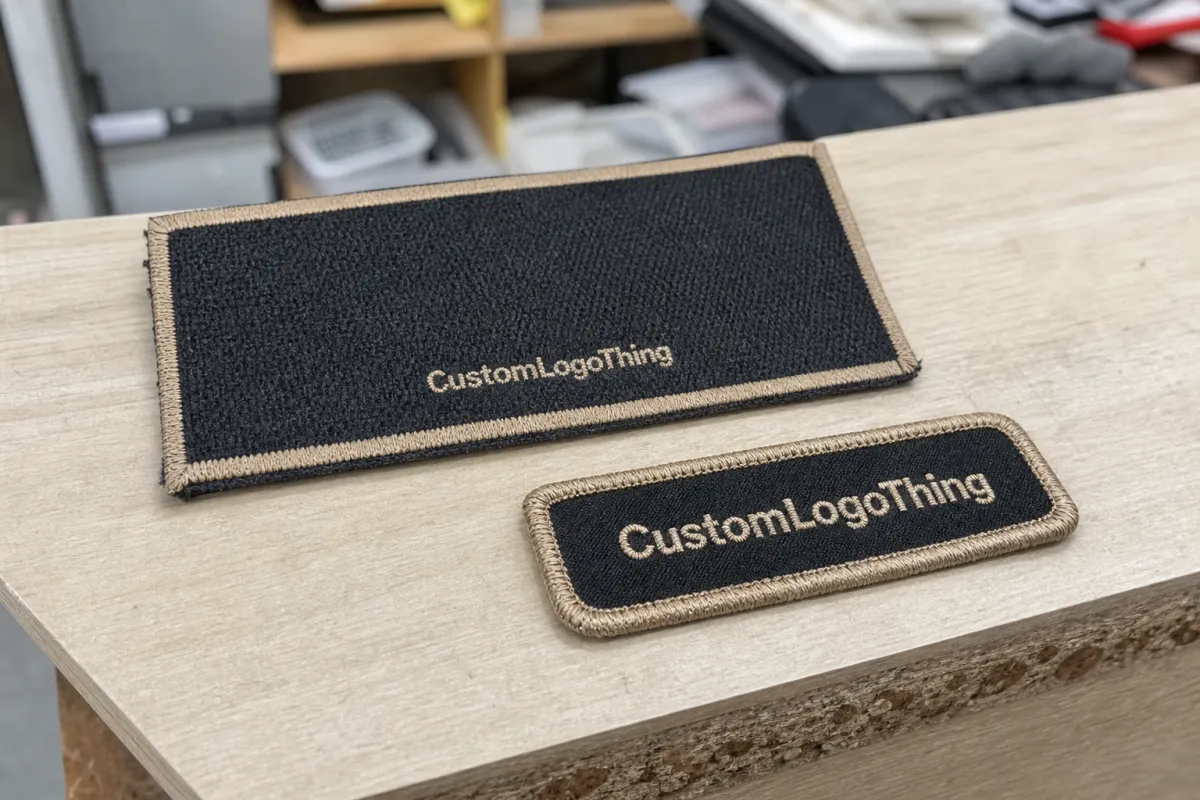
Beer branding moves in two places at once: on the shelf and on people. A can label has seconds to win attention in a cold case. A patch gets a longer life on a bartender’s cap, a brewer’s work shirt, a tote bag at a festival, or a jacket worn on the walk home.
That difference is practical. Labels are tied to containers. Patches move across apparel styles, bag materials, headwear, and promotional pieces. One branded component can cover several blanks: cotton twill caps, canvas aprons, denim jackets, fleece vests, shop shirts, and cooler bags.
Direct embroidery can be excellent, especially on stable fabrics and repeat uniforms. Screen printing works well on T-shirts and flat textiles. Both methods lock the decoration to the product. A patch separates the branded element from the blank, which gives a brewery more flexibility when sizes, garment colors, and reorder needs change.
The trap is treating the patch as a loose commodity. The lowest quoted patch price is not always the lowest finished cost. Stitch density, backing, border type, size, color count, and attachment method affect both the patch and the final application. A $0.72 sew-on patch may land higher than a $0.95 heat-seal patch if sewing is slow, the garment quantity is large, and the fabric accepts heat well.
Buyer rule: quote the patch and the application plan together. A patch is not finished branding until it has been attached, handled, washed, shipped, or sold.
For procurement teams, taproom managers, marketing leads, and merch coordinators, the useful question is not “How cheap can we get patches?” A better question is “Which specifications keep this mark consistent across the next 100, 500, or 1,000 units?” That is the more reliable way to evaluate patch pricing for a beer brand.
Patch Types That Fit Beer Brand Merch and Workwear
Patch format drives cost, appearance, minimum order expectations, and durability. A brewery with a bold shield logo has different needs than a brewery using fine-line hop illustrations, ornate lettering, or label art with gradients. Choose the format before negotiating the final cost per piece.
- Embroidered patches: The classic option for brewery caps, mechanic shirts, denim jackets, and staff aprons. They deliver raised texture, strong durability, and a familiar craft look. Best for bold logos, simple lettering, and badges read from several feet away.
- Woven patches: Better for small typography, narrow borders, hop illustrations, can-art details, and fine lines. Woven yarn captures more detail than standard embroidery, usually with a flatter surface.
- PVC rubber patches: A strong fit for outdoor beer festivals, cooler bags, brewery backpacks, and workwear exposed to moisture. PVC resists water and gives the logo a molded, dimensional feel.
- Leather patches: Faux leather or genuine leather works well for premium taproom hats, barrel-aged releases, heritage marks, and rustic brewpub branding. Debossed or laser-etched effects can look expensive without using thread.
- Chenille patches: Thick varsity-style texture. Useful for oversized merch pieces, special releases, and lifestyle apparel, but rarely the cleanest choice for tiny brewery logos.
- Printed patches: Good for detailed mascot art, full-color label graphics, and artwork that would require too many thread colors.
- Sublimated patches: Best for gradients, photographic effects, and complex art where thread or PVC would lose detail. The tradeoff is less tactile depth.
If the logo will be seen from six feet away on staff uniforms, prioritize contrast and shape. A 2.5-inch embroidered shield with three thread colors may outperform a detailed 4-inch art patch that nobody can read during a crowded taproom shift. If the patch will be sold as merch, texture and perceived value can justify a higher unit cost.
Breweries should separate “staff utility” from “retail appeal.” Staff patches need repeatability, wash performance, and comfort. Retail patches need shelf appeal, packaging options, and a stronger perceived value story. The two uses can share artwork, but they do not always need the same construction.
Specifications That Change Durability, Feel, and Appearance
Before requesting a quote, lock the basics: patch size, shape, base material, thread colors, artwork complexity, border, backing, attachment method, quantity, and packaging. Miss one of those and the quote may look clean while hiding a problem that appears later.
Common brewery sizes are fairly predictable. Hat fronts often use 2 to 2.5 inches wide, depending on the crown and logo shape. Work shirts and jacket sleeves commonly land in the 3 to 4 inch range. Back patches, tote bag patches, and promotional pieces may run 4 inches or larger, especially if the design includes a mascot, barrel, hop cone, badge copy, or slogan.
Border choice affects durability and appearance. Merrowed borders work best for simple circles, rectangles, ovals, and shields. They create the raised stitched edge many buyers associate with classic patches. Laser-cut or heat-cut borders are better for irregular shapes such as hop leaves, barrels, mascots, lightning bolts, or script logos. They allow more shape freedom, although the edge finish needs careful inspection.
Backing is another cost lever. Sew-on backing is the safest long-term option for uniforms because it handles laundering and movement well. Iron-on backing can suit small runs or DIY application, but it should be tested against the garment. Adhesive backing is usually temporary and works best for events, displays, or short-term promotions. Hook-and-loop backing helps with removable uniform patches or rotating staff roles. Heat-seal backing can be efficient for apparel runs if the fabric tolerates the required temperature, pressure, and dwell time.
Stitch coverage changes price more than many buyers expect. Partial embroidery is lighter and usually cheaper because some of the twill background remains visible. Full embroidery creates richer texture, but it increases machine time, thread consumption, and sometimes stiffness. On a 3-inch patch, that difference can be meaningful across 500 or 1,000 units.
Color control deserves a warning. Thread colors rarely match printed can labels perfectly. Printed labels may use CMYK builds or Pantone spot colors; embroidery thread has its own shade ranges. If brand color is critical, send Pantone references and approve a digital proof. For higher-risk programs, ask for a physical sample or strike-off before the full run.
Small text creates the most preventable disappointment. ABV, city names, tiny established-date details, and beer series names may need to be enlarged, simplified, woven, or printed to remain readable. A detail that looks crisp on a 12-ounce can label can turn muddy at 2.25 inches wide in thread.
Logo Patches Unit Cost for Beer Brands: Pricing and MOQ
Logo Patches Unit Cost for beer brands depends on six measurable variables: quantity, patch type, size, artwork complexity, backing, and packaging or application requirements. None of these are abstract. Each one changes labor, machine time, material use, handling, or setup.
The quantity curve is the first pricing reality. Small runs carry higher cost per piece because setup charges, digitizing, proofing, and machine changeover are spread across fewer units. Larger orders reduce that per-patch burden. A 100-piece order may be right for a limited release, but a 500-piece order may make more sense if the brewery also needs staff uniforms and retail merch.
As broad market guidance, simple custom embroidered or woven patches often fall somewhere around the low single-dollar range per piece at moderate quantities, while premium PVC, leather, complex shapes, heavy stitch coverage, retail packaging, or low-volume orders can move higher. Exact pricing varies too much to quote responsibly without artwork and specs. A tiny 2-inch woven patch and a 4-inch full-embroidery mascot patch are not close cousins; they are different production jobs.
Embroidered and woven patches often become more economical at higher quantities. PVC and leather patches can involve additional considerations such as tooling fees, molds, material thickness, debossing setup, or laser-etch testing. That does not make them poor choices. It means the quote should separate setup, production, application, and packaging lines so the buyer can see what is driving the total.
| Patch option | Typical brewery use | Common cost drivers | Best quantity strategy |
|---|---|---|---|
| Embroidered | Caps, aprons, work shirts, jackets | Size, stitch coverage, thread colors, border, backing | Quote 100, 250, 500, and 1,000 pieces for bulk pricing |
| Woven | Fine text, hop details, label-inspired marks | Artwork detail, edge style, backing, quantity | Strong for mid to higher quantities where detail matters |
| PVC | Cooler bags, outdoor events, backpacks | Mold/tooling, colors, thickness, backing | Better when the same design will repeat across programs |
| Leather or faux leather | Premium hats, heritage logos, barrel-aged releases | Material grade, debossing, laser etching, shape | Quote both faux and genuine leather to compare value |
| Printed or sublimated | Mascot art, gradients, detailed can graphics | Print method, color coverage, base fabric, edge finish | Useful for complex art that would be expensive in thread |
MOQ is not just a supplier preference; it reflects production economics. Breweries ordering for one event may need a low-MOQ option, particularly for embroidered, woven, or printed patches. Multi-location taprooms and ongoing merch programs should request several quantity breaks, usually 100, 250, 500, and 1,000 pieces. That matrix reveals the real value point.
Separate the loose patch price from the applied cost. Sewing, heat pressing, individual polybagging, UPC labeling, retail header cards, or kitting can change the landed unit cost. If a brewery wants 300 patches shipped loose for later application and another 300 sewn onto hats, those should be quoted as different paths.
Artwork affects price too. Clean vector artwork can reduce pre-production time. Low-resolution can art may require redraw, digitizing, simplification, or color separation. Those steps can add setup charges or delay proofing.
A smart quote request compares two sizes, two backings, and three quantities. For example: 2.5-inch and 3-inch patches, sew-on and heat-seal backing, at 100, 250, and 500 pieces. That is how buyers find whether the cost is being driven by size, MOQ, backing, or complexity.
The sales math is plain. The lowest unit price is not always the cheapest program if the patch fails durability testing, arrives late, or cannot be applied consistently to the chosen apparel.
Process and Timeline From Artwork to Finished Patches
A clean custom patch order follows a sequence: inquiry, artwork review, quote, material recommendation, digital proof, optional sample, production, quality control, packing, and shipping. Skip steps and the risk moves downstream, usually into cost or deadline pressure.
Send the production team the right information at the start. That means vector logo files, desired patch size, intended garment or product, quantity target, preferred backing, deadline, delivery address, and brand color standards. If the brewery has a Pantone reference for the core logo color, include it. If the patch will go on a structured cap, say so.
Artwork review is where the production reality check happens. Thin lines, small typography, gradients, distressing, and label-style details may translate differently into thread, woven yarn, PVC, leather debossing, or print. A useful review identifies which details can survive at the chosen size and which should be simplified.
The digital proof should show patch dimensions, border, backing, color references, stitch or material direction, and any artwork changes made for production. Do not treat a proof as a formality. It is the contract between the artwork and the finished patch.
Physical sampling adds time, but it can reduce expensive surprises for retail merch, flagship uniforms, high-volume orders, or brand launches. A strike-off is especially useful for metallic thread, small lettering, complex mascot art, leather debossing depth, or PVC color blocking.
Lead time depends on patch type, quantity, proof approval speed, sampling, factory capacity, and shipping method. Simple repeat orders can move faster. New custom shapes, PVC molds, complex woven details, and physical samples extend the schedule. Rush jobs are possible in some cases, but they depend on artwork readiness and machine capacity. Changing specs after proof approval is the most common cause of delay.
For broader packaging and shipping discipline, buyers can review standards from organizations such as ISTA, especially if patches are being kitted with other promotional goods. Sustainability claims and material handling should also be grounded; the EPA provides useful context on waste reduction and materials management.
Approve specs in writing and freeze the artwork before production starts. That protects both the deadline and the quoted Logo Patches Unit Cost for beer brands.
Quality Checks That Protect Brewery Brand Equity
Quality control is brand protection. A patch on a bartender’s shirt or festival hat becomes part of the brewery’s public identity. It is not just trim.
Inspection should cover size tolerance, edge cleanliness, thread breaks, color consistency, backing adhesion, border shape, logo alignment, and readability. For a 3-inch patch, even a small shift in border registration can make a badge look cheap. On a hat front, distortion is even more visible because the crown is curved.
Application testing is where many patch programs succeed or fail. Sew-on patches should withstand laundering and body movement. Heat-seal patches need the correct temperature, pressure, and dwell time. Adhesive patches should be treated as temporary unless the use case is non-apparel and low handling.
Garment compatibility matters. Heavy canvas, cotton twill, denim, fleece, performance polyester, and structured caps all react differently to sewing and heat. Performance polyester can be heat-sensitive. Fleece can compress. Curved cap crowns can distort a flat patch if the size, backing, or border is wrong.
That is the comparison worth keeping in mind: a patch can look perfect on a flat proof and still fail on the product. A 4-inch rigid PVC badge may look strong in hand but sit awkwardly on a curved cap. A heavily embroidered patch may feel premium but be too stiff for a lightweight apron pocket.
For designs with fine linework, metallic thread, small lettering, or complex mascot art, request a pre-production sample or at least a strike-off. It adds a checkpoint before the full run. On a 1,000-piece order, that is not red tape. It is risk control.
Packaging also deserves attention if patches are being sold as merchandise. Options include individual bags, header cards, UPC labels, set bundling, event-ready bulk packing, and kitting with stickers or coasters. A loose patch in a carton may be fine for uniform application. Retail buyers usually need a cleaner presentation.
Quality should be judged by how the patch performs after application, wear, washing, and customer handling, not only by how it looks fresh from the carton. That standard gives breweries a better way to compare cost beyond the first quote line.
How to Request a Quote Without Triggering Revisions
The fastest quote is not the shortest email. It is the complete one. A brewery buyer should send the logo file, quantity range, target patch size, patch type preference, backing choice, garment or product use case, delivery deadline, and shipping location.
- Logo file: Vector artwork such as AI, EPS, or SVG is preferred.
- Quantity range: Ask for 100, 250, 500, and 1,000 pieces if the final order size is not fixed.
- Target size: Include width and height, not just “hat size.”
- Patch type: Embroidered, woven, PVC, leather, printed, or undecided.
- Backing: Sew-on, heat-seal, iron-on, adhesive, or hook-and-loop.
- Use case: Staff uniforms, retail merch, festival giveaways, cooler bags, or launch kits.
- Deadline: Include the in-hand date, not only the event date.
- Shipping location: Freight cost and transit time can affect final planning.
Photos help. If patches will be applied to hats, aprons, work shirts, jackets, cooler bags, or taproom merchandise, send a photo of the target item. Better yet, include fabric composition if available. A cotton twill apron and a coated cooler bag may need different application recommendations.
When unsure, request two quote paths. One can be cost-efficient: embroidered or woven with standard backing. The other can be premium: PVC, leather, full embroidery, or retail packaging. That side-by-side view gives marketing and procurement a cleaner decision than one isolated number.
Flag brand-critical details early. Exact thread colors, mascot expressions, small city names, established dates, beer series names, and trademark restrictions should be reviewed before proofing. If a detail cannot reproduce clearly at the requested size, it is better to know before production.
Custom Logo Things can support artwork review, material recommendation, digital proofing, custom patch manufacturing, backing selection, packaging, and shipping coordination. For practical reference points across use cases, review the Case Studies page.
Use a simple decision sequence: approve artwork first, confirm patch size second, select backing third, review quantity breaks fourth, then lock production. That order prevents most avoidable revisions and keeps bulk pricing easier to compare.
For breweries, the best patch quote is specific enough to survive production. Loose estimates are useful for early planning, but final decisions need artwork, dimensions, materials, quantity, backing, application, and packaging details. Get those aligned and the finished unit cost becomes easier to defend.
FAQ
What affects custom logo patch unit cost for beer brands the most?
The largest cost drivers are order quantity, patch size, patch type, artwork complexity, backing, and whether application or retail packaging is included. A larger patch with full embroidery, complex borders, or premium backing will usually cost more than a small woven patch with standard sew-on backing. For accurate comparison, request pricing at multiple quantities rather than judging one flat quote.
What is the best patch type for brewery hats and taproom uniforms?
Embroidered patches work well for classic brewery hats, work shirts, aprons, and jackets when the logo is bold and not overly detailed. Woven patches are better for small lettering or label-style artwork. PVC or leather patches can be stronger choices for premium merch, outdoor events, or moisture-resistant branding.
Can beer brands order low-MOQ logo patches for a limited release?
Yes, low-MOQ patch orders are often possible, especially for embroidered, woven, or printed patches. The unit cost is usually higher at low quantities because setup and proofing costs are spread across fewer pieces. Limited releases should still include a clear deadline, final artwork, and application method to avoid rushed revisions.
How long does custom patch production take for brewery merch?
Timeline depends on patch type, artwork readiness, quantity, proof approval speed, sampling needs, and shipping method. Simple repeat orders generally move faster than new custom shapes, PVC molds, leather patches, or complex woven artwork. Approving the proof quickly and avoiding post-approval changes are the best ways to protect turnaround.
Do logo patches come ready to apply to hats, shirts, and bags?
They can be supplied with sew-on, iron-on, heat-seal, adhesive, or hook-and-loop backing depending on the use case. Sew-on is often the safest long-term option for uniforms and heavy wear. Heat-seal can be efficient for production runs, but the garment material must be compatible with the required temperature and pressure.


