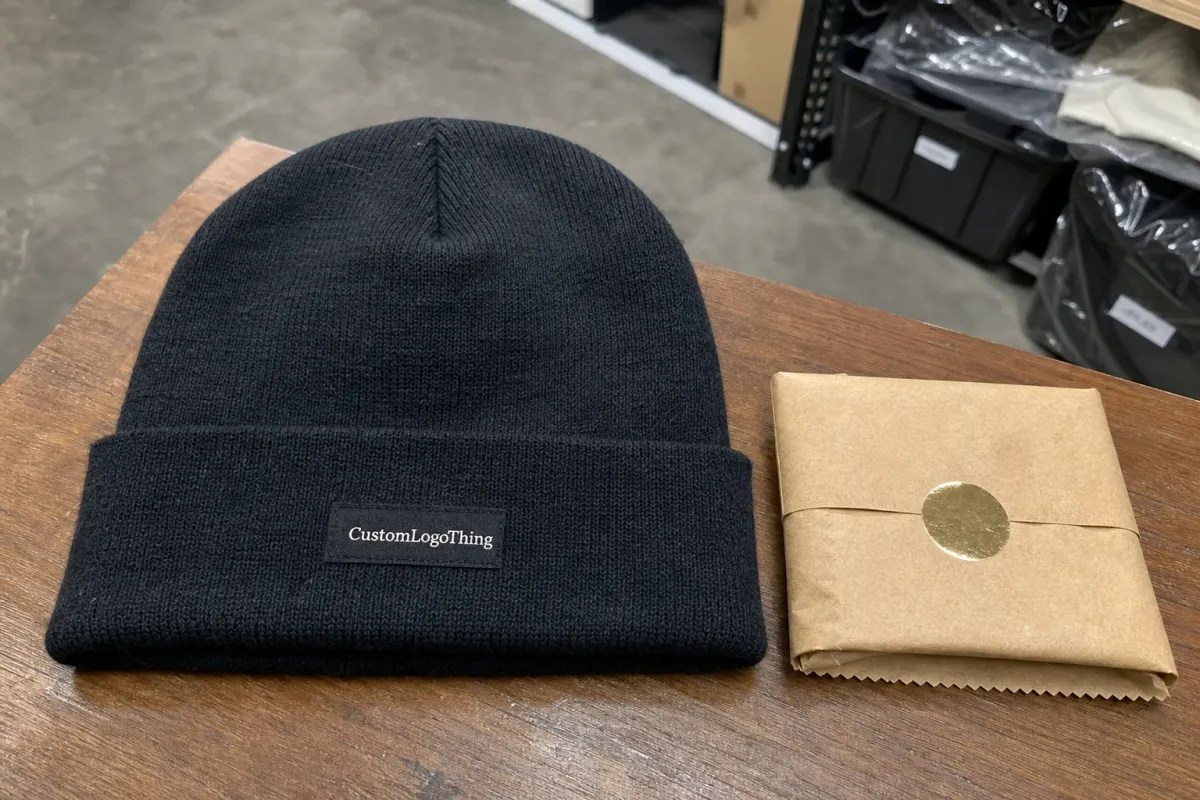
Chocolate Cuffed Knit Beanies physical sample checklist sounds specific because it needs to be. A cuffed knit beanie can look clean in a mockup and still miss the mark once the cuff is folded, the yarn relaxes, and the hat is worn on an actual head. Knit headwear behaves like a structure, not a flat graphic. That is why a physical sample carries more weight than a render or a color chip.
Chocolate is a deceptively difficult color for knitwear. It can read rich and deep in daylight, then shift toward reddish brown, dusty cocoa, or almost black under warehouse lighting. Add stretch, ribbing, label placement, and embroidery, and the surface stops being predictable in a hurry. Buyers who treat the sample as a formality usually end up paying for that mistake in bulk.
The best sample review is not about admiration. It is about control. Does the cuff hold its shape? Does the body recover after stretching? Does the logo distort when the fabric opens up? Does the yarn feel right in hand and on skin? Those answers matter more than a polished photo ever will.
Why a Physical Sample Matters Before Bulk Knit Production
Knit goods are sensitive to construction details that other product categories can hide. A printed tote can tolerate minor shifts in placement. A cuffed beanie cannot. The rib tension, stitch density, and yarn twist all influence how the final piece sits, especially around the band where the cuff is folded and the decoration is usually placed.
On paper, a beanie may have a simple spec: chocolate color, folded cuff, medium stretch, front logo, retail-ready finish. In practice, three things can move the result off target. First, the yarn lot may not match the approved shade exactly. Second, the knitting gauge can make the body denser or looser than expected. Third, decoration can pull the knit out of balance, particularly when embroidery is too heavy for the fabric weight. A sample exposes those problems before they spread across a production run.
That is especially true for dark brown knits. Small inconsistencies are easier to see on a light cream beanie than on a chocolate one, but chocolate shows other issues more clearly: shine from overpacked stitches, label edges that catch the light, and thread color that is almost right but not quite. Buyers often notice those differences only when they hold the piece in hand.
"A sample only deserves approval when it behaves like production under normal handling, not just when it looks good in a studio shot."
A physical sample also helps verify comfort. Some blends feel soft off the machine and slightly firmer after finishing. Some acrylics relax more than expected. Some wool blends can feel premium but may be too warm for the intended market. If the end customer is buying a fashion accessory, a team gift, or winter retail stock, the handfeel has to match that use case. A spec sheet can describe the material; only the sample can prove the experience.
The last reason is less glamorous and more expensive: one off-spec detail in the sample stage can become a run-wide problem later. If the cuff depth is wrong by half an inch, the logo may sit too high or too low on every finished unit. If the shape is too shallow, the beanie may feel less substantial than the buyer intended. That is a manufacturing issue, not a styling preference.
How the Sample Review Process Works
The process usually starts with a tech pack, even if it is a lean one. The supplier needs the yarn blend, Pantone or lab-dip reference, cuff depth, crown height, logo dimensions, decoration method, label requirements, and any packaging notes that affect final presentation. Missing one of those details often causes a revision later, because knit factories do not guess well when the brief is vague.
Once the first sample is made, the review should be structured. Start with flat measurements. Then fold the cuff to the intended position and measure again. Check the silhouette from the front, side, and back. If the beanie is supposed to fit close to the head, place it on a head form or fit model rather than judging it on a table. A flat surface can hide problems with stretch and recovery.
Reviewers should also compare the sample under more than one light source. Daylight reveals the true chocolate tone. Cooler office lighting can make the same yarn appear flatter or more gray. Warm indoor light may push the same color toward red. That variation is normal, but it should be understood before approval. If a color looks borderline under one light, it is usually not stable enough for bulk.
Document everything in one place. Scattered notes create avoidable confusion: one person approves the color, another wants it darker, and a third asks for the embroidery to move without saying whether the cuff depth should change too. A consolidated review keeps the supplier from receiving three separate instructions that fight each other.
For shipment and packaging terminology, the ISTA standards library is a useful reference. For packaging material basics, packaging.org helps clarify paperboard, inserts, and carton considerations. Those resources do not replace a supplier spec, but they help buyers ask sharper questions before the order is locked.
What Belongs on the Chocolate Cuffed Knit Beanies Physical Sample Checklist
This checklist needs to be practical, not decorative. Two people should be able to review the same beanie on different days and reach the same conclusion. If the criteria are loose, approval turns into opinion. If the criteria are specific, the sample becomes a real control point.
Fit and silhouette
- Crown height: confirm the rise or slouch matches the intended fit profile. A beanie that is meant to sit close to the head should not pool at the back.
- Cuff depth: measure the folded cuff in the actual wear position, not only when the beanie is laid flat.
- Stretch recovery: stretch the hat, release it, and wait 20 to 30 seconds to see whether it returns to shape or stays loose.
- Head feel: check the tension on a head form or live fit model. The band should feel secure without pinching.
Recovery matters as much as size on cuffed styles. A knit can stretch generously and still fail if it does not bounce back. That is often what separates a beanie that looks fresh in a store from one that sags after a few wears. If the style is intended to cover the ears, test that configuration too. A small change in placement changes both comfort and visual balance.
Color and yarn behavior
Chocolate yarn is rarely just chocolate yarn. One lot can lean deep espresso, another warmer and slightly red, another more muted under artificial light. That is why the sample should be compared against the approved color reference in more than one environment. If the production order uses multiple dye lots, ask how the supplier manages shade variation and what tolerance they are willing to hold across the run.
Yarn handfeel deserves the same attention. A softer acrylic blend may feel friendlier for retail and promo use, while a denser knit can look more substantial but may wear warmer or heavier. Wool blends add warmth and structure, but they can also introduce itch risk if the end customer expects a smooth hand. There is no universal best choice. The right yarn is the one that matches the intended market and price point.
Surface texture matters too. A high-loft knit can soften the look, but it may also blur stitch definition and make small logo details less crisp. A tighter gauge often reads cleaner, yet it can feel firmer and reduce stretch comfort. That tradeoff should be visible on the sample rather than discovered in bulk.
Decoration placement and finish
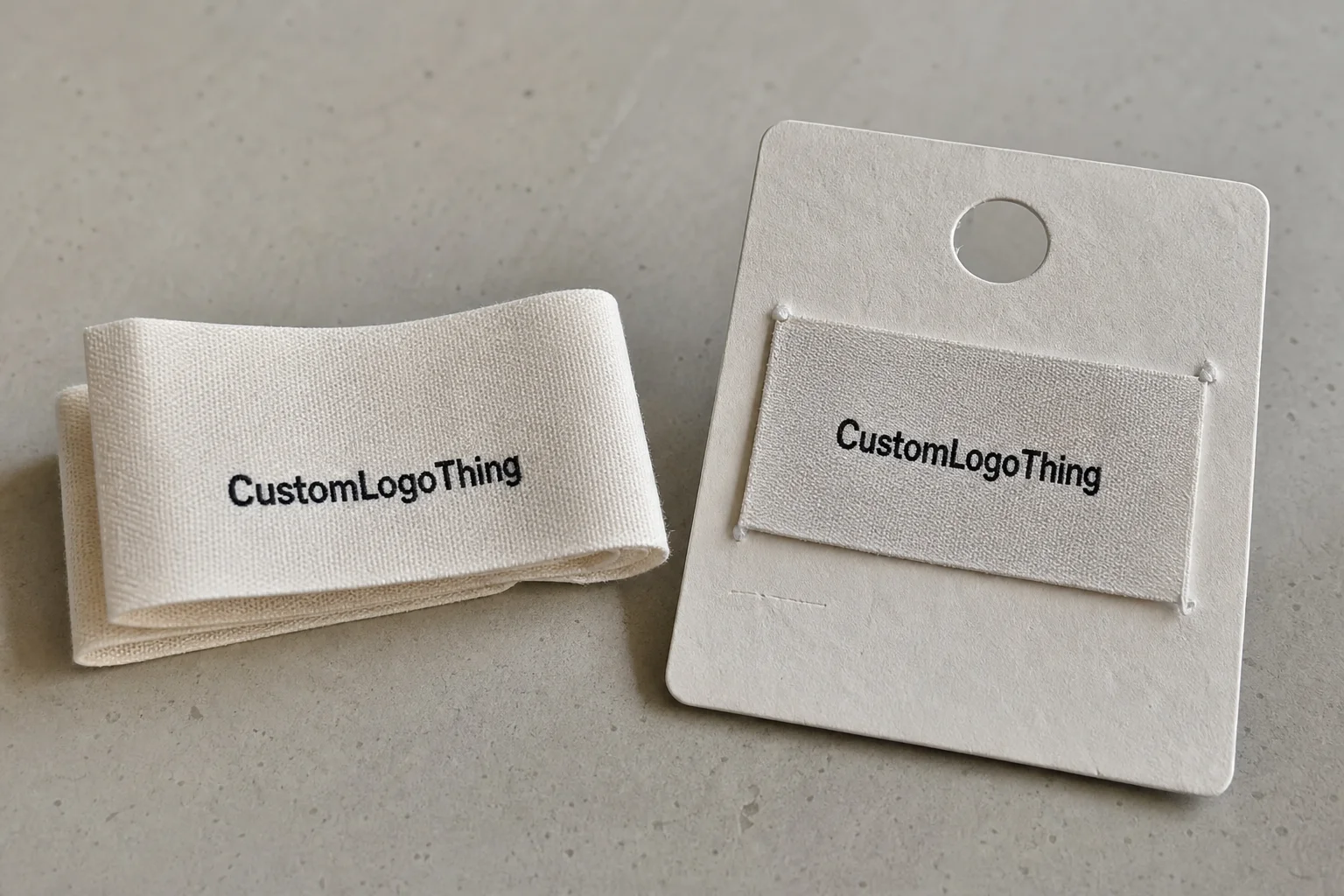
Embroidery, woven labels, woven patches, silicone patches, and appliques all affect knit fabric differently. Heavy embroidery can compress the cuff and create a ripple around the logo. A woven label may look neat but sit too close to the fold. A patch can feel polished and still be too stiff for a soft beanie body. Check size, placement, edge finish, thread density, and backing.
For centered front decoration, verify the distance from the crown point and the edge of the cuff. A half-inch shift can look small on paper and obvious in hand. Dark chocolate fabric also makes thread trimming mistakes easier to spot, so inspect the back side of the decoration as carefully as the front. Loose tails, uneven stitching, and rough backing material all affect the perceived quality.
If the design is meant to look subtle, the stitch count should reflect that. If the goal is a retail-style finish, the logo should still sit comfortably within the cuff without fighting the knit. Decoration should work with the beanie, not force the beanie into a shape it cannot hold.
Construction and finishing
Look at seam quality, join points, and any irregular knit rows. On a simple beanie, a minor seam issue may disappear once the cuff is folded. On a structured cuffed style, it can show immediately. Check the inside finish as well. If there is a woven label, care label, or internal seam tape, confirm that nothing creates a hard edge against the forehead.
Trim work is easy to overlook and expensive to ignore. Loose threads on dark knits are more visible than buyers expect. So are uneven cutting marks around sewn patches or labels. After the first pass, fold and unfold the cuff once or twice. That simple movement often reveals whether the beanie will pack cleanly and recover properly after handling.
Measure the sample against the spec, not against memory. A beanie that feels "about right" can still be off enough to affect fit, labeling, or shelf presentation. In knitwear, small dimensional drift is not small once it is multiplied by a full order.
Process, Timeline, and Production Steps for Sign-Off
A clean approval path usually follows the same sequence: request the sample, confirm the reference, receive the first piece, review it against the checklist, consolidate the notes, and either approve or request a revision. The rhythm is simple. The delays usually come from missing information or vague feedback.
- Spec confirmation: lock the yarn blend, cuff depth, logo method, and target measurements before the first sample is made.
- First sample build: allow extra time if the yarn must be sourced, the color needs matching, or the artwork needs digitizing.
- Internal review: inspect the beanie under different lighting and, if possible, on a head form.
- Revision cycle: if fit, feel, or decoration needs correction, expect one more round rather than forcing approval too early.
- Golden sample lock: once approved, archive the physical reference and the final notes so production and reorders use the same standard.
Typical lead time for a straightforward sample is often 5 to 10 business days once the supplier has the needed materials. If the project uses specialty yarn, custom labels, or multiple decoration methods, 10 to 15 business days is a more realistic window. A remake after revisions usually adds about another week, though that depends on what needs to change and whether the supplier can reuse trims or tooling.
Buyers sometimes focus only on the making time and forget about the review time on their side. That can slow everything down more than the factory itself. If the sample sits on someone’s desk for four days before anyone measures it, the production clock has already slipped. Build in enough internal review time to make a clean decision.
If the program includes retail packaging, confirm those details at the same stage. Fold method, insert card dimensions, hang tag placement, and carton configuration should all be checked before the run begins. A paper insert that looks harmless can still change how the beanie sits in the pack, especially if the cuff is meant to be displayed in a fixed orientation.
Cost, Pricing, MOQ, and Quote Considerations
Sample price for knit headwear usually depends on three factors: material complexity, decoration complexity, and how many setup steps the supplier has to repeat. A basic acrylic cuffed beanie with a small embroidery is usually easier to sample than a custom yarn-matched style with a woven label, patch, and special fold. Every extra component adds labor and a chance for revision.
| Quote Item | Typical Range | What Usually Drives the Price |
|---|---|---|
| First physical sample | $35-$150 | Yarn type, knit gauge, decoration method, and whether artwork setup is needed |
| Revision sample | $25-$100 | How much needs to be remade and whether the same trim package can be reused |
| Bulk production unit price | $1.80-$5.50+ | Order quantity, fiber blend, number of color changes, and finish complexity |
MOQ matters because setup cost gets spread across the run. A 200-piece order will almost always carry a higher per-piece cost than a 2,000-piece run, even when the product looks nearly identical. That is not a penalty; it is the math of knitting, trimming, decoration, and packing. Machines still need setup. Artwork still needs preparation. Labor still happens one unit at a time.
Ask for itemized pricing whenever possible. If the supplier gives one number for the sample and another for bulk, clarify what happens if the yarn blend changes, the logo method changes, or a second sample is needed. Good quotes show the cost of those decisions before they become surprises. Hidden assumptions are where margins disappear.
MOQ and sample cost also tell you something about the supplier’s process maturity. If every small change triggers a large fee without explanation, the quote may be hiding inefficiency. If the numbers are clearly broken out, buyers can compare options intelligently: simpler yarn, lighter decoration, or a different label method may reduce cost without compromising the product.
Common Mistakes Buyers Make During Sample Approval
Approving from photos alone is the most common error. Knit texture, surface depth, and brown color variation do not translate well through a screen. One image can make the beanie look richer than it really is; another can flatten it completely. If the physical piece is available, the decision should be based on the physical piece.
Another mistake is checking the beanie flat but not folded. That hides cuff problems and can make the crown look more balanced than it is. A cuffed style should be reviewed in the wear state, not just as a flattened sample on a table. If the beanie is meant to feel relaxed, inspect it with the cuff lowered. If it is meant to sit snugly, inspect it with the band under mild stretch.
- Ignoring label placement: a care label or woven tag shifted by even a small amount can affect how the hat sits against the head.
- Skipping packaging checks: inserts, tags, and folds should be confirmed before production, not after cartons are packed.
- Not asking about tolerance: if cuff depth or logo position can vary, that range should be understood before sign-off.
- Using too many approvers: one final decision-maker keeps comments clean and prevents revision loops.
There is also a habit of accepting a sample because it is "close enough." That phrase causes trouble. A beanie that is close in color but off in cuff depth may still look acceptable in isolation, yet the problem becomes obvious when a whole order lands on a shelf or appears in a product grid. Close is not the same as approved.
Buyers should also watch for overcorrection. If the first sample is slightly tight, the response should not automatically be to make the beanie much looser. Small changes are safer than large swings, especially with knit structure. The right adjustment is usually measured in millimeters or a modest stitch change, not a full redesign.
Expert Tips for Faster Approval and Fewer Revisions
If the goal is fewer loops, the review process needs discipline. One annotated checklist should go to every reviewer, and every note should refer to the same measurements, the same decoration placement, and the same finish details. Vague feedback slows everything down. Specific feedback moves the order forward.
- Review in two light sources: daylight shows true color shifts, while office or warehouse light shows how the chocolate yarn will read during receiving and packing.
- Use a measured reference: compare the sample to an approved golden sample or a dimensioned beanie, not to memory or a mood board.
- Check both wear states: inspect the hat folded and unfolded, because cuff behavior changes the silhouette more than many buyers expect.
- Lock the final spec in writing: note the approved measurements, decoration placement, and yarn reference before the bulk order starts.
- Archive the control sample: keep the approved piece where production, QA, and reorder teams can access it without digging through old email chains.
There is a practical reason this works. Production teams move faster when they are correcting one clear issue instead of decoding three contradictory opinions. If the logo needs to move, say how far. If the color is right, say that plainly too. If the cuff should be shorter, note the exact target. Precision shortens the path to approval.
Some buyers also save time by testing the sample the way the customer will experience it. Hold it at normal viewing distance. Check the front logo at arm’s length. Put it on a head form for more than a few seconds. Stretch it once, fold it once, and confirm that the finish still looks deliberate. Those checks are simple, but they catch problems before the order is committed.
The chocolate Cuffed Knit Beanies physical sample checklist earns its value when it prevents a full run from drifting away from the approved standard. A careful sample review costs a little time. A mistaken approval costs yarn, labor, freight, and reputation.
Frequently Asked Questions
What should be on a chocolate cuffed knit beanies physical sample checklist?
Include fit measurements, cuff depth, crown shape, yarn feel, decoration placement, color accuracy, stretch recovery, seam quality, and any packaging or label details that affect the final product. Use the same checklist for every revision so changes are easy to compare.
How many sample rounds do buyers usually need for cuffed knit beanies?
Some orders are approved in one round if the spec is tight and the artwork is simple. Two rounds are common when fit, color, or decoration needs adjustment. The first sample proves construction and proportions; the second confirms the corrections.
What affects sample cost on chocolate knit beanies the most?
Yarn choice, decoration method, and color matching are usually the biggest drivers. Extra revisions add labor and remake time, especially if the knit structure or trim package needs to change. Ask whether the sample fee is separate, credited back, or bundled into the final order.
How long does the process and timeline usually take for a beanie physical sample?
A straightforward sample can often be ready in 5 to 10 business days if materials are available. Specialty yarn, custom labels, or multiple decoration methods can push the timing closer to 10 to 15 business days. Add review time on your side so internal approval does not become the bottleneck.
What if the sample looks good but the fit or color is slightly off?
Do not approve it just because it is close. Small differences become obvious in bulk, especially on dark knitwear. Mark the exact issue, explain whether it is a measurement, feel, or visual problem, and request a corrected sample before production starts.