Chocolate cuffed knit Beanies Unit Cost Review is useful only when it is tied to real buying decisions. Chocolate is a strong winter color because it photographs well, hides wear better than pale neutrals, and feels more intentional than basic black. For brands, schools, and corporate programs, that makes it easier to sell through and easier to approve.
The question is not whether the beanie looks good. It is whether the build supports a repeatable price point. Knit density, cuff structure, decoration method, and approval discipline determine whether the unit cost stays controlled or drifts with each small change. A spec-driven order usually produces a better result than a simple color swap.
Why Chocolate Cuffed Knit Beanies Move Faster Than Basic Winter Stock
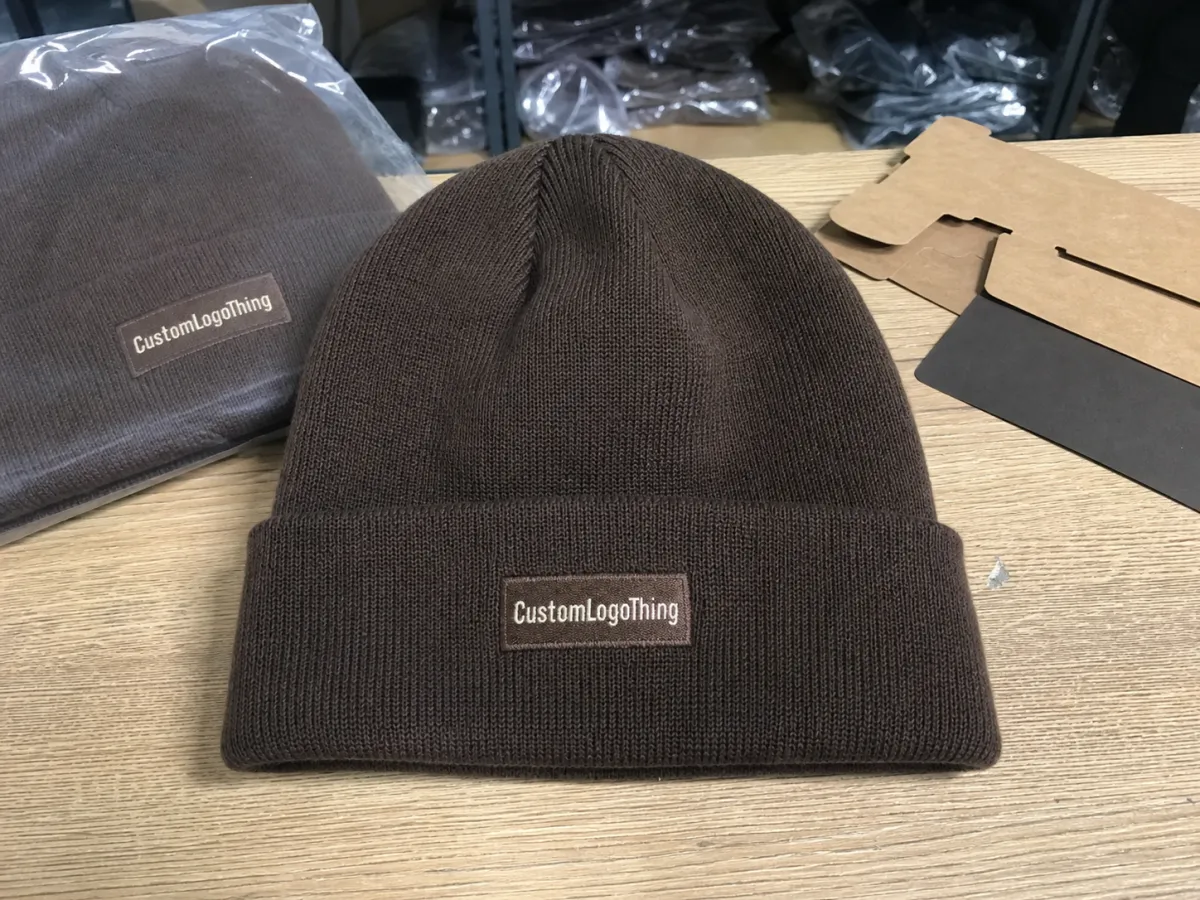
Chocolate sits in a practical middle zone. It is dark enough to feel durable, but softer than black, which can make embroidery and patches look more deliberate. That balance helps in retail, promotion, and team issue programs. A color that feels seasonal without being loud usually has a longer shelf life.
There is also a visual reason buyers keep coming back to this shade. On a hanger, in a folded stack, or in product photography, chocolate reads as intentional rather than default. It carries texture well, and texture is where knit products win. Rib, fold, stitch direction, and patch edge all stand out more clearly than they do on a flat light color.
In demand terms, chocolate beanies fit several use cases at once. A trail brand may want an earthy tone. A university store may need something that pairs with multiple apparel lines. A corporate buyer may want a winter item that feels safe but not bland. That overlap is useful because it reduces the need to create a different SKU for every audience.
Unit cost follows the same logic. The yarn itself is only one piece of the equation. Stitch density, cuff depth, finishing method, and decoration setup can move the quote more than the base color. A thicker rib with a larger cuff uses more yarn and can add knitting time. A shallower cuff saves a little material but may reduce branding space.
Chocolate Color Matching, Cuff Shape, and Fit Details That Matter
A good cuffed knit beanie starts with a cuff that holds its shape. If the fold collapses after a few wears, the piece stops looking retail-ready. If the cuff is too tight, the beanie may feel restrictive. The balance matters because the cuff is both a comfort feature and a branding platform.
Chocolate is also one of the trickier neutral colors to hold consistently. Depending on yarn blend and lighting, it can skew redder, cooler, or nearly black. Buyers Should Ask how the supplier handles shade approval and batch matching. Yarn swatches, photo references, and stored approval samples help only if the factory actually uses them on the next run.
Cuff shape changes the economics in a subtle way. A deeper cuff gives more room for embroidery or woven patch placement, and it often makes the hat feel more substantial. It also uses a bit more material. A slimmer cuff can lower cost and keep the silhouette cleaner, but it leaves less room for branding.
Fit is another area where samples can mislead. Most adult unisex beanies need enough stretch recovery to fit without bagging out, but not so much compression that they feel stiff. If the knit is too loose, the hat looks tired after one wear. If it is too dense, it can sit awkwardly and lose the relaxed shape buyers expect from this category.
Packaging and presentation also influence perception. A neatly folded cuff, aligned logo placement, and clean packing make a simple beanie look more expensive than it is. That matters for retail inspection and for programs where the product is handed out directly.
Specs Buyers Should Confirm Before Requesting Samples
Do not request a sample until the spec sheet is clear. A sample only tells you something useful when it is being compared to a fixed target. At minimum, that target should include yarn content, knit gauge, cuff depth, finished dimensions, stretch range, crown shape, and decoration zone.
Acrylic remains the most common starting point because it keeps the quote accessible and works across a wide range of production methods. Wool blends generally improve warmth and hand feel, but they can raise bulk cost and change the surface texture. Mixed yarns may also affect pilling, which is one of the few quality issues buyers notice after only a few wears.
Decoration should be chosen for both appearance and process efficiency. Simple embroidery is usually the cleanest option for small logos. Woven patches work well when detail matters or when the buyer wants a more retail-forward look. Woven labels and faux leather patches can give the product a more finished identity, but they often introduce added setup or application steps.
Quality control should be defined in plain language. Ask for acceptable measurement tolerance, stitch consistency, colorfastness expectations, and the packing method used for shipment. A supplier that can state those points clearly is easier to work with than one that describes quality in general terms only.
A sample is useful only when it confirms the final build, not when it merely looks attractive under showroom lighting.
If the beanie will be reordered, ask the supplier to preserve the approved spec record. That record should include the yarn blend, knit gauge, cuff height, decoration placement, and packing format. Reorder discipline saves time and protects fit, color, and repeatability.
Chocolate Cuffed Knit Beanies Unit Cost Review: Pricing and MOQ Breakpoints for Bulk Orders
This review becomes useful only when it is tied to order size. Volume is the biggest driver of final price because setup, sampling, and admin overhead are spread across more units as quantity increases. MOQ matters for exactly that reason: a small order carries a heavier share of the same fixed work.
Decoration method, yarn blend, cuff depth, packaging, and any custom color work all shift the quote. A plain embroidered beanie will usually sit on a different price track than a retail-style patch version. Add custom labels, folded inserts, or special bagging and the unit cost rises again. A clean comparison should show the complete stack, not just the base garment number.
The ranges below are practical quote bands, not fixed pricing. They are meant to help buyers spot whether a quote is in the normal zone or drifting away from market reality.
| Order size | Plain cuffed knit beanie | With small embroidery | With retail-style patch |
|---|---|---|---|
| 100-249 pcs | $5.50-$8.50 | $6.50-$10.00 | $7.20-$11.50 |
| 500-999 pcs | $4.20-$6.20 | $5.10-$7.80 | $5.80-$8.90 |
| 1,000+ pcs | $3.20-$4.90 | $4.00-$6.30 | $4.70-$7.40 |
Ask for a quote that separates the variables. Sampling fees, setup charges, decoration setup, label application, freight, and packaging should be visible. If they are buried, the first number on the page is not the real number.
The breakpoint analysis matters. Sometimes moving from 250 to 500 units creates a meaningful drop in unit cost. Sometimes the savings are minor and do not justify the inventory risk. The decision should be based on the actual difference between tiers, not on the assumption that larger is always better.
Custom color matching may add a premium, but not always a large one. In many cases the decoration method changes the economics more than the chocolate shade itself. Still, repeatability matters. If a vendor cannot say how they will hold the same color on a second run, that becomes expensive later.
Production Steps, Timeline, and Lead Time Expectations
A typical knit order follows a predictable path: quote approval, spec confirmation, sample or mockup review, bulk production, finishing, packing, and shipment. The knitting itself is only one stage. Delays usually come from approvals, artwork changes, or last-minute edits to the sample.
Buyers should separate sample timing, production time, and transit time. Those three clocks are not the same. A sample can move quickly while a bulk run waits behind factory scheduling. Freight can add another layer, especially if the destination is not on a standard route.
For seasonal orders, the schedule should include room for correction. A winter launch, campus issue date, or holiday gift program leaves little patience for rework. If a sample fails fit or color review, the delay can be more costly than the change itself.
A straightforward custom beanie order often lands in the 12-15 business day range after all approvals are complete. That is not a promise; it is a common planning window for a simple run with no unusual yarn sourcing, no special packaging, and no prolonged artwork revisions. Add custom labels, unusual finishes, or hand-applied details and the schedule can stretch.
One overlooked source of delay is the buyer’s own approval process. Internal sign-off on logo size, color, and shipping details can take longer than production itself. That is not a manufacturing issue, but it still affects delivery.
What to Compare Before You Choose a Beanie Supplier
Consistency should come first. A supplier that delivers one nice sample but cannot repeat the same shade, cuff height, or logo placement is not a good fit for replenishment work. In practice, repeatability is the product. The first order is only the proof.
Proofing quality is a strong signal. Clear art files, exact measurements, and a written approval process usually indicate better order control. Those things are not bureaucracy. They reduce avoidable error. If the proof is vague, the finished goods often are too.
Communication style matters because knitwear projects involve lots of small decisions. Rib width, patch size, label placement, packing style, and shipping details all need to be confirmed. The better suppliers answer with specifics and keep the quote broken into understandable pieces.
Documentation should be clean enough that procurement can review it without decoding the order. Base cost, decoration cost, setup charges, freight assumptions, and sample terms should be separated. That makes vendor comparison much more useful and cuts down on false price differences.
For repeat programs, ask whether approval references and spec records are stored in a way that supports reorders. That matters more than it sounds. A beanie can become a staple SKU quickly, and once that happens, the ability to reproduce the same finish is more valuable than shaving a few cents off the first run.
Shipping and material references can help buyers ask sharper questions. Many teams use ISTA standards as a frame for thinking about packaging and transit damage. If an order includes paper tags or inserts, FSC-linked paper components may matter in procurement conversations. Those references do not replace the spec sheet, but they add structure to the review.
The cheapest quote is not always the best quote. The more useful comparison is the one that explains why the number is what it is, then proves it can be repeated on the next order. That is the difference between a one-off purchase and a dependable program.
Spec Records and Reorder Planning
Spec records are where a good knit program becomes efficient. Once the approved details are locked, future orders should not require starting over. The record should include yarn content, stitch structure, cuff depth, decoration method, approved color reference, finished measurements, packaging format, and freight assumptions.
It also helps to note the parts of the order that caused friction the first time. If the first sample needed a cuff adjustment, write that down. If the patch placement had to move lower on the fold, keep that in the record. Small corrections are easy to forget, and forgetting them is how reorder costs creep upward.
For buyers managing seasonal inventory, a good spec record does more than save time. It reduces the chance of receiving a second run that looks subtly different from the first. In winter accessories, those small differences matter. Customers notice when a product in the same color family no longer feels like the same item.
This is especially true for chocolate. It is forgiving, but not so forgiving that color drift disappears. A slightly warmer brown or a different rib tension can change the whole impression of the hat. Reorders should protect the shape and the shade with the same seriousness.
If the product is likely to be repeated, the most useful thing a buyer can do is keep the spec simple and measurable. That keeps the next run from turning into a new project with the same name.
Frequently Asked Questions
What affects chocolate cuffed knit beanies unit cost the most?
Quantity usually has the biggest effect because fixed setup and sampling costs get spread across more pieces as the run grows. Decoration method, yarn blend, cuff depth, and packaging also move the price.
What MOQ should I expect for custom chocolate cuffed knit beanies?
MOQ depends on the decoration method, material choice, and whether the color requires custom matching. Ask for tiered pricing at several quantities so you can see where the price drop becomes meaningful.
How long does production usually take after approval?
A straightforward order often falls into a 12-15 business day production window after the spec and artwork are approved. Transit time is separate and should be quoted on its own.
Can I approve a sample before the full run of chocolate cuffed knit beanies?
Yes. Sample approval is the safest way to confirm color, fit, cuff height, and logo placement before bulk production starts. It is much cheaper to catch a problem on one piece than on a full run.
What do I need to request an accurate quote?
Provide target quantity, logo artwork, decoration method, destination, and required arrival date. If you need custom labels, packaging, or a future reorder plan, include that up front so the quote reflects the real scope.


