Beauty Woven Label Beanies Unit Cost Review: What Buyers Miss
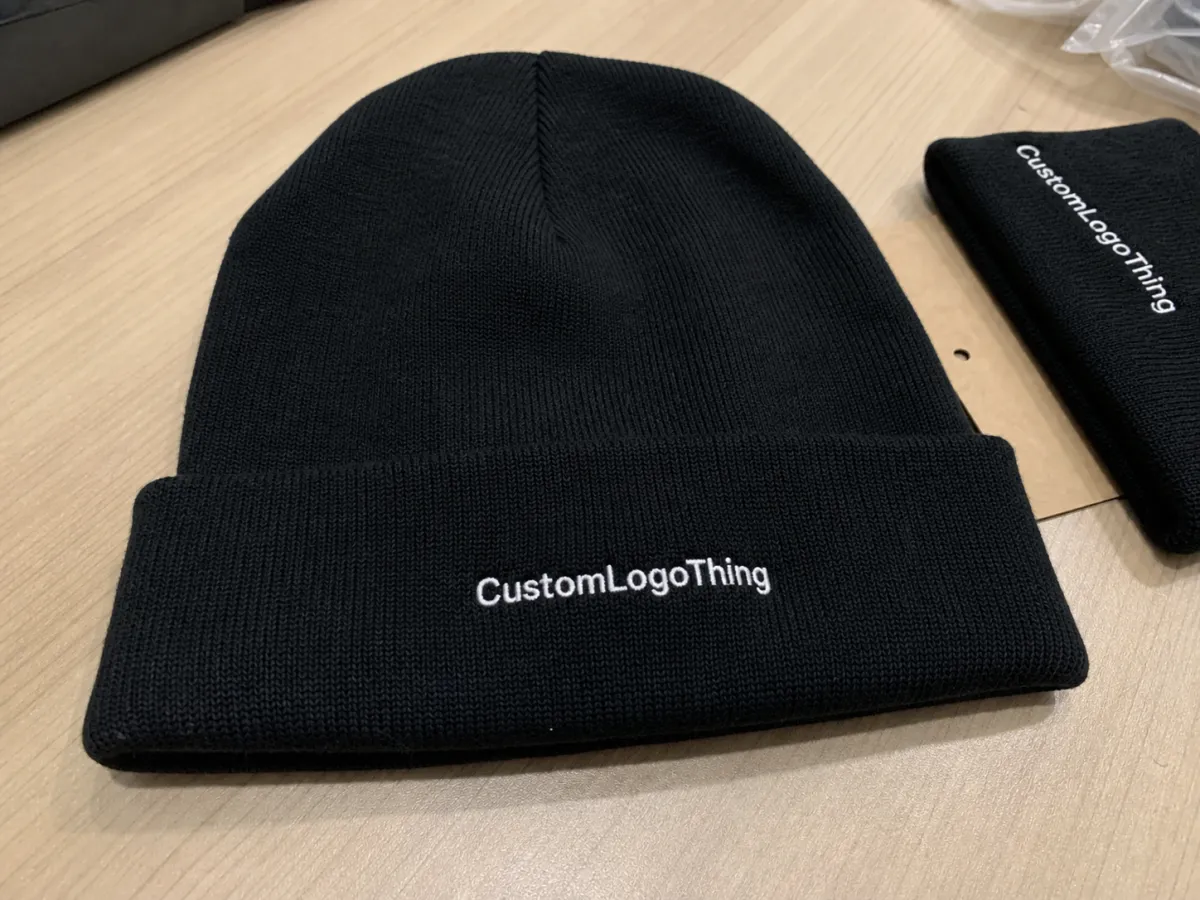
A beauty Woven Label Beanies unit cost review usually goes wrong at the start. Buyers look at the blank beanie price first, then get surprised when the label, sewing, packing, and inspection push the total higher. That is normal on small and mid-sized runs, where setup and handling are spread across fewer pieces.
For beauty programs, that gap matters because the product is judged visually before it is judged for warmth. A cuff that sits flat, a label that is centered, and a fold that holds its shape can lift perceived value more than a small yarn upgrade. In other words, finish quality often matters as much as the knit itself.
The most useful quote breaks the job into three parts: base beanie cost, decoration cost, and fulfillment cost. Once those are separated, the number makes sense. A woven label sewn to the cuff may look simple, but add a specific fold, a second placement, barcode stickers, or retail packing, and the labor changes quickly.
That is why buyers should ask what is included, not just what the unit price is. A quote missing label size, placement, packing format, or delivery destination is likely to come back either padded or incomplete. Suppliers are not guessing; they are protecting themselves from revisions. The tighter the brief, the tighter the price.
Beanie Body and Woven Label Build That Drive Value
The knit body sets the cost floor. Acrylic is still the most common value choice because it is stable in production, easy to color-match, and warm enough for broad retail use. Recycled polyester appears more often when brands want a cleaner material story. Wool blends sit higher on the price ladder, but they justify that cost when hand feel, insulation, and shelf presentation matter.
Shape affects value too. A cuffed beanie gives more room for branding and usually makes label placement easier to control. A cuffless or fisherman style gives less visual space, so the label has to do more work. If the logo is small, the silhouette can matter almost as much as the thread count in the label.
The woven label itself carries most of the brand detail. Damask woven labels are the best choice when the artwork includes fine lettering, thin lines, or small icons. Taffeta is usually cheaper, but it can look flatter and less premium under close inspection. A folded sew-in label adds labor, though it often gives a cleaner edge and better wear resistance.
Placement also affects cost and appearance. A cuff label reads like the main mark, a side-seam label feels quieter, and an inside label can carry care or size information without competing for attention. For repeat orders, the best production file lists yarn content, gauge, cuff depth, finished size, label dimensions, placement, stitch plan, and acceptable color tolerance. Vague notes create avoidable mistakes.
A clean woven label can do more visual work than a heavier knit, because shoppers notice branding before they judge softness.
Specs Buyers Need Before Requesting a Quote
Clear specs are the fastest way to keep budget and timing under control. A supplier can only price accurately if the request includes beanie style, finished dimensions, cuff depth, label size, label placement, yarn content, and the number of label colors. A one-color woven mark on a small label is a different job from a multicolor logo on a folded label with a custom back panel.
Color control deserves the same attention. If the beanie body needs to match a Pantone target, say so. If the woven label must stay inside a narrow palette, send vector art and define the acceptable shade range. Screen color and production color rarely behave the same way, and the difference becomes more obvious on heathered or melange yarns.
Packaging belongs in the spec sheet too. Bulk folding, belly bands, polybags, barcode stickers, hang tags, and retail inserts all add handling time. The labor may look small on paper, but it compounds across hundreds or thousands of pieces. If the order is going straight into warehouse bins, bulk pack may be best. If it is headed to stores or third-party fulfillment, the carton plan and pack format matter to unit cost and freight efficiency.
Proofing should be defined before production starts. A photo mockup, a woven label strike-off, and a preproduction sample do not check the same things. A mockup confirms layout. A strike-off checks weave density, text clarity, and edge finish. A preproduction sample checks the full build, including stitch behavior, label tension, and how the cuff sits once assembled.
One practical habit saves a lot of back-and-forth: send the exact version you want approved. One artwork file, one reference image, and one packing note usually produce a better quote than several short emails with missing details.
Pricing, MOQ, and Unit Cost Drivers
Most of the spread in unit cost comes from five variables: beanie quality, label type, decoration complexity, setup effort, and order size. Shipping destination and packing method sit right behind them. A basic cuffed acrylic beanie with one woven label and bulk packing will never price the same way as a wool-blend beanie with a folded damask label, barcode stickers, and retail folding.
MOQ is where many buyers first feel the economics. Small runs carry a higher per-piece cost because weaving setup, cutting, sewing, and inspection time are spread across fewer units. Once the order grows, the fixed labor gets diluted and the unit price drops. For a standard woven-label beanie, minimums often start around 300 to 500 pieces for the simplest builds, then improve at 1,000, 3,000, and 5,000 units. If the body is custom knit or the label has extra colors, the threshold can move upward.
Setup fees are usually smaller than buyers fear, but they still need to be visible. A quote may include a charge for artwork handling, loom registration, or proofing, and extra charges can appear if the order uses multiple label placements or special packing instructions. The issue is not whether those fees exist; it is whether they show up before approval.
| Quantity tier | Typical unit cost range | What usually changes | Best fit |
|---|---|---|---|
| 300-500 pieces | $2.40-$4.10 per unit | Setup charges weigh heavily; sewing and QC cost more per piece | Samples for retail tests, staff programs, limited drops |
| 1,000-2,999 pieces | $1.55-$2.85 per unit | Better spread on labeling, cutting, and packing labor | Seasonal promotions, ecommerce launches, regional uniforms |
| 3,000-5,000 pieces | $1.20-$2.10 per unit | Bulk pricing improves; freight and packing choices matter more | Retail programs and multi-channel distribution |
| 5,000+ pieces | $0.95-$1.70 per unit | Lowest cost per piece if spec stays stable and artwork is locked | Core assortment and repeat replenishment |
Those ranges assume a standard acrylic beanie with a single woven label and no special retail box. A softer yarn blend, a custom-fold label, or a more demanding stitch plan can move the number upward. The key comparison is total landed cost against the intended use. A slightly higher quote can still be the better decision if it reduces rework, improves shelf appeal, or makes the style easier to repeat next season.
A low quote that omits finishing details often creates extra expense later. Re-labeling, re-folding, delayed launches, and rejected cartons can erase the savings from the lower price. A buyer who compares only the first number is comparing half the product.
Production Steps and Lead Time for Custom Orders
The production flow is straightforward on paper and less simple in practice. It usually begins with artwork submission and quote confirmation, then proof approval, woven label production, sewing, inspection, packing, and dispatch. On a clean order with complete artwork, a standard lead time often falls in the 12 to 18 business day range after proof approval. More complex label work, a custom knit body, or a busy production calendar can push that out.
Artwork revisions are a common delay point. So is color confirmation. A label that looks acceptable on screen may still need a tighter yarn match or a different stitch density before it is released to production. A small error becomes visible fast once it is sewn onto a cuff, especially when the logo must stay centered.
Seasonality matters too. Peak months fill sewing lines faster than buyers expect, and a rushed order can lose its position in the queue if packaging changes late. Rush production may shorten the calendar, but it often affects price, packing options, or freight method. Air freight is faster and more expensive; sea freight is better for larger replenishment orders, but it needs a wider buffer and tighter inventory planning.
Transit planning should sit inside the schedule, not outside it. Factory completion is not the same as launch-ready inventory. Customs clearance, warehouse intake, and carton checks can add days or weeks depending on the route. For cartons that need to survive parcel networks or distribution center handling, reviewing transit testing guidance from ISTA is sensible, especially if retail packing is part of the program.
The best calendar is boring and realistic: approve the proof, confirm the label placement, lock the packing method, and leave room for one revision cycle if the first sample misses the brief.
Why a Retail-Ready Supply Partner Reduces Rework
A good supplier does more than quote fabric. The supplier should confirm specs clearly, check artwork carefully, keep label placement consistent, and inspect the final cartons before they ship. Those steps sound basic, but they are what keep a program from drifting into avoidable rework. On a beanie run, most failures are small misses: a label sewn a little off center, a stitch line that puckers the cuff, or a packing note that was read as optional.
Each of those errors has a cost. Remaking goods uses labor. Re-approving samples uses time. Re-freighting late cartons can eat the margin on the whole order. A supplier with disciplined proof control reduces that risk by catching issues before they move beyond the sample stage. The same logic applies to reorder continuity. If a program needs multiple drops through a quarter, documented specs make the next unit cost review more reliable because the build is already defined.
Retail-ready control also matters when the product expands beyond the beanie itself. Hang tags, care labels, size marks, and barcode systems all need to sit together without fighting each other. Suppliers that understand how those details work as a system tend to produce fewer surprises. That is one reason buyers often evaluate trim and headwear together, not as separate projects.
Communication is the quiet quality check. A supplier that asks about cuff depth, logo placement, and carton packing is usually the one that will avoid errors later. That behavior is less glamorous than a polished sales deck, but it protects both budget and on-time delivery.
What to Send for a Fast, Accurate Quote
If the brief is clean, the quote will be cleaner. The strongest request includes beanie style, quantity, target delivery date, label artwork, preferred placement, size requirements, fiber content, and packing needs. If the cuff should be a specific depth, say it. If the label must be centered on the front edge, say that too. Suppliers price based on what they can measure, not on what they have to infer.
Reference images remove a surprising amount of friction. A photo of an existing beanie, even from another supplier, often clarifies what the buyer means better than several paragraphs of description. That becomes even more useful for repeat programs where the goal is to match an existing look. One good reference, one final artwork file, and one packing note usually move the process faster than a chain of email clarifications.
It also helps to ask for pricing at multiple quantity breakpoints. A 500-piece quote, a 1,000-piece quote, and a 3,000-piece quote often show where the price starts to fall and where the order makes more sense. That comparison is more useful than a single unit price because it reveals the inventory tradeoff.
- Include one artwork file in vector format.
- State the label size and placement.
- List the packing method you want.
- Ask for setup charges before approval.
- Confirm whether the proof is digital or physical.
Once those items are in the request, the quote becomes a buying tool instead of a rough estimate. That is the real purpose of a beauty woven label Beanies Unit Cost Review: not to find the cheapest line on the page, but to match the quote to the product, the calendar, and the margin target with enough detail to avoid surprises later.
What drives beauty woven label beanies unit cost the most?
The biggest drivers are beanie material, label construction, order quantity, and finishing requirements such as folding or retail packing. Smaller runs usually cost more per piece because setup, sewing, and inspection are spread across fewer units, so the quote should always be read with MOQ and packing format in mind.
What MOQ should I expect for woven label beanies?
MOQ depends on the label build, color count, and whether the order uses standard blanks or a custom knit body. Many programs become more efficient once the run size is large enough to absorb setup, cutting, and sewing time, which is why 300 units can look expensive while 1,000 units often read much better.
How long does production usually take after approval?
A straightforward order often lands in the 12 to 18 business day range after proof approval. That window can stretch if artwork changes, shade matching takes longer, or the packing plan is more complex than expected, so lead time should always be checked before the order is released.
Can I change label placement without changing the beanie style?
Yes, but placement changes can affect sewing time, visibility, and the way the beanie sits once it is folded or worn. A new placement should be checked in proof form first, especially if the label moves from the cuff to a side seam or inside position.
What should I compare when reviewing quotes from different suppliers?
Compare the exact beanie spec, label type, MOQ, packaging method, lead time, and freight basis. A lower unit price is not always the better deal if the quote leaves out sewing details, finishing, or shipping support, and that is the practical beauty woven label beanies Unit Cost Review buyers should trust before they place the order.


