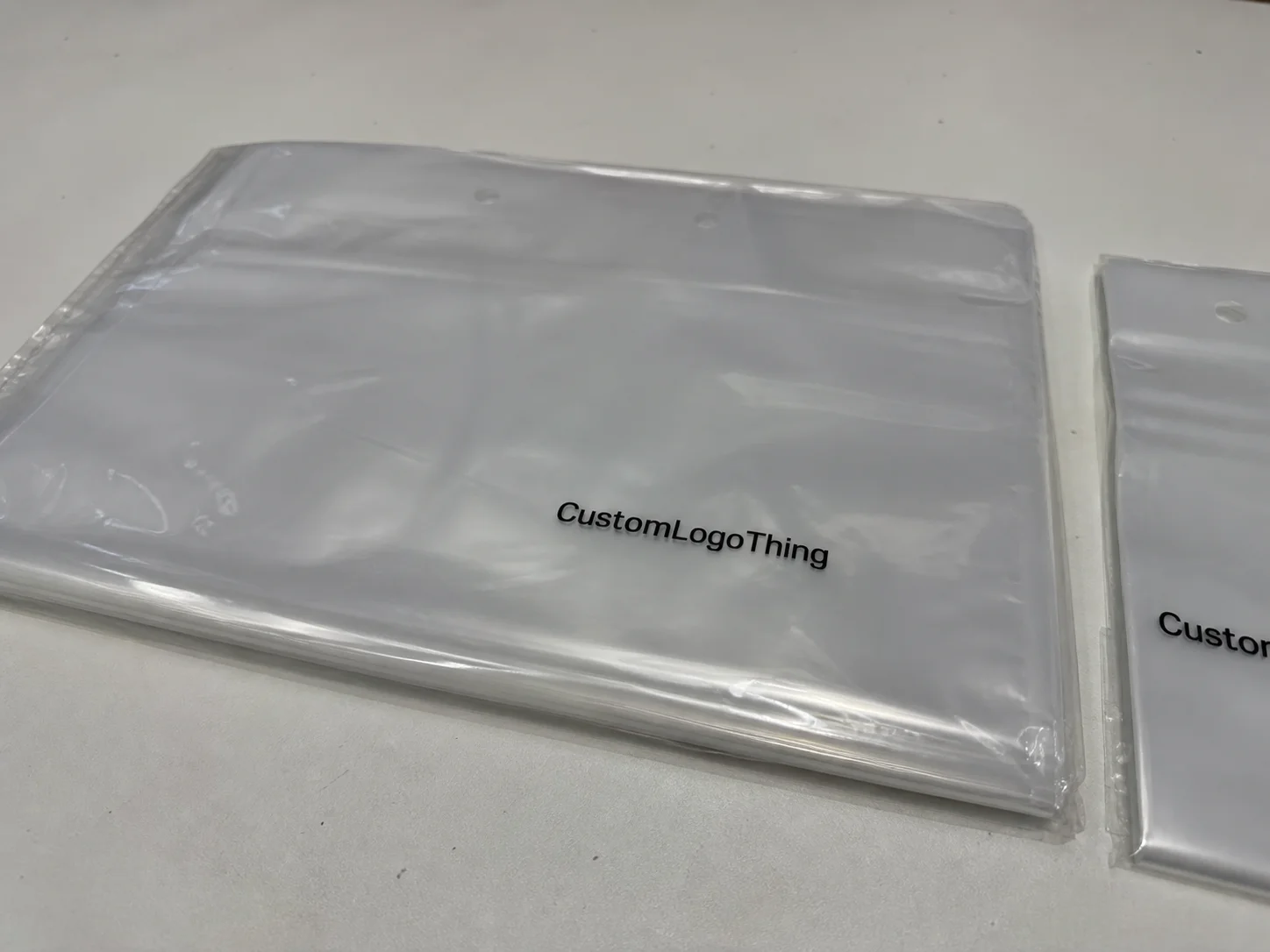
A garment bag can look like a simple clear pouch until the zipper drags, the film clouds up, the barcode will not scan, or the packer has to fight the closure 400 times before lunch. Choosing a private label Slider Lock Clothing Bags supplier is really about controlling those small details before they turn into slow packing, damaged presentation, or a bag that feels more like a warehouse afterthought than retail packaging.
Private label Slider Lock Clothing Bags are resealable plastic apparel bags made for a brand, retailer, fulfillment program, sample room, subscription business, or ecommerce operation. The bag may carry a printed logo, suffocation warning, recycle mark, QR code, size sticker, hang hole, barcode label, opaque privacy panel, or carton label system. Some orders are plain and practical. Others are part of the customer’s first branded touchpoint after the shipping carton opens.
There is no single “best” apparel poly bag. A balletwear brand shipping delicate mesh has a different requirement from a workwear company packing canvas jackets. A subscription apparel program may care about repeat opening and return handling. A warehouse team may care more about scan speed, bag mouth opening, and carton count. Good bag design starts with use, not decoration.
What a private label slider lock clothing bags supplier actually provides
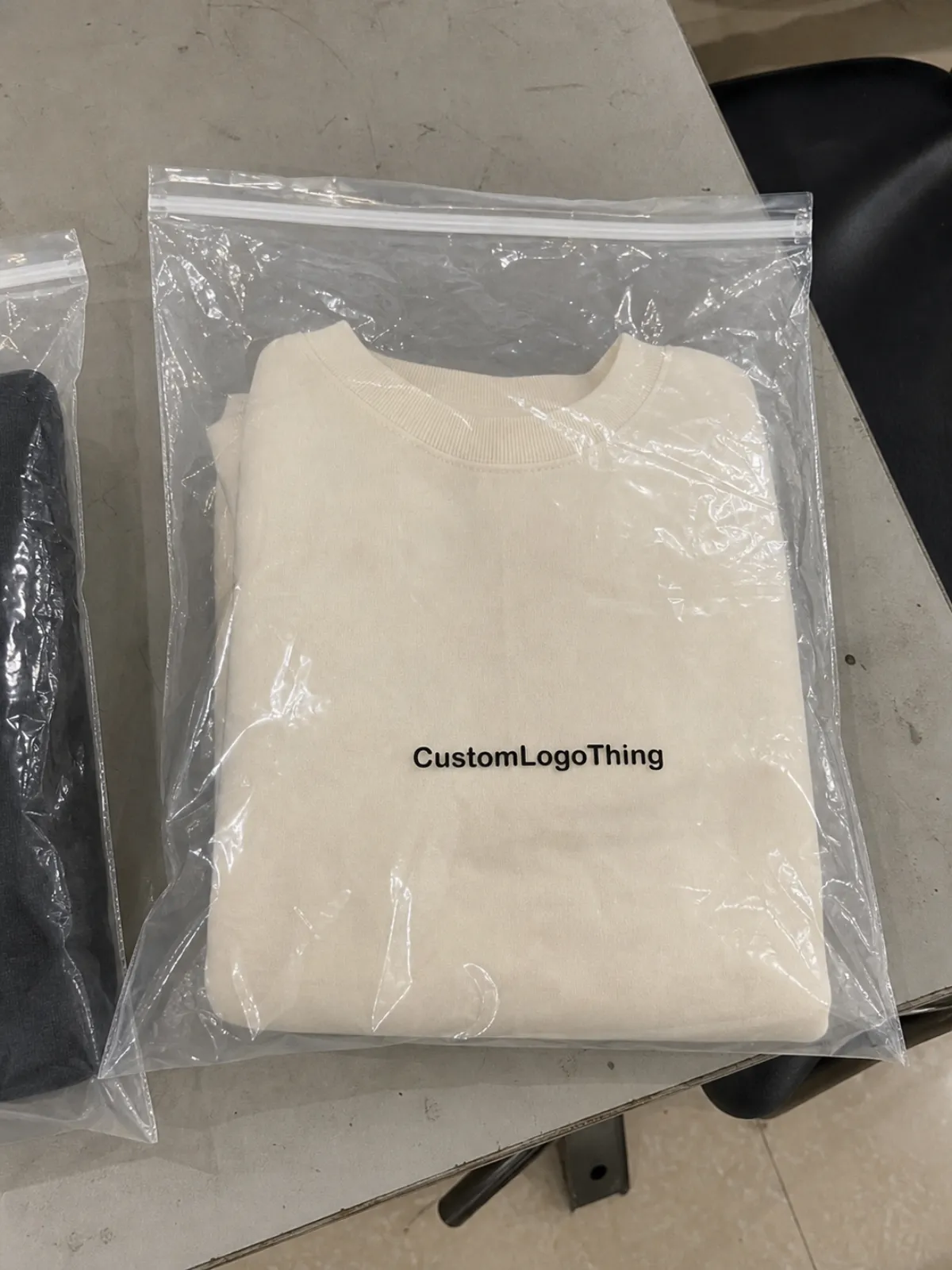
A slider lock closure is a small plastic zipper track with a moving slider that opens and reseals the bag without requiring the user to pinch along the full zipper line. For apparel, that matters. A thick hoodie, denim jacket, folded sweater, or returned garment often pushes against the closure, and a slider usually handles repeated opening better than a basic press-to-close zipper or adhesive flap.
A capable private label Slider Lock Clothing Bags supplier does more than sell a bag by width and height. The supplier should help with film selection, gauge, closure compatibility, print setup, sizing tolerance, sampling, carton quantity, compliance markings, and freight planning. If the buyer only receives a one-line quote that says “custom plastic bag with zipper,” too much has been left to assumption.
From a packaging buyer’s point of view, the best conversations start with the garment and the packing process. Is the bag going into retail display, warehouse storage, direct-to-consumer shipping, returns processing, or showroom sampling? Will customers reopen it ten times, or will a warehouse team open it once? Does the garment have metal trims, drawcord tips, buttons, sequins, or rigid folded seams that can stress the film?
A supplier should also understand how private label work affects repeat orders. Artwork files need to be controlled. Print colors should be matched against a physical or digital standard. Bag dimensions should be documented with clear inside-useable measurements, not only flat outside dimensions. The slider color, zipper profile, vent hole position, carton pack count, and label placement should all be written into the specification.
Practical rule: if the bag must look premium after shipping, scanning, sorting, opening, and resealing, treat the slider, film gauge, venting, and print placement as performance specs, not decoration.
The goal is not to overbuild every bag. Honestly, I think that is one of the more expensive mistakes buyers make. The goal is to speak clearly with suppliers, compare quotes fairly, and avoid ordering bags that look fine on a PDF spec sheet but fail during packing, transit, or retail handling.
How slider lock apparel bags work from film to finished pack-out
Most slider lock apparel bags start as plastic film that is converted into a bag shape, sealed along the sides or bottom depending on the style, fitted with a zipper track and slider component, then packed flat for garment loading. The exact converting path depends on whether the bag is bottom-load, side-seal, wicketed, gusseted, or built for manual loading at a fulfillment bench.
Material choice sets the personality of the bag. LDPE is soft, flexible, and forgiving, so it is common for Apparel Poly Bags. HDPE feels crisper and can reduce material weight, though it may sound louder and feel less boutique. PP and CPP can provide clearer presentation, which helps when fabric color and folding need to show neatly. Recycled-content film can support sustainability goals, but appearance, clarity, seal strength, and resin availability should be tested instead of assumed.
Gauge selection is where cost and feel start wrestling. A lighter film may reduce unit price and shipping weight, especially on 25,000 or 50,000 pieces. A heavier film improves hand-feel, puncture resistance, and perceived value for denim, jackets, knits, reusable storage, or premium custom garment packaging. For many clothing programs, common film thickness falls around 2.0 to 3.0 mil for LDPE, with heavier applications moving to 3.5 mil or more. Thin clear poly can work for a T-shirt; it may not survive a bootcut jean with metal hardware.
The slider itself deserves attention. Low-cost sliders can feel gritty, jump the track, or snag on the side seal if the bag is too narrow near the opening. A better slider moves cleanly, reaches the end stop without popping off, and stays usable after repeated opening. If the bag is meant for returns, sample storage, or customer reuse, ask for cycle testing. Even 20 open-close cycles on a sample can reveal more than a pretty rendering.
Venting is another small feature with a real production impact. A sealed bag full of trapped air slows carton packing and can make stacks unstable. Small round vent holes, micro-perforations, or a tiny open path near the closure can help air escape. That said, venting must be placed carefully on moisture-sensitive garments, light-colored fabrics, and products that may encounter dusty warehouse conditions.
Material, size, and print specs that make clothing bags feel premium
Premium does not always mean heavy. It means the bag fits properly, opens easily, presents the garment cleanly, and carries brand information without making the packer’s job harder. A well-sized 2.5 mil LDPE resealable clothing bag can feel more professional than an oversized 4.0 mil bag with wrinkled film and a crooked logo.
Film and clarity
For clear retail-style packaging, clarity and haze matter. CPP often gives a glassier appearance than LDPE, while LDPE gives more softness and toughness. If color presentation matters, request physical samples over the actual fabric colors, especially black, white, navy, cream, and bright red. Some films make white garments look slightly gray. Others reflect light so heavily that barcode scans become annoying under warehouse lamps.
Ask whether the film is virgin resin, recycled-content film, or a blend. Post-consumer recycled content can be useful for sustainability messaging, but it may create slight specks, tint, odor variation, or reduced clarity. Not always, but often enough that samples should be handled under real lighting. If the claim will appear on the bag, the supporting documentation needs to match the claim.
Size and tolerance
Bag sizing should be based on the folded garment, not the flat garment pattern. Measure the folded width, folded height, and compressed thickness. Then allow enough room for loading, but not so much that the garment swims around and arrives with a sloppy presentation. A common practical allowance is 0.5 to 1.0 inch on width and 1.0 to 2.0 inches on height, depending on fabric bulk and packing style.
Useable opening matters too. If a bag is quoted as 12 by 16 inches, ask whether that includes the area above the zipper, the slider track, or header space. A bag can technically be the correct outside size while still feeling too tight because the zipper reduces the usable mouth. For thick garments, the opening width may be more important than the bag body width.
Printing and marks
Print can be simple or demanding. One-color flexographic printing may be enough for a logo, suffocation warning, recycle symbol, and size code. Multi-color branding, matte panels, or large ink coverage can change cost and lead time. On flexible film, fine type can fill in, thin lines can break, and reversed-out text can blur if the artwork is not built for the process.
For barcode printing, do not guess. Ask for scannability testing against the scanner type used in your warehouse or retail operation. A barcode printed over a soft fold, slider ridge, or high-gloss wrinkle can fail even when the artwork file is correct. GS1 sizing guidance is useful, and ASTM packaging test methods can help frame performance discussions, but the final proof should still be checked in the actual workflow.
Compliance markings also need careful placement. Suffocation warnings may be required based on bag opening size and sales channel rules. Recycling marks should follow the material. FSC does not apply to plastic film itself, but it can apply to paper inserts, hangtags, or cartons used with the bag. If a supplier casually places a sustainability icon on every proof without asking about resin and documentation, slow down and verify.
Pricing, MOQ, and unit cost factors buyers should compare
Pricing for zipper apparel bags depends on film type, thickness, bag size, slider quality, print colors, ink coverage, order quantity, packing method, and freight. A small, clear, one-color LDPE slider bag for lightweight garments may sit around $0.12 to $0.22 per unit at moderate quantities, while larger premium bags with heavier film, colored sliders, full custom print, or recycled-content resin may run $0.25 to $0.55 or more. Very large bags for coats, gowns, or bulky knits can climb higher.
Those ranges are broad because specs drive everything. For 5,000 pieces, a custom printed slider bag may cost $0.18 to $0.35 per unit depending on size and print coverage. At 25,000 pieces, the same bag may drop noticeably because setup time, plate Cost, and Production waste spread across more units. For very small orders, digital labels on stock bags may be more sensible than fully custom printed film.
MOQ is not just a supplier preference. It ties back to film extrusion, print setup, zipper components, machine time, and packing labor. Some suppliers can produce 3,000 to 5,000 custom bags if the film and slider are standard. Others prefer 10,000 to 25,000 pieces for custom print or nonstandard sizes. A private label slider lock clothing bags supplier should explain what drives the MOQ instead of presenting it as a mystery number.
Compare quotes line by line. Does the price include artwork setup? Are printing plates extra? Is the slider a standard color or custom color? Are cartons included? Is freight quoted to your door, port, warehouse, or fulfillment center? Are samples free, charged, or credited after order placement? A quote that looks cheaper by two cents can become more expensive after plates, inspection, and inland freight are added.
Freight deserves its own line in the budget. Apparel bags are light, but cartons can be bulky because slider tracks prevent tight compression. Ocean freight may be economical for large volumes, while air freight can punish oversized cartons. For replenishment programs, ask for carton dimensions, carton weight, and units per carton early. Warehouse teams appreciate that information before a pallet shows up.
Process and timeline from artwork approval to delivered bags
A clean process usually starts with a written specification, not a purchase order. The spec should include bag style, material, gauge, size, opening direction, slider color, zipper type, print colors, artwork location, venting, warnings, pack count, carton marks, sample requirements, and delivery address. If any of those fields are missing, someone will fill in the blank later, and that person may not understand your garment.
Sampling can take several paths. A supplier may send stock samples first so the buyer can feel film thickness and test slider action. After that, a pre-production sample or printed proof can confirm artwork size, placement, color, and bag construction. For simple jobs, proofing may take 3 to 7 business days. For custom film, special slider colors, or recycled-content validation, sampling may take longer.
Production after proof approval often falls around 12 to 25 business days, depending on order size, print complexity, machine schedule, and material availability. Freight then adds time. Domestic delivery may be a few days after production. Imported orders may need several weeks by ocean, plus customs and inland transit. Air freight can shorten the schedule, but it can also erase the savings that made offshore production attractive.
Build in approval discipline. Artwork files should be final before plates are made. Size should be approved with a physical folded garment, not only a measurement table. The buyer, warehouse, merchandising team, and compliance contact should all review the same proof if they each care about different parts of the bag. One late barcode change can delay an entire production run.
For repeat programs, ask the private label slider lock clothing bags supplier to keep a controlled master spec. That document should show revision dates, not as a heading or marketing label, but as production control. If the slider changes, the film gauge changes, or the vent hole moves, the revision should be visible. Quiet spec drift is one reason repeat orders suddenly feel different even though the buyer “ordered the same bag.”
Common mistakes that create delays, waste, or weak branding
The first mistake is undersizing. It sounds harmless because a snug bag looks tidy in a mockup. On a packing line, though, undersizing creates friction, stretched seams, crooked folds, and slower labor. If a packer has to push, shake, and refold every garment, the savings from a smaller bag disappear quickly.
The second mistake is overprinting. Big ink coverage can look strong on screen, but it may increase blocking, odor, drying time, and scuff risk on flexible film. Heavy dark print can also hide the garment, which defeats the point of clear apparel packaging. If the brand wants visual impact, consider a banded logo area, frosted panel, or printed header rather than flooding the full bag.
The third mistake is treating all sliders as equal. They are not. Some sliders feel loose and cheap. Some require too much force. Some are fine on a small bag but unreliable on a wide sweater bag. Test the slider with cold hands, gloves, and repeated use if warehouse or returns teams will handle the bags often.
The fourth mistake is ignoring static and blocking. Thin plastic film can cling, especially in dry packing environments. Bags may stick together, slowing manual loading. Anti-static additives or adjusted packing methods can help, but they need to be discussed before production. A private label slider lock clothing bags supplier familiar with apparel fulfillment should recognize this issue quickly.
The fifth mistake is missing sales channel requirements. Marketplaces, retailers, and third-party logistics providers may require specific suffocation warning language, barcode placement, minimum bag thickness, or poly bag closure rules. Requirements vary, and they change. The supplier can help with common packaging conventions, but the brand still owns final compliance approval.
One more: buyers sometimes approve a beautiful sample with no carton test. A garment bag that looks great on a desk can crush, wrinkle, or develop pressure marks after being stacked in a master carton. For ecommerce and replenishment channels, ISTA-style transit thinking is useful even if a full lab test is not required. Simulate compression. Shake the carton. Open it again after a day. The bag will tell you something.
Factory-floor tips for cleaner specs and smoother ordering
Start with the garment stack. Not the CAD file. Not the catalog image. Fold the garment exactly as production will fold it, add any tissue, insert, hangtag, or spare button envelope, then measure the loaded shape. If the garment relaxes and grows after folding, measure again after a few minutes. Knits can do that.
Request three physical film options whenever possible: value, standard, and premium. Buyers often choose better when they can feel the tradeoff. A 2.0 mil bag may be perfectly acceptable for lightweight tees, while 3.0 mil may make sense for sweaters or resale-friendly storage. A sample kit prevents long email debates over words like “thick” and “premium.”
Use plain language on drawings. Mark “inside usable width,” “inside usable height below zipper,” “slider opens left to right,” “vent holes on back panel only,” and “barcode must remain flat after garment loading.” These notes sound basic, but they prevent misinterpretation. Technical drawings do not need to be fancy; they need to be unambiguous.
Keep the bag mouth generous. A slightly wider opening can speed loading more than buyers expect. If the operator can slide the garment in cleanly without catching sleeve corners, the bag looks better and labor time drops. On high-volume programs, saving even two seconds per pack can matter.
Ask about seal width and seal strength. Narrow seals may look clean but can split if bulky garments press outward. Wider seals use a bit more material and can change the appearance, yet they provide more confidence on heavy items. For puncture-prone garments, test seams by loading the product, pressing out air, closing the slider, and applying realistic carton pressure.
Color-match the slider only if it helps the brand. A black, white, frosted, or clear slider may be stock and economical. A custom color slider can look sharp, but it may require higher MOQ and longer lead time. If the slider color is not central to the retail experience, spend the budget on better film, better print control, or improved sizing.
For sustainability-minded programs, be precise. “Eco-friendly” is too vague. Say recyclable LDPE where accepted, 30% recycled content if verified, reduced-gauge film if performance holds, or reusable storage bag if designed for repeated use. Claims should be backed by supplier documentation and reviewed against FTC Green Guides or local advertising rules. Packaging sustainability is a material fact, not a slogan.
Next steps before you request samples or place an order
Before contacting a private label slider lock clothing bags supplier, gather the details that make quoting accurate. You do not need a perfect engineering package, but you do need enough information to prevent guessing. A supplier can advise, but vague requests create vague quotes.
Prepare a short spec sheet with the garment type, folded size, target bag size if known, estimated annual quantity, first order quantity, print colors, logo file, warning text, barcode requirements, destination, and preferred delivery date. Add photos of the folded garment and any existing packaging you like or dislike. If the bag needs to work with a packing table, scan tunnel, carton size, or returns process, include that too.
Then request samples in two stages. First, ask for similar stock samples to judge film, slider, clarity, and thickness. Second, request a job-specific proof or pre-production sample before mass production. For high-volume programs, do not skip the second stage. It is cheaper to catch a mispositioned logo on one proof than on 20,000 finished bags.
Set expectations for inspection. A reasonable inspection checklist may include bag size tolerance, film thickness, print registration, ink adhesion, slider movement, zipper closure, side seal integrity, vent placement, carton count, and carton labeling. For formal programs, AQL inspection can be used, but many smaller apparel brands can still benefit from a simple receiving checklist.
If the bag will ship through a demanding ecommerce network, run a small pack-out trial. Load actual garments, scan labels, close sliders, pack cartons, stack cartons, and open them again. Watch the operators. Their hands will reveal what the spec sheet missed.
FAQs
What is the best material for slider lock clothing bags?
LDPE is the most common choice because it is soft, flexible, and forgiving during garment loading. CPP or PP can look clearer and crisper, which may suit retail presentation. HDPE may reduce weight but can feel noisier. The best choice depends on garment weight, desired clarity, price target, and whether the bag needs to be reused.
What thickness should apparel slider bags be?
Many apparel programs use film around 2.0 to 3.0 mil. Lightweight T-shirts may work at the lower end, while denim, sweaters, jackets, and reusable storage bags often need heavier film. Test with the real folded garment, because fabric bulk and trims matter more than the product category name.
How much do custom slider lock garment bags cost?
As a practical range, small or mid-size custom zipper apparel bags may cost about $0.12 to $0.35 per unit at moderate quantities, while larger premium bags can move to $0.25 to $0.55 or higher. Size, gauge, print coverage, slider type, recycled content, MOQ, and freight all affect the final landed cost.
What MOQ should I expect?
Some suppliers can support 3,000 to 5,000 pieces for standard materials and simple printing. Custom sizing, special film, colored sliders, or multi-color artwork may push MOQ toward 10,000 to 25,000 pieces. Ask what drives the MOQ so you can adjust the spec intelligently rather than only pushing for a lower number.
Can these bags include recycled content?
Yes, many programs can use recycled-content film, but the appearance and performance should be sampled. Recycled content may affect clarity, tint, seal strength, odor, or availability. Request documentation if you plan to print a recycled-content claim or communicate it to customers.
How do I know if a supplier is reliable?
A reliable supplier asks detailed questions before quoting. They clarify usable dimensions, film gauge, slider style, print method, compliance marks, Samples, Lead Time, and freight terms. They should also provide physical samples and a written production specification. If a quote is fast but thin on detail, treat it carefully.
The right bag should protect the garment, help the packing team move efficiently, and make the brand feel organized the moment the customer opens the shipment. A good private label slider lock clothing bags supplier will help you balance material, closure, print, cost, compliance, and timing without pretending every order needs the most expensive option. Get the folded garment, test the slider, verify the artwork, and insist on a clear written spec; those simple steps prevent most of the problems that make apparel packaging harder than it needs to be.