The hoodie bag looks fine on the desk. Then the slider jams after ten openings, the gusset steals half an inch of usable space, and the printed logo scuffs after one carton ride. That is why a Slider Lock Clothing Bags Sample Approval Checklist is not paperwork. It is damage control before the damage exists.
Apparel packaging samples are sneaky. Buyers often check the logo first, the color second, and the closure last. Wrong order. The slider is the part the shopper, warehouse packer, retail associate, and returns team touch repeatedly. A bag can look approved while failing on fit, seal alignment, film stiffness, barcode placement, or packing speed.
Sample approval is a pre-shipment inspection in miniature. You are not approving one tidy plastic bag. You are approving the assumptions behind 5,000, 25,000, or 100,000 bags: dimensions, material, slider function, print, labeling, pack-out, and tolerances before production money gets locked in.
Why a Slider Lock Clothing Bags Sample Approval Checklist Prevents Expensive Rework
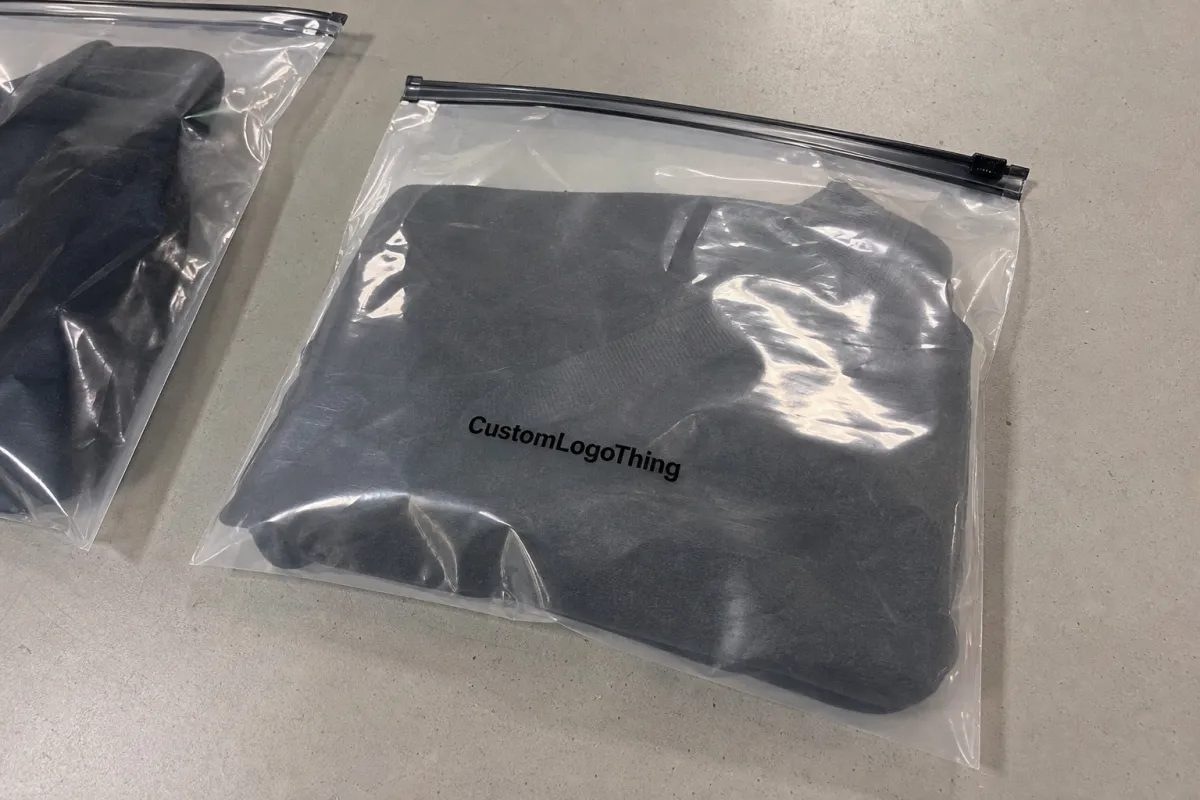
A proper checklist forces the buyer to test the sample as a working package, not as a pretty proof. That distinction matters. A sharp logo can distract from a zipper track that is slightly misaligned, a seal that narrows the opening, or a film gauge that wrinkles around fleece like tissue paper.
Most bulk-order disputes start with something small that was visible during sampling. Not always obvious. Visible. A 3 mm print shift near a fold. A slider that needs two hands. A warning label placed where the garment blocks it. A barcode that scans flat on a desk but fails at a 45-degree angle under warehouse lights.
Plastic bag production has normal manufacturing variation. Width may move by a few millimeters. Print placement may shift within an agreed tolerance. Film thickness can vary depending on extrusion control, resin blend, and recycled-content consistency. None of that is automatically a defect if it was disclosed and approved. The trouble starts when nobody defines the pass-fail line.
Approval should answer one blunt question: if every bag in the order looked and performed like this sample, would the receiving team accept it without extra labor, customer complaints, or repacking?
For Custom Apparel Packaging, the checklist is also a translation tool. It converts vague buyer reactions into measurable instructions: 70 microns instead of “stronger,” Pantone reference instead of “more premium,” 12 mm from the seal edge instead of “move the logo up a little.” The supplier cannot manufacture vibes. Annoying, I know.
Clear approval notes reduce rework before it becomes expensive. They also protect both sides. The buyer gets a defined standard. The supplier gets a production target. The warehouse gets fewer surprises in receiving.
How Slider Lock Apparel Bags Work From Film to Closure
A slider lock apparel bag looks simple because the engineering is quiet. The basic anatomy includes front and back film panels, side seals, a bottom seal or fold, optional gusset, zipper track, plastic slider, header area, vent holes, possible hang hole, and printed branding zones. Each part affects the next.
The slider works by forcing two zipper profiles together or apart as it travels along the track. If the profiles are not aligned, the slider can feel gritty, skip near the end stop, or close unevenly. Buyers sometimes call this “cheap plastic,” but the root cause may be track geometry, seal pressure, slider fit, film tension, or a weak end stop.
Material choice changes the entire experience. LDPE is common because it is flexible, familiar, and usually economical. LLDPE blends can improve puncture resistance. Recycled-content PE may support packaging goals, but it can introduce more haze, odor, or color variation depending on feedstock quality. Frosted film hides wrinkles and fingerprints. Clear film gives better garment visibility. Coextruded structures can improve stiffness, clarity, or seal performance, though they may complicate cost and sourcing.
Film gauge is the lever buyers underestimate. A 40-50 micron bag may control unit cost for lightweight tees, but it can wrinkle badly around bulky hoodies. A 70-90 micron bag feels more substantial, yet overly stiff film can make the slider harder to operate and increase freight weight. There is no universal best gauge. The right gauge depends on garment bulk, retail presentation, handling, and budget.
Use case changes the pass-fail criteria. Showroom samples need clarity and hand feel. Ecommerce fulfillment needs fast packing, barcode readability, and reliable closure. Retail hanging display adds hang-hole strength and front-panel presentation. Warehouse storage adds carton compression, blocking resistance, and static control. The sample review should reflect the real journey, not just the buyer’s desk review.
These bags are not merely containers. They are repeated-use interfaces. A frustrating slider can make a $60 sweatshirt feel cheaper than it is. A clean resealable bag can make returns, exchanges, and closet storage less annoying for the customer. Small difference. Big impression.
Fit, Film Gauge, Slider Feel, and Print Accuracy to Inspect
Start with dimensions that can be measured, not guessed. Record lay-flat width, usable interior width, total length, length to closure, gusset depth, opening width, header height, seal width, and distance from print to seal. If the bag is 300 mm wide outside but the side seals and zipper track reduce usable space to 282 mm, 282 mm is the number your garment cares about.
Test the real folded garment. Not a similar item. Not an empty bag. A fleece hoodie, denim jacket, satin dress, and compression-packed poly mailer insert behave differently. Fleece fights the slider. Denim creates hard corners. Silky fabrics slide and bunch. Approving a sample with air inside it is a good way to get humbled by production.
Slider feel deserves a small stress test. Open and close the bag at least 20 times. Check for catching at the end stops. Try one-handed use. Listen for uneven resistance. If the slider moves smoothly for the first five passes and then starts separating the track, document it with a short video and request a corrected sample.
Film checks should include haze, clarity, stiffness, odor, thickness consistency, static, wrinkle memory, and collapse after filling. A strong solvent or resin odor is a red flag for apparel, especially if garments will sit packed for weeks before sale. Static can slow fulfillment when bags cling together. Wrinkle memory matters if the front panel is supposed to display a logo cleanly.
Print approval is more than logo size. Check brand color, opacity, registration, ink rub resistance, barcode scanability, care-symbol readability, and placement relative to folds or viewing windows. Rub the print with a clean white cloth after the bag is filled, then again after light stacking pressure. If high-coverage ink cracks near the zipper track, the design may need more clearance or a different print setup.
- Dimension tolerance: confirm whether width and length can vary by 2 mm, 5 mm, or another agreed range.
- Print tolerance: define acceptable movement from the approved artwork, measured from a seal, fold line, or bag edge.
- Gauge tolerance: ask whether film thickness is controlled by nominal gauge, average gauge, or a minimum acceptable range.
- Closure tolerance: describe slider defects clearly, including snagging, skipping, track separation, loose end stops, or uneven closure force.
The common failure is approving the sample as an object instead of testing it as a process. A good sample review makes the bag work under the same conditions the bulk order will face.
Sample Approval Process and Timeline Before Production
The usual process is predictable: confirm specifications, receive a digital proof, approve artwork, produce a pre-production sample or strike-off, inspect it, request changes, approve the final sample, then release bulk production. The order sounds tidy. The delays rarely are.
A digital proof may be enough for a repeat order with unchanged dimensions, film, slider, print method, and packing. It can verify artwork position, warning text, barcode size, and basic color intent. It cannot verify slider feel, film stiffness, odor, garment fit, or seal strength. For new bag dimensions, new slider styles, recycled-content film, high-coverage artwork, or tight garment fits, insist on a physical sample.
Typical timing depends on artwork readiness, material availability, print complexity, sample shipping method, buyer response speed, and revision count. A straightforward branded sample might take 5-10 business days before shipping if no tooling is needed. More complex film blends, custom slider colors, unusual vents, or special packing can add another week or more. International sample transit can add 3-7 days depending on service level and customs handling.
The slowest part is often not making the sample. It is translating unclear comments into revised specifications. “Make the bag nicer” can trigger three supplier guesses. “Increase film from 50 microns to 70 microns, keep clear finish, and maintain the same zipper track” gives production a target.
Set a disciplined review window. Inspect the sample within one business day of receipt if the production timeline is tight. Photograph every pass-fail note with a ruler or garment inside the frame. Consolidate feedback into one email so the supplier is not chasing scattered messages from design, operations, merchandising, and compliance.
Timeline risk compounds near seasonal launches, influencer drops, retail resets, and warehouse intake deadlines. A two-day sampling delay can turn into a missed vessel booking, an air freight upgrade, or a rushed approval that everyone pretends is fine.
Cost, MOQ, and Unit Cost Signals Hidden in the Sample
The approved sample locks in more than appearance. It affects film consumption, slider component cost, print setup, waste rate, carton count, and freight density. A bag that is 20 mm wider than necessary may not sound dramatic, but across 50,000 units it can mean extra resin, larger cartons, and more storage volume.
Major cost drivers include bag size, film gauge, slider type, number of print colors, print coverage, recycled content, venting, hang holes, resealable closure complexity, and order quantity. MOQ is tied to setup time, material ordering, print preparation, and production efficiency. Custom slider bags often need enough volume to justify the changeover. Smaller runs can be possible, but the unit cost may jump sharply.
Realistic pricing varies by supplier, country of origin, specification, and freight basis. As a rough buyer-side planning range, a simple custom printed slider apparel bag might land around $0.18-$0.28 per unit at 5,000 pieces. Thicker film, recycled content, larger hoodie sizes, special slider colors, or high-coverage printing can push costs higher. Treat that as planning math, not a quote.
| Specification Choice | Typical Use | Cost Signal | Approval Risk to Check |
|---|---|---|---|
| 40-50 micron clear PE | Lightweight tees or basics | Lower material cost | Wrinkling, weak feel, limited stiffness |
| 70-90 micron PE blend | Hoodies, denim, premium retail | Higher resin and freight cost | Slider resistance and carton weight |
| Frosted film | Retail presentation and scuff hiding | Moderate premium | Reduced garment visibility and barcode contrast |
| High-coverage print | Brand-forward packaging | More ink, setup, and waste | Ink rub, cracking near folds, opacity mismatch |
| Recycled-content PE | Sustainability-led programs | Variable premium by supply | Haze, odor, stiffness, batch consistency |
A cheaper sample may be hiding trade-offs: thinner film, weaker zipper profiles, narrower usable opening, lower ink opacity, fewer quality checks, or less protective packing. Ask competing suppliers to quote the same dimensions, gauge, material, print method, quantity, packing method, sample basis, and tolerance language. Otherwise, you are comparing stories instead of specifications.
The sample is a unit-cost audit. If it feels flimsy, jams, slows packing, or needs extra carton protection, the true cost may show up later in returns, labor, and rework. A careful Slider Lock Clothing Bags sample approval checklist keeps price pressure from quietly stripping out performance.
Step-by-Step Inspection Routine for Approving the Bag Sample
Use a repeatable routine. A good inspection should take 20-30 minutes for a simple bag and longer for retail packaging with barcodes, warnings, hang holes, and multiple garment sizes. Speed is not the goal. Consistency is.
- Label the sample: write the date, revision number, supplier, spec sheet version, intended garment SKU, and reviewer name on a tag or approval sheet.
- Measure the empty bag: record outside width, usable interior width, total length, closure position, gusset depth, header area, seal width, and print placement.
- Pack the real garment: fold it using the intended production fold, insert it without excessive force, close the slider, and check whether the garment distorts the logo.
- Shake and stack: shake the filled bag lightly 10 times, stack it under several similar units, and check whether the closure creeps open.
- Cycle the slider: open and close it at least 20 times, including both directions if the design allows, and record snagging, skipping, or track separation.
- Inspect print and labels: review the bag under warehouse lighting and brighter retail-style lighting, then scan barcodes from flat and angled positions.
- Check pack-out: confirm carton fit, bag count per inner pack, counting method, carton labeling, and whether fulfillment staff can pack without forcing the closure.
For compliance, review warning language and placement. Suffocation warnings may be required based on bag size, opening, thickness, and selling market. Recycling marks should match the material claim. If sustainability language references responsible fiber-based packaging elsewhere in your program, do not blur plastic and paper certifications. FSC guidance, for example, applies to forest-based materials and can be reviewed at fsc.org.
Operational checks matter because warehouse teams judge packaging differently than designers. They care whether the barcode scans, whether bags separate cleanly from a stack, whether the slider closes in one motion, and whether a carton of 500 pieces fits the shelf location. The prettiest bag can still fail if it slows packing by 6 seconds per unit across a 10,000-unit drop. Nobody will frame the packaging mood board in the warehouse.
End with a written decision: approved, approved with noted tolerance, revise and resubmit, or rejected with specific reasons. Attach photos. Attach measurements. Keep the language boring and precise. Boring approvals save money.
Common Sample Approval Mistakes That Create Bulk Order Problems
The most common mistake is approving brand appearance while skipping functional stress tests. The logo looks clean. The color feels close. Everyone is busy. Then production arrives and the slider snags on every tenth bag.
Another mistake is measuring outside dimensions only. Slider tracks, side seals, gussets, and header areas reduce usable space. A bag can match the quoted size and still be too tight for the garment. Separate outer dimensions from usable interior dimensions every time.
Approving from photos is risky if the project involves a new film gauge, new slider, high-coverage ink, recycled content, or a tight garment fit. Photos cannot show closure force. They cannot prove odor. They cannot show whether frosted film makes the barcode harder to scan. Photos can confirm layout, but they are not a substitute for touch and testing.
Vague feedback causes more damage than buyers realize. “Make it stronger” could mean thicker film, wider seals, a different zipper track, or a different resin blend. “Color is off” could mean Pantone mismatch, low opacity, film interference, or lighting conditions. Suppliers need measurable instructions: gauge target, Pantone reference, print density concern, closure force issue, or exact placement change.
Ignoring packing conditions is another quiet failure. A bag that works for one folded T-shirt on a desk may fail when cases are compressed during freight. For broader transit testing principles, the International Safe Transit Association publishes packaging performance resources at ista.org. Apparel bags do not always need formal ISTA testing, but the mindset is useful: test the package in the conditions it will face.
Compliance oversights can be expensive. Missing suffocation warnings, incorrect recycling marks, retail label conflicts, blocked barcodes, or warning text hidden by a fold can delay receiving or trigger relabeling. Keep a signed golden sample so production, receiving, and dispute resolution reference the same physical standard.
Next Steps After Approval: Lock Specs, Evidence, and Handoff
Approval is not the finish line. It is the handoff from sampling into production control. Photograph the approved sample from the front, back, closure, side seals, barcode area, warning label, carton pack, and garment fit. Update the spec sheet. Confirm tolerances. Sign off artwork. Save the supplier’s final production file.
Create a short approval packet with dimensions, material, gauge, print colors, slider type, packing quantity, carton labeling, revision number, and approval date. Keep it in the same folder as the purchase order and quote. If a later dispute appears, you want one evidence trail, not a hunt through chat messages and old proofs.
Send one consolidated approval email. State exactly what is approved and what cannot change without written permission. For example: “Approved based on 70 micron clear LDPE/LLDPE blend, black one-color print, white slider, 100 pieces per inner pack, 500 per master carton, plus or minus 3 mm dimension tolerance.” Dry? Yes. Useful? Very.
Prepare the receiving team before cartons arrive. Share the golden sample, inspection checklist, acceptable variance, carton count expectations, and photos of correct print placement. If the order is large, tight to launch, or made with custom film, recycled content, or high-coverage printing, request a first-article or early-production check before the full run is packed.
The Slider Lock Clothing Bags sample approval checklist should be treated as the final safeguard before bulk production begins. It protects the brand, the supplier, the warehouse team, and the customer from tiny unchecked defects that multiply by the carton. That is not glamorous. It is just how packaging problems get prevented.
FAQs
What should be included in a slider lock apparel bag sample checklist?
Include dimensions, usable interior space, film gauge, material finish, slider operation, seal strength, print accuracy, barcode scanability, warning labels, packing method, carton fit, and written tolerance limits. Test the real garment inside the bag instead of approving an empty sample because garment bulk changes closure performance and presentation.
Do I need a physical sample before ordering custom slider lock clothing bags?
A physical sample is strongly recommended for new sizes, new film gauges, new slider styles, heavy garments, retail packaging, or branded print runs. A digital proof may be acceptable for a repeat order with unchanged specifications, but it cannot verify slider feel, film stiffness, odor, or actual garment fit.
How long does slider lock clothing bag sample approval usually take?
Timing depends on artwork readiness, material availability, sample production, shipping, and revision speed. A simple sample may take 5-10 business days before shipping, while custom film, special slider colors, or multiple revisions can add a week or more. Buyers can shorten the timeline by submitting complete specs and sending one consolidated list of changes.
How does the approved sample affect pricing and MOQ?
The sample confirms cost-driving details such as size, film gauge, slider component, print coverage, color count, recycled content, and packing method. MOQ is affected by setup requirements, material sourcing, print preparation, and production efficiency, so changing the sample after quoting can change unit cost.
What are the biggest red flags during slider lock bag sample approval?
Red flags include slider snagging, track separation, weak side seals, tight garment fit, distorted print, ink rub, strong odor, unreadable barcodes, missing warnings, or unclear tolerance language. Any issue that appears in one sample can multiply across a bulk order, so document it with photos and request a corrected sample before approving production.
The best final habit is simple: keep the checklist beside the physical sample, not buried in a procurement folder. The checklist tells you what was approved; the sample proves what “approved” actually means.

