If you are sourcing clear clothing Bags Wholesale Custom Logo for retail, warehouse prep, or direct-to-consumer shipping, the packaging has to protect the garment, speed up handling, and carry the brand without creating extra work for the team packing it. Plenty of packaging looks fine on a mockup and falls apart once it hits a real line.
Clear Garment Bags solve a practical problem. They let staff inspect the item without opening the package, which saves time when checking fold quality, size labels, print placement, or color consistency. Add a logo and the bag becomes a branded part of the product presentation. Done badly, it looks cheap and cloudy. Done well, it disappears into the workflow and still improves the shelf look.
The best use cases are folded tees, sweatshirts, uniforms, boutique apparel, multipacks, and seasonal basics that need dust protection and simple branding. For those items, clear film usually gives a better balance of cost, visibility, and speed than custom boxes or opaque packaging.
Good packaging protects the product, keeps packing moving, and still looks like it belongs to the brand.
Why Clear Garment Packaging Works Beyond Shelf Appeal
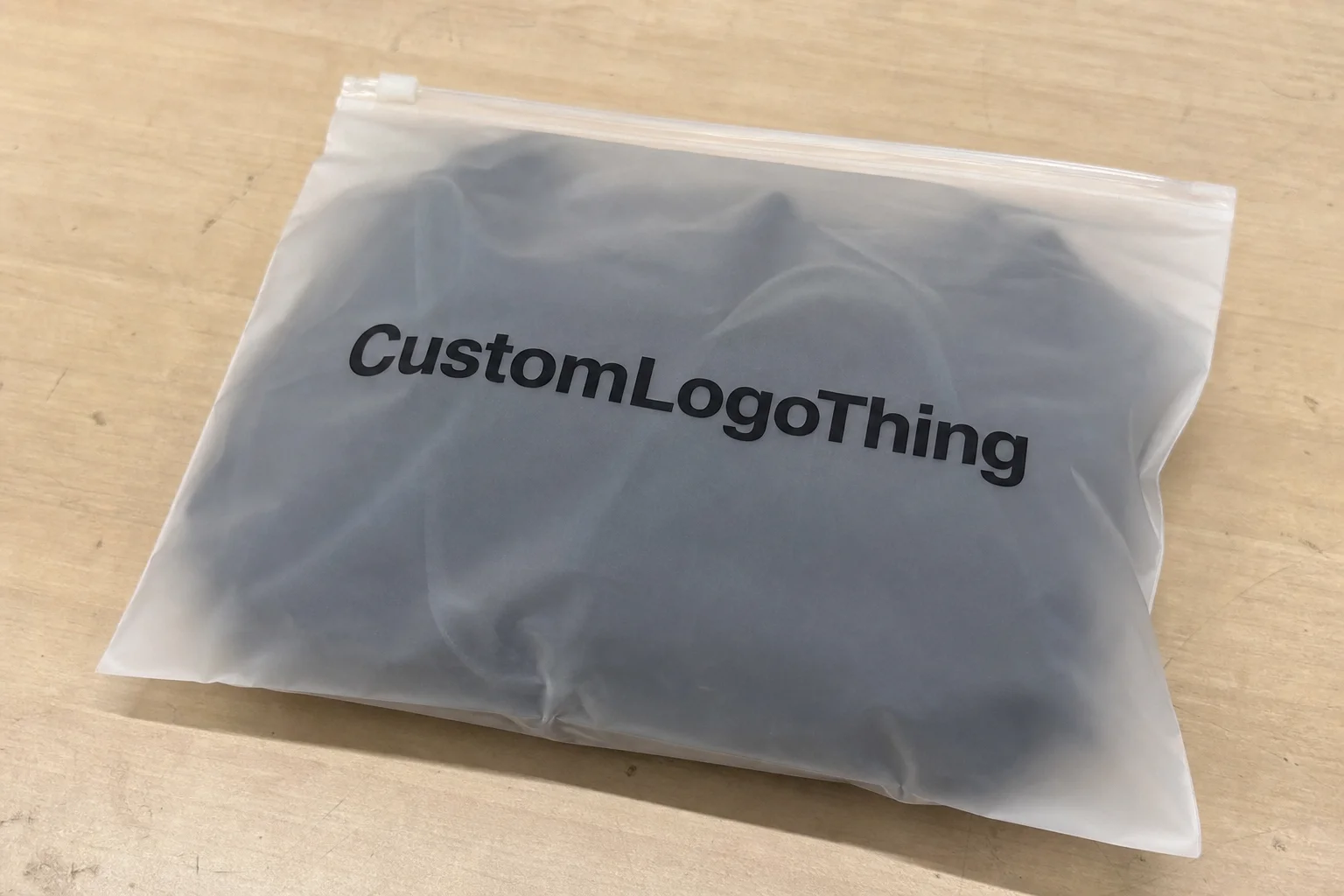
Clear packaging works because it shows the product instead of hiding it. Buyers in retail want to confirm the garment is folded correctly, the size tag is visible, and the piece is ready to go on the floor. Warehouse teams care for a different reason: a transparent bag reduces unnecessary opening and resealing during inspection.
That visibility lowers handling time, reduces mistakes, and makes rework less likely. When a garment is packed in opaque packaging, staff often have to open it just to confirm a basic detail. Clear film avoids that and keeps the process moving.
A logo on the bag adds another layer. The package starts doing brand work without requiring a heavier, more expensive format. That is why branded clear bags often make sense for apparel programs that want presentation, but not excess. They are especially useful for product lines that get folded, stacked, shipped, and reopened more than once before they reach the customer.
There is also a real operational benefit. Clear bags help staff verify QC checks such as print orientation, folding consistency, and barcode placement. When the product inside is visible, problems are easier to spot before cartons get sealed.
One caveat: clear film is honest. Any wrinkle, dust speck, crooked seal, or weak logo placement shows up fast. That is good for quality control and terrible for sloppy specs. If the goal is a premium look, the bag itself has to be specified carefully.
Material, Closure, and Print Choices That Change Performance
The film material sets the baseline for feel, clarity, and tear resistance. LDPE is a common choice for soft, flexible bags with decent seal strength. It handles repeated folding well and is usually easier to work with on standard apparel runs. CPP has a crisper look and can give the package a cleaner, stiffer presentation, which some brands prefer when the bag sits on a shelf or in a display bin.
Thickness matters just as much as material type. Light retail sleeves may sit around 1.5 to 2.0 mil, while heavier garments or shipping use often need 2.5 to 4.0 mil. Thicker film improves tear resistance, but it also raises cost and can feel less refined if the garment does not need the extra body.
Closure style changes how the package behaves in packing and display:
- Flap-and-seal is common for retail folding and keeps the front clean.
- Adhesive strip supports quick packing and a tidy seal.
- Zipper closure works when reuse or repeated access matters.
- Hang-hole or euro slot options help with pegboard display.
- Header-style formats suit bundles or higher-end retail presentation.
Printing is where some clear bags go wrong. Transparent film does not hide weak ink coverage. If the logo is too light, it washes out. If the ink is too heavy, the mark can look muddy and reduce visibility of the product underneath. For longer runs, flexographic printing is commonly used because it is efficient and consistent. Screen printing can produce bolder coverage when the logo needs stronger visual weight. Either way, the artwork has to be set up for clear material, not for paper or cardboard.
Other details affect performance in the real world. Anti-static treatment can help in dry conditions where film clings to itself. Vent holes can reduce ballooning during packing. Gussets add useful depth for thicker garments or bundles. A suffocation warning may be required depending on the destination market, and that should be confirmed early rather than discovered after the quote. If the bags need to run through automated packing equipment, the supplier needs that information before production starts.
For buyers comparing Custom Packaging Products, the right choice is usually the one that fits the garment weight, handling route, and presentation standard without adding unnecessary cost. Industry references such as ISTA can also help when the packaging has to survive distribution instead of just looking clean on a table.
Specification Checklist for a Clean, Brand-Ready Fit
Size errors cause most of the avoidable problems. If the bag is too tight, the garment creases and loading slows down. If it is too loose, the product shifts around and the package looks sloppy. Start with the folded garment’s width, depth, and height, then add space for insertion, seal area, and any hanging or header feature.
For branded orders, measure the folded product first. Do not guess from the hanger size. A lightweight tee and a heavyweight hoodie are not close to the same packaging problem. Sweaters, fleece, and bundle packs need more depth than thin shirts. If the bag is for multipacks, calculate around the full bundle instead of the base garment.
A good quote request should include the following:
- Flat width, gusset depth, and usable length
- Thickness in mil or microns
- Logo size and exact print area
- Number of print colors and PMS targets, if needed
- Closure style and any hang-hole or euro slot detail
- Compliance text, including suffocation warnings if required
- Intended use: retail display, storage, shipping, or bundling
Logo placement matters more on transparent film than on opaque packaging. Clear bags expose every alignment issue, so the print needs enough margin from the seal and edge. If the logo should sit above the fold or away from a warning area, say so. If the artwork needs reverse printing so it reads correctly from the outside, that should be built into the proof.
Usability details should be stated up front. Some programs need barcode visibility through the film. Others need vent holes so trapped air does not puff the package during packing. If the bags will move through a cartoning line, a hand-pack station, or a retail prep team, the shape should support that workflow. Packaging spec is not just about appearance.
| Specification Area | What to Confirm | Why It Matters |
|---|---|---|
| Size | Flat width, gusset, usable length | Prevents tight fit or excess slack |
| Material | LDPE or CPP, thickness range | Controls clarity, tear resistance, and feel |
| Colors, coverage, placement, PMS match | Affects logo sharpness on clear film | |
| Closure | Flap, adhesive, zipper, hanger style | Changes packing speed and retail display |
| Compliance | Warning text, venting, barcode visibility | Reduces rework and avoids shipment issues |
For broader sourcing decisions, the EPA is a useful reference on waste reduction and packaging impact, especially if your team is comparing reuse, source reduction, or better material selection across a larger packaging program.
Clear Clothing Bags Wholesale Custom Logo: Cost, MOQ, and Quote Factors
Price usually comes down to five variables: bag size, film thickness, closure style, print colors, and quantity. Setup costs can also matter if the job needs plates, tooling, or special finishing. That is why two bags that look almost identical can produce very different quotes once the production method is defined.
Higher quantities usually lower the unit price because setup is spread across more pieces. A simple one-color run in a standard size will usually cost less than a multi-color design with a zipper closure and custom hang hole. Specialty details add converting steps, and every extra step costs money.
MOQ depends on the print method, bag structure, and artwork complexity. Straightforward one-color runs often start at lower minimums than multi-color or special-format jobs. If you are comparing offers, ask what is driving the minimum. Sometimes the number looks favorable until the supplier explains the pack format, carton count, or setup requirement.
| Order Factor | Typical Price Impact | Buyer Takeaway |
|---|---|---|
| Higher quantity | Usually lowers unit cost | Best for repeat retail or chain programs |
| Thicker film | Raises material cost | Better for heavier garments or shipping |
| More print colors | Raises setup and run cost | Simple logos often price better |
| Zipper or specialty closure | Raises converting cost | Worth it only if reuse or access matters |
| Rush timing | Can increase landed cost | Plan ahead when launch dates are fixed |
To get an accurate quote, send exact dimensions, final artwork, intended use, and target quantity together. That cuts down on back-and-forth and prevents assumptions from creeping into the spec. Shipping method and packing format also affect landed cost, especially if the order needs to move by air, arrive on pallets, or be broken into retail-ready inner packs. If you also purchase Wholesale Programs items on a recurring schedule, ask about reorder terms and storage options so the next run stays consistent.
There is no universal price for this category. A clean one-color clear bag can be economical, but the final number still depends on size, film weight, closure detail, and order volume. The smarter move is to quote against the actual garment and handling route, not against a generic product category.
Production, Proofing, and Lead Time Expectations
Most jobs follow the same flow: size confirmation, artwork review, digital proof or sample approval, production setup, printing, converting, packing, and dispatch. The process is simple. The delays are usually not. They show up when the spec is incomplete or artwork keeps changing after proofing begins.
When reviewing proofs, check logo position, ink coverage, seal area, and how the design reads against transparent film. A logo that looks fine on white paper can disappear on clear plastic if the contrast is too low. If there is barcode or compliance text, confirm it remains readable after folding, sealing, and carton packing.
Lead time depends on order size, print complexity, and whether a pre-production sample is needed. Standard runs usually move faster when the artwork is final and the dimensions are locked before approval. Rush timing can compress the calendar, but it does not delete printing, curing, converting, or packing steps.
Repeat orders are easier when the original spec sheet was written properly. If the bag size, logo placement, and closure format stay the same, production can usually run with fewer questions and fewer mistakes. That is one reason written specs matter.
Complete artwork and exact dimensions usually save more time than any rush fee can buy back.
If your packaging program includes labels, inserts, or other branded components, consistency matters across the whole system. The bag should match the rest of the packaging in tone and function.
How to Compare Suppliers on Clarity, Print Quality, and Consistency
Sample evaluation should be practical, not sentimental. Start with clarity. Cloudy film makes even a good garment look dull. Then check whether the seal is straight, the edges are cut cleanly, and the print is sharp with even density. A bag that photographs well but curls badly on the packing table is not the right choice.
Ask for material data, thickness tolerances, and print limits. If a supplier cannot explain how close the film stays to spec, or how the logo behaves on transparent stock, the final result may not match the sample you saw. Good vendors can discuss those numbers because they know packaging is a production item.
Consistency becomes even more important for retail programs that repeat across multiple shipments. The same bag size and logo should look the same from batch to batch so staff and customers do not get a different experience every time. That matters for chain stores, seasonal apparel drops, and replenishment programs where one weak run can create handling issues in several locations.
The better suppliers usually help refine the spec before production instead of treating every order like a fresh experiment. That kind of input saves time and usually improves the package. If a vendor can advise on film choice, print coverage, and packing format, the odds are better that the final product will balance presentation with real-world handling.
For buyers comparing branded clear bag options, the shortlist should include clarity, print quality, dimensional control, and communication. Price still matters. So does whether the supplier helps prevent correction cycles that eat into time and margin.
Ordering Next Steps That Prevent Spec Mistakes
Before requesting a quote, gather the garment measurements, target quantity, logo artwork, preferred closure style, and any compliance text you need. If the bag will be used for retail display, shipping, storage, or multipack bundling, choose the main use case first. That decision drives the right material and closure.
Approve a digital proof or sample before mass production, and make sure the delivery window matches the launch or restock date. If you expect to reorder the same item, ask for a written spec sheet so the next run matches the first one. That single document can prevent a surprising amount of avoidable confusion.
Send measurements and artwork together. It is the fastest way to reduce revision cycles and get a useful quote. For branded packaging orders, the cleanest path is a complete request with real dimensions, final artwork, and a clear use case.
Custom Logo Things supports buyers who want branded packaging that is practical rather than overdesigned. Start with the garment dimensions and artwork first, then build the bag spec around the way the product will actually be packed, displayed, or shipped.
What size should clear clothing bags wholesale custom logo orders be?
Base the size on the folded garment’s width, depth, and height, then add room for loading and closure. For branded retail use, allow enough flat space so the logo does not crowd the seal or hang-hole area.
Which material is best for clear garment bags with logo printing?
LDPE is common for a softer feel and good seal strength, while CPP can offer a crisper, more rigid look. The better choice depends on garment weight, handling conditions, and whether the bag is for display or shipping.
What affects the MOQ for custom logo clear clothing bags?
MOQ is usually driven by print method, bag size, film type, and setup requirements. Simple one-color runs may have lower minimums than multi-color or specialty-closure orders.
How long does production usually take after proof approval?
Lead time depends on order size, print complexity, and whether a sample is required. Complete artwork and exact specs usually help keep production moving without avoidable delays.
Can these bags be used for retail display and shipping?
Yes, but the right thickness, closure, and warning labels depend on the intended use. Retail display bags often prioritize clarity and presentation, while shipping bags need stronger seals and better tear resistance.


