For many buyers, Clear Garment Bags lead time and moq is the real decision point, not the bag itself. The job is usually straightforward: protect apparel from dust and handling, keep the product visible, and avoid ordering so much stock that it sits unused for months. If the bag slows replenishment or bloats inventory, the packaging stops being a support item and starts acting like a problem.
Clear Garment Bags are often easier to source than printed specialty packaging because the approval path is simpler. There is less artwork review, fewer proofing steps, and less risk of a color mismatch sending the order back through production. That simplicity matters for boutiques, dry cleaners, apparel brands, and fulfillment teams that need a repeatable supply instead of a one-off experiment.
The smart buy is rarely the fanciest bag. It is the bag that matches the garment, storage method, and handling speed without forcing excess inventory. That is the practical side of clear garment bags lead time and moq: the specs decide the schedule, and the schedule often decides the cost.
Why Clear Garment Bags Are Easier to Source Than You Think
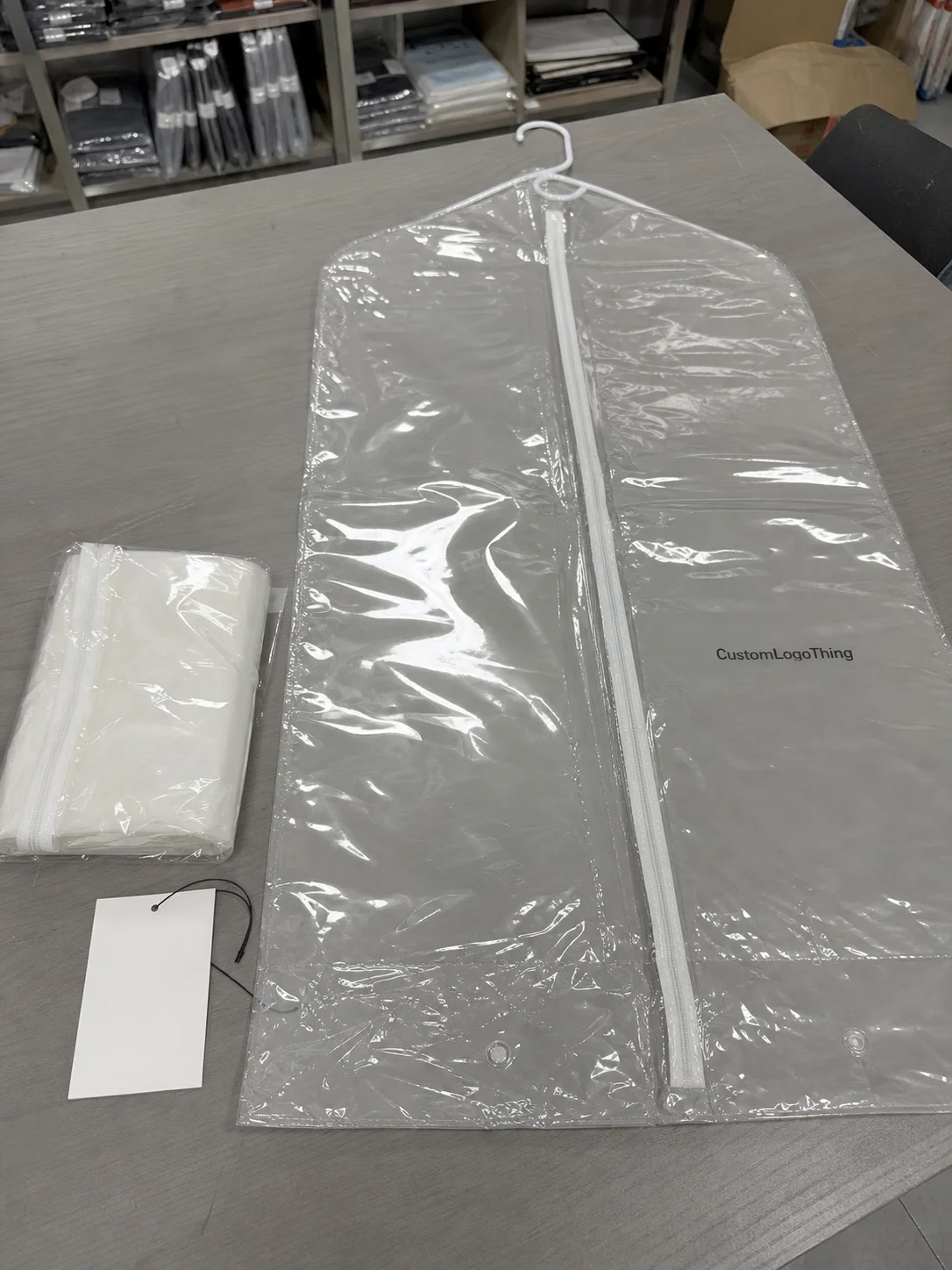
Clear garment bags usually move faster because the spec is compact. A buyer does not need to resolve full-color graphics, ink coverage, or multiple proof rounds. The conversation starts with dimensions, material, thickness, and closure style. Once those are fixed, the rest of the order is mostly execution.
That does not mean the bag is interchangeable. It means the sourcing path is cleaner. A supplier can quote a standard size faster than a custom printed product because there are fewer unknowns. If the buyer knows whether the garment is being hung, folded, or shipped flat, the order can move quickly without a long chain of clarification.
Most buyers want the same three outcomes: protection from dust and handling, enough clarity to show the garment, and a format that stores efficiently. A cloudy sleeve, a seal that splits, or a bag that takes up too much space in the stockroom turns a low-cost item into hidden waste. A bag that looks dull can also make the garment look lower-value, which matters more in retail than most teams admit.
Clear garment bags also work across several use cases. Retail display wants presentation. Dry cleaning wants cleanliness and repeat handling. Fulfillment wants packing speed and predictable dimensions. The common mistake is assuming one clear bag solves all three jobs equally well. It does not. The right film and closure depend on how the bag will actually be used.
A clear bag is part of the product presentation, even when nobody budgets for it that way. If the film scuffs easily or turns hazy under light, the garment inside inherits that weaker first impression.
Standard PE and LDPE structures are usually predictable to source because the materials are common and the manufacturing steps are familiar. That predictability does not eliminate lead time, but it does reduce uncertainty. For buyers comparing clear garment bags lead time and moq, the biggest advantage is often not speed alone. It is the ability to reorder without re-litigating the whole spec every time.
What You’re Actually Ordering: Film, Finish, and Closure Options
Not all clear garment bags are the same plastic sleeve with a different label. Film choice changes feel, clarity, stiffness, noise level, and how the bag behaves during packing. The main options are usually PE, LDPE, and CPP-style clear films, each with a different balance of price and presentation.
PE is common for basic dust protection and broad storage use. It is usually the most economical choice and works well when the bag needs to do a simple job without premium appearance. LDPE tends to feel softer and more flexible, which helps when the garment needs a smoother drape and a slightly better hand feel. CPP-style films can offer a clearer, crisper look for presentation-focused applications, though pricing usually rises with that visual improvement.
Thickness matters more than many first-time buyers expect. A light-duty bag in the 20 to 30 micron range may be fine for storage and short handling cycles. A midweight bag in the 35 to 45 micron range usually holds up better in retail backrooms and repetitive use. Move toward 50 to 60 micron or more if the bag will be shipped with product, handled often, or used in a program where puncture resistance matters.
Closures shape the workflow. Open-top bags are simple and fast. Zip closures make reuse easier and improve product security. Flap seal and adhesive strip styles are common in retail and e-commerce fulfillment because they reduce the need for extra tape or tie-offs. Hang-hole options are useful if the garments stay on hangers during storage or display. If the garment is not being folded, that detail belongs in the quote from the start.
Size format affects both function and waste. Shirt-length bags, suit-length bags, folded apparel sleeves, and oversized formats all behave differently in a packing line. A bag that looks fine on a drawing may still slow the team down if it bunches at the hem, hangs too long, or leaves too much empty space around the garment.
- Light-duty bags: lower cost, basic dust protection, shorter service life
- Midweight bags: stronger feel, better presentation, fewer tears during routine use
- Heavy-duty bags: better for shipping, storage, and repeated handling
Clarity and surface finish matter as much as thickness. A clear bag can still look dull if the film has poor gloss, heavy haze, or scuffing from bad packing. That is a problem for fashion retail and a nuisance for anyone trying to keep returns low. Ask for film samples if the appearance of the garment matters to the sale.
| Option | Typical Use | Strength | Common Tradeoff |
|---|---|---|---|
| PE | Dust protection, storage | Low to medium | Less premium feel |
| LDPE | Retail, folding, repeated handling | Medium | Slightly higher cost per piece |
| CPP-style | Presentation-focused apparel | Medium to high | May raise lead time and price |
| Zip or adhesive closure | Reuse, shipping, packing control | Higher functionality | More setup complexity |
Specifications That Affect Performance and Order Approval
The fastest way to slow a quote is to send a vague request. “Need clear garment bags” is not enough. A proper spec should include width, length, thickness, closure type, and whether the bag needs venting, gusseting, or a hang-hole. Missing one of those items can change the structure enough to alter both cost and lead time.
If you want branded clear bags, the word “clear” does not mean “no print decisions.” Some buyers need a logo, barcode area, size marker, warning text, or a small opaque patch for labels. Those additions can trigger setup charges or press adjustments even if the bag remains mostly transparent. Small changes have a way of becoming big on the production side.
Quality checks are simple on paper and easy to overlook in practice. Film thickness should stay consistent across the run. Seals should hold under normal handling. Edges should be trimmed cleanly. The bag should not cling aggressively to fabric if it is meant for display, and it should not feel flimsy if it is meant for shipping or long storage.
Cleanliness matters. If bags are packed badly, they can pick up dust, odor, or static before they even reach the customer. Heat and humidity can also affect storage, especially for thin film that sits in a poorly controlled warehouse. Buyers should ask how cartons are packed, whether the film is protected from crushing, and how long finished goods typically sit before shipment.
For packaging programs that need a more formal benchmark, it helps to compare the bag against the job rather than against a generic standard. Retail display needs clarity and appearance. Shipping needs seal strength and puncture resistance. Storage needs low cost and predictable durability. Packaging tests used in distribution programs, including ISTA methods, are useful reference points for buyers who need a stricter handling context. If your sourcing team is working with recycled content or sustainability claims, guidance from organizations like the FSC can help frame material language more carefully.
Request a physical sample or a clear spec sheet before mass production. A photo is not enough. A bag can look acceptable on screen and still feel wrong in hand, especially when the buyer is judging clarity, stiffness, seal finish, and how the bag folds around the garment.
Clear Garment Bags Lead Time and MOQ: What Actually Drives Both
Clear garment bags lead time and moq are tied together more often than buyers expect. MOQ usually depends on size, thickness, film type, and whether the bag is a stock shape or a custom dimension. Standard flat bags often allow smaller minimums. Custom widths, unusual lengths, gussets, zippers, or print zones usually push MOQ higher because they require more setup and a more specialized run.
Lower MOQ is convenient, but it usually raises the unit cost. Smaller runs spread setup, labor, and packing overhead across fewer pieces, so the per-bag price rises. Larger runs reduce the unit price, but they require more storage space and a more disciplined forecast. The inventory mistake is simple: saving a few cents per bag and then sitting on cartons that no one needs for six months.
Lead time is driven by the same variables. Material availability is one factor. Bag size is another. Closure type, print complexity, and the speed of proof approval also matter. A standard clear bag with no print can move faster than a custom-size bag with a zipper, vent holes, and a label panel. That is not an estimate pulled from thin air. That is how production workflows usually behave.
Repeat orders are generally faster. Once dimensions, film, and packing format are locked, the supplier does not need to rebuild the setup. First-time orders take longer because the supplier has to confirm the spec, align on tolerances, and often send a sample or proof. If the buyer needs the shortest possible turnaround, the best move is to send complete information on the first request.
Practical lead time ranges often look like this:
- Stock-style clear bags: often 7 to 12 business days after confirmation, depending on inventory and packing
- Custom-size clear bags: often 12 to 20 business days after proof approval
- Custom print or special closure: often 15 to 25 business days, sometimes longer if tooling is involved
Those ranges are useful only if the order is well defined. A missing dimension, a late artwork approval, or a change in closure type can move the date quickly. If a supplier gives a lead time without asking any spec questions, that number deserves scrutiny.
For buyers comparing clear garment bags lead time and moq, the important distinction is between a true custom run and a stock-based order with a few selected options. That difference shapes both the schedule and the price ladder.
Cost, Pricing, and Unit Cost Tradeoffs That Matter
Pricing for clear garment bags is usually driven by resin cost, thickness, bag size, closure style, packing format, and whether the order needs print or special finishing. Bags that ship flat in bulk cartons are usually cheaper than retail-ready units packed one by one. More handling means more labor, and more labor raises the cost.
The part many buyers miss is landed cost. A low-MOQ quote can look attractive until freight, waste, storage, and the cost of reordering too soon are added back in. The cheapest quote on paper is not always the cheapest order overall. That is especially true for teams with seasonal demand, because running out mid-season can cost more than the packaging itself ever saved.
Tooling fees and setup charges also matter. Custom dimensions, special seal patterns, zipper styles, and branded details may involve one-time tooling or first-order setup costs. Those charges should be included in the comparison from the start. If they are left out, the final invoice can look very different from the initial quote.
For a realistic comparison, ask for pricing at three levels: the MOQ level, a mid-volume tier, and a larger volume tier. That gives a better picture of where the unit cost starts to drop enough to justify the added inventory. A price chart is more useful than a single number because it shows how much flexibility the supplier really has.
Typical pricing behavior is predictable even if exact numbers vary. Standard PE garment bags at volume may land in the low single-digit cents per piece. Heavier gauges, custom sizes, zipper closures, or print features can push the price into the high single-digit cents or low tens of cents. Retail-ready specialty formats can go higher still. Buyers should read that spread as a signal: the more tailored the bag, the less forgiving the price.
| Order Type | Unit Cost Trend | Inventory Impact | Best For |
|---|---|---|---|
| Low MOQ | Higher | Low risk, low storage | Testing, short runs |
| Mid-volume | Balanced | Moderate storage | Most brands and retailers |
| Bulk pricing | Lower | Higher storage and cash tie-up | Repeat programs, stable demand |
Use landed cost, not just ex-factory price. Add freight, any duties if relevant, carton packing, and storage impact. If you are comparing quotes from multiple suppliers, make sure the numbers are formatted the same way. Otherwise, you are not comparing options. You are comparing assumptions.
For broader guidance on recycling and resin-related decisions, the EPA recycling resources are useful if your brand needs to think about end-of-life messaging or material choices.
Production Steps and Timeline From Quote to Delivery
A clean production process usually follows the same sequence: inquiry, spec confirmation, quote, sample or proof, production, quality control, packing, and shipment. If one step is skipped, the delay usually shows up later as a rush fee, a rework cycle, or a shipment that misses the launch date.
The most common cause of delay is incomplete information. Buyers forget to include exact dimensions. Or they mention a hanger without saying whether the bag needs a hang-hole. Or they ask for “clear” without defining thickness. Then the supplier has to stop and ask questions. Every extra question adds time, and each round of clarification slows the order more than most teams expect.
Send these items upfront:
- Garment type and garment size
- Bag dimensions, or at least the target fit
- Thickness preference
- Closure style
- Quantity needed
- Print or label requirements
- Whether the bag is for hanging, folding, or shipping
Sample timing and mass production timing are not the same thing. A sample can usually be turned around more quickly, but only if the buyer reviews and approves it quickly too. If approval takes a week, the schedule stretches. That is not a supplier failure. It is normal production math.
Most buyers should build a buffer around the launch date. Freight can slip. Proofing can stall. Inventory can arrive in partial shipments if the order is split across cartons or production waves. A plan with zero buffer is not a plan. It is a rush order waiting to happen.
For standard programs, a well-managed order can move from quote to delivery in a few weeks. More complex runs, especially those involving tooling, special closures, or custom finishing, usually take longer. That is why clear garment bags lead time and moq should be evaluated together instead of treated as separate questions.
How to Choose a Supplier Without Wasting Weeks
A serious supplier reply should be specific about specs, MOQ, lead time, and pricing tiers. If the response is vague, incomplete, or filled with “no problem” and no numbers, that is not confidence. That is a delay waiting to happen.
Ask for photos of prior bag styles, measurements, and packing method. You do not need a sales pitch. You need evidence that the supplier can make the style you want and pack it in a way that arrives usable. Single-point communication helps too. Fewer handoffs usually mean fewer mistakes and a cleaner approval process.
Reliable suppliers also help reduce hidden problems such as mixed film thickness, weak seals, cloudy film, or cartons packed too loosely. Those defects do not always show up on the quote sheet. They show up later, usually in receiving, when someone opens a carton and realizes the product inside does not match the promise.
If you are comparing suppliers, think in terms of risk reduction. The cheapest option is not always the safest one. A supplier that responds clearly, sends complete information, and respects timeline commitments often saves more money by preventing rework than the lower-priced source saves on the unit price.
Use the FAQ alongside the spec sheet so the team can answer common questions before quotes are requested. That cuts down on email back-and-forth and keeps the buying process from becoming a long series of tiny clarifications.
In the end, the best supplier is the one that helps you Order the Right quantity the first time. That is the practical value behind clear garment bags lead time and moq: fewer delays, fewer surprises, and a bag that actually fits the job instead of just checking a box.
What is the typical MOQ for clear garment bags?
MOQ usually depends on size, thickness, and whether the bag is stock or custom. Standard flat bags often allow lower minimums. Custom sizes, closures, or print details generally require a higher MOQ. Ask for tiered MOQ options so you can compare the smallest workable run against better pricing at volume.
How long is the lead time for clear garment bags?
Lead time depends on material availability, spec complexity, and proof approval speed. Repeat orders are usually faster than first-time orders because the specs are already approved. The shortest path is to provide exact dimensions, closure type, quantity, and any print or packing requirements upfront.
Can I order a small quantity without paying a huge unit cost?
Yes, but small runs usually cost more per bag because setup and production overhead are spread across fewer units. If you need a low MOQ, expect a tradeoff between flexibility and unit cost. Request pricing at two or three quantity tiers before deciding.
What details should I send to get an accurate quote fast?
Send garment type, bag dimensions, thickness preference, closure style, quantity, and whether printing is needed. Include any packaging or storage requirements, such as hanger use or folded apparel. A complete spec sheet reduces back-and-forth and usually shortens the quote process.
Do clear garment bags work for retail display and shipping?
Yes, if you Choose the Right film thickness and closure for the use case. Retail display often needs cleaner clarity and hang-hole options, while shipping may need stronger seals and sturdier film. Match the bag to the job instead of using one generic size for everything.


