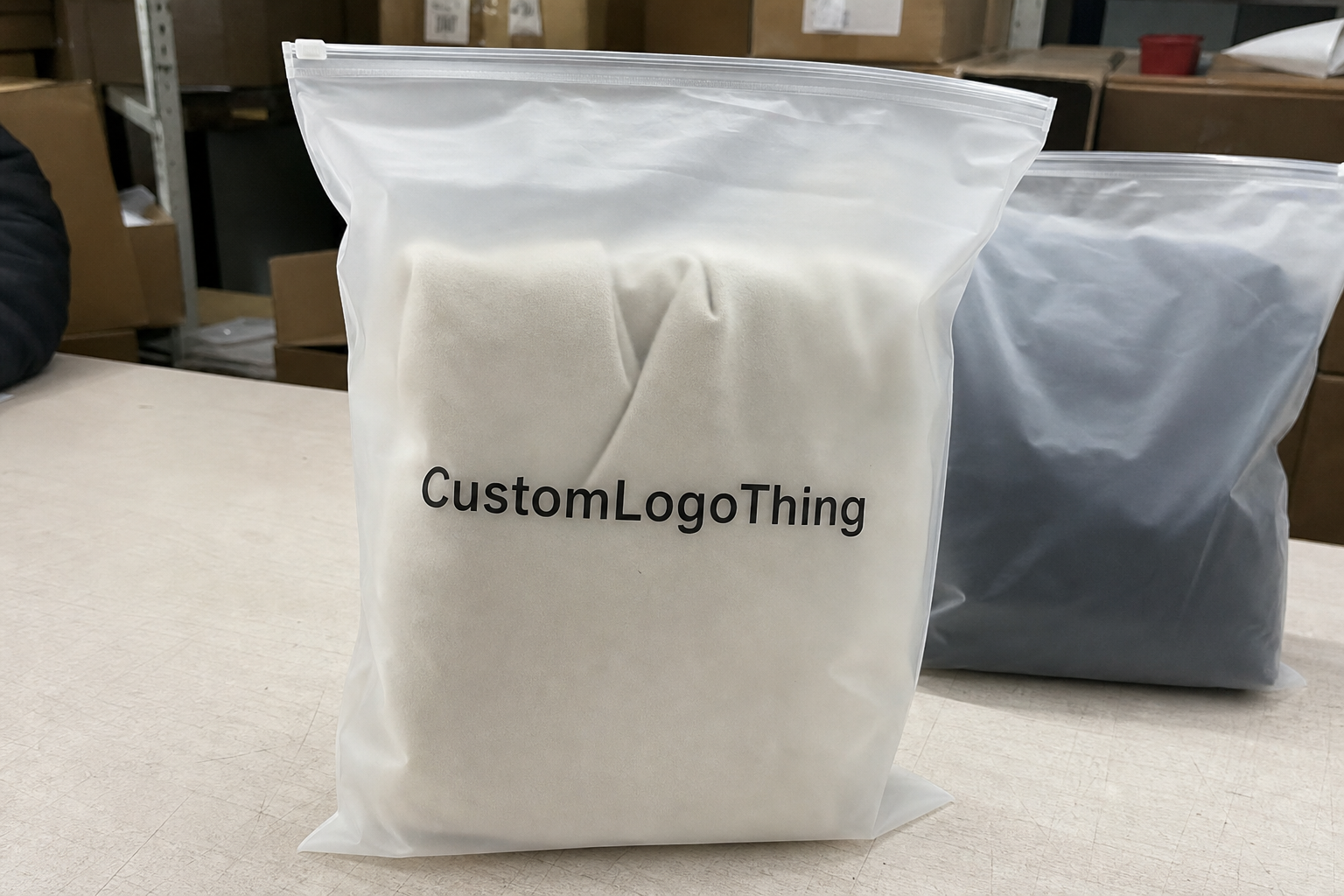
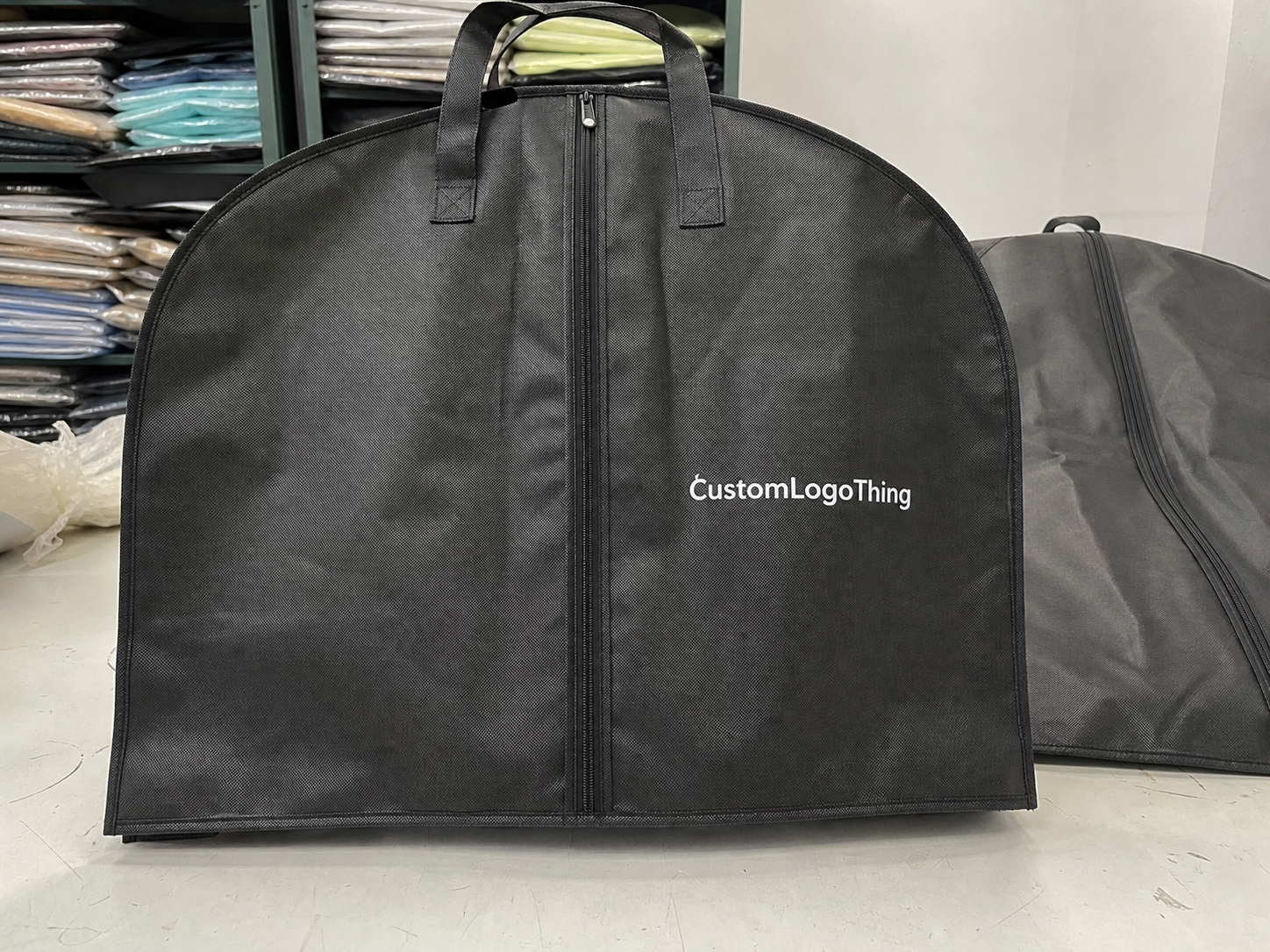
A clear Garment Bags Low MOQ custom order usually makes more sense than a large generic run. Most brands do not lose money because the bag itself is expensive. They lose money because the bag is wrong, oversized, under-specified, or sitting in storage long after the product line changed.
That matters for launches, seasonal drops, sample sets, and replenishment programs. A smaller custom order gives room to test the fit, check the print, and see how the bag behaves in the real workflow before the budget gets locked up in inventory. The bag should make the garment easier to handle and easier to sell. If it starts creating storage headaches or awkward presentation, the spec is off.
Low MOQ does not mean casual. It means tighter planning. Exact measurements, cleaner artwork, and a more disciplined approval process. That is especially true for packaging buyers who already know how small details affect branded packaging, retail packaging, and product packaging. A vague request gets a vague quote. A vague quote usually becomes an expensive correction later.
Clear Garment Bags Low MOQ Custom Order: Why Smaller Runs Beat Overstock
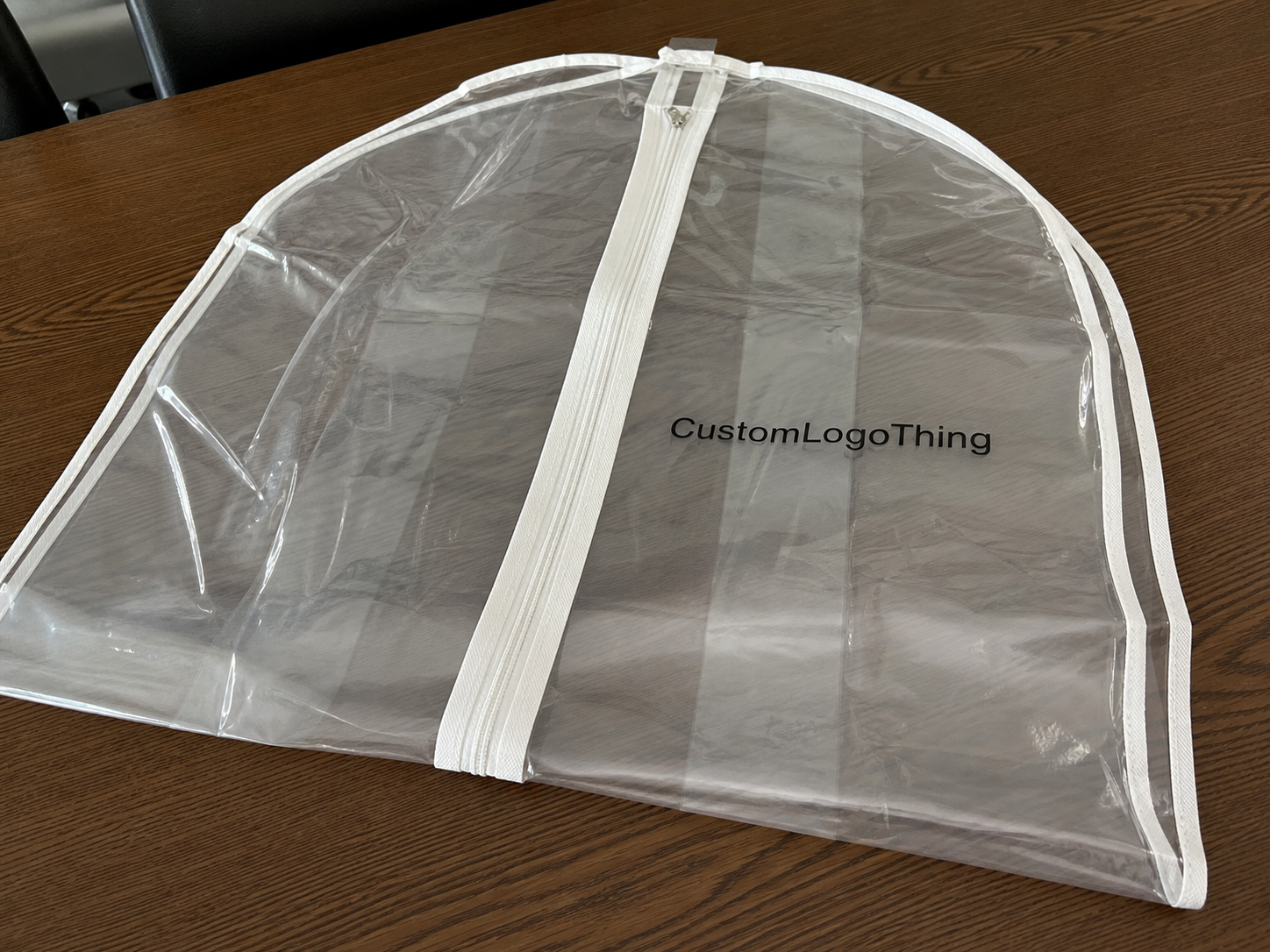
Most buyers arrive at a Clear Garment Bags low MOQ custom order for one of three reasons: they are testing a new line, they need a seasonal restock, or they are tired of paying to store packaging that no longer fits the actual assortment. That is not a packaging problem. It is an inventory problem with a plastic sleeve on it.
The math is straightforward. If you order 20,000 bags before the final garment dimensions are stable, you are betting your margin on a guess. A small size mismatch can make the bag look awkward on the rack, add handling time, or create wrinkles that defeat the whole point of a clean presentation. Smaller runs give you a chance to correct the spec before the mistake becomes a warehouse issue.
Low MOQ is also useful as a test tool. It lets buyers compare one size against another, check how the material behaves in transit, and see whether the presentation actually helps the garment sell. That matters for brands that split inventory between stores and ecommerce. A clear sleeve that looks good on a hanger may not hold up the same way inside a mailer or a packed carton.
There is a cash-flow side to this that gets ignored. Lower initial quantity means less money tied up in packaging inventory, which frees room for the things customers actually notice: better garment construction, better imagery, or better finishing on the garment itself. Packaging should support the product, not consume the budget that should have gone into the product.
A clear bag should make the garment easier to present, move, and sell. If it starts dictating storage space, handling time, or markdown risk, the spec is too heavy for the business.
That is why small-run buying works. It is not about squeezing the price until something breaks. It is about staying flexible while the product line is still moving. A good supplier understands that and keeps the process practical instead of pushing a minimum that only makes sense on a spreadsheet.
Film, Clarity, and Finish Options That Matter on the Rack
For clear garment bags, the film choice matters more than most buyers expect. PE is softer and more flexible, so it bends around folded garments without cracking or looking too rigid. PP tends to look crisper and more polished, which helps when the display needs a cleaner visual edge. Both work. They solve different problems.
Thickness is the next decision. Light retail sleeves often sit around 1.5 to 2.0 mil for presentation-driven use. More durable garment bags commonly move into the 2.5 to 4 mil range, and sometimes higher if the bag needs to survive repeated handling, warehouse movement, or sharp hardware. In micron terms, that is often roughly 40 to 100 microns, depending on the material and supplier. Thin film is fine for short-term display. Heavier gauge is worth the extra cost when the bag has to do more than look clean for a few minutes.
Clarity is not just a yes-or-no question. Some buyers want a glass-like finish. Others only need a clean sleeve that does not distort the garment. Glossy film reflects more light and can look sharper under store lighting. Matte or anti-glare finishes reduce reflections, which helps if the garment photographs poorly under bright lights. Anti-static treatment is worth asking about if the bag will be handled often, because cling and dust are the sort of details that make a cheap-looking first impression very quickly.
Closures and hardware change the user experience. A zipper is useful for repeated access. An adhesive flap is faster for packing teams. A resealable strip can help on ecommerce orders where the bag may be opened and closed again. Hanger holes, vent holes, tear notches, and reinforced headers sound minor until the line starts moving and someone has to pull, fold, or rehang every piece by hand. Then those details become labor costs.
Compliance should not be treated as decoration. Retail packaging often needs warning text, suffocation language, or market-specific labeling, and some fulfillment programs need stronger shipping protection than shelf presentation. If the order is headed into a regulated retail program or an export lane, confirm the target-market requirements before the proof is approved. For broader references on packaging handling and testing, ISTA and Packaging School are useful starting points.
Sizes, Closures, and Custom Specs to Lock the Fit
Size should be matched to the garment, not guessed from a generic template. A shirt bag, a suit bag, and a dress bag all fail differently when the fit is off. Too tight, and the garment looks compressed or wrinkles at the fold. Too loose, and the bag hangs badly, catches air, and looks sloppy on the rack. That is not good package branding, and it is not good product packaging either.
The measurements that matter are simple: width, length, gusset depth, flap overlap, and the hanger opening. If the garment is folded, measure it in the exact final fold, not on the flat fabric. If it hangs, measure where the shoulder sits and how much room is needed below the hem. For bulkier items like coats or layered pieces, a gusset is often the difference between a clean presentation and a bag that fights the garment.
Custom features can improve the workflow without making the order messy. Printed sizing marks help packing teams. Reinforced headers reduce tearing at the hanger hole. Branded insert cards can carry care instructions or a logo without forcing extra print complexity onto the bag itself. A hang tab may be useful for display fixtures, while a zipper pull can make repeated access easier for staff. The rule is simple: add only what the workflow needs. Every extra feature adds cost and usually some lead time.
Clear bags are also used differently across a business. One run may be for a single garment on a hanger. Another may be for folded inventory in a warehouse. Another may be for ecommerce orders that go into mailers. Each use case changes the spec sheet. A buyer who says “we need one universal bag” usually ends up paying to fix the mismatch later.
The common mistakes are predictable. Undersizing to chase a lower quote. Forgetting seam allowance. Ignoring how the bag closes after the garment is inserted. Assuming every style in the range can use the same size. Those shortcuts make the purchase look efficient for a moment, then they create repacking labor and weak presentation. That trade is avoidable.
Cost, Pricing, MOQ, and What Changes the Unit Price
MOQ is not just a number. It is a pricing lever. The lower the run, the more setup cost gets spread across each unit, which is why a clear garment bags low MOQ custom order usually carries a higher unit cost than a standard bulk order. That is normal. If a quote looks unusually cheap for a custom run, somebody is probably hiding cost later or cutting corners on the spec.
The main price drivers are easy to track: material grade, thickness, size, print colors, closure style, custom shape, special finish, and compliance printing. If the order needs a tight visual match to a brand palette, or if the logo includes fine lines, the price can climb quickly because the print setup gets more demanding. The same thing happens with custom printed boxes. The cleaner the spec, the more honest the quote.
Here is a practical pricing frame for small-run work. Blank stock-style clear bags may land around $0.10 to $0.22 per unit for moderate quantities, depending on size and gauge. Light custom printing often moves into the $0.18 to $0.38 per unit range. Heavier-gauge bags or specialty closures can push into the $0.30 to $0.60+ range, especially when the order is small, the artwork is complex, or the buyer wants extra finishing. Those are not fixed prices. They are budgeting ranges that keep the quote from becoming a surprise.
| Option | Typical Use | Approx. Unit Cost | Notes |
|---|---|---|---|
| PE clear bag, blank | Basic retail or storage | $0.10-$0.22 | Lowest setup burden, suitable for simple presentation |
| PP clear bag, one-color logo | Brand display, store replenishment | $0.18-$0.38 | Crisper look, better for package branding |
| Heavier gauge bag with zipper | Repeated handling, ecommerce, premium retail | $0.30-$0.60+ | Higher durability, higher setup and material cost |
Buyers also forget the hidden costs. Artwork prep. Plate or cylinder charges. Sample fees. Freight. Duties. Rush charges if the timeline is compressed. None of those are mysterious, but they do affect landed cost. If the goal is a sharper price, the answer is usually one of three things: increase quantity, simplify the spec, or remove a custom option that does not matter to the customer experience.
There is no magic here. The quote is shaped by how many decisions get made and how unusual those decisions are. A clean, standard spec with minimal print almost always wins on price. A tiny, complicated run with multiple custom steps will cost more. That is basic packaging economics.
Production Steps, Lead Time, and Approval Timing
The production flow should be boring in the best way: inquiry, spec confirmation, artwork review, proof approval, sampling if needed, production, quality check, and shipping. If a supplier cannot describe that sequence clearly, the order will probably drift later. Clean process beats confident noise every time.
Lead time depends on three practical factors: print complexity, material availability, and whether a physical sample is required. A simple clear bag with a straightforward logo can move faster than a multi-step custom job. If the artwork is ready and the spec is final, small-run work often lands in the 10 to 18 business day range after proof approval. More complex custom orders can stretch to 3 to 5 weeks, especially if sampling or special materials are involved. Those ranges are typical, not promises.
Delays usually come from the same places. The buyer sends a rough size instead of a finished measurement. The logo file is not print-ready. Feedback is split across several people, each with a different opinion. Someone asks for a copy change after proof approval. The factory waits while the buyer decides whether the zipper pull should be black or clear. That kind of back-and-forth is how a quick order becomes a slow one.
If timing matters, approvals need to move fast. One decision-maker. One comment set. One final file. That keeps the schedule honest and gives the factory less room to stall. If the order includes transit-sensitive packaging, ask how it will be packed for shipment and whether the cartons are built for the handling profile. For larger distribution programs, it is also reasonable to ask whether the supplier understands testing aligned with common ISTA handling expectations. That matters when the packaging has to survive more than one touchpoint.
I also prefer a sample or a preproduction proof when a bag is being customized for the first time. It adds a little time, but it reduces the chance of a bad fit, a weak seal, or a logo placed half an inch too low. That is a cheap mistake to catch early. It is not cheap to fix after a full run.
What a Reliable Small-Run Supplier Should Actually Prove
Good suppliers do not hide behind adjectives. They show the material spec, the print method, the tolerance range, and sample work that matches the quote. If the bag is supposed to be clear, it should be clear. If the seal is supposed to be clean, it should not look like it was pinched shut in a hurry. The basics matter because small orders have less room for waste.
Communication matters more on low-MOQ work than on large production runs. There are fewer units to absorb defects, and there is less tolerance for guessing. A supplier that responds slowly at the quote stage usually responds slowly on revisions too. That is not a moral judgment. It is a forecasting clue.
Here is the level of proof I would expect before trusting a small run:
- Clear material spec with film type and thickness.
- Written confirmation of size, closure, and print placement.
- Sample photos or a preproduction proof.
- Basic tolerance notes for size and print alignment.
- A straightforward plan for handling defects or reprints.
There should also be honesty about tradeoffs. If the request is for a heavy-gauge PP bag with a multi-color logo, a zipper, and a custom insert, the quote should reflect that. If a supplier says yes to everything and never flags cost or lead time, that is not service. That is avoidance. Real support means explaining why one choice raises unit cost and another keeps the run manageable.
For buyers comparing suppliers across branded packaging, product packaging, and retail packaging categories, the useful question is simple: can they explain why the feature exists, or are they just repeating the spec sheet back to you? That is the difference between a vendor and a packaging partner. One sells bags. The other helps prevent mistakes.
Ask for proof of process, not just proof of price. A cheap quote with unclear specs is a future problem with a receipt attached.
What to Send for a Fast Quote and Clean First Run
If you want a clean quote, send the details that affect the build. Garment type. Folded or hanging dimensions. Target quantity. Material preference. Closure style. Print requirements. Shipping destination. If you have artwork, send the correct file format and note any brand color references. The more exact the input, the fewer revision rounds later.
Context helps too. A bag for retail display does not need the same structure as a bag for warehouse storage or ecommerce fulfillment. A line that moves through stores may care more about shelf presentation and package branding. A line that ships direct to the customer may care more about protection and repeat opening. Same product family. Different use case. Different spec.
If the choice is not obvious, ask for two or three options instead of one vague quote. Compare a lighter gauge against a heavier one. Compare blank versus one-color logo. Compare zipper versus adhesive flap. That gives a real view of the tradeoff between price, durability, and presentation. It is a cleaner buying process than guessing and hoping the bag fixes the rest of the packaging design.
For the first run, the cleanest submissions usually include a finished size sheet, a simple artwork file, and a note about how the bag will be used on the line. That saves time because it removes the assumptions the factory would otherwise have to fill in. It also helps avoid the classic problems: artwork too close to the seal, a hanger hole in the wrong place, or a flap that does not overlap enough to stay closed.
The more complex the order, the more the buyer should think like a production manager. Not a marketer. Not a shopper. A production manager. That means measuring twice, confirming once, and making sure the spec is stable before anyone starts cutting film.
A clear garment bags low MOQ custom order works best when the request is specific and the approval chain is short. Exact size, exact use case, exact print needs. That is how the first run stays clean, the unit cost stays understandable, and the bag does its job without creating extra work for the team.
What is the usual MOQ for clear garment bags with custom printing?
MOQ changes with size, print complexity, material, and closure type. Small custom runs often start higher on unit price because setup costs are spread across fewer pieces. Blank or lightly customized bags usually have the lowest entry point, while multi-color printing or special closures can raise the minimum. The supplier should state MOQ before proof approval, not after.
Can I order clear garment bags with a low MOQ and my logo?
Yes. The cost depends on how the logo is applied, how many colors it uses, and whether the bag needs a custom size or closure. Small-run logo orders usually work best with one print area, limited colors, and a standard bag structure. If the budget is tight, keep the print simple and put the money into the material and fit.
What thickness should I choose for custom clear garment bags?
Use lighter film for simple retail presentation and short-term storage, and move to heavier film when you need better tear resistance or more shipping protection. The right thickness depends on garment weight, fold style, and how often the bag will be handled. If the use case is uncertain, ask for two quotes so you can compare durability against unit cost.
How long does a low MOQ custom garment bag order take?
Timing depends on proof approval, material availability, and whether the order needs sampling before production starts. Simple orders usually move faster than printed or specialty formats, especially when the artwork is final and the spec is complete. Faster approvals are the easiest way to keep the timeline from slipping.
What information do you need to quote clear garment bags accurately?
Provide garment type, bag dimensions, quantity, material preference, closure style, print details, and shipping destination. If you have artwork, send the correct file format and note any brand color requirements. The more exact the spec, the fewer revision rounds and the lower the risk of price drift.
Should I choose PE or PP for a small custom order?
PE is usually the more flexible option and works well for softer presentation needs. PP gives a crisper look and often feels more premium on the rack. If the bag is for repeated handling or higher-visibility display, PP is usually easier to justify. If the priority is flexibility and simple storage, PE is often the better fit.