If you are comparing clothing Labels Unit Cost for beauty, the first number you see is rarely the number that matters. A cheap quote can hide a high minimum, a costly setup, or a finish that does not belong on the garment. For beauty brands, labels are small but visible, and they have to feel deliberate from the first touch.
That matters on spa robes, salon uniforms, retail loungewear, and gift items that need to look finished without distracting from the product. A label is not just a place for a logo. It affects comfort, durability, compliance text, and the way the item reads on shelf or in use. The quote should reflect that reality.
Bottom line: unit price is only one part of the decision. Material choice, fold style, quantity bands, artwork quality, and freight can change the true cost per piece more than buyers expect.
Why Beauty Brands Pay More Attention to Label Unit Cost
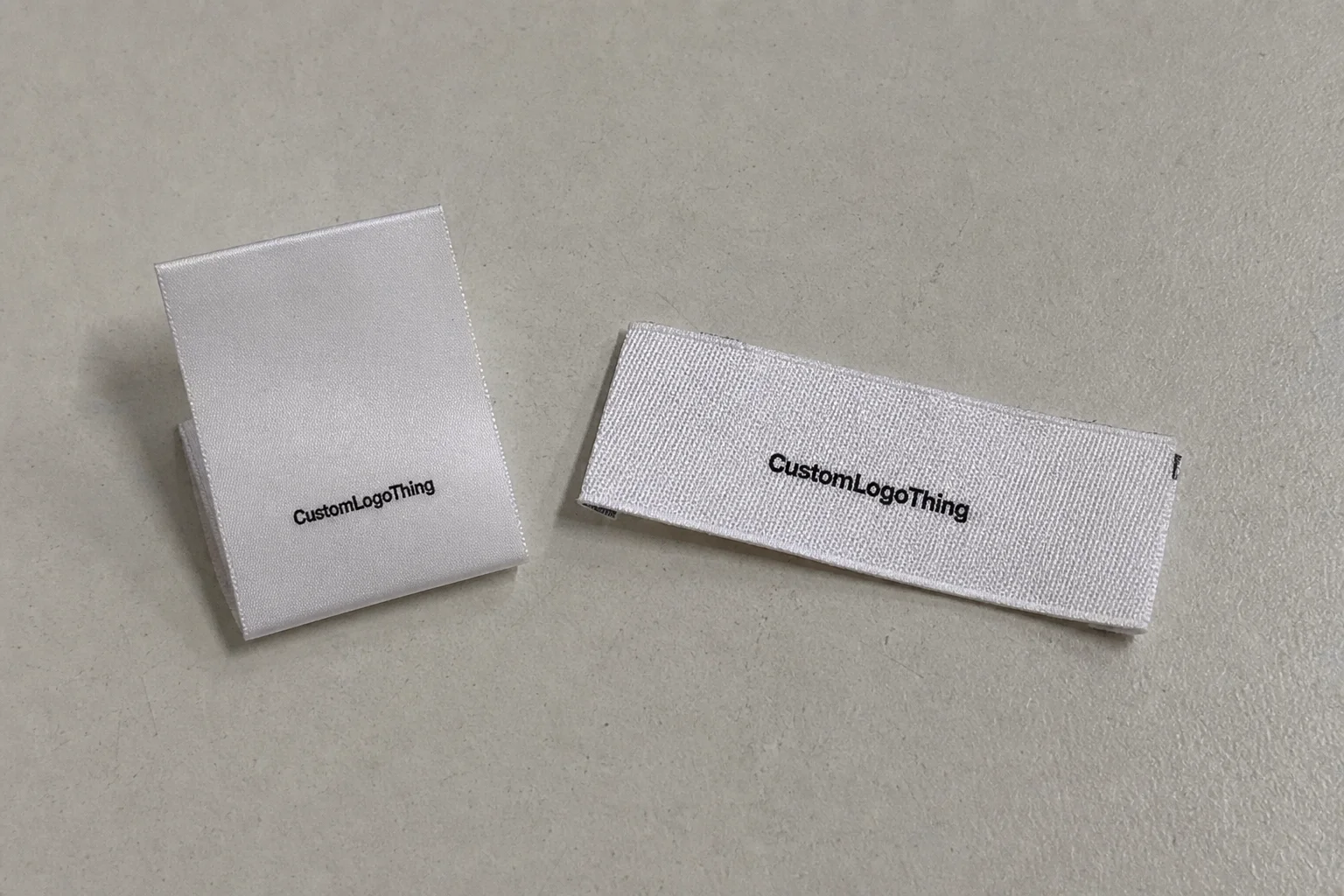
Beauty buyers tend to scrutinize Clothing Labels Unit Cost for beauty more closely because the label sits at the point where presentation and function meet. On a spa robe, the label has to look refined and stay comfortable. On a retail garment, it has to support the brand without feeling flimsy or generic. On a giftable item, it has to help the product feel complete.
The price per piece can look attractive while the order itself becomes awkward. A label quoted at $0.09 each is not inexpensive if the supplier requires 20,000 pieces and the actual launch needs 6,000. The extra inventory ties up cash, consumes storage, and can leave a brand with out-of-date artwork if the packaging changes.
Three figures should stay in view during any quote review:
- Unit price - the price for one label before freight and duty.
- Total order value - the actual spend for the run.
- Landed cost per piece - the full cost after shipping, duty, and handling.
That last figure is the one many teams forget to calculate. A label that looks inexpensive on paper may not be inexpensive once it lands in your warehouse. Freight for a small carton can be higher than expected, and special handling adds up quickly if the run is split across multiple shipments.
Beauty brands also place more weight on visual consistency. A woven label on premium apparel can support a higher retail feel. A smooth satin label on a spa item can reduce irritation against the skin. A printed care label can keep the interior clean and readable without adding bulk. Those choices affect the product experience, which is why the lowest quote is not always the best quote.
For industry reference on packaging and materials, the Institute of Packaging Professionals is a useful resource. It will not price your labels, but it reinforces a practical point: material and structure drive cost as much as print itself.
Materials and Finishes That Change the Final Look
The material is the biggest design and cost decision in the quote. Buyers often ask for “something soft” or “something premium,” which is a good starting point for discussion but not enough to quote accurately. A supplier needs the actual substrate, finish, and application method.
Woven labels carry the most texture and usually read as the most premium. They fit well on robes, higher-end loungewear, and pieces where the brand wants a tactile identity. The detail level matters. Fine logos and small text need enough weave density to stay legible, and that can push the price up. If the art is too detailed for the size, the label will not improve just because the quote is higher.
Satin labels are common in beauty-adjacent apparel because they feel smoother against the skin. They work well on spa garments, sleepwear, and items that touch the neck or inner seam. Satin can look elegant, but it has limits. Too much text in too little space can blur the design, and some inks sit better than others depending on the base fabric.
Printed polyester labels usually give the best balance of clarity, durability, and cost control. They are often the practical choice for care labels, inner branding, and items that need readable text without a premium weave structure. For buyers managing multiple SKUs, this option often keeps the budget under control while still holding up to wash cycles and routine handling.
Heat-transfer labels remove sewn-in bulk and can feel cleaner inside the garment. They are useful for light apparel, neck branding, and products where comfort matters more than a traditional stitched label. The tradeoff is that artwork and application conditions need to be controlled carefully. If the substrate, press settings, or curing are off, the result can fail early.
Finishes also move the price. Matte gives a softer, more restrained appearance. Gloss can make color pop, but it also changes the feel and may look more synthetic. Edge sealing, lamination, embossing, and special inks all add cost somewhere in the process. Buyers often ask for premium effects without realizing how quickly those effects change both unit cost and production time.
| Label Type | Typical Feel | Common Use | Relative Cost |
|---|---|---|---|
| Woven | Textured, refined | Robes, premium apparel | Medium to high |
| Satin | Smooth, soft | Spa wear, gift items | Medium |
| Printed polyester | Flat, legible | Care labels, uniforms | Low to medium |
| Heat-transfer | Minimal, clean | Light garments, inner branding | Medium |
For beauty products, the right choice usually depends on wear time and wash exposure. A short-life promotional garment can tolerate a simpler construction. A robe sold at retail needs more durability and a more controlled finish. The label should fit the product life, not just the design mood board.
Specifications That Protect Fit, Comfort, and Brand Consistency
Accurate pricing starts with a clear spec sheet. A supplier needs finished size, fold type, material, artwork file, color count, application method, and delivery location. If any of those are missing, the price may shift later, usually after the quote has already been compared internally.
Label size affects both cost and usability. A narrow neck label, a side seam label, and an insert-style tag are not interchangeable. Each uses a different construction path. Small text on a tiny label can force a higher-cost print or weave, while a slightly larger format can lower the production risk without changing the brand look.
For beauty brands, consistency matters across products and batches. The label should match the tone of the packaging, the logo spacing, and the language used on the rest of the line. If the package is soft and minimal, a bright or crowded label will feel off immediately. If the brand uses neutral colors and quiet presentation, the label should support that direction instead of competing with it.
There are also practical limits that are easy to miss during design:
- Wash instructions need legibility at the final size.
- Care text should fit without compressing the layout.
- Skin contact matters if the label sits in a sensitive area.
- Artwork cleanup can prevent rework and pricing changes later.
One of the most common errors is treating label art like a packaging graphic and not a production file. Thin type, tiny icons, and overly detailed logos can survive on screen and fail in the physical sample. Fixing that before production is far cheaper than correcting it after a run has already started.
For brands that use recycled or paper-based components, documentation can matter as much as appearance. Standards such as FSC can be relevant when the label system includes paper tags or secondary packaging. Not every beauty label needs certification, but brands that make sourcing claims should ask for proof early rather than trying to retrofit it later.
Clothing Labels Unit Cost Breakdown for Beauty Orders
The phrase Clothing Labels Unit Cost for beauty sounds straightforward, but the actual pricing structure is layered. Quantity, material, print or weave complexity, fold style, special finishing, and setup work all feed into the final price. Remove one of those variables from the quote request and the comparison becomes unreliable.
The usual cost pattern looks like this:
- Low quantity has the highest unit cost because setup is spread across fewer pieces.
- Mid-range quantity often gives the best balance between price and inventory risk.
- High quantity lowers the per-piece rate but only makes sense if the demand is stable.
Most suppliers use quantity bands. That means price drops in steps rather than changing smoothly. A run of 2,000 pieces may fall in one band, while 10,000 pieces fall in another with a much lower rate. On some specs, that difference can be dramatic. General market ranges for labels might run from about $0.18 to $0.35 for small runs, $0.08 to $0.18 for mid-volume, and $0.03 to $0.09 for large, repeatable orders. Those ranges are broad because the material and finishing choices matter so much.
Setup charges often sit outside the quoted unit price. Tooling, die cutting, art processing, or special fold setup can add a fixed amount to the order. That fixed cost is manageable on larger volumes and painful on small ones. A $120 setup fee sounds small until it is spread across 500 labels and added to freight.
Freight and duty should stay in the conversation from the start. A low label price with expensive shipping can still produce a weak landed cost. If the order ships in multiple cartons or needs express timing, the final cost can rise faster than expected. Finance teams should compare total spend, not just the headline rate on the label itself.
Here is a practical way to read quotes:
| Order Band | Typical Unit Cost | Best For | Watch Out For |
|---|---|---|---|
| Small run | $0.18-$0.35 | Launches, samples, limited editions | High setup impact, higher MOQ pressure |
| Mid run | $0.08-$0.18 | Replenishment, seasonal lines | Spec changes can move pricing quickly |
| Large run | $0.03-$0.09 | Stable SKUs, repeat production | Inventory risk if demand shifts |
The most useful habit is to request tiered pricing at several quantities. Ask for 1,000, 3,000, 5,000, and 10,000 pieces if that range fits your business. It shows where the breakpoint sits and whether buying more actually improves the total cost enough to justify the extra stock. Without tiers, the quote hides too much.
Process, Timeline, and Turnaround From Quote to Delivery
A clean production process makes quoting easier and reduces expensive surprises. The usual sequence is inquiry, spec review, quote, artwork check, proof or sample approval, production, inspection, and shipment. If a supplier cannot describe that sequence clearly, the order is likely to create avoidable delays.
Most slowdowns happen before production starts. Incomplete specs, a file that needs cleanup, a missing color target, or a late change to fold style can all push the schedule. Once the production line is set, changes become more expensive and less flexible. That is not a sign of poor service. It is how the process works.
Reasonable lead times vary by label type and order complexity:
- Quote turnaround: often 24 to 48 hours when the spec is complete.
- Proofing: usually 1 to 3 business days if the artwork is ready.
- Production: commonly 7 to 15 business days after approval for standard runs.
- Shipping: depends on destination, carrier, and the chosen service level.
Sampling adds time, but it reduces risk. A sample confirms color, texture, fold behavior, print sharpness, and how the label sits on the garment. That matters most on premium beauty products, where a slight change in sheen or a cramped line of text can make the finish feel wrong. For launch inventory, the sample is cheap protection against a reprint.
Timeline also belongs in the cost discussion. A lower unit price is not lower cost if the run misses a sales window or a seasonal release. Delayed labels can hold up packed inventory, and that carries its own expense. A quote that ignores timing is incomplete.
For transit expectations and packing concerns, the ISTA testing standards are useful if you want a framework for understanding shipment risk. Good labeling work still needs to survive handling and delivery before it reaches production or retail use.
What a Serious Supplier Does Better for Beauty Brands
A serious supplier does more than send a number. They point out file problems, explain where cost changes come from, and keep repeat orders aligned with the original spec. That matters for beauty brands because the label is part of the product presentation, not an afterthought.
Clear communication is usually a sign of better production control. If a supplier can explain why a woven label costs more than a printed polyester version, or why a different fold changes the price, they understand the work being quoted. If the reply stays vague, the quote probably deserves more scrutiny.
Quality control shows up in practical details:
- Color stays consistent from one batch to the next.
- Edges are clean and fold lines are even.
- Text remains readable at the final size.
- Stitching or print application holds up under use.
- Packaging arrives organized and ready for receiving.
There is a clear difference between a vendor and a production partner. A vendor sells labels. A production partner helps reduce spec drift, keep the order repeatable, and avoid preventable errors in the artwork or finishing. For Beauty Brands That run multiple SKUs, that reliability can matter as much as price.
If you are managing related brand components, consistency across labels and tags is worth protecting. A single spec language across the line lowers confusion and makes future reorders easier to price and approve. Related items can be viewed through Custom Labels & Tags if you are keeping the broader trim system aligned.
What to Send Next for an Accurate Quote
To get a useful quote for Clothing Labels Unit Cost for beauty, send the complete spec in one message. Quantity, size, material, fold type, artwork file, color targets, and delivery destination are the core details. If the supplier has to chase those pieces later, the quote often becomes slower and less reliable.
Ask for tiered pricing at the same time. That shows how the unit cost changes at different volumes and whether the MOQ fits your plan. A single price without quantity breaks is hard to compare, especially if the product launch is still flexible.
If the order is tied to a launch, a seasonal update, or a premium line, request a sample or proof before mass production. That is the easiest way to catch a wrong shade, an awkward fold, a text block that is too tight, or a finish that looks better in theory than in hand. The earlier the issue is found, the lower the correction cost.
A practical quote request can stay short:
“Please quote clothing labels unit cost for beauty with quantity tiers, MOQ, material options, setup charges, and freight to my destination.”
That phrasing gives the supplier what is needed to price correctly and gives you what is needed to compare apples to apples. The point is not to chase the lowest number. The point is to understand the real cost of the label system before production starts.
For beauty brands, labels are small, but the buying decision is not. The right quote reflects material, labor, finish, timing, and inventory risk. The wrong one only looks cheap until the order lands.
FAQ
What affects clothing labels unit cost for beauty brands the most?
Quantity usually has the largest effect because setup costs are spread across more or fewer pieces. Material, fold type, print or weave complexity, and special finishes also change pricing quickly. Artwork cleanup can add cost if the file is not production-ready.
What is the MOQ for custom clothing labels for beauty products?
MOQ depends on the label type, material, and production method. Woven labels and specialty finishes usually require higher minimums than simple printed labels. The more useful question is whether the MOQ fits your launch plan and inventory tolerance.
Which label material gives the best balance of cost and feel?
Printed polyester is often the most practical balance of durability, legibility, and controlled cost. Satin feels softer for spa wear and customer-facing apparel, while woven labels create a more premium look. The best option depends on where the label sits and how often the product is worn or washed.
How long does production take after artwork approval?
Standard runs often take 7 to 15 business days after approval, but the actual schedule depends on label style, order size, and current capacity. Sampling, fold changes, and specialty finishes add time. Shipping time is separate and should be counted before launch deadlines are set.
Can I get a sample before placing a full beauty label order?
Yes, and for launch items or premium lines, that is the safer choice. A sample helps confirm color, texture, size, and the way the label sits on the garment. It is much cheaper to adjust a proof than to reprint a full order.


