If you are pricing coffee Black Paper Gift Bags unit cost, start with the part that usually gets ignored: black stock already does a lot of visual work. It makes a package feel finished before you add a second finish, a heavy ink build, or a complicated insert. That matters because buyers are not shopping for decoration alone. They are trying to hold a margin while still presenting coffee in a way that feels deliberate.
The best packaging decisions are rarely the flashiest ones. They are the ones that survive retail handling, look clean in a customer’s hand, and do not cause the finance team to stare at the invoice for too long. Black paper gift bags sit in that narrow lane where presentation and restraint can actually support each other.
Why Black Coffee Gift Bags Often Beat Fancy Inserts on Shelf Impact
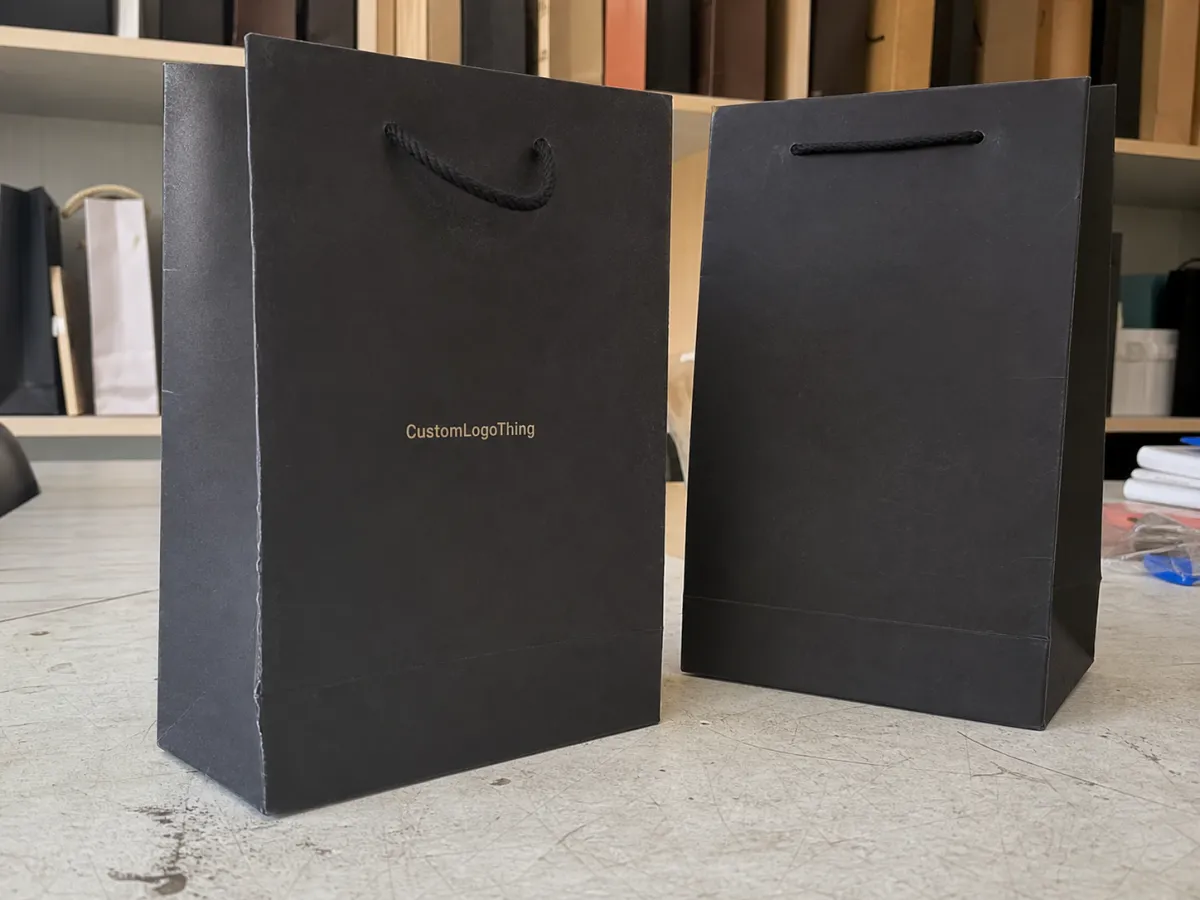
Black paper gift bags pull their weight in a very practical way. A strong logo on a dark surface, a handle that feels dependable, and a size that fits the product set can carry a gift bundle, a retail carryout, or a seasonal coffee pack without much visual clutter. That simplicity is part of the appeal. Coffee packaging often works best when it looks intentional rather than crowded.
There is also a damage-control advantage. Black stock hides the minor scuffs, rubbing, and edge wear that show up during packing and store handling. Light-colored papers tend to reveal every crease and fingerprint. Black is more forgiving, which is useful in programs where bags are moved often and touched by a lot of hands before they reach the customer.
That is one reason Coffee Black Paper Gift Bags unit cost can be more manageable than buyers expect. The surface itself already reads as premium. A clean one-color logo and a well-made handle can do more than a complicated insert system that looks elaborate but is hidden once the bag is closed. Inserts still have uses, especially for fragile products or tight retail sets. They just do not always add enough visible value to justify the extra spend.
In practice, black bags tend to work well for:
- coffee bundle gifts that pair beans with a mug, note card, or sampler
- retail carry bags for roasters, cafes, and tasting rooms
- holiday sets that need fast assembly and a polished outer package
- membership gifts or corporate sets that need a reusable presentation bag
The shelf effect is simple: buyers notice a package that looks finished, not busy. A black bag with one clean visual anchor often beats a more complicated layout with too many ingredients. That is not a design trick. It is a cost decision that happens to look good.
Paper, Handles, and Finish Choices That Change the Look
Paper choice determines how a bag feels in the hand and how well it survives normal use. For black gift bags, the common structures are SBS board, kraft-laminated board, and recycled paperboard with a black wrap or black printed finish. SBS usually gives the smoothest print surface and a crisp, polished feel. Kraft-laminated board adds a slightly more natural look and can feel sturdier in some formats. Recycled board can work for buyers who need a sustainability story, but it has to be controlled carefully or the surface starts to look flat and dusty instead of premium.
Handle choice changes the perceived value faster than most logos do. Twisted paper handles are the most cost-efficient option and are common in volume programs. Cotton rope handles feel sturdier and are often preferred when the bag is meant to carry mixed merchandise, not just a single item. Ribbon handles lean more gift-like and are usually reserved for seasonal or higher-end sets. The handle is touched constantly, so it is not the place to overcut budget if the bag needs to feel reliable.
Finish choices matter, but every finish has a price and a production consequence. Matte lamination usually creates the most restrained, controlled look on black stock. Soft-touch film feels richer in the hand, although it can show fingerprints and handling marks if the packing environment is busy. Gloss can make graphics pop harder, but on black it can also push the look toward something sharper and less subtle. Foil and spot UV can be effective on dark surfaces because contrast is stronger, yet both add tooling, setup time, and a greater chance of inconsistency if the artwork is crowded.
Small structural details are easy to miss and hard to fix later. Top folds help the mouth of the bag stay neat. Base cards or reinforced bottoms keep the bag from sagging under weight. Gusset support matters when the bag is expected to hold tins, jars, or boxed coffee. A bag that bows, creases, or opens at the seam under ordinary use stops being a premium item and starts becoming a service issue.
Here is the practical tradeoff most buyers eventually make: keep the print simple, choose one meaningful finish, and put the remaining budget into paper weight or handle quality. Black already contributes most of the visual drama. The rest should reinforce that impression, not fight it.
| Handle or Finish | Look and Feel | Typical Added Cost | Best Use |
|---|---|---|---|
| Twisted paper handle | Simple, practical, dependable | Lowest | High-volume retail and basic gift use |
| Cotton rope handle | Sturdier feel, better hand feel | + $0.03-$0.08/unit | Cafe retail, coffee bundles, repeat orders |
| Ribbon handle | More gift-like, softer appearance | + $0.05-$0.12/unit | Seasonal gifting and premium sets |
| Matte lamination | Clean, controlled surface | + $0.04-$0.10/unit | Most black paper gift bags |
| Foil or spot UV | High contrast, stronger visual hit | + $0.06-$0.18/unit | Top-tier brand presentation |
Size, Weight, and Print Specs to Lock Before Quoting
Size decisions drive the rest of the quote. If a bag is too small, the pack-out becomes awkward and the handles take more strain than intended. If it is too large, paper is wasted and the product moves around inside the bag, which creates a loose, unfocused presentation. For coffee retail and gifting, buyers usually need one compact size for single-item sets, one mid-size option for bundles, and a larger carry format for mixed merchandise.
Useful ranges often look like this: around 7 x 3.5 x 9 inches for small gifts, around 10 x 5 x 13 inches for two- to three-item coffee bundles, and around 12 x 4.5 x 16 inches for broader retail use. Those measurements are only a starting point. The usable interior matters more than the headline size. Gusset width, base depth, and handle drop decide whether the bag actually behaves the way the buyer expects.
Weight capacity should be discussed before anybody talks about unit cost. A bag for a card and one bag of beans is a very different structure from a bag carrying two tins, a mug, and a boxed sampler. Buyers should ask for a load target or at least a practical carry expectation. If the bag is overbuilt, the buyer pays for paper they do not need. If it is underspecified, it becomes a complaint at the counter.
Print specs matter just as much. One-color logo work is usually the cleanest and most economical option. Two-color printing adds setup complexity. Foil stamping, embossing, inside print, and full-panel coverage all increase the price and can push production into a different schedule. On black stock, restraint usually looks more expensive than clutter. The design has to earn the extra layers.
Before requesting a quote, send artwork that is actually usable. Vector files, Pantone references, and a clean dieline reduce back-and-forth and save days. Add bleed. Keep text away from folds, gussets, and glue areas. Tiny type near a crease is a bad idea no matter how good the concept looks on screen. If the bag includes any specialty finish, confirm the art after the dieline has been checked and before bulk production starts.
A short spec list saves time and bad assumptions:
- finished size, not an estimate
- target load weight
- handle type and handle drop
- print count and print placement
- finish choice, if any
- shipping destination and carton packing requirements
If the bags will travel through a rough distribution chain, ask how the outer cartons are built and whether the packing plan protects the handles and face panels. ISTA guidance is a useful reference point for shipment stress and carton handling. A bag that looks good but arrives crushed is not a good value.
Coffee Black Paper Gift Bags Unit Cost, MOQ, and Price Breaks
This is where most buyers spend their time, because the quote sheet looks simple until it does not. Coffee black paper gift Bags Unit Cost is never just one number. It moves with size, paper weight, handle selection, print method, finishing, and quantity. The relationship is predictable, but it is still easy to misread if the quote is compared line by line without checking what the factory has included.
MOQ depends on the spec. A plain printed bag often has a lower minimum than a foil-stamped bag or one with a custom handle. That is not a supplier trick; it is a production reality. Higher-finishing jobs need more setup, more attention, and more justification to run efficiently. In many cases, the lowest acceptable MOQ is not the best value. The better pricing often appears one tier above it, where material use and machine time start to balance out.
Setup charges are where budget surprises hide. Ask about plate charges, die or tooling fees, sample charges, special packing, and any extra handling for black stock or finish work. Some suppliers fold several of these into the unit rate. Others separate them. A quote can look inexpensive until the add-ons appear, and that is how a buy that seemed safe gets more expensive than expected.
| Order Tier | Simple Spec Unit Cost | Upgraded Spec Unit Cost | What Usually Changes |
|---|---|---|---|
| 1,000 pcs | $0.38-$0.68 | $0.72-$1.20 | Higher setup charges and less efficient material use |
| 3,000 pcs | $0.24-$0.44 | $0.52-$0.88 | Better balance between MOQ and cost per piece |
| 5,000 pcs | $0.18-$0.34 | $0.44-$0.76 | Common bulk buy range for coffee brands |
| 10,000 pcs | $0.14-$0.28 | $0.36-$0.64 | Best unit cost if storage and cash flow can support it |
Those ranges are directional. A narrow bag with a twisted handle and one-color print can land toward the low end. A heavier board bag with ribbon handles, matte lamination, and foil branding will sit higher. There is no hidden formula that makes premium finishes cheap. There is only the tradeoff between visual ambition and the cost of producing it correctly.
Ask for multiple quote tiers on the same spec. A comparison at 3,000, 5,000, and 10,000 pieces shows how the cost per bag moves as quantity rises. It also makes the storage question visible. A lower unit price is helpful only if the extra inventory does not tie up cash or create a warehouse problem.
Always look at landed cost. Shipping, duties, local delivery, and carton packing can change the real price materially. Comparing suppliers across borders without those numbers is a common mistake. The cheapest factory line item is not always the cheapest delivered order.
If paper sourcing matters to your program, ask for FSC options and request documentation before approval. Traceability does not make a bag expensive by itself, but it can be a real requirement for brand standards, retail audits, or procurement rules.
The pattern is easy to remember: quantity usually matters more than people expect, setup charges matter more than they first admit, and finish choices matter most when they are applied without restraint.
Production Steps and Lead Time From Proof to Delivery
The production path is usually straightforward, but it can stall at almost every handoff if the buyer moves slowly. A typical job starts with artwork review, then dieline confirmation, then sample approval if needed, followed by bulk printing, finishing, die cutting, gluing, and final packing. Each added finish introduces another approval point. Foil, embossing, and lamination are all manageable, but they do ask for more coordination.
For simple printed bags, a normal working range is about 12-15 business days after proof approval. More complex bags can take 15-20 business days or longer, especially if the job includes specialty handles, heavy finishing, or unusual carton packing. Custom pre-production samples can add another 5-7 business days. Shipping time is separate from factory time, and that distinction still gets missed too often.
Most delays are predictable. Unclear artwork slows the proof stage. Late approval pushes production off schedule. Changing quantities after the quote can force the factory to re-plan material use. Waiting too long to sign off on a sample is another common reason launch dates slip. None of these problems are mysterious; they are the practical side of buying packaging.
If the bags support a seasonal launch or a recurring retail window, build a reorder buffer. A two- to four-week buffer is reasonable for repeat programs. If the job includes special finishes or custom packing, give yourself more room. Reordering after the last carton is open is usually the expensive choice.
Carton packing deserves more attention than it gets. Flat-packed bags save space, but they can still warp or rub if the box build is weak. Heavier runs should be packed so the faces do not scuff and the handles do not deform. Shipping damage is a packaging issue, not just a logistics issue.
If a proof sits unapproved for days, production does not pause for the launch calendar. Manufacturing schedules are not sentimental, and rush fees tend to remind buyers of that quickly.
Clean approvals protect both timing and price. The more times a job has to be changed after the quote, the less useful the original unit cost becomes. Lead time is part of the cost structure, even if it does not show up as a separate line.
Why Buyers Reorder These Bags Instead of Chasing Cheap Alternatives
Reorders happen when the bag behaves well in the real world. That is the short version, and it is usually the right one. Coffee packaging is often part of a repeat retail or gifting program, which means consistency matters a great deal. If one run arrives with a slightly different black tone, handle length, seam strength, or print sharpness, the whole line starts looking inconsistent.
That is why buyers tend to stick with bags that have already proved themselves. A sturdier body reduces damage claims. Better glue work keeps seams from failing under normal use. A slightly heavier paperboard can prevent bowing when a mug or tin goes inside. None of these things are glamorous. They just keep the package from causing avoidable problems after it reaches the store or the customer.
Proof control matters more on dark stock than many buyers expect. Black can hide some surface flaws, but it can also make weak contrast, muddy logo edges, and poor registration easier to spot. A clean bag looks expensive because the print is controlled, not because the design is crowded. Buyers notice that difference quickly, even if they cannot explain it in technical terms.
Private-label flexibility also matters. Some coffee brands start with a seasonal run and then turn the same bag format into a regular retail line. That only works if the spec stays stable and the supplier can repeat the job without changing the feel from one order to the next. A first order should not be treated like a one-off experiment if the real goal is to build a reusable packaging format.
The pattern is simple:
- buy simple if the bag is for standard retail
- add one premium feature if the bag needs a stronger gift feel
- reorder the spec that survives use, not the one that only photographs well
There is a reason cheap alternatives do not always stay cheap. If a lower-priced bag tears, collapses, or prints inconsistently, the savings disappear in returns, rework, or replacement orders. A lower invoice does not help much if the bag creates extra work downstream.
Practical truth: buyers reorder when the bag holds up, the print stays sharp, and the invoice matches the quote. That is what matters after the creative meeting is over.
What to Send for a Faster Quote and Cleaner Reorder
Send the full spec at the start. Exact size, target quantity, handle choice, print colors, finish, destination, and deadline all belong in the first request. That reduces guessing and keeps the quote aligned with the actual job. When the details are vague, the response usually looks attractive for about five minutes and then gets revised three times.
If the order includes black stock, foil, embossing, or a new size, ask for a sample or mockup. Black can behave differently than the screen preview suggests. A design that looks balanced on a monitor can come out too dull, too shiny, or too thin once it is printed on dark paper. A sample is the only reliable way to check color, rigidity, handle strength, and overall finish together.
Request two quantities in the same quote. One should be the minimum acceptable run. The other should be the quantity where the unit cost falls enough to justify the larger order. That side-by-side view makes the tradeoff visible. It also prevents the conversation from getting stuck on a single price that does not reflect the rest of the order economics.
Confirm carton count, packing method, and shipping terms before approval. If those details change late, the final invoice can drift away from the original estimate. That kind of drift is avoidable, which is why it frustrates buyers so much when it happens. Clear specs up front are easier than corrections later.
For reorders, keep one clean spec sheet on file and reuse it. Hold the same size, handle, print file, finish, and packing method unless there is a real reason to change. Consistency keeps the order simple, and simplicity is one of the few things that still helps unit cost in a visible way.
The most useful next step is not another round of vague comparison. It is a clean check of spec, sample, and landed price so the order can be judged on the same terms from start to finish.
What affects coffee black paper gift bags unit cost the most?
Bag size and paper weight usually move the price first. Handle type, finish, and print complexity come next. Higher quantity tiers usually reduce the unit cost faster than small spec changes, so quantity planning matters more than people expect.
What MOQ should I expect for custom black paper gift bags?
MOQ depends on bag size, print method, and finish. A basic printed bag may start lower, while foil, embossing, or specialty handles can push the minimum higher. Ask for MOQ by spec rather than a generic number, because that is the only answer that helps with planning.
Can I get a sample before placing a bulk order?
Yes. Request a stock sample or a custom pre-production sample if the order is new. Use it to check color on black stock, handle strength, and bag rigidity. Sample approval takes time, but it saves money and avoids avoidable surprises.
How long does production usually take after approval?
Simple printed bags often move faster than foil, embossing, or heavy finishing. A normal working range is about 12-15 business days after proof approval for straightforward runs, with more complex jobs taking longer. Shipping time is separate from factory lead time.
How do I reduce the unit cost without making the bag look cheap?
Keep the print simple and avoid stacking too many finishes. Match the bag size to the product instead of oversizing it. Order at a higher quantity tier if storage and cash flow allow it, because that is often the cleanest way to improve coffee black paper gift bags unit cost without weakening the presentation.

