Coffee FSC Paper Shopping Bags MOQ for Bulk Buyers
coffee fsc paper shopping bags moq is usually the first number buyers ask for after they decide on size and print, because the bag affects launch timing, landed cost, and how quickly a new packaging program can move through approvals. That is true for roasters, cafes, grocery chains, and retail brands alike. The bag may look simple on the shelf, but it carries three things at once: product weight, brand image, and a sustainability claim that procurement teams increasingly expect to verify.
FSC certification changes the conversation because it is not just a visual cue. Buyers often need chain-of-custody paperwork, carton-level consistency, and a spec that can survive reorders without changing tone or handle feel. The Forest Stewardship Council explains those requirements clearly on its site: FSC certification basics. For many packaging teams, that documentation matters as much as the artwork. A bag that looks good but cannot support the claim will slow approval, and in some organizations that is enough to stop the order.
There is another reason MOQ gets attention early. The first quote is often where the buyer discovers whether the design is realistic at volume. A two-color logo, reinforced handle, and custom paper grade can push a project into a different cost band than expected. A simpler spec may save more than aggressive negotiation ever will.
Most of the mistakes happen before production begins. The buyer under-specifies the load, the supplier quotes against the wrong paper weight, or the artwork file arrives too late to hold schedule. Once those gaps appear, the MOQ is no longer only a purchasing question. It becomes a timing and risk problem.
Why coffee buyers switch to FSC paper bags quickly
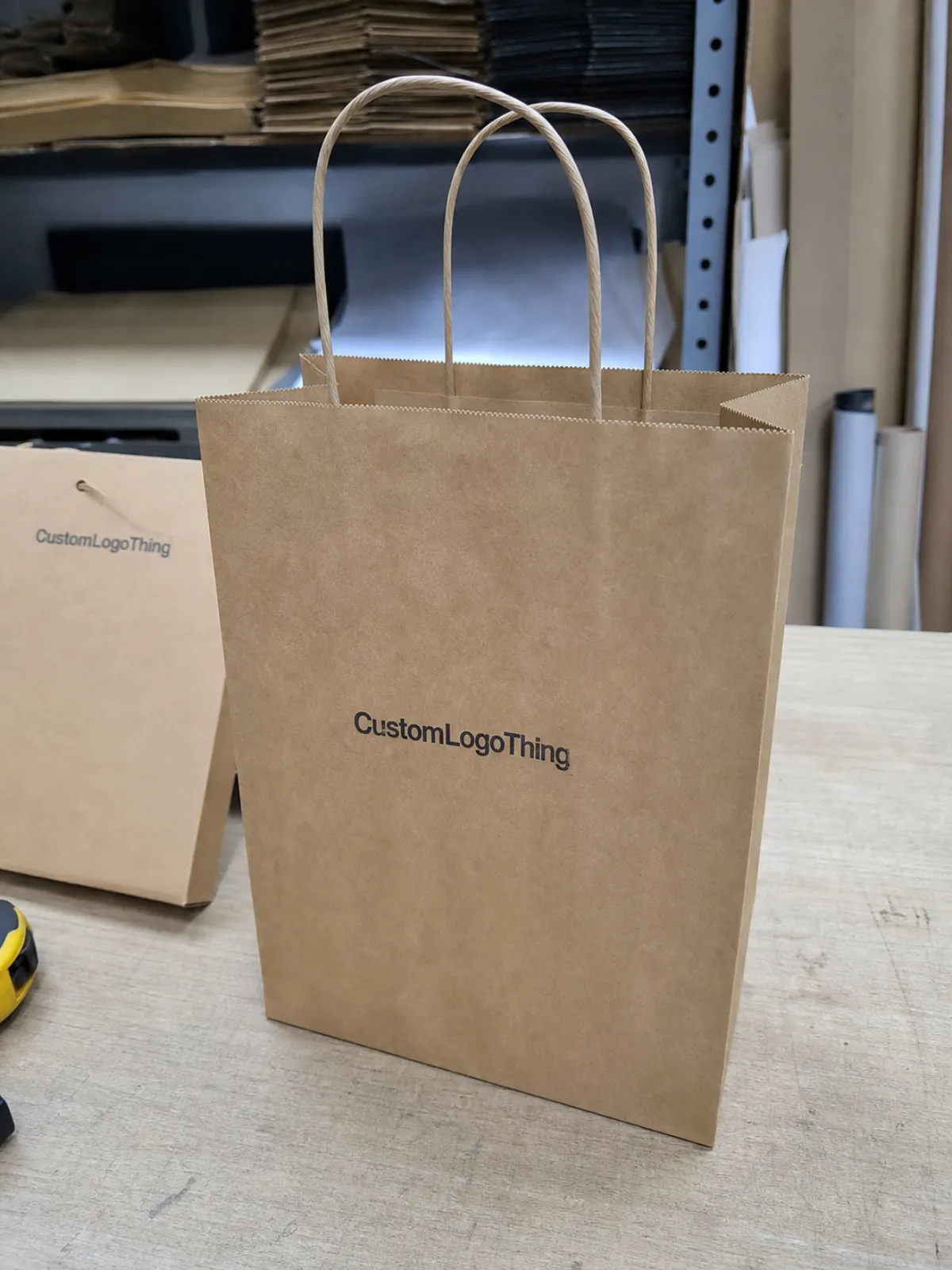
The switch is rarely about packaging fashion. It is usually about control. A branded FSC paper carrier is easier to standardize than a mix of generic bags, seasonal alternatives, and ad hoc substitutions. It also keeps the customer-facing presentation consistent when different stores, distributors, or fulfillment teams are involved.
That consistency matters more than people admit. A cafe may only see a bag for a few seconds, but those seconds are where the brand is judged. If the print looks muddy, the paper creases badly, or the handle feels weak, the bag communicates the opposite of what the coffee itself is trying to say. In a retail setting, packaging quality becomes a proxy for product quality.
Many buyers also move toward FSC paper because procurement wants a paper trail that is easy to defend. A sustainability claim without documentation can create friction during vendor onboarding or annual review. A documented paper source, a clear size spec, and a repeatable print process reduce that friction. The bag stops being an unverified marketing asset and becomes a controlled supply item.
There is a cost side to this too. For recurring programs, the cheapest unit price is not always the cheapest option overall. A bag that reorders cleanly, ships in stable cartons, and keeps the same board feel across runs can save money in ways that do not show up on the first invoice. Fewer surprises mean fewer emergency air shipments, fewer rejected batches, and fewer calls to redo artwork.
Buyers usually notice the pressure points only after the first quote lands. If a launch date is fixed, a new bag program can move fast or stall immediately depending on how complete the brief is. The strongest projects tend to have one thing in common: the spec is defined before the price conversation starts.
Construction details that affect strength and shelf appearance
Coffee packaging is broader than one bag style. A carrier for a single bag of beans is not the same as a bag carrying tumblers, filters, boxed gifts, or a mixed retail set. The right construction depends on what the bag must hold, how often it will be reused, and how much visual polish the brand expects at point of sale.
Flat-handle bags are common when the priority is cost control and easy stacking. Twisted-handle bags usually feel sturdier in the hand and read more retail-ready. Rope handles, reinforced patches, and folded top edges sit in a more premium lane, but they add cost and can change the MOQ because of extra setup and slower assembly.
Bottom structure matters more than many spec sheets admit. A pasted bottom seam that looks fine in a mockup may fail once the bag is filled with boxed coffee or stacked samples. Wider gussets help with stability, but they also change how the artwork lands. If the bag has a heavy base load, the buyer should ask for the bag to be tested with the actual contents, not just the target dimensions.
Grease and moisture are a quieter issue. Coffee itself is dry, but the full order is often not. Pastry add-ons, condensation from cold drinks, coated boxes, or sampling kits can transfer moisture into the bag. Heavier paper and better adhesive control help here. So does realistic handling during packing. A bag that survives in the sample room may still fail when someone loads it quickly at the counter.
Branding should work with the structure rather than against it. Large-format print can look strong on a wide bag, but it may raise setup costs and increase the chance of alignment issues. For smaller runs, a clean one-color mark on kraft paper often looks more deliberate than a crowded design trying to force premium cues onto a thin stock. The paper, handle, and ink should feel like one decision, not three separate ones.
Paper grades, handles, print methods, and finishes
Paper choice usually narrows to kraft, bleached white, and specialty coated or uncoated stock. Kraft is the most natural-looking option and tends to support a practical, low-waste message. It also hides small scuffs better than white paper. Bleached white gives the cleanest canvas for precise logos, dark typography, and sharper color contrast. Specialty stocks can feel more upscale, but they should be used only when the procurement team is comfortable with the material story.
Paper weight is just as important as surface appearance. Light paper can hold down cost, but it dents more easily and often feels less stable in hand. Heavier paper adds rigidity and improves shelf presentation. For many Retail Paper Bags, 120gsm to 200gsm is a useful working range, though the real choice depends on size and load. A small bag for lightweight merchandise can sit toward the lower end. A larger carrier for boxed coffee gifts or bundled accessories usually needs more body.
Print method affects both visual quality and the economics of the order. Flexographic printing is usually the better fit for simpler logos, fewer colors, and higher repetition. Offset gives finer detail and more accurate color control, especially on white stock, but setup costs make more sense once the volume is high enough. Digital can help on lower quantities, though the total cost still depends on size, coverage, and finish.
Finish changes the perception more than many buyers expect. Matte feels restrained and works well with kraft paper. Gloss can sharpen the color and make graphics stand out under retail lighting, but it can also show handling marks sooner. If the bag is going to be carried through stores, markets, or events, the finish should tolerate real use rather than just photograph well.
Handle choice deserves the same level of attention. Flat handles are economical and stack neatly. Twisted handles are common because they strike a better balance between strength and cost. Reinforced handles, while more expensive, can be the safer option for heavier loads or bags that will be reused. A handle failure is not a small defect; it can turn an entire print run into a liability.
Buyers reviewing quotes usually compare the same five things: board weight, handle style, print colors, bag size, and packaging format. Those are the variables that move cost fastest. If any one of them is vague, the price is less useful than it appears.
| Option | Typical use | MOQ impact | Indicative cost per piece | Practical takeaway |
|---|---|---|---|---|
| Kraft, one-color flexo, twisted handle | Everyday coffee retail and takeaway | Lower | About $0.18-$0.28 at 5,000 pcs | Good balance of speed, cost, and clean presentation |
| Bleached white, two-color print, flat handle | Boutique retail and gift bundles | Medium | About $0.24-$0.38 at 5,000 pcs | Better for sharp graphics and stricter brand color control |
| Heavier paper, offset print, premium finish | Flagship launches and higher-end seasonal packs | Higher | About $0.35-$0.60 at 5,000 pcs | Best when shelf impact matters more than the lowest unit cost |
The table is only a working guide. Actual pricing shifts with country of origin, carton quantity, freight method, and how much tooling is required. A buyer comparing quotes should ask whether the price includes plates, die-cutting, proofing, and export packing. Those items can move the total more than the bag spec itself.
For brands that care about recycling claims, it helps to understand how the material will be reviewed outside packaging departments. The EPA has useful general guidance on recycling and recovery: EPA recycling guidance. That does not replace local rules, but it gives teams a common reference when they are aligning marketing language with procurement language.
Pricing and MOQ planning for bulk orders
MOQ looks simple until the setup costs appear. The unit price is shaped by paper weight, print complexity, handle type, carton format, and order size. Two bags with the same dimensions can land in different price bands if one has a reinforced handle, a second print location, or a custom finish.
The biggest pricing mistake is comparing only the base bag price. Tooling, plates, die-cutting, and color matching can add fixed costs that are hard to absorb on a small run. A 1,000-piece order can look expensive next to a 10,000-piece order even when the paper is identical, because the fixed work is spread over fewer units. That is not hidden margin; it is math.
Buyers usually get a clearer picture by asking for two scenarios at the same time: a test volume and a production volume. The spread between those two numbers tells you whether the design is efficient. If the lower quantity is too costly, the answer is rarely to negotiate harder. It is usually to simplify the spec.
The best cost drivers to keep under control are the ones that multiply quickly:
- Color count - every added ink color can increase setup time and risk.
- Paper thickness - heavier board improves feel but raises cost and freight.
- Handle complexity - reinforced and specialty handles cost more to assemble.
- Artwork coverage - full-wrap printing is harder to align and inspect.
- Packing format - retail-ready packing takes more labor than bulk cartons.
Freight should not be an afterthought. Paper bags are light, but they take up space. Carton volume can make shipping feel disproportionate to the bag price, especially on smaller orders. A quote that ignores freight may look attractive until the cartons are on the move.
The cheapest quote is only cheap if the bag arrives on time, matches the proof, and can be reordered without rework.
That is why landed cost is a better metric than list price. If the first order is meant to test market response, the buyer should also ask what happens at reorder. A supplier that can repeat the spec without redoing approvals is usually worth more than a slightly lower first-run number.
Production timeline and approval checkpoints
Production starts long before the first sheet enters the line. A typical flow is brief intake, quotation, artwork review, proofing, production, packing, and shipment. Each step is predictable on paper, but schedule drift usually comes from incomplete files or late approvals, not from the bag-making itself.
Artwork is one of the most common bottlenecks. Low-resolution logos, missing dielines, unclear Pantone references, and unconfirmed handle colors can all push back the proof stage. If the supplier needs to redraw the layout or ask for a cleaner file, the order slows down immediately. This is especially true on lower MOQ runs, where there is less margin for repeated corrections.
For many bulk orders, a realistic production window is often 12-20 business days after final approval. Larger quantities, special paper sourcing, or premium finishes can extend that timeline. If the bags are needed for a launch date, that schedule should include proof signoff, packing, and transit time. A production date without a shipping plan is not a real deadline.
Before production starts, buyers should approve the following:
- Finished dimensions and gusset depth
- Paper grade and paper weight
- Handle style, handle color, and reinforcement
- Print placement, color count, and finish
- Carton count, label format, and packing method
Those five approvals are where most downstream disputes begin. A mockup can look correct while the folded bag behaves differently under load. If the bags will be packed with actual products, sample testing should use the real contents whenever possible. A lightweight test load rarely reveals the same issues as a boxed coffee set or a mixed retail bundle.
Shipping validation is also worth considering when the bags will travel far before store use. Packaging guidance from groups such as ISTA can help teams think about compression, carton strength, and transit risk: ISTA standards reference. The goal is not overengineering. It is avoiding damage that only appears once the order leaves the factory.
Small delays also matter. A two-day pause in proof approval can become a week if the supplier is waiting on a paper batch or a finishing slot. Buyers who work across procurement, design, and operations tend to move faster when they lock the spec before requesting the final quote.
What separates a reliable manufacturer from a risky quote
A serious supplier makes the quote easier to understand, not more mysterious. Clear dimensions, paper weight, handle details, printing method, MOQ, lead time, and FSC documentation should all appear in the same response. If that information is scattered across multiple messages, the risk is usually higher than the price suggests.
Sample quality is the fastest way to judge manufacturing control. Does the handle pull evenly? Does the bottom sit flat? Does the print stay within tolerance? Does the paper color match the approved reference, or does it drift once the order is in quantity? Those details reveal more than a polished sales sheet ever will.
Communication matters for the same reason. A manufacturer that answers technical questions clearly is usually easier to work with when the order is in motion. A vague answer on paper weight or color variance may not seem serious at quote stage, but it often becomes a dispute later. The best suppliers tend to be specific about what is guaranteed and what is only a normal production range.
These are the warning signs that deserve attention:
- MOQ changes from one message to the next
- Missing paper weight, handle type, or finish details
- Different measurements in the quote and the mockup
- No mention of print tolerance or color variance
- FSC claims without traceable documentation
There is also a difference between a supplier that wants the order and one that can support it. The first may quote aggressively and promise speed. The second will point out where the spec is too complex, where the artwork needs simplification, or where a different handle can improve cost without hurting performance. That kind of restraint is often a sign of experience.
For buyers, the safest path is not the cheapest quote or the glossiest sample. It is the supplier that can explain the trade-offs plainly, keep the spec stable, and deliver the same bag again without forcing the team back into approval loops. In packaging, repeatability is usually more valuable than novelty.
What is the usual MOQ for coffee FSC paper shopping bags?
MOQ depends on size, paper grade, handle style, and print complexity. Simple one-color kraft bags can often start lower than multi-color, reinforced, or premium-finish runs. The most useful approach is to ask for two quantities so you can compare the cost jump between a test run and a production run.
How do coffee FSC paper shopping bags affect unit cost?
Unit cost rises with heavier paper, stronger handles, larger dimensions, and more complex printing. Freight and packing format can matter almost as much as the bag itself when the order is small. A low quote is not helpful if it creates rework, delays, or a weak presentation at retail.
Can I order FSC coffee shopping bags with custom printing at low MOQ?
Yes, but lower MOQ custom work usually works best with simpler constructions and fewer colors. Clean artwork files matter because corrections can eat into the economics of a small run. If you have several designs, ask whether the MOQ applies per design or across the combined order.
What information should I send for a coffee bag quote?
Send dimensions, paper type, handle style, print colors, quantity, destination, and required delivery date. Include whether the bags will hold beans, boxes, or mixed retail items so the supplier can match the strength to the load. A logo file and a dieline, if you have them, usually save time during proofing.
How long does production usually take after approval?
Production time varies with artwork approval, material availability, and order size. For many standard orders, 12-20 business days after final signoff is a reasonable planning range, but special finishes or larger quantities can extend that. The timeline should always separate proofing, production, packing, and shipping.

