A corporate gifting small retail paper Bags Sample Checklist exists for one reason: a bag can look right in a proof and still fail in the hand. The gusset may open too wide, the base may sag under a boxed gift, the handle may pull off-center, or the logo may drift just enough to look wrong once the bag is photographed or handed over.
Buyers judge Small Retail Paper Bags quickly, often beside ribbon, tissue, and rigid boxes. That makes the physical sample more than a design check. It has to confirm dimensions, materials, print quality, finish, and load performance before production starts.
Why one sample bag can save an entire gifting run
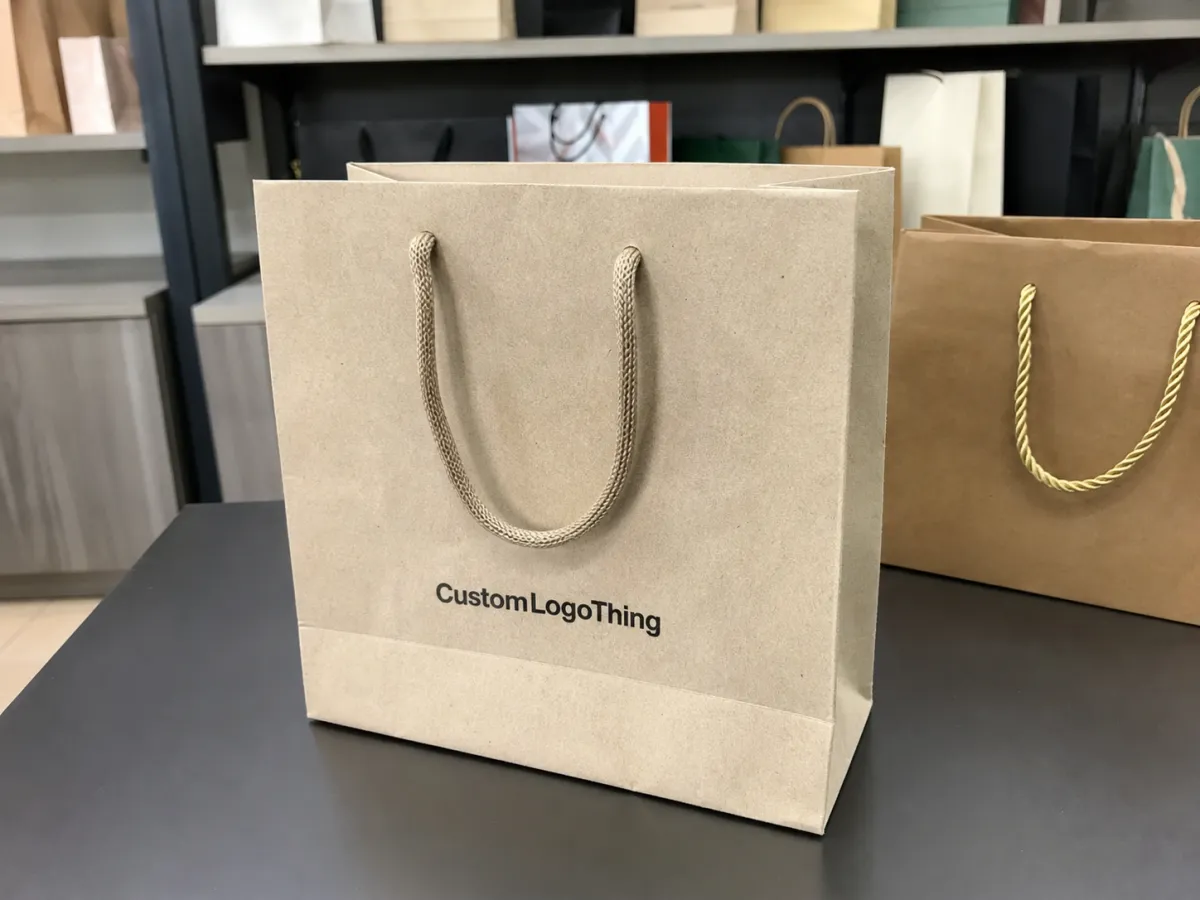
The sample is a risk filter. Teams sometimes treat it as a formality because the artwork already passed proofing, but weak handles, soft bases, and warped side panels usually show up only after the bag is packed with a real gift. A 1.5 kg set with a rigid box behaves very differently from an empty bag on a table.
The cost of a bad approval rarely stops at the bags themselves. One missed issue can trigger a second sample round, expedited freight, internal review time, and production delays. Corporate gifting makes this worse because the delivery date is often tied to a launch, trade event, client visit, or seasonal send-out. If the window is missed, the packaging becomes surplus instead of part of the gift experience.
Small retail paper bags are also compared side by side with very little patience. Cleaner folds, firmer board, and sharper logo placement usually read as higher quality even when price differences are small. That is why the sample should be treated as a production proxy, not a display piece.
A sample is not a souvenir. It is a production decision in your hands.
For a broader reference on test discipline, the standards published by ISTA and FSC are useful anchors. The bag itself may be simple, but the approval logic should still be exact.
Sample approval process and timeline checkpoints
A clean approval process usually moves from brief to sign-off in six steps: supplier review, material confirmation, proofing, physical sample, revisions, and final approval. The first brief matters most. If the supplier has to guess the bag size, gift weight, or finish, the timeline starts slipping immediately.
The key difference is between a visual mockup and a production-intent sample. A mockup checks artwork placement and overall appearance. A production-intent sample should use the actual paper stock, handle style, reinforcement, and print method. If those elements change later, the sample only proved the concept, not the order.
Lead time depends most on five variables: custom handles, foil or lamination, specialty paper stock, multi-color printing, and structural revision rounds. A simple stock-material sample may arrive in 5-7 business days, while a fully custom sample with metallic foil, rope handles, and reinforced bottom boards can take 10-18 business days before shipping. Add transit time and a possible second round, and the schedule gets tight fast.
Unclear specs are usually the delay engine. If the brief says “premium look” but does not define paper weight, handle type, or acceptable color variance, the supplier will keep asking follow-up questions. A tight checklist shortens that loop because it tells the factory exactly what must be true before approval.
Checklist to verify before approval
Start with dimensions. Size errors are expensive and obvious once the real gift is inside. Check width, depth, height, gusset size, and whether the bag stands upright when loaded with the intended contents. A bag that looks roomy when empty may buckle at the base or pinch at the top fold once a rigid box is inserted.
Next review the material. Paper weight matters, but so do caliper, stiffness, and surface finish. An 180 gsm art paper bag can feel premium if it has proper board support and coating, while a lighter stock may collapse near the handle attachment. If the bag will be used repeatedly at a conference or retail counter, test whether the finish resists scuffing after a few passes.
Handle style is another pressure point. Twisted paper handles are economical, but cotton rope handles usually feel more gift-worthy and carry weight better. Ribbon handles can photograph well, yet they are not always the strongest option. Ask how the handle is attached, what reinforcement patch is used, and what load the supplier considers safe. For a small retail gift bag, a realistic target is often 1-3 kg, though the exact threshold depends on construction.
Print accuracy deserves the same scrutiny. Check logo placement, color match, edge sharpness, bleed, and whether the branding remains readable from arm's length. If the bag uses a dark background, watch for ink coverage issues and small registration shifts. A digital proof can look clean while the physical result appears muddy on coated paper or flat on kraft stock.
Critical checks that fail quietly
- Reinforcement: base boards, folded seams, and glue lines should be tested, not just inspected visually.
- Balance: the bag should stand without tipping when filled with the intended contents.
- Finish: matte, gloss, soft-touch, or lamination should match handling expectations and brand tone.
- Compatibility: inserts, tissue, tags, and sleeves should still fit once the bag is closed.
- Compliance: confirm FSC paper if procurement requires it, and check food-contact or sustainability constraints if the contents demand them.
One useful field test is simple: pack the real gift, close the bag, carry it, set it down, and inspect the stress points. If the bag creases badly in one pass, production will not improve it.
Also ask whether the sample was made from the same materials and on the same line expected for the full order. If it came from a different machine or paper batch, have that difference stated in writing. Approval is safer when the sample is traceable to the production plan.
Cost, MOQ, and quote math
Sample cost and production cost should be read separately. A sample often looks expensive per unit because setup time is spread across one or a few pieces instead of thousands. That is normal. The real question is whether the sample reveals a problem early enough to avoid a larger loss later.
The main price drivers move quickly: paper grade, handle material, print colors, special finishes, structural reinforcement, and assembly labor. A single-color kraft sample is inexpensive. Add foil, lamination, rope handles, and a reinforced base, and the quote climbs. Freight matters too, especially if the sample needs fast international shipping or a second revision round.
| Sample option | Typical sample charge | Indicative production unit cost at 5,000 pcs | Best use case |
|---|---|---|---|
| Stock paper, single-color print, twisted handles | $35-$80 | $0.18-$0.32 | Simple gifting, short lead time, low artwork complexity |
| Custom paper, 2-4 color print, reinforced base | $90-$180 | $0.28-$0.55 | Most branded retail-style corporate gifts |
| Premium finish, foil, lamination, rope handles | $160-$350 | $0.55-$1.20 | Client-facing gifts, executive kits, high-visibility events |
MOQ affects the decision too. A low sample quantity can look expensive, but it may show whether the larger order is worth placing at all. Once tooling, plates, or dies are added, the quote should be itemized clearly. Ask for packing charges, rush fees, and freight to be separated. If the supplier bundles everything into one line, comparison becomes harder than it needs to be.
It also helps to ask a practical buying question: does the sample show that one supplier can deliver fewer defects and fewer revision rounds? If yes, a slightly higher unit price may still be the better commercial choice. Buyers often focus on a difference of two or three cents per bag while ignoring the hidden cost of rework, rush shipping, and internal approval time.
For transit-related packaging checks, the logic behind ISTA standards is useful even for a paper bag order. The bag is not being certified as a mailer, but the mindset is the same: test the pack under the kind of stress it will actually see.
Sampling workflow from brief to sign-off
Start with a one-page brief. Include bag size, gift weight, brand colors, print area, target quantity, and delivery deadline. Add a short note on where the bag will be used: office handoff, retail counter, trade show, or VIP delivery. That context helps the supplier recommend the right structure instead of defaulting to a generic bag.
- Request variants: ask for two or three sample options if structural choices matter, such as twisted handles versus rope handles or coated stock versus kraft stock.
- Match the contents: place the actual gift set inside the sample and see whether the gusset, height, and base still behave properly.
- Run basic handling tests: carry the bag, stack it, place it on a shelf, and check whether the logo remains visible and centered.
- Record revisions: write one approval note that captures all changes, so the production order does not depend on memory or scattered email threads.
- Save evidence: photograph the approved sample next to the spec sheet and artwork file for future reorders.
Use a simple pass-fail sheet during review. Mark dimensions, color, handle strength, finish, and print alignment. That keeps the decision objective. A pretty sample can still fail the brief, and a plain-looking sample can perform well if it matches the gift load and brand standard.
Confirm whether the sample came from the same materials and production line expected for the full order. If a supplier made the sample on different equipment or from a different paper batch, ask for that difference in writing. The safest approval process is the one that leaves a paper trail.
Common sample mistakes
The biggest mistake is approving a sample because the print looks good while ignoring strength, balance, or load-bearing performance. A bag that photographs well may still fail after one lift if the handle patch is weak or the bottom board is too soft.
Another trap is comparing a digital proof with a physical sample as if both answer the same question. They do not. The proof checks artwork, text, and placement. The physical sample checks materials, construction, and feel. Buyers who collapse those two stages into one often miss the reason the final bag looks different from the artwork file.
Lighting can distort the result too. Brand colors shift under office fluorescents, store LEDs, and phone-camera flash. If the bag will be handed out in a retail setting or photographed by recipients, review it under at least two light sources. A rich warm red on screen can read brownish in a cool white environment.
Handling wear deserves attention. Retail bags are touched far more than mailers. They rub against desks, counters, boxes, and other bags. Scuff marks at the fold line or shallow creases near the handle may not show in the first photo, but they become obvious after a few minutes of handling. A sample should show how the packaging ages over a normal day, not just how it looks the moment it leaves the courier.
Consistency across multiple samples or cartons matters too. One perfect piece means very little if the order has to scale across thousands of units. If one sample looks clean but another has an off-center logo or loose glue, resolve that before approval. The sample stage is the safest place to find drift.
Expert tips and next steps for the final production order
If the project is high value, ask for samples pulled from different cartons or different positions in the pack. Small variation often shows up there first. For executive gift sets or customer welcome kits, repeatability matters more than presentation polish alone.
A few habits make approvals faster and cleaner:
- Use one reference file: keep the approved sample photo, spec sheet, and artwork in the same folder.
- Change one variable at a time: if the first sample fails, revise size, stock, or handle spec separately so the fix is traceable.
- Confirm packing method: flat-packed, nested, or pre-assembled bags affect freight, storage, and damage risk.
- Document tolerances: allow a small color and dimension range, but define it before production starts.
That discipline matters on reorder. Teams change, memory fades, and the “same bag” can drift over time if nobody has a clean reference. Photos of the approved sample, notes on the handle spec, and the final quote should live together so the next order starts from facts instead of guesswork.
If the first sample misses the mark, do not stack fixes blindly. Adjust one specification, retest, and compare again. That is how you keep the approval process from becoming a guessing game. Keep the corporate gifting small retail paper Bags Sample Checklist close, use it on every quote, and the final production order is far less likely to surprise you.
FAQ
What should a corporate gifting small retail paper bags sample checklist include?
List bag dimensions, paper weight, handle type, print placement, finish, and reinforcement details before approval. Add performance checks for carry strength, base stability, scuff resistance, and how the bag looks when filled with the real gift. Include delivery date, MOQ, quote items, and revision limits so the decision covers both quality and buying terms.
How long does a small retail paper bag sample usually take?
Simple stock-material samples are usually faster than fully custom ones because fewer setup steps are involved. Print changes, special finishes, and handle customization extend the timeline because they add proofing and assembly work. Build in buffer for shipping and a possible second round of revisions instead of planning around the fastest estimate.
What drives the unit cost of custom paper bag samples?
Paper grade, handle material, print complexity, finish type, and structural reinforcement are the biggest pricing levers. Low quantities make sample pricing look high per unit, so compare that number with the projected production run. Freight, tooling, plates, rush fees, and packing labor should be itemized so the quote is easy to compare.
How do I compare two paper bag samples from different suppliers?
Use the same checklist for both samples so the comparison is based on equal criteria rather than visual preference. Measure the bags, test the handles, inspect print alignment, and load them with the same gift contents. Compare not just appearance but also lead time, MOQ, quote transparency, and whether each supplier can repeat the result at scale.
What should I do after I approve the sample?
Lock the final spec sheet, approved artwork, and signed sample reference into one production document. Confirm the quote, quantity, shipping window, and packing method so the supplier can move directly into production. Keep photos and notes from the approval stage so future reorders match the same standard without starting over.


