A coffee Paper Takeaway Bags bulk order can look straightforward and still fail in daily service. The common problems are undersized bags, weak bottoms, awkward handles, and specs that were approved from a mockup instead of a real load. When that happens, the unit price stops being the main issue; repacking, complaints, and emergency replacements become the real cost.
The better way to buy is to start with the heaviest normal order, then work backward to size, paper weight, and print. A good bag is one that fits the counter workflow, survives handling, and can be reordered without hidden changes. That means the buying decision should focus on structure, strength, Cost, Lead Time, decoration, and inspection rather than generic packaging language.
Coffee Paper Takeaway Bags Bulk Order: what buyers should check first
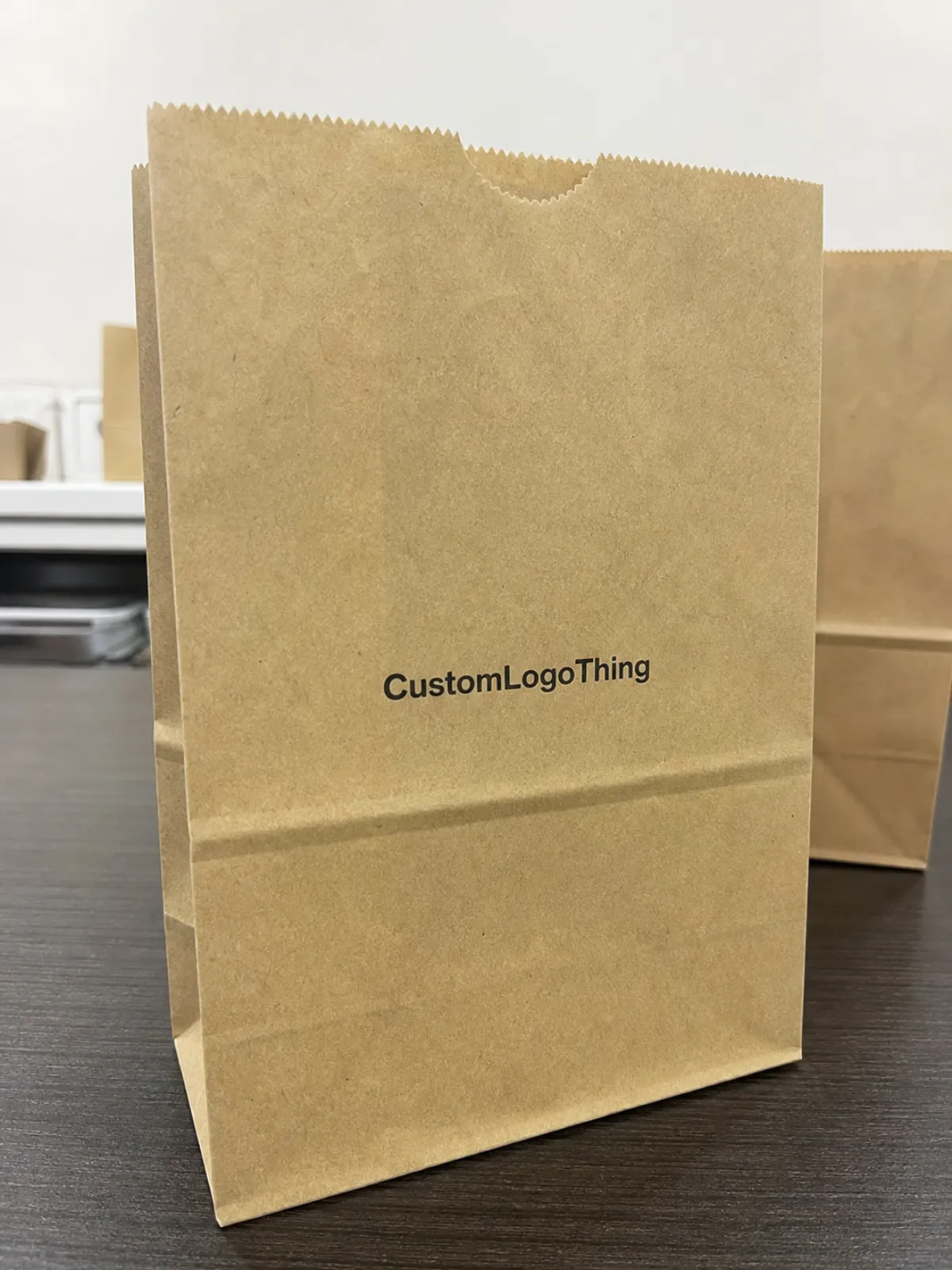
The first thing to confirm is not the logo but the load. A bag that looks good in a proof can still be wrong if it cannot hold two drinks and a pastry box without collapsing. In coffee service, the most common failure is not dramatic tearing. It is a bag that is hard to pack quickly, loses its shape, or forces staff to use a second bag.
Before requesting pricing, check these four points:
- Load: define the heaviest common carry set, not the lightest sample order.
- Size: match width, gusset, and height to cups, lids, and box corners.
- Strength: ask about seam, bottom, and handle construction, not only paper weight.
- Speed: make sure staff can pack the bag easily during a rush.
Buying to the average order usually creates waste later. The order that matters is the one that arrives at peak service: two hot drinks, a pastry box, napkins, and maybe a retail add-on. If the bag only works when the counter is calm, it is not the right bag for a cafe.
Slight oversizing is usually safer than squeezing the spec too tightly. Too much empty space is inefficient, but too little room causes crushed tops, strained seams, and awkward handling. The useful target is a bag that stays upright when filled and still closes without forcing the top open.
Bag styles and print options that fit daily coffee service
Bag style changes how the order feels at the counter and how much the buyer should expect to pay. Flat bags are inexpensive and fine for pastries or other dry items, but they are limited for mixed orders. Gusseted bags add usable volume without much complexity. Handled bags suit cafes that send out multiple items all day. Reinforced formats make sense when the order weight starts pushing standard stock beyond its comfort zone.
For daily coffee service, the common formats are below:
| Bag style | Best use | Typical spec | Bulk note |
|---|---|---|---|
| Flat paper takeaway bag | Pastries, dry bakery items, single-item carry | 60-80gsm kraft, folded top, no handle | Lowest cost, but limited for mixed orders |
| Gusseted carry bag | Mixed coffee-and-snack orders | 80-120gsm kraft, wider side gusset | Strong balance of cost, capacity, and storage efficiency |
| Handled bag | Takeaway-heavy counters and roaster retail packs | 100-150gsm, twisted or flat handles | Common branded choice for regular carry-out use |
| Reinforced bag | Heavier combo orders and boxed sets | Reinforced top, stronger base, thicker stock | Higher unit cost, but fewer complaints and replacements |
Print choice is easier once the structure is set. Kraft paper gives a natural look and usually hides handling better. White paper gives sharper contrast and fits brands that want a cleaner presentation. One-color printing is often the best value because it keeps setup lower and still reads clearly at a distance.
Multi-color work can look strong, but each extra color adds setup time, proof checks, and room for error. The print should stay legible on a folded, handled bag; a design that depends on fine detail may look better on screen than in production.
Finish matters too. Matte is usually the safer choice for food service because it hides scuffs and stays consistent under mixed lighting. Gloss can look sharper, but it shows handling marks sooner and does not improve carrying performance. Handle type should be part of the same decision: twisted handles are economical, flat handles can feel better on heavier bags, and die-cut handles suit slimmer formats but are less forgiving with weight.
Paper weight, size range, and carry strength specs
Paper weight should match the contents, not the marketing pitch. A light bakery bag can work at 60-80gsm. Mixed coffee-and-snack orders usually need 80-120gsm. Once the bag carries multiple cups, boxed food, or denser retail packs, 120-150gsm is the safer range. The real test is how the paper behaves when folded, glued, and loaded, not the gsm number alone.
Size matters just as much. A bag that is too small forces items upright and puts pressure on the seam and handle. A bag that is too large wastes paper and lets contents shift around. In practice, buyers usually need three size buckets:
- Small: pastry bags and light single-item carry.
- Medium: most coffee takeaway orders, especially drinks plus snacks.
- Large: multiple cups, boxed items, and heavier mixed orders.
Paper weight alone does not decide whether the bag works. Seam strength, bottom reinforcement, handle attachment, and edge stability matter just as much. A 100gsm bag with weak glue can fail sooner than an 80gsm bag with a better build.
For quality control, ask how the supplier checks paper caliper, glue line consistency, print registration, handle pull resistance, and carton packing. If the order needs responsible sourcing documents, FSC chain-of-custody paperwork is worth requesting before production starts. If transport testing matters, it is reasonable to ask whether packaging is aligned with ISTA-style checks. These details do not guarantee quality, but they reduce surprises.
Carry strength is best judged with the heaviest normal load in the actual bag format. Flat samples can look fine and still fail once cups shift the weight toward the corners and handles. That is why sample orders should mimic the real order mix, not just show an empty bag in ideal lighting.
Pricing, MOQ, and unit cost: what changes the quote
Bulk pricing depends on paper weight, dimensions, handle type, print colors, finish, carton packing, and freight volume. Two bags can look similar and still cost differently because one uses heavier stock, a stronger base, or a larger print area. Comparing only the mockup usually hides the real cost drivers.
Common bulk unit-cost bands are below:
| Setup | Typical bulk unit cost | What drives it | Buyer takeaway |
|---|---|---|---|
| Plain flat kraft bag | $0.06-$0.11 | Light stock, no handle, simple cut | Useful for dry bakery carry and low-cost volume |
| Gusseted carry bag | $0.08-$0.15 | Extra volume, stronger base, wider format | Usually the most practical everyday option |
| Handled printed bag | $0.12-$0.24 | Handle material, print coverage, finish | Common branded choice for cafes and roasters |
| Reinforced custom bag | $0.18-$0.35 | Thicker stock, reinforcement, larger print area | Worth the premium for heavier or more premium orders |
MOQ affects the economics as much as the unit price. Custom printed orders usually make more sense around 3,000 to 5,000 pieces for simple builds and 5,000 to 10,000+ pieces for more detailed work. Below that, setup costs and handling absorb too much of the budget. Above that, the unit price may improve, but only if the buyer can store the inventory and carry the cash flow.
Sample fees and proof fees are normal. The useful question is whether they are deducted from the final production invoice. That detail can change the true project cost more than a small difference in the headline unit price.
One-color branding remains the strongest value in many cases. It keeps setup simple and still gives the bag a clear identity. More colors, special finishes, and larger coverage all raise cost, so the simplest design that still reads well is often the best buying decision.
Process, lead time, and production steps from proof to shipment
The fastest quotes come from the clearest requests. Send the bag style, size, quantity, artwork, delivery location, and target date first. Missing details force the supplier to guess, and guesses slow down quoting and make comparisons unreliable.
The proof stage is where expensive mistakes can still be avoided. A proper proof should show dimensions, logo placement, color callouts, handle style, and any reinforcement details. If the logo sits too close to a fold line or the print crowds the gusset, fix it before the run starts.
The usual production sequence is simple:
- Confirm size, quantity, artwork, and ship-to details.
- Review the mockup or dieline and approve layout.
- Lock paper grade, color count, handle type, and finish.
- Prepare materials and run the print job.
- Cut, fold, glue, and attach handles if required.
- Inspect the run, pack cartons, and label shipment.
- Dispatch using the agreed packing method.
Lead time depends on the amount of custom work. Simple or stock-style runs can move faster once paper is available. Custom printed orders need more time for proof approval, setup, and inspection. A practical range is 7-12 business days for simpler runs after approval and 15-25 working days for more complex or larger custom work. Transit time is separate. Rush work, special sourcing, unusual packing, and pallet requirements can all extend the schedule.
Shipping quality matters more than many buyers expect. A bag that leaves the factory in good shape can still arrive damaged if cartons are packed poorly or stacked without enough edge support. Handles can deform, corners can curl, and the bottom shape can shift. Packaging is part of the product, especially on export orders.
Orders move better when there are fewer handoffs. Clean approvals, confirmed artwork, and one written spec reduce the chance of a size or print detail slipping. That saves time and reduces rework.
Factory controls, sampling, and repeat-order consistency
Factory controls matter more than polished sales language. A good quote tells you little about glue consistency, print alignment, or handle pull strength. Those details decide whether the bag holds up in real use. The better factories check the line during production, not just the finished carton.
Ask how they measure paper thickness, inspect the glue line, verify registration, and test handle attachment with a sample load. Routine control is the point. A reliable bag usually comes from repeated checks, not from a lucky first run.
Sampling is cheap insurance. A plain material sample shows how the paper folds and feels. A printed pre-production sample shows whether the logo, tone, and placement work on the chosen paper color. For larger or launch-critical orders, a printed proof is worth the extra step.
Most reorder problems are not dramatic failures. They are small spec changes that nobody wrote down.
Repeat-order consistency depends on record keeping. The approved artwork, exact dimensions, handle type, paper grade, finish, and carton count should all be stored against the job. If those details are missing, the second order becomes a new project with an old name. That is how a buyer receives a bag that is almost right and still unusable.
For longer shipping routes, carton handling deserves attention. Bags that travel through multiple transfers need stronger outer packaging and labeling that is easy to stack. Corner support and sensible palletization reduce damage risk. That matters on export orders, but domestic freight can still damage paper goods if cartons are over-compressed or exposed to moisture.
The real value of a good supplier is fewer surprises: fewer reprints, fewer emergency buys, and fewer complaints from staff who had to force a bag to do a job it was never sized for. That is where disciplined ordering pays back.
What to send for a fast quote and a clean reorder
A quote becomes more accurate when the request is specific. Include bag style, width, gusset, height, paper weight, print colors, quantity, delivery location, and target date. If you already have artwork, attach the final logo file and any reference image. If not, say so plainly. Vague requests usually return vague pricing.
It also helps to ask for two versions of the same spec: the target build and a lower-cost alternative. That makes the tradeoff visible before approval. Sometimes the lower-cost version is enough. Sometimes it becomes a bag that needs extra handling or repacking. Either way, the buying team sees the real cost more clearly.
For the reorder file, save the exact version that was approved, not the draft that went through revisions. Keep the paper grade, size, handle style, finish, packing detail, and carton count in one place. A physical reference sample is useful too, especially if the same product will be reordered months later by someone who was not part of the original approval.
- Artwork file: store the final approved version only.
- Exact spec: keep paper grade, size, handle type, and finish together.
- Packing detail: record carton count and pallet method if used.
- Reference sample: keep one approved bag for visual matching.
Multi-location buyers usually benefit from a single master sheet. That sounds basic because it is. The hard part is consistency, not sourcing. Once the first order is approved and saved properly, future buys are easier to compare against the same standard instead of memory and a phone photo.
What is the usual MOQ for coffee paper takeaway bags bulk order?
For plain stock-style bags, smaller runs may be possible. Custom printed orders usually make more sense at 3,000 to 5,000 bags for simple builds and 5,000 to 10,000+ bags for more detailed work. That is where setup costs spread out enough to keep the unit price reasonable.
How long does a custom coffee takeaway bag order take to produce?
A simple run after proof approval can move in about 7-12 business days. More typical custom work often sits in the 15-25 working day range, before transit. Artwork changes, special paper sourcing, and unusual packing can extend that timeline.
Which paper weight is best for takeaway coffee bags with heavy loads?
For mixed cafe orders, 80-120gsm is usually the practical range. For heavier takeaway sets with multiple cups or boxed items, 120-150gsm is safer. The better test is not the gsm alone, but whether the bag holds its shape with your heaviest common order.
Can I add a logo without pushing the cost too high?
Yes. One-color print is usually the best value because it keeps setup simple and still gives a clean branded result. Costs rise with extra colors, larger coverage, special finishes, and nonstandard handle builds, so the simplest design that still reads well is often the smartest one.
What should I send to get an accurate bulk-order quote?
Send bag size, paper weight, handle style, print colors, quantity, delivery address, and deadline. If you have artwork, include the final file and any reference sample. Clear specs reduce quote corrections and make the production run easier to approve.
A paper takeaway bag only earns its keep when it matches the order pattern on the counter, survives handling in transit, and can be reordered without the spec changing quietly in the background. That is the difference between packaging that supports service and packaging that creates one more problem for the shift to solve.

