Custom Logo Patch Beanies for Outdoor Launches: Cost, Lead Time, and Fit
If you are sourcing custom Logo Patch Beanies for outdoor brand launches, the fastest path to a credible drop is simple: keep the decoration clean, the fit believable, and the specs easy to approve. A patch usually reads more polished than crowded embroidery on chunky knit, and that matters when buyers are judging the product from a few feet away.
For an outdoor brand, the beanie has to do two jobs at once. It needs to feel rugged enough for trail, camp, and cold commutes, while still carrying the brand in a way that looks retail-ready instead of giveaway-heavy. That is where patch choice, color restraint, and honest product specs do the real work.
Why custom logo patch beanies for outdoor brand launches sell through
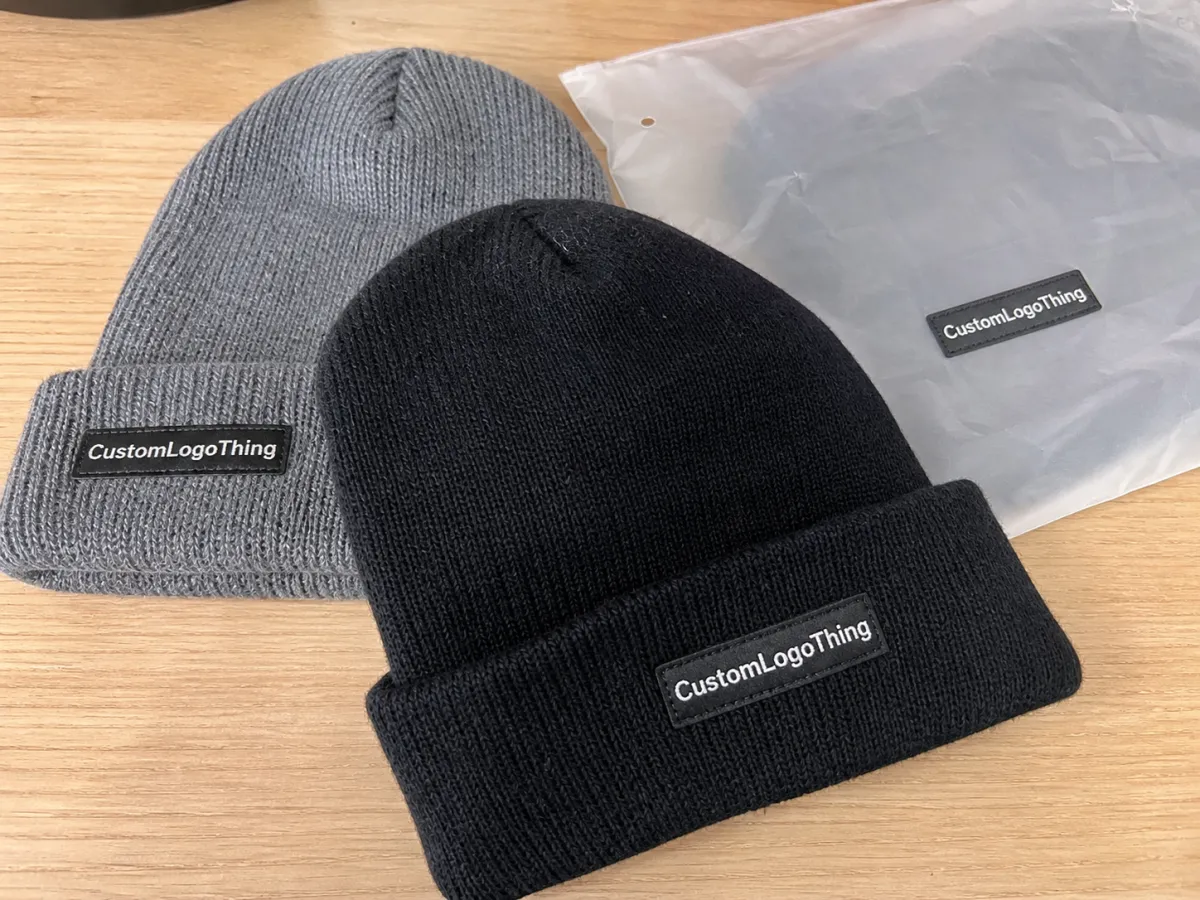
A beanie with a patch looks finished without trying too hard. The logo gets a defined edge, which helps a new label look established even before the rest of the line exists. That matters in launch season, where customers decide quickly whether the brand feels credible.
Outdoor buyers also judge build quality fast. If the knit is sloppy, the cuff twists, or the branding sits awkwardly off-center, the whole item feels compromised. A clean patch on a solid cuffed beanie sends a better signal: the brand paid attention.
These styles also work because they are easy to price and easy to wear. Launches need broad appeal, simple decoration, and enough margin for retail markup or bundling. A stock beanie with a well-made patch can fit DTC and wholesale programs without forcing the rest of the line to carry it.
There is no need to over-explain the brand on a hat. One strong mark usually does the job. If you want to see how restrained apparel drops tend to land, our Case Studies page shows examples where the product is doing the selling, not the copy.
Rule of thumb: if the logo needs a paragraph of explanation, it is too complicated for a launch beanie.
How patch construction changes the look and feel
The patch is not just decoration. It changes the entire read of the hat. Woven patches feel crisp and controlled, which helps if the logo has fine lines or small type. Embroidered patches feel more tactile and classic. Faux leather pushes the look toward premium and rugged. Silicone reads more technical. Felt is softer and more casual.
On beanies, sewn-on or edge-stitched patches are usually the safest choice. Heat-applied options can work on some programs, but knit surfaces are less forgiving after wear and washing. A sew line also helps the patch sit properly on textured yarn.
Beanie construction should drive patch choice. Cuffed beanies give you a defined branding zone, so a 45-55 mm wide patch usually feels balanced. Waffle knits and ribbed knits can take a bit more contrast. Slouch beanies need a lighter touch; oversized branding on a loose crown often looks like an afterthought.
Contrast matters too. Strong logo contrast helps when the hat needs to read from across a booth or retail wall. Tone-on-tone patches can look sharper for technical outdoor branding, especially if the rest of the collection leans into muted earth tones, charcoal, olive, or sand. The key is matching the patch to the brand, not to the factory swatch that looked exciting late at night.
| Patch type | Look | Durability | Typical add-on at 500 pcs | Best use |
|---|---|---|---|---|
| Woven | Clean, sharp, detailed | High | $0.20-$0.45 | Small logos, fine text, modern outdoor branding |
| Embroidered | Textured, classic | High | $0.30-$0.65 | Heritage looks, bold icons, thicker mark shapes |
| Faux leather | Premium, rugged | Medium-high | $0.35-$0.80 | Trail, camp, workwear, understated branding |
| Silicone | Technical, modern | Very high | $0.45-$0.95 | Performance-minded outdoor labels |
| Felt | Soft, casual | Medium | $0.25-$0.55 | Relaxed lifestyle drops and simpler marks |
If the launch also includes packaging, keep the visual logic consistent. A precise patch paired with clumsy box design feels off. For product packaging, inserts, or custom printed boxes, start with our Custom Packaging Products page.
Cost, MOQ, and unit pricing for launch orders
Price is where launch plans usually become real. For custom Logo Patch Beanies for outdoor brand launches, unit cost depends on patch material, number of colors, patch size, beanie yarn quality, and any packaging add-ons. Hang tags, barcode stickers, retail sleeves, or fold cards all add cost, even when each line item looks small on its own.
As a rough range, simple stock beanies with a single custom patch can often land around $3.25-$6.50 per unit at mid-size launch quantities, before freight. Better yarns, more complex patch construction, or lower MOQs can push that into the $6.50-$9.50 range. Premium knit, specialty attachment, or multiple decoration steps cost more.
MOQs vary, but launch orders often start around 50-100 units per style for simpler stock programs and 100-300 units when the patch or beanie color is fully custom. Lower MOQ sounds convenient until the unit price rises. Once setup is spread across fewer hats, the math gets less friendly.
Compare quotes by separating the parts. Ask for blank beanie price, patch price, decoration price, packaging price, sample price, and freight price. Also confirm whether mold charges, sew-out revisions, and rush fees are included. Bundled quotes can hide the real cost.
If the beanie is the visible hero of the drop, spend on the front-of-hat branding before chasing fancy extras nobody notices. Customers see the patch first and the knit second. That does not mean the body can be flimsy; it means the patch has to earn its keep.
A practical buying pattern:
- Basic stock beanie + woven patch for the leanest launch budget.
- Midweight rib knit + faux leather or embroidered patch for a stronger retail read.
- Premium yarn blend + silicone patch if the brand wants a more technical finish.
Production steps, timeline, and lead time planning
The cleanest production path is brief, proof, sample, bulk, inspection, packout, ship. The brief should include logo files, target retail price, quantity, beanie color, patch style, and deadline. The more you guess, the more the factory guesses back.
Timing depends on how custom the order is. A stock beanie with a standard patch can move in roughly 10-15 business days after proof approval. A more customized run, especially with a custom knit color, unique patch material, or multiple revision rounds, often needs 20-35 business days before freight. Transit is separate, so plan for it separately.
The slowdown points are predictable. Bad artwork files waste days. Vague Pantone targets create revision loops. Too many patch concepts turn a buying decision into a committee exercise. Late approvals are obvious, but unclear fit expectations also cause delays. If the drop has a seasonal or event deadline, build in buffer time.
If the goods are shipping into ecommerce cartons, ask how they are packed and tested. For outer carton handling, ISTA test methods are a sensible reference point. If you are adding paper inserts or sleeves, the basics on FSC certification are worth knowing.
Lead time planning also matters when packaging and apparel are finalized together. Approvals tend to collide when the hat, hang tag, and box are all changing at once. Lock the beanie first, then align the rest of the branded packaging around it.
Specs that make the beanie feel worth keeping
A good launch beanie feels right on the head before anyone reads the logo. That starts with fit. Crown depth, cuff height, stretch recovery, and yarn softness all matter. Most cuffed beanies sit around 8.5-10.5 inches tall before cuffing, with a cuff height of roughly 2.25-3 inches. Too shallow and the hat rides awkwardly. Too deep and it swallows the face.
Yarn choice matters more than many buyers expect. Basic acrylic is cost-effective and easy to produce. Acrylic-wool blends bring more warmth and a richer hand feel. Recycled polyester can suit a technical outdoor angle, especially if the brand wants a sustainability story. Just do not confuse sustainability with softness.
Patch placement should support the shape of the beanie. Centered cuff placement is classic and easy to read. Off-center placement can feel more current for lifestyle outdoor brands, and lower placement can work better on slouch styles. The best patch size is the one that respects the hat. A logo that overpowers the cuff starts looking like a promo item.
One strong patch usually beats stacking woven tabs, slogans, rubber badges, and side labels all at once. That kind of layering makes the design feel crowded. For most outdoor launch items, clarity is better than clutter.
Think about how the hat sits alongside the rest of the collection. If the outer packaging uses muted tones, recycled board, or neat custom printed boxes, the beanie should echo that discipline. The best product packaging plans make the whole drop feel more expensive than it is.
Before approving, check three things on the actual sample: whether the patch edge feels soft enough to wear, whether the knit recovers after stretch, and whether the beanie still looks clean after folding. That is the stuff customers actually notice.
Common mistakes that make launch merch look cheap
The first mistake is oversized logos. If the patch overwhelms the cuff, the beanie starts looking like a staff giveaway instead of something customers would buy. Outdoor buyers usually want confidence, not billboard energy.
The second mistake is color chaos. Too many shades make the patch look less rugged and more like a design exercise that got out of hand. Glossy materials can do the same thing. A shiny patch on a workhorse beanie can feel wrong fast if the rest of the brand leans toward trail gear or cold-weather layers.
The third mistake is chasing the lowest quote without checking sample quality. Cheap can be fine. Cheap and sloppy is not. If the stitching is loose, the patch edge is stiff, or the color match is off, the savings disappear the second the first customer compares it to the hero photo.
Skipping samples is the fastest way to regret. A sample approval that takes two extra days is still cheaper than finding a bad scale after 1,000 units are already in motion. Check patch size, hand feel, and attachment strength before bulk begins.
Another mistake is ignoring the rest of the launch system. If the beanie is supposed to land inside retail packaging, hang tags, or ecommerce kits, the hat has to match the rest of the presentation. Otherwise the unboxing experience feels stitched together from whatever was left in the office supply closet.
Good merch does not try to impress with volume. It wins by looking calm, durable, and ready to wear.
Next steps: brief, sample, approve, and launch
Start with a clean brief. Include logo files, target quantity, target retail price, color palette, launch date, and sales channel. Be specific about where the beanies will live: ecommerce, retail, event giveaway, wholesale, or a bundled product.
Then choose one patch direction and one backup option. That gives the project enough structure to move without turning into a design free-for-all. You do not need six concepts; you need one strong answer and one fallback that protects margin and timeline.
Request a sample or digital proof before bulk production, and review it on the actual beanie shape. Check contrast, placement, patch edge quality, cuff fit, and whether the logo reads at arm's length. If the sample looks right, approve it quickly. If it does not, fix it before the line is running.
For a practical reference on how other teams organize launch collateral, our Case Studies page shows how product packaging, apparel, and branded packaging can work together without overcomplicating the order.
For most brands, custom patch beanies should be treated as a margin-friendly hero item, not a science project. Pick the version that balances brand clarity, durability, and fit, then get it into the field.
FAQ
Are custom logo patch beanies better than embroidery for outdoor brand launches?
Usually, yes. Patches often give a cleaner and more premium read on thick knit beanies, especially when the logo includes small details. Embroidery can work, but it can sink into textured yarn or lose sharpness on heavier knits. If you want stronger shelf appeal and easier brand recognition in photos, patches usually win.
What MOQ should I expect for custom logo patch beanies?
Many launch orders start around 50-100 units per style for basic stock programs, while more custom knit or patch combinations often land closer to 100-300 units. Lower MOQs are useful, but the unit cost usually rises because setup gets spread across fewer hats. If you need multiple colors or sizes, the pricing gets less friendly.
How long is the lead time for custom logo patch beanies?
Simple stock beanie programs can move in roughly 10-15 business days after approval, while more customized orders usually need 20-35 business days before freight. Artwork approval, sample review, and revisions are the usual delay points. If your launch is tied to a season or event, leave buffer time so one missed approval does not wreck the drop.
Which patch material looks best for an outdoor brand?
Woven and faux leather patches are versatile starting points for many outdoor brands. Silicone looks more technical and modern, while embroidered patches feel more classic and heritage-driven. The best choice is the one that fits the brand voice and the product plan, not the one that merely sounds expensive in a quote.
How do I keep unit cost down without hurting quality?
Keep the design simple, use one strong patch instead of stacking extra labels, and avoid finishing options that do not improve the customer experience. Order enough units to spread setup costs, but do not overbuy styles you have not tested. That is how launch beanies stay useful instead of becoming expensive lessons in brand enthusiasm.

