Pet treat logo patch beanies Bulk Order Planning starts with a basic buying truth: if the item is going to live on a head for three months, the decoration had better survive three months. A logo patch is not decoration for decoration's sake. It is the part that keeps the brand visible after the box is gone, the mailer is tossed, and the handoff is over.
That matters for pet treat brands because the merchandise is usually doing one of three jobs. It is either supporting a seasonal promo, giving retail buyers something with margin, or building recognition at events where people are already carrying bags, samples, and too much caffeine. Different use cases, different specs. The worst orders come from treating them all like the same thing.
Buyers usually get better results when they lock down audience, use case, and distribution path before debating patch shape or yarn shade. That keeps the order grounded in reality instead of wishful thinking. For teams comparing quantity tiers across multiple programs, the Wholesale Programs page is a useful reference point before the art team starts polishing the mockup into something beautiful and operationally expensive.
Why a Logo Patch Beanie Works for Pet Treat Promotions
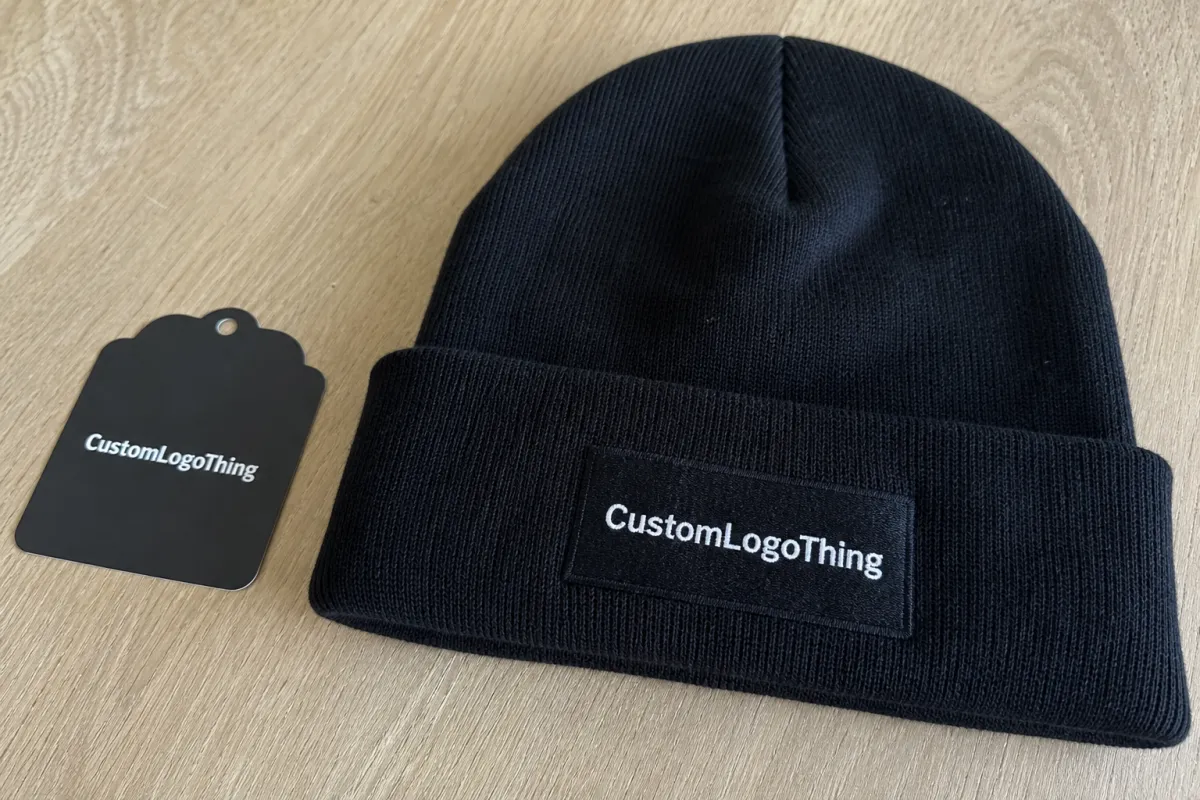
A logo patch beanie earns its keep because it gets worn. More than once, ideally. A flyer gets one glance. A tote bag can do decent work, but it disappears into a trunk or closet fast. A beanie is different. It lives through cold mornings, dog walks, shipping runs, and the usual chaos of winter errands. That is a lot of impressions for one unit.
For pet treat promotions, that repeated exposure matters more than a flashy first look. The audience is usually already carrying a brand relationship with the product category. The beanie does not need to explain the whole company. It just needs to stay readable, look decent after wear, and not fall apart the first time someone pulls it over wet hair.
From a buyer's side, a patch beats printed decoration on a knit cap for one plain reason: durability. Knit fabric moves. Ink can crack. Direct embroidery can pucker or blur small letters. A woven, leather, or TPU patch gives the logo a stable surface and keeps the outline cleaner over time. That is especially useful if the beanie is part of a retail bundle or a seasonal gift set where the item is expected to justify its shelf position.
Order size should follow distribution, not ego. A first test run might be 250 to 500 units if the goal is to measure response without tying up too much cash. A regional retail push or a multi-store campaign may sit closer to 1,000 to 3,000 units. The size changes quickly once a buyer starts splitting inventory across events, staff, and retail displays. That is not a problem. It is the math.
"The decoration only matters if the beanie survives long enough to be seen twice."
That sounds blunt, but it is usually the right frame. Buyers often focus on patch style first because it is the visible part. Fine. Just do not let visual preference outrun wear time, fit, and packing requirements. Those are the parts that decide whether the order works outside the mockup.
- Promotional giveaway: Keep the cost controlled and the logo readable from a distance.
- Retail item: Spend more attention on finish, label presentation, and sizing consistency.
- Internal or partner kit: Simplify the build and reduce packaging overhead.
Decoration Choices, Fit, and Color Options Buyers Can Specify
The patch is where most of the brand risk lives. A neat logo in a PDF can become a muddy mess if the patch construction cannot hold the detail. Tiny type, thin paws, fine outlines, and multi-part badge shapes all create problems when the physical format gets smaller than the art team wanted. That is not the supplier being difficult. That is scale doing its job.
Patch style sets the limits
Woven patches handle fine lines well and usually give the cleanest read for small logos. Leather patches look premium and quiet, which works if the brand wants understated instead of loud. TPU has a smoother, more modern feel and can carry a clean edge on simpler graphics. Embroidered patches add texture, but they are not friendly to tiny letters. Sew-on fabric patches sit somewhere in the middle and are often the easiest path for straightforward logos.
If the pet treat mark uses stacked text or a tiny tagline, expect to simplify it. Sometimes that means removing a line. Sometimes it means dropping the slogan entirely. Better that than a patch nobody can read without squinting. Buyers who ask the supplier to confirm legibility before sampling save themselves time later. That step is not glamorous. It is just smart.
Fit affects how the decoration sits
Cuffed beanies are the safest choice for a logo patch because the front panel gives a clean placement zone. Uncuffed styles can look more relaxed, but the patch location is less controlled and the final look depends more on how the knit lands on the head. Rib knit is usually the default for a reason. It stretches well and recovers better than flatter constructions. Waffle knit has more texture and looks a little more fashion-driven, though the logo surface is not as tidy.
Fit details are where a lot of quiet complaints come from. A beanie that is too shallow rides up. A beanie that is too loose makes the patch sit low and less visible. Buyers should ask for crown depth, cuff height, relaxed circumference, and stretched circumference. Those numbers tell the truth faster than a generic one-size-fits-most promise. If a supplier cannot provide them, keep moving.
Pom styles deserve a separate mention. They work well in retail and holiday runs because they add personality. They also complicate the silhouette and can make the brand mark feel secondary. Fine if that is the plan. Not fine if the logo has to do the heavy lifting.
Color control is where expectations get tested
Color is usually the first place where the physical product stops matching the mental picture. Pantone targets help, but knit texture, yarn availability, and dye lots all affect how the shade reads in daylight. Dark shades tend to hide wear and handling marks better. Lighter colors show logos clearly, but they also show everything else. That includes lint, fingerprints, and the fact that a warehouse is not a sterile showroom.
For that reason, buyers should provide approved artwork, a target swatch, and a fallback palette if the supplier has to work from available yarn stock. That is not settling. It is basic risk control. If a campaign depends on exact color matching, the buyer needs to say so early and understand that the sourcing window and pricing may move.
Material choices for the packaging should follow the same logic. If the order includes printed inserts, hangtags, or sleeves, FSC-certified paperboard is a sensible reference point for responsible sourcing. The FSC certification framework explains the standard clearly. If the packaging needs to stay recyclable, the EPA's recycling guidance is a decent baseline for what happens to paper and mixed-material components after distribution.
Size, Material, and Packaging Specifications to Lock Down
Before a quote becomes real, the spec sheet needs to answer three plain questions: what is the beanie made of, how does it fit, and how will it be packed. Leaving any of those vague is a nice way to buy delays. Suppliers can work from incomplete specs, but they will either pause to confirm them later or guess. Guessing is how mistakes get paid for twice.
Common materials include 100% acrylic, recycled acrylic blends, cotton-rich knits, and heavier winter-weight constructions. Acrylic is still the most practical choice for many bulk programs because it is warm, cost-effective, and easy to source in a wide range of colors. Recycled blends can support sustainability claims, but hand feel, softness, and shade consistency may vary more from run to run. Cotton-rich styles feel softer and more casual, though they usually do not hold heat as well in colder conditions.
For pet treat promotions, the most sensible choice is often a midweight acrylic or acrylic blend. It looks presentable, sells at a better price point than more premium constructions, and does not create the false expectation of a luxury item. That sounds obvious. Yet a lot of buying mistakes come from asking a mass-market promo item to behave like a boutique accessory.
One-size-fits-most is still the norm, but it should not be the end of the conversation. Ask for measurements on cuff height, body length, and stretch range. Ask what the fit looks like after repeated wear. Ask whether the yarn relaxes over time. A good supplier will have those answers. A weak one will say the sample looks fine and hope the rest works itself out.
Packaging has its own cost and operational impact. Individual polybags help retail presentation and keep units clean for kitting. Bulk cartons lower handling cost for distribution programs. Hangtags can add price-point clarity or brand story, but they also create another approval step. Size stickers make warehouse receiving easier. Carton marks matter more than most people expect because they save time when several colors or destination codes move through the same building.
- Retail-ready: polybag, hangtag, barcode, and carton marks.
- Event or giveaway: bulk pack, simple label, and count verification.
- Fulfillment-friendly: flat-pack spec, color-by-SKU labeling, and fixed box counts.
The packaging choice should match the channel, not the other way around. A trade-show giveaway does not need retail theater. A shelf-ready item does. Mixing those two models usually means someone gets stuck repacking boxes later, which is never as exciting as the spreadsheet made it sound.
Pet Treat Logo Patch Beanies Bulk Order Planning: What Drives Cost, MOQ, and Quote Accuracy
Pricing is a stack of small decisions, not one big number. Patch style, yarn choice, stitch density, color count, label format, packaging, and carton configuration all matter. If a quote only gives one tidy unit price and skips the rest, it is not tidy. It is incomplete.
The clearest pattern is this: the more custom the build, the higher the minimum order quantity tends to be. Stock acrylic with a standard woven patch can often support smaller runs. Custom yarn colors, specialty patches, and retail packaging usually push MOQ upward because the setup cost has to be spread over more units. No magic there. Just manufacturing.
| Order profile | Typical quantity | Approx. unit price | MOQ pressure | Best fit |
|---|---|---|---|---|
| Stock acrylic beanie + woven patch | 300-1,000 | $4.90-$7.40 | Low | Events, staff kits, first tests |
| Custom yarn color + leather patch | 500-2,500 | $5.80-$8.90 | Medium | Retail merch, premium promos |
| Recycled blend + TPU patch + retail hangtag | 1,000-5,000 | $6.10-$9.60 | Higher | Seasonal campaigns, resale bundles |
Those ranges are planning numbers, not promises. Freight, duty, local delivery, and packaging changes can move the final landed cost. Still, they are useful because they show where the budget actually goes. A buyer who only compares the top-line quote can miss setup charges and sample fees that later show up like unpaid receipts.
Typical setup costs may include digitizing at $25-$75, patch tooling at $40-$150, and sample production at $35-$120 depending on the patch type and packaging needs. Rush requests can add 10-20 percent if the schedule gets squeezed. Special retail packaging can add more, especially when the box or insert needs its own print run. These are not hidden costs. They are the normal cost of asking the factory to make something specific instead of generic.
If the goal is to trim cost without gutting the order, there are a few safe levers. Simplify the patch artwork to one or two colors. Keep the patch shape standard. Reduce the number of trim variations. Avoid changing the knit structure just for visual novelty. In many runs, those choices save more money than haggling over a few cents on the base beanie.
For pet treat logo patch Beanies Bulk Order Planning, a useful quote separates setup, unit cost, packaging, and freight. One blended number hides too much. Buyers need the parts because the parts tell them where the margins live and where the risk sits.
Production Steps, Lead Time, and Reorder Timing
A clean production flow usually moves through art review, patch proof, yarn approval, knitting, patch attachment, finishing, packing, and final inspection. In theory, that is a straight line. In practice, the delays usually happen before the machines even start. Someone changes a logo. Someone else notices the cuff height is wrong. Then the calendar gets shorter very quickly.
- Artwork check: confirm file format, logo size, stitch limits, and patch placement.
- Patch proof: review shape, color separation, and text clarity.
- Material approval: lock yarn, knit style, and trim details.
- Production: knit, decorate, finish, and pack.
- Inspection: check count, patch alignment, color consistency, and carton marks.
For stock materials and simple patch attachment, a realistic lead time is often 12-15 business days after proof approval. If the order needs custom yarn dyeing, specialty packaging, or a more complex patch build, 18-30 business days is the more honest range. Faster is possible, but only when the base materials already exist and the buyer answers proofs quickly. “We need it sooner” is not a schedule. It is a wish.
Late changes create most of the pain. A new Pantone target after approval. A resized logo. A different cuff style. Missing size breakdowns. Slow sign-off from multiple teams. All of that stretches the timeline because each step depends on the last one being final. If there is a single person responsible for approvals, the whole process tends to move faster. Funny how that works.
Reorder timing should be tied to the season, not to the date the order was finally approved. For winter launches, a six- to eight-week buffer is safer, especially when freight consolidation or warehouse intake is involved. That cushion matters more than it sounds. The first cold snap is not waiting for the supplier to finish loading cartons.
If cartons are traveling through mixed handling environments, transit testing becomes relevant too. ISTA testing standards are useful for checking packaging durability before a full release. That does not mean every promo order needs a lab-level test. It means the buyer should know whether the cartons will survive stacking, moisture, and the usual rough edges of distribution.
Shipping discipline matters just as much as production quality. Loose packing, weak labels, and oversized cartons create avoidable damage claims. No one gets excited about that part, but it is often the difference between a clean receiving process and a week of useless emails.
How to Compare Suppliers Before You Place the Bulk Order
Price alone is a lazy comparison. A low quote can still be expensive if the patch adhesive fails, the knit varies from box to box, or the supplier cannot keep the proof consistent with the sample. The better test is whether the supplier can describe the tradeoffs without dodging them.
Ask for a sample that matches the actual build, not a generic beanie pulled from another order. Mockups are useful, but they are not proof of fit, patch placement, or color behavior. A decent supplier should send photos or physical samples that reflect the exact construction you are buying. If they cannot, the order is still too abstract.
"If setup, unit cost, packaging, and freight are not broken out, the quote is not ready for comparison."
That matters even more for pet treat logo patch beanies Bulk Order Planning because the distribution channel can change what the final pack-out needs to look like. Retail, event, and fulfillment orders are not the same thing. A supplier should be able to tell you whether the beanies ship loose, bagged, tagged, or carton-packed, and what each version does to the cost and timeline.
Look for these signs of a better partner:
- Clear spec confirmation: every meaningful detail is written down before sampling starts.
- Tradeoff honesty: the supplier says where simplification helps and where it hurts.
- Proof discipline: mockups, sample photos, and approval records are easy to trace.
- Fulfillment support: carton labels, split shipping, or multi-channel packing are available if needed.
That is the kind of work that keeps a seasonal order from turning into a messy rescue operation. For teams building a larger program, the FAQ can handle common spec questions, and the Wholesale Programs page helps frame quantity planning before the numbers start drifting.
How many pet treat logo patch beanies should I order for a first bulk run?
For a first run, 250 to 500 units is a practical test range if the goal is to measure response without tying up too much inventory. If the order already has a fixed retail or event destination, a larger single run is usually easier to manage than several small ones. Add a few extras for samples, replacements, and size or color splits.
What artwork do I need for a logo patch beanie order?
Provide a vector logo file, preferred Pantone targets, and the final patch size and placement. If the art uses tiny text or thin outlines, ask the supplier to confirm legibility before approval. That saves rework and keeps the logo usable in production instead of just on-screen.
How does MOQ affect pricing on custom patch beanies?
Higher MOQ usually lowers the unit cost because setup and decoration expenses get spread across more pieces. Specialty patches, custom yarn colors, and retail packaging can raise the minimum even if the beanie silhouette stays simple. The quote should show each component separately so the numbers make sense.
What is a realistic lead time for a custom patch beanie order?
Plan on 12-15 business days after proof approval for stock-based builds, and 18-30 business days if the order needs custom yarn, special packaging, or a more complex patch. The fastest timelines come from complete specs, fast approvals, and no last-minute changes.
Can I mix colors or sizes in one order?
Mixing colors is usually easier than mixing multiple constructions, but it can still affect pricing and MOQ. Ask for a split-run quote so you can compare each option before committing. That keeps the order aligned with budget, timing, and the actual distribution plan.


