A pom pom beanie can look excellent in a render and still disappoint once it is worn. The knit may sag, the cuff may twist, the pom may throw off the balance, and the shape may collapse faster than the photos suggested. That is why a book Pom Pom Beanies material sample guide matters: it helps buyers judge the parts that decide whether a hat is retail-ready or just decorative.
Most problems are not about the logo. They come from yarn handfeel, stitch density, stretch recovery, seam bulk, or a pom that changes the silhouette in a bad way. Those issues rarely show up on a spec sheet. They show up when someone stretches the beanie, wears it, and checks it again after a few minutes.
Sampling is not about perfection. It is about avoiding costly surprises before a run of 3,000, 5,000, or 10,000 pieces gets locked in. If the sample cannot survive a basic wear test, production will not fix it.
Why Pom Pom Beanie Samples Fail in the Real World
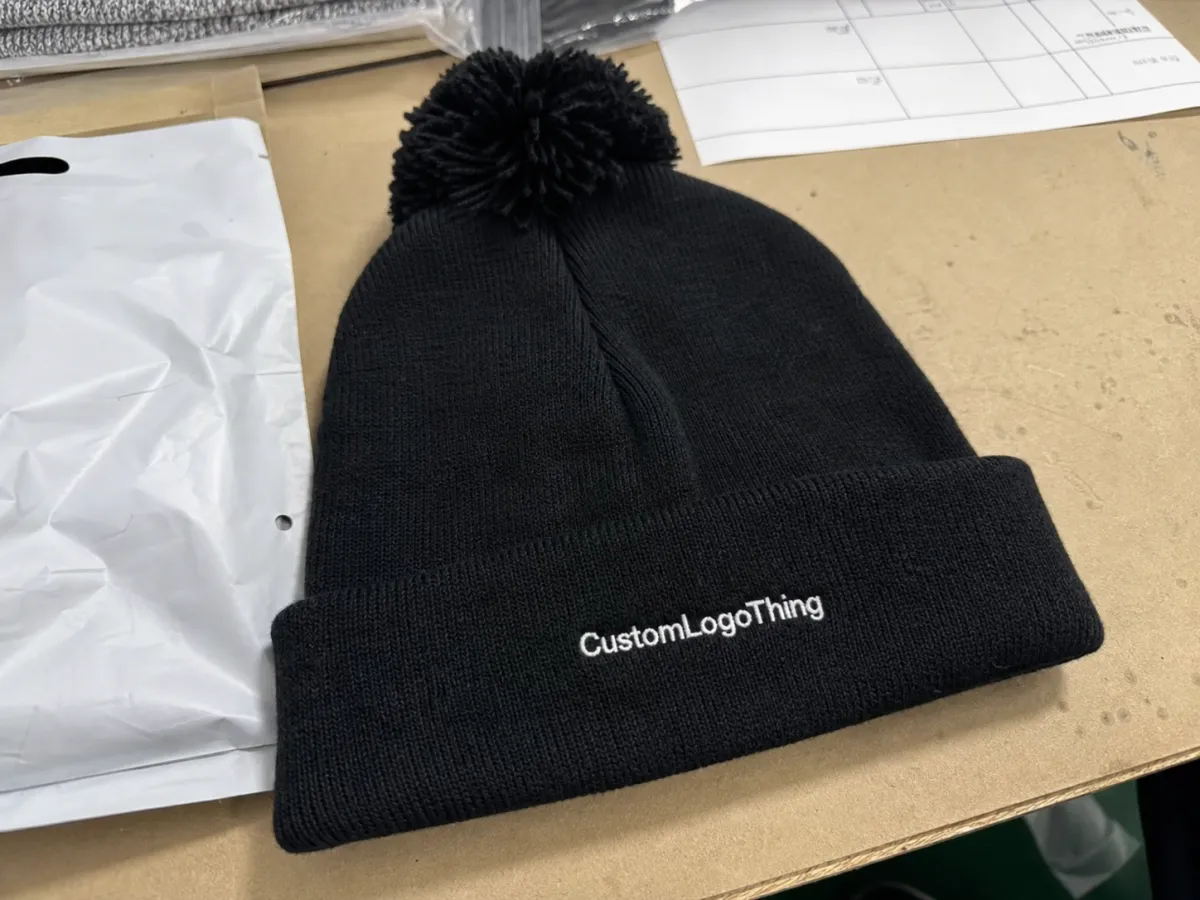
The fastest way to waste time is to treat a sample as a formality. It is a stress test. A useful sample shows how the beanie behaves under actual use, not how it photographs under good light.
Failures are usually small and cumulative. The knit feels thin once stretched. The cuff does not recover cleanly. The yarn pills too early. The seam creates a ridge at the crown. The pom pulls the hat off balance. Each issue is minor on its own, but together they decide whether the customer wears the hat twice or leaves it in a drawer.
Flat lays hide a lot. Tight photography can make loose knitting look acceptable, and a carefully arranged pom can hide weak attachment points. Color also changes in hand versus on screen. Buyers often find the real issue only after a fit test or a short wear test.
A sample that only looks good in a photo is not a sample. It is a prop.
Warmth and comfort are not only about fiber content. A thicker yarn can still feel scratchy. A soft yarn can still collapse if the stitch structure is weak. The best sample balances softness, rebound, and shape. If one of those is off, the whole piece feels weaker than it should.
The pom deserves separate review. Too large, and the beanie reads playful but messy. Too small, and the style loses impact. Too heavy, and the crown droops. A pom is not decoration only. It changes the engineering of the hat.
How the Sampling Process Works From Spec to Shipment
Sampling goes better when the brief is detailed before anyone starts knitting. A useful spec sheet should include measurements, target fit, crown height, cuff depth, yarn choice, color references, decoration method, and packaging needs. If the style uses embroidery, a woven label, a patch, or a jacquard logo, it should be stated up front. Missing details usually return later as delay.
Once the spec is clear, the supplier builds the first sample. For a straightforward beanie, that means selecting yarn, knitting the shell, finishing the cuff, attaching the pom, and adding trim. If the factory has the yarn in stock, the process moves faster. If it needs a custom color match or a recycled blend, expect more lead time.
The review cycle should stay controlled. Check the sample against the spec and mark only the changes that affect fit, appearance, or wear. Keep comments measurable. "Make it better" is not a production note. "Reduce cuff depth by 0.25 inch" is.
Good revisions usually focus on a few practical adjustments: tighter cuff recovery, a different pom size, a softer yarn, cleaner seam finish, or a slight change in crown height. Those are the changes that matter in bulk, and they are also the easiest to track if the feedback is specific.
Once the sample is approved, it becomes the reference for production. That means the approved version needs to be clear, repeatable, and measurable. If the cuff should be narrower, say by how much. If the pom should be fuller, define the target diameter or weight. Vague approval language creates expensive arguments later.
Material, Stitch, and Pom Pom Factors That Change the Final Look
The easiest way to compare samples is to separate the build into three parts: yarn, knit structure, and pom. Most of the final look comes from those choices. Everything else matters too, but not as much as buyers expect.
| Material option | Typical feel and look | Price impact | Best use |
|---|---|---|---|
| Acrylic | Predictable, easy to shape, common retail handfeel | Lowest | Promos, basics, larger runs |
| Recycled acrylic | Similar handfeel with a more responsible sourcing story | About 5% to 12% higher | Brands with recycled content targets |
| Wool blend | Warmer, more natural texture, usually reads premium | About 10% to 25% higher | Cold-weather retail and higher-margin styles |
| Premium synthetic blend | Softer surface, smoother touch, often cleaner in photography | About 20% to 40% higher | Fashion-led pieces and touch-driven product lines |
Acrylic wins on predictability. It is easy to source, easy to color match, and usually the most stable choice for broad runs. Recycled acrylic is a good middle ground if the brand wants a lower-impact story without leaving the standard price tier. Wool blends feel warmer and more natural, but they are not automatically better if the customer wants easy care and lower cost.
Knit structure changes the silhouette more than many teams expect. Rib knit gives stretch and helps the beanie fit more head sizes. A tighter gauge makes the hat feel denser and more polished. A looser knit can look chunky and casual, but it also risks looking weak if the yarn has too little body. The sample should be stretched, released, and checked for rebound.
The pom is where small decisions become visible. Sewn poms generally hold up well in shipping. Tied poms can be lighter, but the attachment point has to be strong. Glued poms are cheaper and usually the least reliable choice. Heat, moisture, and handling can expose weak spots quickly. Multi-color poms can look great, but matching them consistently is harder than it sounds.
Fit and finish deserve equal attention. A cuff that looks neat on paper may feel tight after wearing. A seam at the crown can create a ridge that shows through the knit. Lined versions improve comfort and warmth, but they also add cost and change the stretch profile. On the sample, all of that should be checked on a head, not just on a table.
How to Use a Book Pom Pom Beanies Material Sample Guide
A practical book pom pom Beanies Material Sample guide starts with use case, not aesthetics. A retail winter beanie, a team merch piece, and a fashion drop do not need the same spec. The first needs comfort and warmth. The second needs durability at a lower price point. The third needs better handfeel, cleaner finishing, and tighter color control.
Keep the review process short and direct. A checklist is better than a long discussion.
- Fit: Does the beanie sit securely without squeezing or slipping?
- Softness: Is the yarn comfortable against bare skin, or rough after a minute?
- Stretch recovery: Does the cuff bounce back after being pulled?
- Logo clarity: Is the decoration readable from a normal viewing distance?
- Pom balance: Does the pom look centered, full, and proportionate?
- Color match: Does the shade hold up under daylight and indoor lighting?
Then test the sample the way a customer would. Wear it for several minutes. Fold the cuff. Stretch the body. Shake the pom. Photograph it in natural light and under warm indoor lighting. If the hat changes shape too easily, that is a production risk, not a styling issue.
The best feedback is precise. "Reduce cuff depth by 6 mm." "Increase pom diameter by 10 mm." "Switch to a softer yarn with less surface fuzz." "Move the logo 4 mm higher." Those notes are usable. Suppliers can fix a measurable issue. They cannot guess what vague language means.
Do not rewrite the whole product every time a sample lands a little off. If the yarn, knit, and pom all change at once, it becomes impossible to tell which adjustment improved the result. One controlled revision is faster than three confused ones.
Common Sample Review Mistakes That Waste Time and Money
Color approval from a screen is a classic mistake. Monitors lie, and phone screens lie even more. A yarn that looks correct online can be noticeably different in hand. If the color matters, ask for a physical lab dip, a yarn wrap, or a real sample under daylight.
The next mistake is changing too many variables at once. If the supplier adjusts yarn, stitch, cuff, and pom in one revision, the next sample may be better, but nobody will know why. That creates trouble later if the production order needs another correction. Slow and clear beats fast and confusing.
Wear behavior gets ignored too often. A beanie can pass the shelf test and still fail once someone actually wears it. Check for pilling, seam irritation, shape loss, and pom droop. If the hat feels acceptable for one photo and annoying after five minutes, the market will notice.
If the sample feels wrong in minute one, it usually feels worse by minute ten.
Packaging deserves the same discipline. If the beanies ship in corrugated cardboard, ask whether the outer case has enough crush resistance for transit. For parcel distribution, an ISTA drop or vibration check is a useful sanity check. If the brand needs recycled or certified paper components, confirm the claim in writing and ask for traceable material specs.
Another common problem is vague emotional language. "More premium" can mean softer yarn, tighter knit, cleaner seam finish, or a heavier pom. Pick the reason, then write it down. Buyers who define the problem get faster revisions and fewer surprises.
Pricing, MOQ, and Quote Drivers for Custom Beanie Samples
Sample cost depends on the work required, not the style name. If the factory can use stock yarn, a standard pom, and a simple decoration, the sample price stays fairly low. If the order needs custom-dyed yarn, special embroidery, a woven label, a lined cuff, or a specific pom build, the quote moves up quickly. MOQ matters for bulk pricing, but sample pricing is a separate line item.
| Quote driver | Typical sample range | What pushes it up |
|---|---|---|
| Basic stock yarn sample | $30 to $60 | Simple knit, standard pom, small logo |
| Custom yarn or color match | $60 to $120 | Lab dips, sourcing time, tighter shade approval |
| Premium build with special trim | $90 to $180 | Embroidery, woven labels, lined cuff, custom pom |
| Rush sample or extra revision | +$20 to $80 | Expedite fees, repeat sampling, priority handling |
Those are working ranges, not fixed quotes. A factory with the right yarn in stock may stay near the lower end. Add custom coloration, special finishing, or presentation packaging, and the fee rises. If the sample needs a branded wrap instead of a plain polybag, expect a little more cost and lead time.
Ask for an itemized quote every time. Separate the sample fee, setup charge, shipping, and projected bulk price. If packaging is part of the brief, ask for the cost difference between plain corrugated cardboard and a branded wrap with kraft paper or FSC-certified inserts. That makes the tradeoffs visible.
Sustainability claims need clean paperwork. If the style uses recycled materials, post-consumer content, or biodegradable packaging, get the exact wording from the supplier. Loose claims are cheap. Traceable claims take more work, which is why they are worth asking for early.
Turnaround, Lead Time, and Next Steps Before Bulk Approval
Lead time is usually split into a few parts. Spec review can take 1 to 2 business days if the brief is complete. Knitting and assembly for a straightforward sample often takes 5 to 10 business days. Custom yarn sourcing, color matching, or more complex trim can stretch that longer. Shipping adds another 3 to 7 days depending on route and carrier. Revision rounds usually need 3 to 7 more days.
Here is the cleanest approval path:
- Confirm measurements and target fit.
- Lock the yarn choice and knit structure.
- Approve the color reference or lab dip.
- Review the first sample against the checklist.
- Issue one round of precise corrections if needed.
- Sign off on the final reference sample before production.
Teams still skip steps, then wonder why the bulk lot drifts away from the approved sample. The reference sample is the standard. If it is not locked cleanly, production will reflect that confusion.
It also helps to decide who has final approval before the sample arrives. Sales, merch, brand, and operations often care about different details. That is normal. What slows the process down is waiting days for everyone to weigh in on the same cuff width. Pick the decision maker early and keep the review tight.
For packaging closeout, keep the logic simple. A beanie sample packed in corrugated cardboard with kraft paper protection is usually enough for approval work. If the brand needs a cleaner presentation, ask for FSC-certified paper components or biodegradable packaging only where it supports a real compliance need or a better customer experience.
Use the notes from the book pom pom Beanies Material Sample guide to make one clear decision: approve, revise, or reject. Then move forward with the approved reference sample as the production standard. That protects margin, reduces waste, and keeps a good concept from turning into avoidable returns.
FAQ
What should a book pom pom beanies material sample guide include?
It should cover yarn type, knit gauge, cuff size, pom construction, fit measurements, decoration method, and packaging notes. It should also define the pass/fail criteria so the approval team is not guessing later.
How many sample rounds do pom pom beanie buyers usually need?
Simple styles may only need one round if the first sample lands close on fit, yarn, and trim. More complex beanies with custom color matching, embroidery, or special pom construction often need two or three rounds.
How much does a custom pom pom beanie sample usually cost?
A basic sample often starts around $30 to $120 before shipping. Custom yarns, special trims, rush handling, and extra revisions can push the fee higher.
How long is the typical beanie sample lead time?
Simple samples are often ready in 7 to 14 days if materials are available. Custom yarn sourcing, color matching, or revision rounds can push lead time into the 2 to 4 week range.
What should I do if the sample looks right but feels wrong?
Test stretch recovery, seam comfort, pom weight, and how the hat sits after a few minutes of wear. Then request a revision that fixes the exact issue instead of changing unrelated details.


