Vitamin pom pom beanies Bulk Order Planning gets messy when the sample looks right but the production order was never fully defined. The usual misses are simple: pom size was never fixed, the cuff style was left vague, packaging was not specified, and nobody wrote down what "approved" actually meant. Small gaps like that can turn into rework, freight surprises, or a receiving problem at the warehouse.
For buyers, the order is not just a knit item with decoration. It has to work as a retail product, a giveaway, a school store item, or a seasonal kit. That means fit, packaging, cost, and shipment handling all matter. Once those decisions are made early, the rest of the process gets much easier.
"The sample is the easy part. The bulk order is where sloppy assumptions get expensive."
Vitamin pom pom beanies bulk order planning: what buyers miss
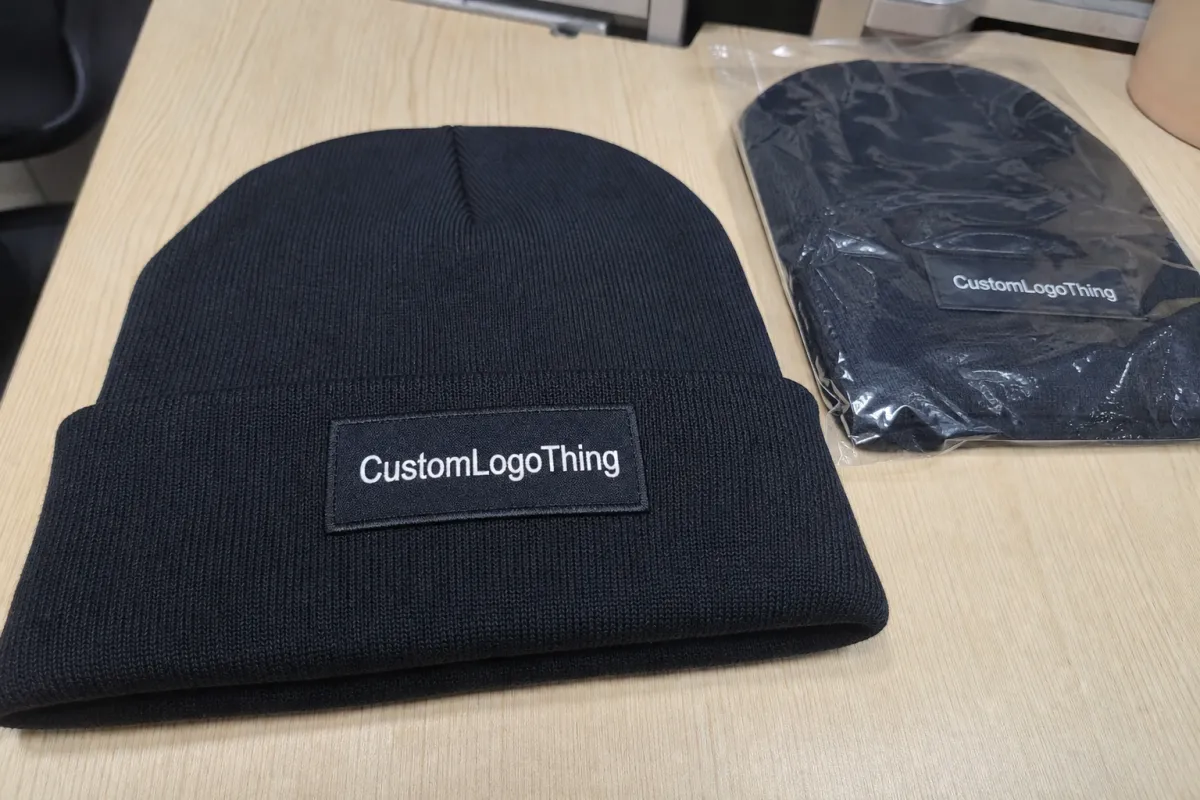
The biggest mistake is assuming the sample will automatically match the bulk run. Factories do not guess at small details. If the pom diameter, cuff width, fold method, or pack-out is not written down, the final run can drift in ways that are hard to correct after production starts.
Use case should shape every decision. Retail winter merch usually needs stronger shelf appeal and tighter color control. Staff giveaways often need lower unit cost and faster replenishment. School stores need practical sizing and easy stock handling. Event kits may need lighter packing and a simpler decoration plan. The order is easier to quote when the end use is defined first.
Packaging affects landed cost earlier than many buyers expect. A beanie folded flat in a polybag ships and stores differently than a loose-packed piece in a master carton. Carton count, carton size, hangtag use, and insert requirements all affect freight and warehouse handling. If you compare landed cost without those details, the quote will not mean much.
Good planning reduces revisions, keeps quotes cleaner, and lowers the chance of paying for avoidable rework. That matters even more when the style needs to repeat next season. For broader sourcing terms, it helps to connect the order to your existing Wholesale Programs so volume, timing, and packaging rules are aligned before the first proof lands.
Pom-pom build choices that affect warmth, feel, and sell-through
Start with the body construction. Acrylic knit is the most common choice because it is cost-effective, easy to source, and flexible on color. Blended yarns can add softness or a more premium handfeel, which helps when the beanie is meant to read less promotional. Heavier gauges usually feel warmer and more substantial, but they also increase material usage and unit cost.
The pom changes the product more than many buyers expect. Yarn poms are typically the safest bulk-order option because they are durable, familiar, and predictable. Faux-fur poms look more premium and can improve retail appeal, but they add cost, more finish variation, and sometimes longer lead time. Oversized poms create stronger shelf presence, though they can feel top-heavy if the body knit is too light.
Cuff height and stretch matter too. A taller cuff gives more room for embroidery or a woven label, while a shorter cuff can look cleaner for youth sizing or simpler branding. Lined beanies add warmth and comfort, but they also change weight, stitching complexity, and price. For genuine cold-weather use, lining is often worth it. For event handouts, it may not be.
Decoration should fit the knit structure. Embroidery is durable and familiar, but small logos can get lost in a dense knit. Woven labels work well for clean branding and lower abrasion. Patches create more texture and can make the product feel stronger at retail. Hangtags help presentation, but they do not replace the actual decoration. The lowest-cost option is not always the best final result.
| Option | Typical Price Impact | Best Use | Tradeoff |
|---|---|---|---|
| Acrylic knit with yarn pom | Lowest | Staff giveaways, event kits | Basic look, less premium feel |
| Blended yarn with woven label | Mid-range | Retail winter merch, school stores | Slightly higher setup and material cost |
| Heavy knit with faux-fur pom | Higher | Premium retail, branded seasonal drops | More finish variation and tighter QC needed |
| Lined beanie with patch | Highest | Cold-weather use, premium gifting | Longer production and higher freight weight |
For product behavior standards and shipping stress testing, it helps to know whether the carton plan should be aligned to transit expectations like ISTA packaging and transport testing. A soft item still has to survive handling like a real commercial shipment.
Specs that keep color, size, and logo placement consistent
Exact measurements prevent a lot of problems. Set crown depth, cuff height, body width, and pom diameter before the factory starts cutting or knitting. If the order only says "adult size" or "medium cuff," the result can drift. A useful spec sheet should include the flat width, stretch target, and acceptable tolerance, usually around +/- 0.5 cm on key dimensions depending on the knit structure.
Color control is another common failure point. Use PMS references when possible, or send a physical swatch if the yarn needs to match a brand standard. Vague names like "navy" or "orange" are not enough. One factory's navy can be another factory's almost-black, and that is a problem for any branded order.
Logo placement needs the same discipline. Write down the distance from the cuff edge, the center point, and the maximum allowed variance. If the beanie has a care tag, note that location too. Fold-pack instructions should also be confirmed before sampling, because a folded piece can hide or distort the logo position once it is packed.
The language below helps reduce disputes:
- Knit tolerance: +/- 5% on stretch, with sample approval required for any visible gauge change.
- Pom diameter: fixed within a 1 cm range, measured at the widest point after trimming.
- Logo placement: centered above cuff seam, with a 0.5 cm placement window.
- Carton pack: 50 pieces per master carton unless a retail pack-out requires a different count.
Add carton labeling before final approval. That includes style name, color code, quantity, and PO number. If the shipment has multiple colors, split carton counts clearly so receiving does not waste time opening every case to identify what is inside. Small operational details like this save real money.
For buyers who need extra help at the approval stage, the general process and common order questions are also covered in the FAQ section on the site.
Cost, pricing, and MOQ math for cleaner budget approvals
Price is driven by a few predictable inputs: yarn type, stitch density, pom construction, decoration method, and packaging level. If any one of those gets upgraded, the unit price moves. The challenge is usually not the math itself; it is getting the right scope into the quote before procurement reviews it.
For planning, a simple acrylic beanie with a yarn pom and woven label often lands in the lower range at higher volume, while a lined version with faux-fur pom and patch decoration can move much higher. A practical spread can be roughly $0.60 to $2.50+ per unit depending on quantity, customization, and freight assumptions. On a 5,000-piece order, even a small material upgrade can move the total by several thousand dollars.
MOQ should be treated as a planning tool, not a badge of honor. The right minimum depends on sell-through risk, storage space, and how much variation you want by color or decoration. If the style is new, a smaller run may make sense even if the unit cost is slightly higher. If the style already sells, a larger buy can lower the landed cost and support replenishment.
Do not let the quote blur sample charges, setup fees, decoration costs, and freight. Those should be separated so procurement can compare options without rebuilding the math. A clean quote usually shows:
- Sample or proto cost
- Per-unit production price
- Setup or plate/embroidery fee, if any
- Packaging cost by format
- Estimated freight or shipping method
Three budget lanes usually help buyers get approval faster:
- Test run: lower quantity, simpler decoration, minimal packaging.
- Core order: the main stock piece with standard branding and carton pack-out.
- Seasonal stock-up: larger quantity for retail or multi-site distribution, often with better price breaks.
If your company reviews sustainability or packaging compliance, resources from EPA packaging guidance and FSC can help frame recycled cartons, paper inserts, or responsibly sourced paper components. Not every beanie needs a sustainability lecture, but the shipper box still matters.
A larger order is not always better value if the style is still unproven. Saving 8% on unit price while overbuying by 30% is just buying storage.
Production steps, lead time, and shipping checkpoints
The order flow should be mapped before you send the PO. A reliable sequence looks like this: quote, artwork proof, sample approval, bulk production, final QC, dispatch, and transit. Skip one of those steps and you usually pay for it later. Clear planning matters here because the shipment depends on each approval being complete.
Lead time depends on season load and customization. Off-peak production can move quickly, while winter demand often backs up knitting, embroidery, and packing queues. A simple custom beanie might take 12 to 18 business days after approval, while a more complex style with special pom material, custom labels, or higher-volume pack-out can push to 20 to 30 business days. Transit is separate. Ocean freight, air freight, and domestic delivery each add their own clock.
Pre-production proofing is the cheapest place to catch mistakes. Check color drift, pom shape, cuff proportion, logo scale, and packaging layout before the bulk run starts. If a proof photo looks slightly off, do not assume the bulk run will fix it. It usually will not.
Before shipment, ask for a checkpoint list:
- Final carton count and style count
- Label accuracy on inner and outer cartons
- Photo confirmation of packed goods
- Freight method and tracking details
- Delivery address confirmation
That last step sounds dull. It is also one of the easiest ways to avoid a perfect order being delayed by bad delivery information.
How we keep repeat beanie orders consistent across runs
Repeat orders stay consistent when the specs are stored properly. That means approved swatches, final artwork files, photo references, and written placement notes. Verbal memory is not a control system. If the next batch needs to match the last one, the factory needs the same reference set, not a fresh guess from a new person on email.
Early risk flags matter too. Low yarn stock, a color that is no longer available, or a packed production schedule can all change the timeline. Those issues are manageable if they are surfaced early. They become a problem when they show up after the deposit is already paid.
Retail-ready details are where experienced suppliers earn trust. Carton labels, packing structure, and replacement handling matter more than polished sales language. A buyer needs to know how the order will be packed, how mixed SKUs will be separated, and what happens if a small defect appears in the run. Clear communication shortens revision cycles and keeps the order from being rebuilt every season.
That is the real value of a supplier that thinks like a process partner. Not just a quote source. Not just a deposit collector. Someone who understands that this kind of order is about repeatability, not just a single good sample.
What to approve before you submit the final purchase order
Before you send the final PO, lock the basics. Quantity, delivery date, use case, and audience should already be clear. Is this for retail, staff, school stores, or events? If the answer is still fuzzy, the specs will probably be fuzzy too.
Gather the assets first: logo files, color references, packaging notes, and shipping details. If the quote is based on one file and the approval later uses another file, the order has already started changing. That is avoidable. So is the round of "we thought the logo would be bigger."
Approve at least one standard sample and one upgraded option if the budget allows it. The comparison makes tradeoffs visible. A buyer can then see whether the added cost is worth the better knit, better pom, or cleaner decoration. For a custom order, that side-by-side view is often more useful than a long email thread.
Then approve the spec sheet and proof together. Not one without the other. Once those are signed off, the PO should match them exactly so production starts without missing details. If the factory needs to interpret anything after approval, the order is not fully ready.
Use this checklist to move vitamin Pom Pom Beanies bulk order planning from rough idea to order-ready status:
- Confirm target quantity and delivery window.
- Choose body knit, pom style, and decoration method.
- Lock color references and logo placement.
- Approve packaging format and carton count.
- Review proof, sample, and final quote together.
- Submit the PO only after every spec is written down.
That is the difference between a tidy bulk order and a messy one. Treat the purchase like a spec-driven order, not a casual merch idea, and the final shipment is a lot less dramatic.
How do I start vitamin pom pom beanies bulk order planning?
Define the audience, quantity, and use case before you talk pricing. Choose knit weight, pom style, and decoration method early so the quote is accurate. Collect logo files, color references, and packaging notes before requesting samples.
What MOQ should I expect for a pom pom beanie bulk order?
MOQ depends on yarn availability, decoration complexity, and packaging needs. Custom colors and label changes often push the minimum higher than stock-style orders. Ask for tiered pricing so you can compare a test run against a larger stock-up order.
How long is lead time for custom vitamin pom pom beanies?
Lead time starts after proof and sample approval, not after the first email. Peak winter demand can extend the schedule, especially for custom colors or branding. Transit time is separate from production time, so build in shipping buffer.
Can I mix colors in one vitamin pom pom beanies order?
Mixing colors is often possible if the yarn and setup plan support it. Multiple colors can increase complexity, so confirm per-color minimums and pricing. Carton planning should be decided early if each color needs separate pack counts.
What should I approve before I place the final order?
Approve final specs, artwork placement, and color references before production starts. Check sample photos or physical samples for pom shape, knit feel, and logo alignment. Confirm carton labels, freight method, and delivery address so nothing stalls at shipment.

