Tea ribbon handle paper Bags Unit Cost Review sounds narrow, but it usually decides whether a tea line feels like a thoughtful gift or just another packaged item on a shelf. The bag is doing more than carrying product. It is framing the first impression, setting the price expectation, and signaling how much care went into the brand.
For buyers, the real job is not finding the fanciest option. It is balancing presentation, pack strength, and landed cost without drifting into waste. A ribbon handle can absolutely improve the look, but the value only holds if the structure matches the tea pack, the print holds up, and the quote still leaves margin.
The useful questions are basic ones: What is the bag made from? How is the handle attached? What does the finish add to the unit cost? How much does MOQ move the price per piece? Once those are answered, the decision gets less fuzzy. Pretty packaging is easy. Controlled packaging is the part that matters.
Why ribbon handles change tea packaging first impressions
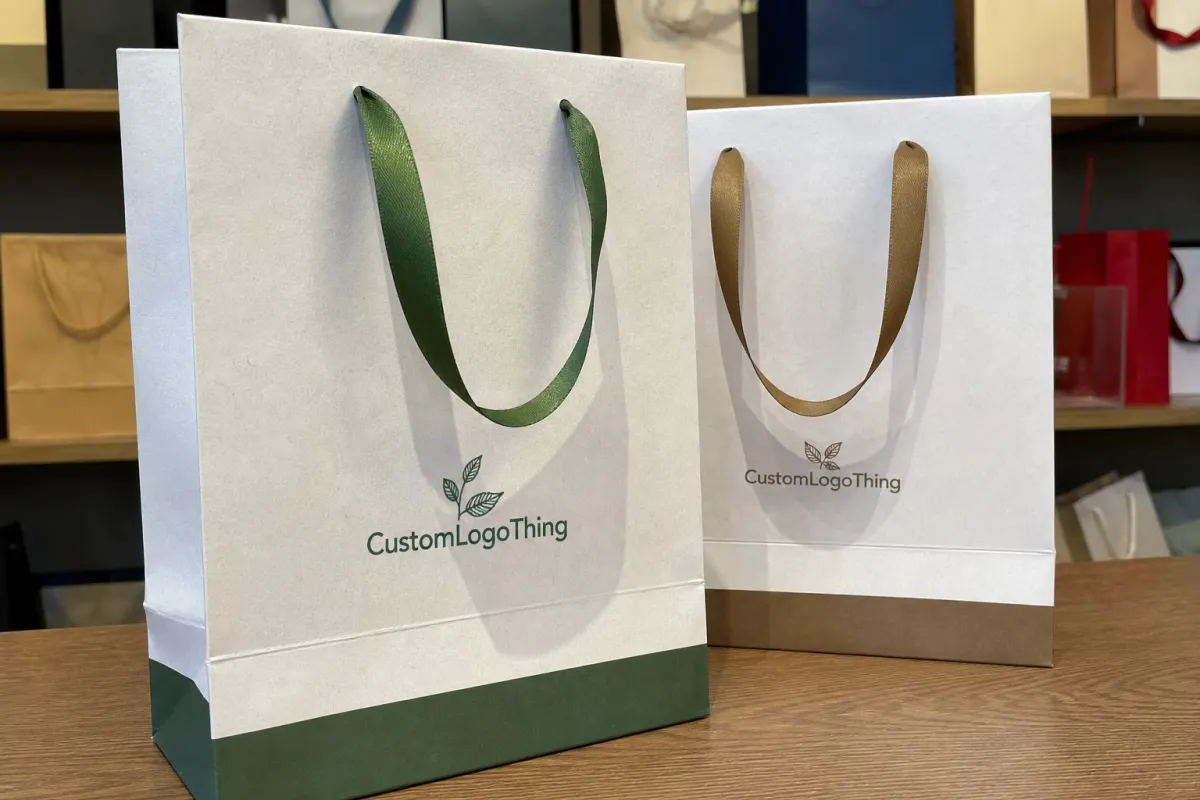
Tea packaging gets judged fast. A shopper sees the bag, touches the handle, and decides in a second whether the product feels gift-worthy or cheap. Ribbon handles soften the visual language of paper bags. They move the package away from generic retail carryout and closer to something selected, wrapped, and intentional.
That matters for tea gifts, sampler sets, subscription bundles, seasonal promotions, and corporate orders. A rigid box is not always necessary, especially when the contents are light or already packed in pouches, tins, or small jars. A well-built paper bag with a ribbon handle can deliver enough shelf impact without dragging the packaging budget into box territory.
The handle itself does a lot of emotional work. Satin reads soft and polished. Grosgrain looks more structured and a little more serious. Wider ribbon feels more deliberate, but it also uses more material and can add cost quickly. If the bag is supposed to carry a premium tea assortment, the handle should feel like part of the product, not an afterthought stapled on to satisfy a spec sheet.
There is also the practical side. A nice-looking bag that collapses under weight is useless. Tea sets are rarely heavy compared with cosmetics or bottles, but they can still create awkward stress points if the body stock is too light or the bottom board is flimsy. The first job of the bag is carrying. The second is looking good while carrying.
A tea gift set does not need to scream luxury. It needs to look intentional, survive handling, and justify the price the buyer is paying. That is a different test.
From a cost standpoint, ribbon handles usually sit between a standard paper bag and a more elaborate rigid package. That middle position is exactly why buyers like them. You get a better presentation than plain kraft, but you avoid the extra board, inserts, and assembly cost that come with premium boxes.
Bag construction and finish options that affect the look
Construction comes before graphics. A ribbon Handle Paper Bag usually starts with kraft paper, coated paper, or art paper wrapped around a reinforced body. Light tea packs can work with lighter stock, but anything that includes tins, glass jars, or multi-pack sets needs stronger paper and a more reliable base.
Common stock ranges are roughly 120-180 gsm for lighter kraft builds and 157-250 gsm for coated or art paper bags, depending on how much reinforcement sits underneath. Those numbers are not rules. They are the point where most buyers start getting believable performance instead of a bag that looks fine in the mockup and disappointing in the warehouse.
The top edge matters more than people expect. If the mouth of the bag is weak, the handle sits crooked and the whole package looks tired. A reinforced top fold, a clean gusset, and a stable bottom insert make the bag feel expensive even before the print is considered. If you have ever watched a bag sag in a retail handoff, you know how quickly the illusion disappears.
Ribbon choice changes the tone immediately. Satin looks soft and polished. Grosgrain feels firmer and more structured. Printed ribbon can carry branding, but it pushes the price up because the handle becomes part decoration, part material component. That is useful when the ribbon is visible and central to the design. It is expensive noise when nobody will notice it.
Finish options need the same discipline. Matte lamination gives a calmer, more modern surface. Soft-touch coating feels expensive in hand, though it can show wear more easily on dark artwork or high-friction retail use. Foil stamping adds a sharp accent, and embossing can make a logo feel more tactile. Spot UV is useful when the design needs contrast, but stacking too many effects usually makes the bag feel crowded instead of premium.
The best finish is the one that suits the tea itself. A single-origin white tea line does not need the same treatment as a holiday sampler or a corporate gift set. Over-decorated bags often look less expensive than restrained ones because they are trying too hard. Buyers see that, even if they do not say it aloud.
| Option | Look | Cost impact | Best use |
|---|---|---|---|
| Kraft body + satin ribbon | Warm, gift-ready, understated | Lower to mid | Tea retail, samplers, seasonal packs |
| Coated paper + printed ribbon | Cleaner branding, sharper shelf impact | Mid to higher | Premium retail and campaign packaging |
| Art paper + matte lamination + foil | More polished, stronger premium signal | Higher | Corporate gifts and high-margin sets |
If recycled content or certified fiber matters to your brand story, ask for the actual paper spec and any certificate references tied to the order. FSC claims should be attached to the specific stock being used, not just floating around in a marketing deck. For transit durability, ISTA testing methods are worth understanding if the bags will travel far or move through rough distribution.
Sizes, paper weights, and print specs to confirm before ordering
Before asking for a quote, lock the dimensions. The supplier needs the length, width, gusset, handle drop, and the packed weight the bag is expected to carry. A tea pouch is one thing. A pouch plus a tin plus a sample sachet is another. If the bag is sized to the optimistic version of the load, the sample may look fine and the final run may not.
That is why size should be built around the real contents, not the marketing concept. A bag for a two-item tea gift set might need a taller profile and a deeper gusset than a bag for a single pouch. Handle drop matters too. If the handles sit too high, the bag bunches awkwardly. If they sit too low, the bag looks clumsy and can drag on the contents inside.
Paper weight affects appearance and function at the same time. Light stock can work for a basic tea pouch, but heavier assortments need stronger paper or extra reinforcement. I see buyers under-spec the body because they focus on print quality and forget that the bag still needs to carry real product. The result is a nice-looking bag with a soft bottom, weak corners, or a handle pull that feels wrong.
Print specs deserve equal attention. One-color branding on kraft is usually the most efficient route, and it tends to look clean when the design is simple. Full-coverage artwork is possible, but registration needs to be tighter. Pantone matching can help keep brand color consistent, especially when the tea line already uses a defined palette. Inside print is possible on some builds, though it adds complexity and usually pushes up both setup time and price.
Fine text, thin rules, and tiny icons are common trouble spots. If a logo has narrow strokes or the design includes more than one dark block, ask for a proof that shows how the artwork will sit on the actual paper finish. A shiny coated surface behaves differently from kraft, and a design that looks crisp on screen can print softer than expected. That is not a surprise if you have ordered enough packaging. It is still a problem if nobody checks it early.
There are a few practical tests worth requesting before the order goes live. A flat sample helps when dimensions are still under review. A preproduction proof is better once the structure is settled and the artwork needs checking. For heavier or more fragile tea packs, ask for a loaded sample so the bag can be tested under real weight. A perfect mockup tells you less than a bag that has actually been asked to do the job.
It also helps to confirm the packaging method. If bags are shipped nested, flat-packed, or pre-assembled, the factory needs to know before quoting. Flat packing reduces freight volume but can change the labor mix. Pre-assembled bags are easier to use on arrival, but they take more space and often cost more to move. The quote should reflect the real handling method, not a guess.
Tea ribbon handle paper bags unit cost review: pricing, MOQ, and volume breakpoints
The pricing picture is mostly a mix of size, stock, ribbon type, print coverage, finish, and shipping terms. Change one variable and the quote shifts. Change three and the unit cost can move a lot faster than a buyer expects. The bag itself matters, but MOQ is often the bigger pricing lever because setup costs have to be spread across the run.
At low volume, the setup charge does more damage to unit cost than the raw materials do. At higher volume, the setup gets diluted and the price starts to reflect paper, ribbon, and labor more cleanly. That is why a 500-piece order can feel surprisingly expensive while a 3,000-piece run suddenly makes more sense. The production math is not subtle.
For reference, a realistic rough range for custom Ribbon Handle Paper Bags in USD can look like this:
| Volume | Typical cost per piece | What usually changes |
|---|---|---|
| 500 pieces | $0.65-$1.20 | Setup charges weigh heavily; ribbon and finish choices matter a lot |
| 1,000 pieces | $0.42-$0.85 | Setup spreads better, but materials still shape the quote |
| 3,000 pieces | $0.26-$0.55 | Bulk pricing starts to show real value if the spec stays stable |
| 5,000+ pieces | $0.18-$0.40 | Larger runs usually bring the strongest unit cost for simple builds |
Those ranges are a buying reference, not a promise. A simple kraft bag with one-color print and standard satin ribbon can land near the lower end. A coated bag with foil, spot UV, a printed ribbon, and color matching will sit higher. If the bag needs extra reinforcement at the top or bottom, expect another bump. Nothing is free just because it seems small on the drawing.
Freight can upset the whole comparison. A quote that looks cheap ex-factory may stop looking cheap once cartons, export packing, and shipping are added. Sampling may be free or may carry a charge depending on how much tooling is involved. Plates, screens, or special dies can also show up as separate items. If the quote does not spell those out, ask before you compare suppliers. Otherwise you are not comparing pricing. You are comparing what each supplier chose to mention.
The cleanest way to read a quote is to line up identical specs: same size, same stock, same ribbon, same print method, same finish, same shipment terms. If one supplier comes in far below the others, something is missing. Usually it is more than one thing. Maybe the ribbon is narrower, maybe the paper is lighter, maybe the finish has been stripped out. A low number is only useful if the bag still does the job.
There is also a practical breakpoint that has nothing to do with aesthetics. If the tea line is stable and the bag will be reused across a season or a full retail cycle, ordering a slightly higher volume can make sense because the per-piece gap often drops fast after the first thousand units. If the design is still in motion, avoid locking too much inventory into a finish that might change next quarter. Dead stock is its own form of packaging waste.
Production process, proofing, and turnaround from quote to shipment
A normal order follows a predictable sequence: inquiry, spec review, artwork check, sample approval, production, inspection, packing, shipment. The steps are ordinary. The delays are not. Most schedule trouble comes from missing information, late approvals, or a buyer changing the spec after the quote is already locked.
For timing, a simple custom order often needs 2 to 4 weeks after proof approval. That is a realistic bulk timeline, not an aggressive one. Samples or mockups usually take a few days. If the ribbon color needs matching, if the print includes foil, or if the artwork has not been prepared to dieline, add more time. A clean file is faster than a rushed phone conversation every time.
There are a few checkpoints that matter more than the rest. The dieline should be checked before print. The handle placement should be confirmed before assembly. The bottom board, if used, should be fitted before mass packing starts. If the order includes dark coverage, ask how the factory handles scuff resistance. Matte black that scratches in transit is not premium. It is a complaint waiting to happen.
Rush orders exist. They also squeeze out margin and reduce room for correction. If the bags are tied to a launch, a holiday gift program, or a trade event, it is better to work backward from the delivery date and leave enough time for a proof correction. One bad run costs more than a normal lead time. That is not dramatic. It is just how packaging orders behave.
Shipping conditions matter too. Paper bags do not like moisture. Ribbon handles can deform if cartons are packed badly, and coated surfaces can scuff when cartons rub inside a container. For long routes or humid storage, ask how the bags will be carton-packed, whether desiccant is used, and whether the stacking method prevents crushing. If the route is rough, carton strength is part of the product.
What a dependable paper bag supplier should prove before you pay
A dependable supplier gives more than a price. They give enough proof to reduce risk. That means current material options, recent sample photos, a clear MOQ, a workable lead time, and a direct answer about what the build can and cannot do. If every response is vague, the quote is not the only soft thing in the exchange.
Quality control is especially visible on ribbon handle bags because the defects are easy to spot. Handle pull strength should be checked. Glue lines should be straight. The ribbon should sit evenly on both sides. The print should align with the die-cut, not drift across the fold. If the edges are messy, the bag reads cheap no matter how good the artwork is.
I also want to see whether the supplier understands the use case. Tea packaging has a few common failure points: bags that are too narrow for the pack, handles that are too short, bottoms that bow under small weight shifts, and finishes that mark too easily during handling. A supplier who asks the right questions is usually more useful than one who only wants to rush the quote out.
Ask about replacement policy if quality fails on arrival. Ask how samples are charged or credited. Ask whether color tolerance is measured against a physical reference or just a digital file. Ask if they can show a loaded sample, not only a pristine mockup. These are not aggressive questions. They are the sort of questions that stop minor problems from becoming expensive ones.
Think of supplier selection as risk control, not branding theater. A beautiful bag that ships late or arrives damaged is still a failed order. A reliable bag with a decent finish usually wins because it reaches customers on time and performs in use. Packaging has to survive reality before it can sell an idea.
What to send now for a fast accurate quote and next-step plan
If you want a quote that is useful on the first pass, send the specs in one message instead of scattering them across three follow-ups. Include size, quantity, material preference, ribbon style, print colors, finish, shipment destination, and target delivery date. If artwork is ready, attach it. If it is not, send a reference image or a simple mood board so the supplier can see the visual direction.
It helps to request pricing tiers. A 500-piece quote is useful, but so is a 1,000-piece and a 3,000-piece option. Those breakpoints show whether the jump in volume is worth the lower unit cost. Sometimes the difference is enough to justify a larger order. Sometimes it is not. Either way, the answer should come from numbers, not gut feel.
Before approving production, compare the samples against the loaded use case. Check the handle feel, the bag depth, the print clarity, and the way the bottom sits with actual tea contents inside. If the bag is for loose-leaf tea, tins, or bundled gift packs, test it with the real product. If it will sit on a retail shelf for weeks, ask how the finish ages under handling and light. A bag that looks good for five minutes is not the same as a bag that holds up through a sales cycle.
That is the real point of a tea ribbon handle paper Bags Unit Cost Review: not finding the lowest number on the page, but choosing a build that protects margin and still looks worth the price. Send accurate specs, compare the tiers, and avoid paying for effects that do not help the tea sell. Simple enough. Not always easy. Still worth doing properly.
What drives the unit cost of tea ribbon handle paper bags most?
Size, paper weight, ribbon type, print coverage, and finishing have the biggest impact. MOQ matters because setup charges get spread across fewer pieces at low volume. Freight, cartons, and sample charges can change the landed cost more than buyers expect, so the headline price should never be the only number reviewed.
What MOQ is typical for ribbon handle paper bags?
Many custom runs start around 500 to 1,000 pieces, but the exact MOQ depends on size, structure, and print complexity. Lower MOQs usually carry a higher unit cost because tooling and setup are not diluted across the run. Tiered pricing at 500, 1,000, and 3,000 pieces gives a much clearer buying picture than a single quote.
How long does production usually take after approval?
Simple orders can move quickly, but a realistic bulk lead time is often 2 to 4 weeks after proof approval. Samples or mockups usually take a few days before mass production begins. Color matching, foil, and late artwork changes are the most common reasons schedules slip.
Can I customize the size and ribbon style for tea packaging?
Yes. Most suppliers can adjust dimensions, ribbon width, ribbon material, handle length, and print layout. Custom specs can change MOQ and pricing, especially if the bag needs reinforcement or a special finish. A dieline or reference sample makes the first quote far more accurate than a written description alone.
What should I include in a quote request for tea ribbon handle bags?
Include dimensions, quantity, paper stock, print colors, finish, ribbon preference, shipment destination, and target delivery date. Add artwork files or a reference photo so the supplier can check feasibility early. If the bags will carry tins or bundled sets, mention the packed weight so the structure can be priced correctly.

