For buyers comparing retail-ready packaging, a pet treat pvc garment Bags Unit Cost Review should start with the spec, not the silhouette. A clear garment-style bag looks simple on paper. It rarely is. Thickness, size, closure style, print coverage, and finishing details can move the price more than the product category ever will.
The format has a real purpose. It lets shoppers see the treat, gives the pack some structure, and creates a cleaner shelf read than a basic pillow pouch or loose wrapper. That matters for pet treats, where shape, color, and fill level often sell the product before the copy does. It also matters on the packing line. If the bag opens cleanly and holds its form, workers waste less time fighting wrinkles, crooked seams, and awkward closures.
Still, there is no magic here. A clear PVC bag can be a smart retail choice, or it can become an annoying cost sink. The difference usually comes down to whether the buyer understands the tradeoffs before asking for a quote. The sections below focus on those tradeoffs: what changes unit cost, what changes lead time, and what should be in the request file before anyone starts pricing.
Why a Clear PVC Garment Format Works for Treats
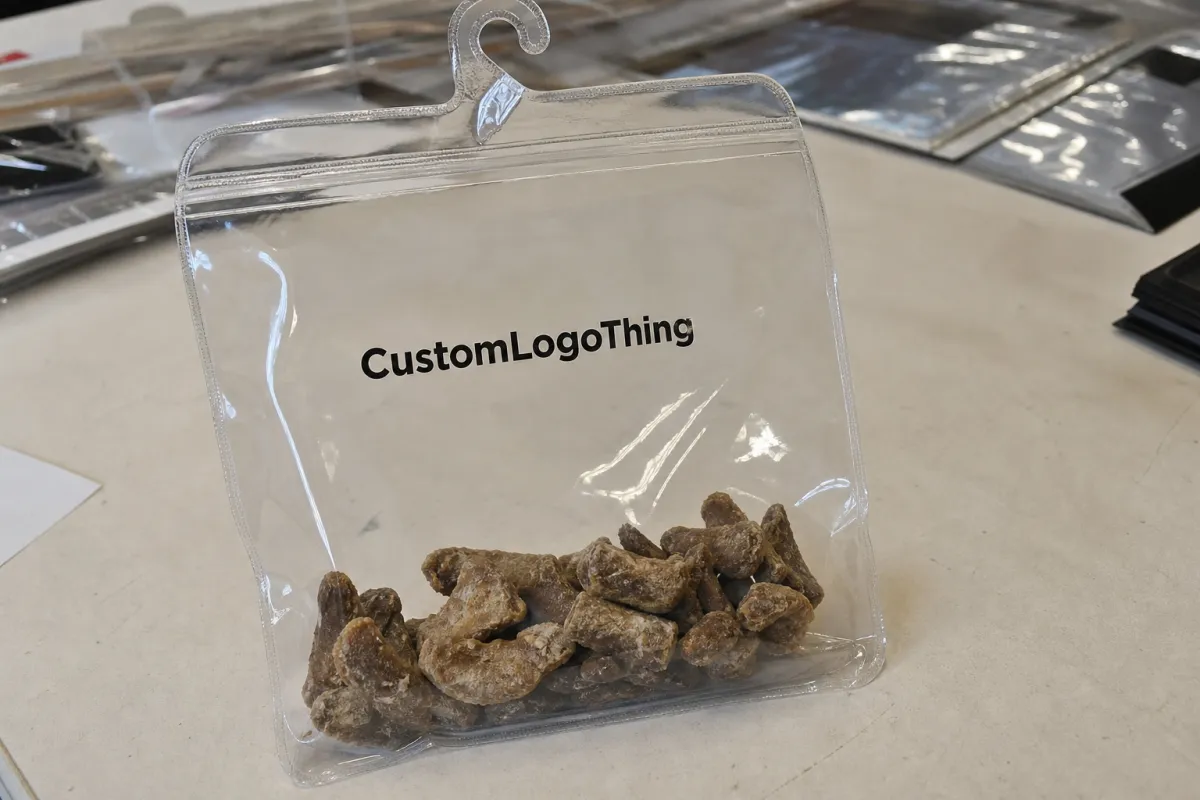
From a buyer's point of view, the appeal is pretty direct. The bag shows the product. It protects presentation. It makes the pack feel finished without relying on a large printed carton or expensive label system. For pet treats, that combination is useful because the product itself often carries the visual message. A customer can see the color, texture, and quantity at a glance. No guessing. No squinting at tiny copy.
The garment-style shape adds another layer. It can hang neatly, sit flatter in a tray, or stack better in a shipper depending on the closure and gusset choices. That flexibility is why this format shows up in gift sets, seasonal runs, promotional packs, and assorted treat bundles. It is not just about looking clean. It is about fitting the way the product actually gets sold.
There is also a production angle that buyers should not ignore. A bag that opens consistently and seals in a predictable way lowers the chance of rework. A bag that collapses, scuffs easily, or pops out of shape during filling does the opposite. One awkward bag sounds small. A pallet of awkward bags is where costs start bleeding through labor, scrap, and packing delays.
So the best way to think about this format is simple: it works when the product needs visibility and the pack must look retail-ready without heavy structural packaging. It stops working when the material is too thin, the dimensions are too tight, or the closure choice fights the line.
"A clear bag only looks cheap when the spec is loose. Once the thickness, size, and closure are set properly, the price usually makes a lot more sense."
If you are building a request for quote, define the finished dimensions, treat weight, closure type, and display method first. Those details shape the quote more than the name of the product. For general packaging structure and industry terms, the Packaging Machinery Manufacturers Institute is a useful reference point.
Material Choices That Change Fit, Feel, and Shelf Presence
Thickness is the first lever, and it is usually the one buyers underestimate. A lighter gauge PVC can look bright and clean, but it may show scuffs, waviness, or a soft, floppy feel if the bag is large. A heavier gauge adds stiffness and helps the pack hold shape. That can improve shelf presence. It can also make filling slower if the bag becomes too rigid. The right choice depends on whether the pack needs to look premium, move fast on the line, or survive rougher distribution.
Clarity matters too. Clear PVC is supposed to show the product, but not every clear film behaves the same once it is sealed, printed, and shipped. Some films keep a cleaner face after handling. Others pick up marks quickly and start looking tired before the product leaves the warehouse. Buyers should ask for a sample under real light, not just a proof image on a monitor. Screen mockups are nice. They are not packaging.
Closure style changes both cost and usability. A zipper is practical when the bag must be reopened. A flap top or heat seal can be better for a tamper-evident look or a faster packing process. If the bag needs a hang hole, reinforced seam, or gusset, those features should be reviewed together rather than one at a time. Each detail affects material usage, tooling, and labor. The bag may still be inexpensive, but not by accident.
Size tolerance deserves more attention than it usually gets. Pet treats are not perfectly uniform. Neither are inserts, label cards, or promotional extras. A bag that looks fine on a flat spec sheet can become too tight once the real fill is loaded. A little extra room often prevents bowed seams, wrinkled faces, and closures that do not align cleanly after filling.
There is a practical tradeoff here. Ultra-clear, thin film can look excellent in a catalog photo and irritating in a warehouse. Slightly heavier film may reduce surface defects and improve handling, especially when the bag travels through multiple touchpoints before retail. If the product ships long distances, gets repacked, or sits in a distribution center before shelf placement, the more durable option often pays for itself in fewer rejects.
When comparing options, ask for at least two thickness samples. Side by side, the differences usually show up fast. One may feel too soft. The other may be more stable than necessary. That test is simple and far more useful than arguing about a number in a spreadsheet.
Print, Sealing, and Compliance Details Buyers Should Check
Printing on PVC packaging starts with restraint. More ink is not automatically better. A clean logo in the right place often sells the pack more effectively than full-panel coverage that looks busy and costs more to produce. The price climbs with color count, print area, registration complexity, and proofing work. If the goal is premium presentation, sharp placement usually beats visual noise.
Sealing quality is just as important. Buyers should look for even welds, straight edges, and a zipper or top closure that lines up consistently from bag to bag. Tiny defects stand out fast on a transparent pack. A crooked seam or uneven cut edge can make the whole batch feel lower grade, even when the artwork is fine. If there is a hang hole, it should be cut cleanly and reinforced enough to survive display use.
Compliance needs a practical answer, not a vague promise. First, determine whether the PVC bag will touch the treat directly or sit as an outer pack around a sealed inner pouch. That difference changes the document request. Direct contact calls for the relevant material declaration and any available food-contact paperwork. Outer-pack use shifts attention toward print durability, odor, shipping performance, and the general handling conditions the bag will face.
Before production starts, ask for a proof workflow and clear artwork limits. A supplier should tell you where the logo can sit, what bleed is realistic, and whether the print will wrap cleanly around the finished bag. If the bag will travel through a real distribution chain, transit and carton tests are worth discussing early. Packaging rarely fails because the design looked bad. It fails because the spec ignored how the product would actually be handled.
A useful order file should include:
- Finished dimensions and acceptable tolerance
- PVC thickness or gauge
- Closure type and any hang feature
- Print area, color count, and artwork references
- Whether the bag touches product or serves as an outer pack
- Proof approval contact and revision limits
The more complete the request, the less time gets wasted on revisions that should have been obvious from the start.
Pet Treat PVC Garment Bags Unit Cost Review
This is where buyers usually start, even if they should not. Fair enough. Price still runs the decision. But a useful pet treat PVC Garment Bags unit cost review only works when the price is tied to the build. A 0.18 mm clear bag with a simple closure and a small logo is not the same product as a heavier-gauge bag with a gusset, hang hole, and multi-color print. Treat them like the same thing and the comparison falls apart.
The main cost drivers are straightforward: material thickness, finished size, print complexity, sealing method, and packaging configuration. MOQ matters too. As order volume increases, unit cost usually drops because setup, inspection, and handling are spread across more bags. Small runs can still make sense for launches or seasonal tests, but the fixed work does not shrink much. That is why small orders often carry a higher cost per piece than buyers expect.
Freight and carton packing can distort the picture. A low factory price is not a bargain if the shipment is bulky, the cartons are oversized, or the pack-out requires extra inserts and labels. Buyers should ask for landed cost, not just an ex-factory number. Two suppliers can quote the same looking bag and still arrive at very different totals once shipping, carton efficiency, and finishing are included.
| Order Profile | Typical Unit Cost Range | What Usually Drives the Price | Buyer Takeaway |
|---|---|---|---|
| 1,000 pcs, simple clear bag, limited print | $0.55-$1.20 | Setup charges, proofing time, small-run handling | Useful for testing, but not ideal for margin-sensitive retail programs |
| 5,000 pcs, medium gauge, one-color logo, zip closure | $0.22-$0.38 | Material thickness, print area, closure style, MOQ efficiency | Often the best balance between shelf presentation and price |
| 10,000 pcs, heavier gauge, gusset, hang hole, two-color print | $0.16-$0.28 | Better bulk pricing, but more material and finishing complexity | Works best when the format is locked and repeatable |
| Custom shape or premium finishing | $0.30-$0.60+ | Tooling fees, special sealing, tighter tolerances, larger print coverage | Use only if the display value supports the extra spend |
Those ranges are practical, not universal. Resin costs, labor conditions, compliance steps, and shipping method can move the number in either direction. The part that matters is the structure. If a quote looks high, ask which variable is responsible: gauge, size, print coverage, tooling, or pack configuration. If the answer stays fuzzy, the quote is probably incomplete.
To get a cleaner comparison, ask for three versions: your target quantity, the nearest higher MOQ tier, and a simplified print option. That shows where the savings live and whether the design can still meet your margin target without gutting the presentation. A precise request should always include size, thickness, closure style, print area, quantity, and delivery window. Vague specs produce noisy pricing. Noisy pricing produces bad decisions.
Process and Lead Time: From Quote to Shipment
The production path is usually predictable if the spec is complete. It starts with inquiry and specification review, then moves to artwork checking, proof or sample approval, bulk production, inspection, packing, and shipment. Each step sounds ordinary. Each step can still slow the order if the details are sloppy. A missing dimension, unclear logo file, or unsettled closure choice can hold everything up before the factory even starts cutting material.
Lead time depends on quantity, print complexity, tooling needs, and how quickly the buyer approves the proof. Simple bags without special tooling move faster than shaped or heavily printed pieces. If the run needs custom sealing, a new hanger layout, or a revised gusset, expect more setup and inspection time. The approval stage often causes the biggest delay. Production is usually not the villain people imagine. The email thread is.
For a normal bulk order, I would plan around a few business days for quote alignment, a proof window that may take another few days if revisions are needed, then production plus packing. If the order is tied to a launch date, build in cushion. Paying for rush freight because packaging arrived late is an expensive way to learn patience. A week of buffer is cheaper than a panic shipment.
Repeat orders can move faster if the approved spec, artwork, and tolerances are already on file. That only helps when the buyer keeps the format stable. If the closure changes, the size changes, or the print area shifts, the lead-time clock resets more than people expect. Small revisions are not small to a production line.
Packaging buyers also need to think about transit, not just production. A bag that looks perfect in the warehouse can still suffer if cartons are stacked hard, crushed, or handled roughly. Carton sizing, inner pack protection, and standard shipping tests matter because they reveal whether the presentation survives the trip or arrives tired. The goal is not just a good-looking bag. The goal is a retail-ready unit that still looks like one when it reaches the shelf.
What a Reliable Supplier Should Show Before You Order
A reliable supplier is specific. They do not hide behind vague promises or a suspiciously cheerful quote with no details behind it. They confirm the spec, explain the cost drivers, and show how the bag will be made before production starts. That is especially important for garment-style PVC bags, where size consistency and finishing quality matter as much as the print.
Honest MOQ guidance is a good sign. So is a supplier that can explain why one version costs more than another without sounding defensive. Maybe the bag needs a heavier gauge to hold shape. Maybe the print area raises setup charges. Maybe the seam tolerance takes more labor. Those are ordinary reasons. They are also the kinds of reasons buyers can work with if they are stated plainly.
Repeatability matters more than many teams admit. If the sample looks good but later production drifts in size, gloss, or sealing quality, the shelf result suffers. Transparent packaging makes variation obvious. There is nowhere to hide. A dependable supplier should talk about tolerances, inspection points, and acceptable variation without making it sound exotic.
A good supplier also helps compare tradeoffs instead of forcing one expensive path. If the buyer wants lower unit cost, the answer may be a simpler print or a slightly lighter gauge. If the buyer wants stronger presentation, the answer may be maintaining the thickness and reducing unnecessary artwork. That kind of discussion protects margin and keeps the pack honest.
Look for these signals:
- Clear spec confirmation before quoting
- Written explanation of price drivers
- Sample or proof approval process
- Consistent sizing and finishing language
- Realistic MOQ guidance, not wishful pricing
If a supplier cannot explain the quote in concrete terms, the quote is not useful. Packaging is not a trust fall.
Next Steps for an Accurate Bulk Quote
For the fastest and cleanest response, send a complete request from the start. Include the finished size, PVC thickness, closure style, artwork, quantity, shipping destination, and required delivery window. If the bag must fit a specific treat pack or hang on a certain display system, say that upfront. Those details remove guesswork and let the supplier price the real build instead of a rough idea.
Ask for two or three quote scenarios. The target quantity. The next MOQ tier. A simplified print version. That gives you a better read on where the savings are and whether the design has room to flex. If the lowest quote depends on changing thickness or reducing print coverage, you should see it immediately rather than after the order is already moving.
Before approval, run a basic checklist: confirm the specification, review the proof, approve the sample if one is needed, and align the order date with the production schedule. That sequence is not glamorous, but it prevents expensive surprises. In packaging, boring process is usually profitable process.
For buyers balancing presentation and margin, the right pet treat pvc garment bags Unit Cost Review is not about chasing the lowest headline number. It is about matching the quote to the real structure, the real print, the real MOQ, and the real shipment plan so the bag performs the way the channel expects.
FAQ
What affects pet treat PVC garment bag unit cost the most?
The biggest drivers are PVC thickness, finished size, print coverage, and the closure or hanging features required for the bag. MOQ and packaging format matter too because setup labor is spread across fewer or more units. Freight and any custom inserts can change landed cost even when the factory price looks stable.
How does MOQ change pricing for PVC garment-style treat bags?
Higher quantities usually lower the per-piece price because setup and handling costs are distributed across more bags. Small runs often cost more per unit, especially if the order needs custom print or special finishing. Ask the supplier to show pricing at multiple quantities so you can see the breakpoints clearly.
What thickness should I choose for pet treat display bags?
Choose a thickness that keeps the bag clear and stable without making it too stiff to fill or seal. Heavier packs or premium retail presentation usually benefit from a sturdier gauge. If you are unsure, request sample options side by side so you can compare clarity, feel, and durability.
Can printing be added without pushing the quote too high?
Yes, but the cost impact depends on the number of colors, ink coverage, and how much of the bag surface is printed. Simple logos and limited placement are usually more economical than full coverage graphics. The best way to control cost is to finalize artwork early and keep the print spec consistent across orders.
What details do I need before requesting a quote?
Provide the finished dimensions, PVC thickness, closure style, print requirements, order quantity, and shipping destination. If the bag must fit a specific treat pack or display system, include that information so the supplier can check fit. A complete spec sheet reduces revisions and helps you compare prices on equal terms.

