Most buyers only need one bad run to respect a coffee roaster window cartons Print Proof Checklist. I have watched a screen proof sail through review, only for the finished carton to arrive with a window sitting a few millimeters too high, roast-level copy squeezed against a fold, and a logo cut by a score line. On paper, everything looked clean. In the hand, it looked rushed.
That is the headache with coffee roaster window cartons: structure, print, and product visibility all share the same small surface. If one piece slips, the box starts looking improvised even when the coffee inside is excellent. A serious coffee roaster window cartons Print Proof Checklist is not fussiness for its own sake. It is the cheapest way to avoid paying for preventable mistakes.
Window cartons expose everything. The bag or inner pack has to sit in the right place behind the film, the artwork has to survive folds and scores, and the barcode still has to scan while the front panel is trying to sell a premium roast. Miss one element and the box costs more than the product can comfortably absorb. That mismatch is usually visible before anyone says a word.
This process is about approval, not taste policing. The goal is not to argue for a larger logo because someone likes loud branding. The goal is to catch the defects that trigger reprints, delay launch dates, and eat margin on a package that should have been straightforward. Use the coffee roaster window cartons Print Proof Checklist like a gate: if it fails, the job waits.
Coffee Roaster Window Cartons Print Proof Checklist: Why Small Errors Get Expensive Fast
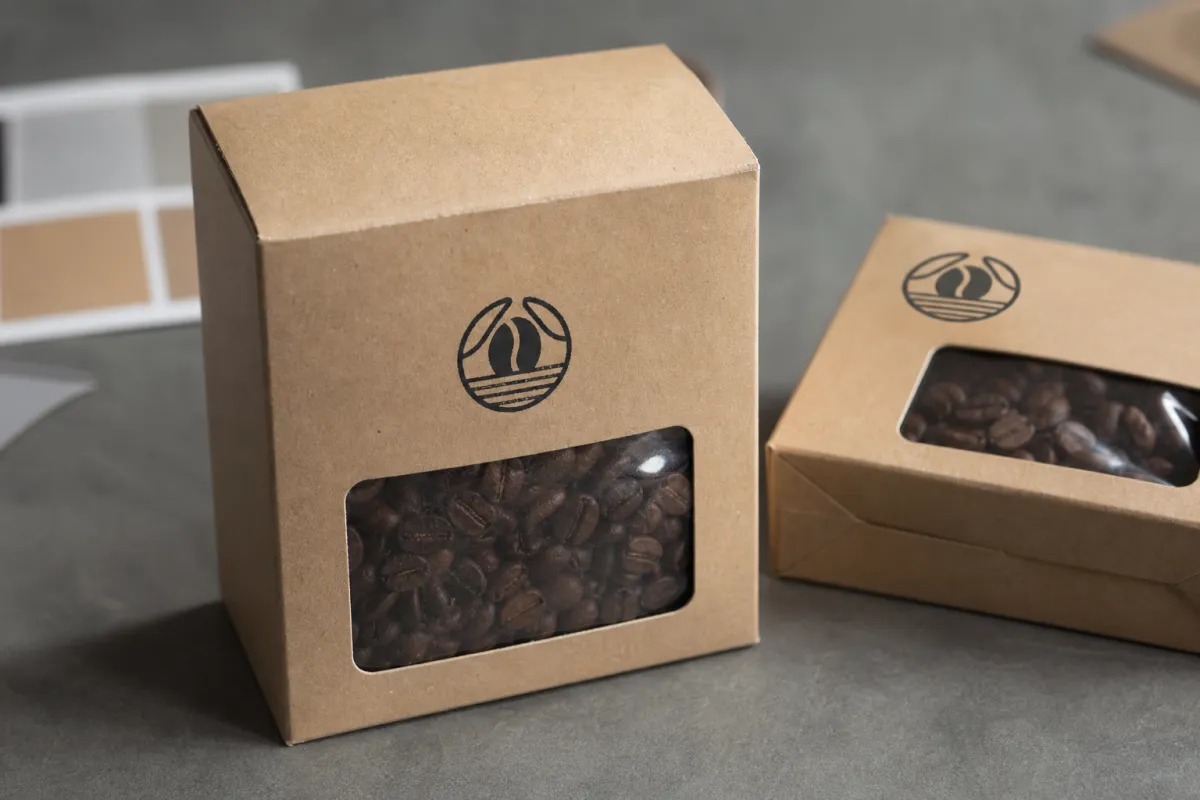
The coffee roaster window cartons print proof checklist starts with a plain fact: a proof is a model of the job, not the job itself. On a monitor, the window may look centered. On the dieline, the math may be correct. After folding, gluing, and packing, the opening can drift just enough to make the bag look oddly placed. “Close enough” is where packaging budgets go to die.
Coffee roaster cartons are hard on mistakes because they carry two jobs at once. They are a branding surface and a structural object. The printed panel has to tell the story of origin, roast level, and flavor, while the box still needs to fold properly and hold shape in shipping. If the proof does not reflect real panel dimensions, the brand name can land too close to a score line, copy can wrap awkwardly, and the window can expose a seam or a half-hidden gusset. None of that reads as premium.
The business cost is usually larger than teams expect. A wrong finish, an off-center window, or a typo in origin copy can trigger a reprint, which hurts enough. The bigger hit is time. When a launch is tied to a roast date, a retailer reset, or a distributor booking, the calendar does not care that marketing forgot to check the panel order. Even a small error can turn into a chain reaction: more review time, more freight, more handling, more missed shelf time.
A good coffee roaster window cartons print proof checklist does three jobs at once: it protects print quality, protects structure, and protects the launch schedule. That means checking whether the proof reflects the exact carton size, whether the window placement matches the real bag or product, and whether the artwork still reads cleanly after die-cutting, folding, and finishing.
Another detail gets missed more often than it should: a proof is also a manufacturing sign-off. The supplier uses it to confirm the dieline, color targets, board selection, window film choice, and finishing method before a factory commits material. A mistake here can ripple into offset setup, digital proofing, or flexographic adjustments depending on the run type. The coffee roaster window cartons print proof checklist matters because it turns a visual check into a production control point.
From a buyer’s perspective, the best proof answers the annoying questions before anyone reaches for the approval stamp. Where does the glue flap land? Does the window show enough of the bag? Is the barcode far enough from the fold? Is the roast-level copy readable at arm’s length? If the proof leaves those unanswered, you are kinda guessing with production money.
How the print proof process and timeline work for coffee roaster window cartons
The usual proof sequence is dull, which is exactly what you want. Final artwork goes to the supplier, the dieline proof gets built, prepress checks technical issues, and then you review a digital or physical sample before approval. The coffee roaster window cartons print proof checklist belongs in the middle of that flow, not at the end when people are tired and too polite to raise concerns.
Mockup, digital proof, and production proof are not interchangeable. A mockup is mostly for concept and shelf presence. A digital proof checks layout, copy, and approximate color. A production proof, or hardcopy sample, starts showing how board, window placement, and finish behave in real conditions. Approving only a mockup is a bit like judging a car by the brochure and assuming the brakes will sort themselves out later.
Turnaround depends on the change set. Simple proof corrections can move in one to two business days. Structural changes, finish changes, or barcode corrections often add another round. If the carton runs through offset printing on a larger order or digital printing on a smaller one, the proof path may shift because the color and finishing workflow shifts with it. The coffee roaster window cartons print proof checklist should reflect that reality instead of pretending every supplier follows the same playbook.
Most delays come from ordinary confusion, not drama. Someone is still waiting on final copy. Another person has not confirmed Pantone targets. Marketing is arguing over a logo move. Operations wants a larger window, while the dieline still shows the older one. None of that is glamorous. It is just slow, and slow becomes expensive once production slots are booked.
Lead time pressure changes how the proof conversation works. If the launch date is fixed, treat the proof stage like a gate instead of a suggestion. Once plates, cutting rules, board inventory, and finishing setup are scheduled, the supplier has very little room to absorb late revisions. Packaging.org has a useful set of packaging references if your team wants a neutral check on how packaging decisions affect production flow: packaging.org.
The practical rule is simple. If the proof is unclear on structure, artwork, or finishing, do not rush it. One extra review usually costs less than a missed launch, a carton reprint, or a product that lands on shelf looking unfinished. That is exactly why the coffee roaster window cartons print proof checklist exists.
Key factors to check before approving the window carton proof
Start with artwork placement. The logo, roast level, origin notes, and flavor callouts need to survive the fold. A proof can feel balanced on a flat screen and still become cramped once a score line cuts through a key area. The coffee roaster window cartons print proof checklist should always include a panel-by-panel review, not just a quick look at the front.
Then check the window against the product. The opening should reveal the bag or inner pack in a way that supports the story. That means intentional visibility, not a random sliver of foil seam and a hint of pouch. If the bag fill level is low, the window can expose too much dead space. If it is high, the reveal may hide the cue you actually wanted customers to see. That tradeoff matters more than most first-time buyers realize.
Structural details deserve real attention. Panel orientation, tuck direction, glue flap placement, and score lines all need to match the supplied dieline. If a side panel gets swapped, text can land upside down or face the wrong direction on shelf. The coffee roaster window cartons print proof checklist should catch that before production, not after someone opens the shipping case and realizes the carton reads like it was assembled during a power outage.
Print-specific details come next. Check color targets, bleed, background coverage, overprint behavior, and whether the chosen finish will change contrast. A matte lamination can soften a deep brown. A gloss varnish can deepen blacks but also make lighter copy feel less crisp. CMYK works well for many cartons, yet spot color is often better for brand-critical tones, especially when a coffee brand depends on a specific red, green, or charcoal that cannot drift.
Retail function should never be treated like an afterthought. Verify barcode placement and quiet zone, make sure the scan area is not too close to a fold, and confirm the front panel faces the shopper the way the retailer expects. If you use a hang tab, tamper-evident feature, or recycling mark, include those too. The coffee roaster window cartons print proof checklist is not only about looking good; it is about working on shelf and in the warehouse.
For sustainability-minded buyers, material claims need a careful read. If the board is FSC-certified or the carton is meant to communicate recyclability, verify the exact wording before sign-off. FSC is not a decorative acronym to toss on a box and hope nobody notices. For a cleaner reference on certification language and chain-of-custody basics, see fsc.org. A sloppy claim can do more damage than no claim at all.
One more thing: confirm whether the proof reflects the real board color, not a generic white mockup. I have seen kraft cartons approve beautifully on screen and then come off press with a much darker, dustier front than the team expected. On a premium coffee pack, that can change the whole mood from specialty to grocery aisle in one bad step.
Coffee Roaster Window Cartons Print Proof Checklist: Cost, MOQ, and quote traps
The coffee roaster window cartons print proof checklist is also a money tool. Every proof decision touches cost somewhere, even when the supplier does not say it out loud. Carton size, board thickness, window film type, finish, number of colors, and sample requirements all affect the quote. Buyers often ask for “just a small tweak” after the proof, then act surprised when the number changes. Packaging math does not care about optimism.
MOQ matters because setup costs ignore wishful thinking. A low minimum order can look attractive, but unit cost often climbs fast when the run is too small to spread die-cutting, press setup, and finishing across enough cartons. For coffee roaster cartons, the economics usually improve once runs move beyond tiny hobby quantities and into a few thousand units. Exact pricing depends on board, print coverage, and finish, yet the pattern stays consistent: the smaller the run, the more you pay per unit.
Here is where buyers get trapped. They approve the proof, then decide the dieline needs to be wider, the window needs to move, and the finish should be soft-touch instead of matte. That is not a minor tweak. That is a new setup. The coffee roaster window cartons print proof checklist should force those decisions early, because the quote gets rewritten the moment the structure or finishing changes.
| Proof option | Typical cost | Typical turnaround | Best for |
|---|---|---|---|
| Digital proof | $0-$30 | 1-2 business days | Layout, copy, barcode placement, preliminary color review |
| Hardcopy / production sample | $35-$120 | 3-7 business days | Window placement, board feel, fold behavior, shelf appearance |
| Preproduction proof with finishing | $60-$250+ | 5-10 business days | Final approval before mass run, finish validation, retail realism |
Those figures are not universal. They move with supplier, region, quantity, board grade, and whether you need a special proof with print finishing. The pattern still helps: the closer the proof gets to the final carton, the more it costs, and the more problems it can prevent. That is still cheaper than a reprint, which is where the real pain lives.
When you Request a Quote, make sure the supplier separates the moving parts. Ask for artwork revisions, proof rounds, tooling, sample charges, shipping, and reorder pricing as distinct lines. Otherwise you get one vague number and a trail of excuses later. The coffee roaster window cartons print proof checklist should help you ask better quote questions, not just prettier design questions.
One practical rule helps here: if the carton includes a custom window shape, custom insert, or special board, get clarity on tooling before you approve. A die change or film change can add cost even when the printed artwork stays the same. Buyers sometimes focus too hard on print price and ignore structure cost. That is backwards. Structure is what keeps the carton from looking cheap after the artwork is already paid for.
And yes, suppliers sometimes bundle these charges in a way that looks tidy but hides the real driver. That is fine if you are comparing like with like. It is not fine if one quote includes a hardcopy sample, a different coating, and a slightly larger window while another does not. Apples-to-apples is the only comparison that actually tells you anything.
Step-by-step proof review for a clean approval
Use the dieline overlay first. Confirm that all folds, cuts, glue areas, and panels match the artwork file. Check whether anything important sits too close to a score line, because a logo or flavor callout that looks safe in Illustrator can end up clipped by the pressure of a fold. The coffee roaster window cartons print proof checklist should make this step non-negotiable.
Then review the front panel as a shopper would. A carton that only reads well from ten inches away is not doing its job. Shelf distance matters. The brand name, roast level, and hero message should be readable in a second or less. If the copy takes effort, it is already losing. In practice, the first three seconds decide whether the carton feels clear or cluttered.
Next, inspect the window like a skeptic. Compare the opening size, shape, and offset against the actual product or mockup. Does the reveal feel intentional? Does it show enough of the bag to feel premium without exposing a sloppy fill line? The coffee roaster window cartons print proof checklist should make you ask whether the window supports the story, or just exists because someone thinks window cartons sell better. That is not a strategy. That is a guess with a price tag.
After that, look at the back and side panels. Ingredients, origin story, prep notes, legal copy, and recycling language tend to get squeezed by the front design. That is how important text ends up in a small space with poor contrast. A good proof review catches this before printing, not after a customer sends a photo and asks why the pour-over instructions require a magnifying glass.
Finally, do a production preflight. Check image resolution, color mode, embedded fonts, bleed, barcode contrast, and finish approval. CMYK should be intentional, not accidental. Spot color should be specified where brand consistency matters. If your carton depends on a rich black, ask how the black is built and how it will behave under coating or lamination. The coffee roaster window cartons print proof checklist works best when it includes the boring technical details that nobody wants to explain later.
A proof that looks fine on a laptop can still fail on the shelf. If the window, folds, and copy do not work together, the carton will announce that mistake before the customer ever tastes the coffee.
One habit I have seen save teams money is printing the proof, not just viewing it. A paper proof on a desk exposes spacing issues that disappear on a backlit screen. It is a small move, but it catches the annoying stuff: an odd line break, a window edge that feels too aggressive, or a barcode that looks safe until you hold it at arm’s length.
Common mistakes that cause reprints, delays, and bad shelf presentation
The classic mistake is trusting a screen proof too much. Monitors lie by omission. They make colors look stable, then the actual carton lands with a warmer gray, a duller black, or a logo that loses punch under finish. Digital printing, offset printing, and flexographic printing all behave differently, so the proof needs to reflect the method being used. The coffee roaster window cartons print proof checklist should always ask, “Proof for which process?”
Window placement errors cause another common disaster. Even a few millimeters can change the entire feel of the carton once it is assembled. Too high, and the product looks cramped. Too low, and the front looks empty. Too far left or right, and the whole pack feels off-center. Small shift, big annoyance. It is the packaging version of a crooked picture frame in a room that otherwise looks put together.
Finish and substrate mismatches cause more trouble than buyers expect. Kraft board, white board, matte lamination, soft-touch coating, and varnish all change perceived color and contrast. A design that looks elegant on coated white board can look muddy on kraft. That is not the supplier being difficult. That is physics. The coffee roaster window cartons print proof checklist should match the design intent to the actual board, not the imaginary one in the mood board.
Content mistakes are the trust killers. Wrong roast description, stale origin information, incorrect net weight, incorrect product name, or a barcode that will not scan properly are all avoidable if the right people review the proof. A typo in a flavor note may seem small until it sits on 20,000 cartons in a retail environment. Then it is no longer small. It is inventory with a spelling problem.
The last mistake is process-related: approving the proof before all customer-facing claims are final. Marketing may still be polishing the copy. Operations may still be checking the bag size. Regulatory may still want a wording tweak. If the proof gets approved too early, every later change becomes a revision charge or a delay. The coffee roaster window cartons print proof checklist should force internal alignment before sign-off, not after.
There is also a shelf presentation issue that buyers do not discuss enough. A carton can be technically correct and still look tired because the window is too small, the copy hierarchy is weak, or the finish fights the brand. Proof review should include a retail lens, not just a production lens. If the carton does not look intentional from three feet away, the shelf will not forgive it.
That visual check matters even more in coffee than in many other categories because the box is usually competing with a dozen other brown or black cartons that all claim craftsmanship. If your pack blends into the line, customers stop reading before they start comparing origins. A cleaner proof can literally change which box gets picked up first.
What to do next after the proof passes
Once the proof passes, save everything in one shared folder: the approved proof, the final artwork, the dieline, and any email confirmations that changed the spec. This sounds obvious until three departments are working from three different versions and nobody can remember which file was actually approved. The coffee roaster window cartons print proof checklist does not stop at approval; it also protects version control.
Send the supplier a written approval that repeats the exact carton spec, finish, window size, quantity, and ship date. Do not assume anyone will remember the details just because the conversation happened in chat or on a call. Packaging projects mutate quietly. A precise approval note keeps the job from drifting.
If the launch matters, order one physical reference sample or preproduction sample before the full run. That is the least expensive way to catch assembly quirks and shelf-fit issues. It will not solve every problem, yet it will catch the irritating ones: the bag sits too high, the tuck is stiff, the carton crushes in transit, or the window reveals more emptiness than expected. The coffee roaster window cartons print proof checklist gets stronger when a physical sample confirms the digital approval.
Then check the operational side. Confirm freight timing, carton storage space, bag size compatibility, and whether the finished pack still works in your fulfillment workflow. A carton that looks perfect in prepress can still become a nuisance if it stacks badly, tears during packing, or takes too long to assemble. Pretty packaging that slows the line is not a win. It is just expensive decoration.
For repeat orders, use the same checklist again. Every reorder is where lazy assumptions sneak back in. Someone says, “We already did this last time,” and then the board grade changes, the window shifts, or the printer updates a finish. The coffee roaster window cartons print proof checklist is not a one-time form. It is the habit that keeps a decent pack from slipping into a bad one.
If you want a rough rule to live by, here it is: approve slowly, print once, and keep the approved proof as the source of truth. That is how you avoid the costly, dramatic, completely preventable reprint that nobody wants to explain to finance.
One final check before release: make sure the approved carton still matches the actual coffee bag or inner pack on the line. A proof can be technically perfect and still fail if the fill height changed, the bag film changed, or the insert was removed to save cost. The carton and the product have to behave like a pair, not strangers.
What should a coffee roaster window cartons print proof checklist include?
It should cover dieline fit, window size and placement, logo and roast-level placement, barcode legibility, finish, bleed, and final copy accuracy. It should also verify carton dimensions against the actual bag or product so the reveal looks intentional after folding and gluing. A strong coffee roaster window cartons print proof checklist also checks the shelf-facing side, because that is where customers judge the carton in about two seconds.
How many proof rounds do coffee roaster window cartons usually need?
Most straightforward jobs need one or two rounds if the artwork is ready and the dieline is already approved. If the structure, window placement, or finishing changes during review, expect extra rounds and a longer approval timeline. The coffee roaster window cartons print proof checklist helps reduce those rounds by catching the obvious issues before they multiply.
What affects the cost of coffee roaster window cartons proofs?
Cost usually moves with carton size, board type, finish, number of colors, window film choice, and whether you need a physical sample. Late artwork changes can add revision charges and push the job into a more expensive production setup. A detailed coffee roaster window cartons print proof checklist is cheaper than paying for a proof restart after the team notices a missed detail.
How long does the proof and approval process take?
A simple digital proof can move quickly, but detailed structural or print corrections often add days before final approval. If your launch has a fixed date, build in extra time for corrections, internal review, and supplier clarification. The coffee roaster window cartons print proof checklist should be part of the schedule, not something squeezed into the last hour before production.
Can I approve the proof if the window or color is slightly off?
You can, but you probably should not unless the difference is truly minor and documented, because small shifts become obvious on shelf. If the window hides the product or the color undermines the brand, ask for a revised proof before production starts. The coffee roaster window cartons print proof checklist is there to stop “close enough” from becoming “why did we approve that?”
Use the coffee roaster window cartons print proof checklist every time you approve a new carton or reorder an old one. The job is simple: catch the window shift, the fold-line problem, the copy error, the finish mismatch, and the barcode issue before they become expensive inventory. Check the proof against the real bag, the real shelf, and the real production method. If those three things line up, the carton will do its job quietly; if they do not, it will tell on itself the second it leaves the press.


