Coffee Roasters Kraft Paper Bags Small Batch Order
Coffee roasters Kraft Paper Bags small batch order decisions usually happen after the roast plan is already in motion, and that is exactly why they deserve attention early. A seasonal single-origin can go from green sample approval to shelf-ready inventory in a few weeks, while the bag design is still sitting in a designer's inbox. Packaging ends up becoming a cash-flow decision, a storage decision, and a brand decision all at once.
That timing mismatch is common. I have seen roasters approve a roast profile before they have settled the bag size, then scramble when the first production run fills slower than expected or the label copy changes at the last minute. The cost is not just the reprint. It is the awkward gap between what the coffee is doing and what the packaging can support.
Packaging often gets approved after the roast profile, yet it is the first thing a buyer sees at checkout, on a cafe shelf, or in a wholesale sample box. Too much inventory creates dead stock. Stale artwork creates confusion. A Coffee Roasters Kraft Paper Bags small batch order gives a roaster room to react without tying up money in boxes of bags that no longer fit the offer.
Kraft paper has another advantage: it reads as practical and specialty-focused without trying too hard. It can feel handmade without looking rough, premium without becoming precious. For roasters that rotate origins, roast levels, or seasonal blends, the right coffee roasters Kraft Paper Bags small batch order works like a sales asset, not a commodity container. It keeps the line recognizable across micro-lots, one-off blends, and repeat core SKUs.
A good bag does not rescue stale coffee, but a bad bag absolutely costs sales.
Coffee Roasters Kraft Paper Bags Small Batch Order: Why It Pays Off
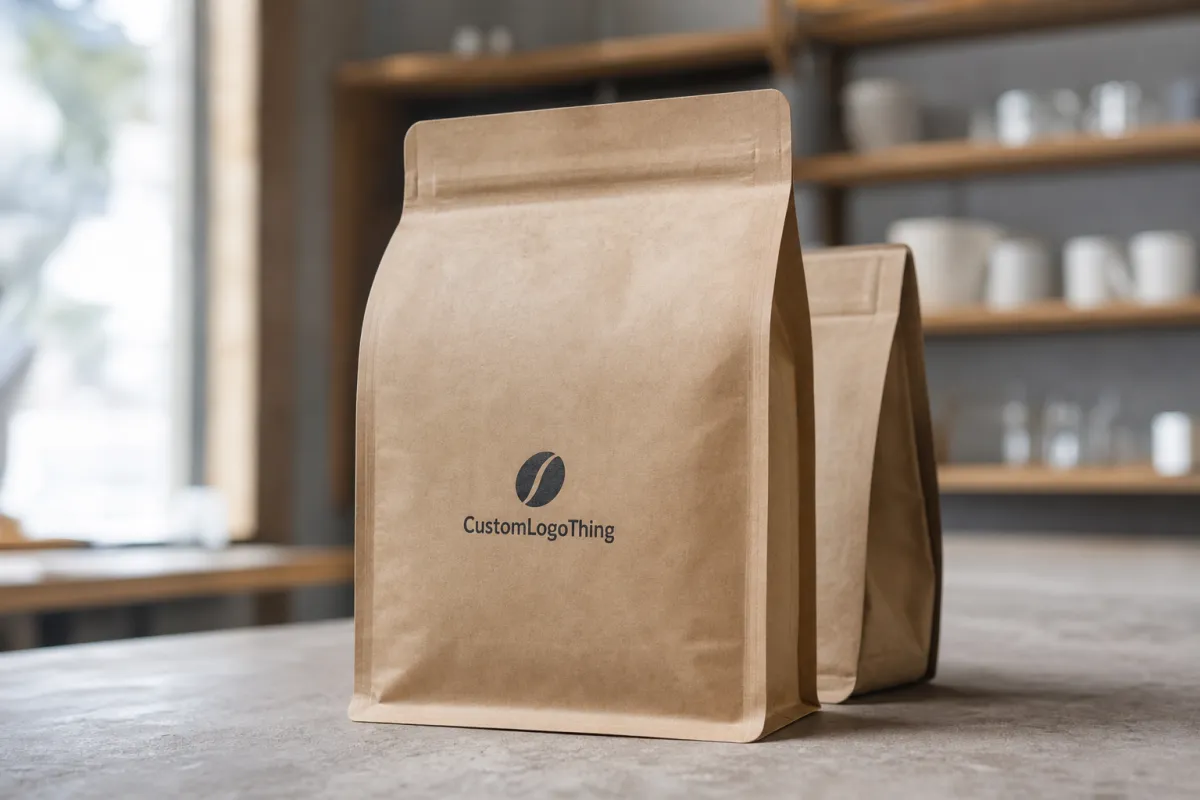
From a packaging buyer's point of view, coffee roasters kraft paper bags small batch order work because they reduce the cost of being wrong. A roaster launching a limited-edition lot does not want 10,000 printed bags sitting in storage while the roast changes every six weeks. That is not a theoretical problem. It is a very ordinary one. When a brand buys only what it needs, cash stays available for green coffee, labor, freight, and the next release.
The math usually supports that logic, even if the unit price looks higher on the first quote. Larger runs often reduce the per-bag price, but they also increase the risk of obsolescence, relabeling, and rush reprints. If a seasonal blend underperforms or a compliance note changes, the wasted spend can outweigh the savings from the bigger order. Coffee roasters kraft paper bags small batch order reduce that exposure in a way that is easy to measure after the fact.
There is also a branding reason to start small. Kraft paper signals specialty, restraint, and a kind of maker honesty that coffee buyers respond to quickly. A clean coffee roasters kraft paper bags small batch order can make a modest run feel intentional instead of improvised. Buyers do judge by packaging before they judge the roast. That is just how shelf behavior works.
Repeatability matters too. A roaster may test four micro-lots, then settle on two core blends and one seasonal rotation. A controlled coffee roasters kraft paper bags small batch order makes it easier to standardize size, closure, and artwork across those versions. That means less training for retail staff, simpler warehouse handling, and fewer reorder headaches later on.
- Less inventory pressure: Smaller buys keep cash available for coffee, labor, and freight.
- Lower obsolescence risk: Packaging can change with the roast calendar instead of forcing the roast calendar to bend around packaging.
- Better testing: New origins, limited releases, and seasonal labels can be trialed without overcommitting.
- Cleaner brand control: Coffee roasters kraft paper bags small batch order help keep print, size, and closure decisions consistent across a growing line.
In practice, the strongest roasters treat packaging like a working tool. They do not ask whether a coffee roasters kraft paper bags small batch order is cheap enough in a vacuum. They ask whether it supports the next four to eight weeks of sales, then whether it can scale cleanly if the blend earns a reorder. That mindset saves more money than chasing the lowest sticker price ever will.
Product Details for Coffee Roasters Kraft Paper Bags Small Batch Order
Coffee roasters kraft paper bags small batch order usually start with one of four formats: flat bottom pouches, gusseted kraft bags, stand-up pouches, or zipper closures designed for retail shelves. Structure matters more than most buyers expect. A flat bottom pouch gives a polished shelf profile and strong front-panel visibility. A gusseted bag is often simpler, lighter, and less expensive. The right pick depends on how the coffee is sold, stored, and handled after it leaves the roastery.
Finish and feel shape the first impression. Natural kraft texture gives the bag a grounded, tactile look, while matte printing or soft-touch accents can lift perceived value without making the package feel glossy or overworked. Window placement is useful when the roaster wants to show beans or let the liner color do some visual work. Used well, these details keep coffee roasters kraft paper bags small batch order from looking generic. Used badly, they just add noise.
Functional features do the heavy lifting. A degassing valve helps fresh-roasted coffee release gas after packing. A resealable zipper improves shelf convenience for retail customers. Tear notches make opening easier. Heat-seal compatibility protects freshness. Tin ties still have a place in some formats, especially for smaller retail bags or in-store refill displays. These are not decorative extras. They are part of how the coffee roasters kraft paper bags small batch order perform in real use.
Print method changes the whole feel of the package. One-color branding usually creates a restrained, specialty-roast look, while multiple colors can push the bag toward a more premium retail presentation. Neither is automatically better. A coffee roasters kraft paper bags small batch order with one well-placed mark can feel more credible than an overdesigned bag that tries to shout over the coffee itself. Clarity usually sells better than clutter. Pretty simple, really.
Common bag structures
Flat bottom pouches are a strong choice when shelf presentation matters and the bag needs to stand upright with clean panel visibility. Gusseted kraft bags are often the most economical way to enter a coffee roasters kraft paper bags small batch order without losing the natural paper look. Stand-up pouches sit between the two, especially when the goal is retail display plus practical resealability. Each one solves a different problem. The trick is to choose the one that matches the route to market, not the one that sounds best in a sales deck.
Features roasters actually use
Valves, zippers, tear notches, and heat seals should be chosen for workflow, not trend. If the roastery fills on a small line, a simple top seal may be enough. If the bags are heading to retail shelves or ecommerce, the added convenience of a zipper is easier to justify. Coffee roasters kraft paper bags small batch order should match the packaging team's handling speed as much as the brand story. Otherwise the bag looks great and slows everything down, which is its own kind of expensive.
Print and finish choices
Simple one-color print is often enough for a small batch launch, especially when the kraft background is doing most of the visual work. More complex artwork makes sense if the brand is aiming for a premium gift shelf or a broader wholesale presentation. The key is balance. Coffee roasters kraft paper bags small batch order work best when the finish supports the roast instead of competing with it.
Specifications That Matter for Coffee Roasters
If the goal is a clean coffee roasters kraft paper bags small batch order, the first spec decisions should be made before artwork starts. Bag size, fill weight, closure type, barrier level, valve placement, and print count affect almost every other line item. When those choices are left vague, the quote gets fuzzy and the production schedule starts slipping. Clear specs are faster for everyone, and they reduce the kind of back-and-forth that eats half a workweek.
Bag size should follow the coffee format, not the packaging preference. A roaster selling 8 oz retail bags needs different dimensions than a business using 12 oz or 1 lb bags for wholesale. Sample sizes are another category altogether, especially for cupping kits or outreach packets. If the packaging is wrong, fill speed suffers and the shelf footprint looks off. A coffee roasters kraft paper bags small batch order works best when size is tied to actual use.
Barrier selection deserves plain language. Standard kraft paper can work for short shelf life or quick turnover. Enhanced barrier structures are more appropriate when oxygen protection matters more, and specialty liners support longer freshness windows. It is also worth being honest here: not every bag that looks like kraft paper is fully biodegradable. Valves, zippers, films, and laminations change the end-of-life story. If a brand wants biodegradable packaging, it should ask about the entire structure, not just the outer look.
Artwork files need the same discipline as the packaging spec. A proper dieline, bleed, safe area, color count, and print method should be approved before the proof stage. If a barcode, roast-date panel, or compliance text is required, it should be built into the layout early. For sourcing standards, a brand that needs FSC certified paper should ask for documentation and not just a verbal assurance. The reference point is clear at fsc.org.
Food safety and usability matter as well. The bag should support a reliable seal, readable date coding, and clean barcode placement if the product moves through retail systems. If the customer experience depends on a quick open-and-reseal process, zipper quality becomes part of the spec, not an afterthought. That is the practical side of a coffee roasters kraft paper bags small batch order: the details touch operations, not just design.
- Size: 8 oz, 12 oz, 1 lb, or sample format.
- Barrier: standard kraft, enhanced oxygen barrier, or specialty liner.
- Closure: heat seal, zipper, tin tie, or none for short-run applications.
- Artwork: dieline, bleed, color count, logo placement, and barcode zones.
- Compliance: food-safe construction, seal integrity, and readable roast-date area.
One practical note: if your brand story includes recycled materials or post-consumer waste content, ask how that claim is supported in the bag structure and outer carton. Recycled content in kraft paper is useful, but the claim needs to be accurate. The shipping carton is usually corrugated cardboard, and that matters too because the full packaging system should be easy to handle and easy to recycle where local programs allow. Claims should match reality, not marketing mood.
Cost, Pricing, and MOQ for Coffee Roasters Kraft Paper Bags
Coffee roasters kraft paper bags small batch order pricing is driven by quantity, size, print coverage, barrier materials, zipper or valve add-ons, and shipping destination. The bag itself is only one part of the landed cost. Freight, freight class, carton counts, and any sample or tooling charges can shift the final number enough that a lower unit price is not actually the better deal.
MOQ behavior is straightforward, even if vendors describe it in three different ways. Lower quantities usually carry a higher unit cost because setup time gets spread across fewer pieces. Repeat orders often improve pricing because the production line is already set up and the art is already approved. That is why a coffee roasters kraft paper bags small batch order can be a smart first move, even if the eventual plan is to scale.
Buyers should always ask for the charges that sit behind the quote. Tooling, plates, custom color matching, sample production, and freight are the usual suspects. If a quote seems unusually low, check whether it includes the exact bag structure, the right barrier, and the correct closure. Comparing unit price alone is how buyers get surprised later. A better comparison is the landed cost for a coffee roasters kraft paper bags small batch order at the quantity the roaster can actually sell.
The economics often make sense even when the unit price is not the lowest available. A slightly higher per-bag price can still be cheaper than throwing away 8,000 obsolete bags after a label change or roast update. I have seen that tradeoff swing in favor of the smaller order more often than brands expect. Coffee roasters kraft paper bags small batch order are about reducing risk, not chasing the absolute lowest sticker price. If the budget is tight, that distinction is everything.
| Bag style | Typical MOQ | Typical unit price range | Best use case |
|---|---|---|---|
| Gusseted kraft bag | 500-1,000 pieces | $0.16-$0.35 | Simple branding, lower setup, quick turnover |
| Stand-up kraft pouch with valve | 1,000-3,000 pieces | $0.24-$0.62 | Retail shelves, resealability, fresh-roast performance |
| Flat bottom kraft pouch | 1,000-5,000 pieces | $0.35-$0.85 | Premium shelf presence and stronger front-panel branding |
| Kraft window bag | 1,000-3,000 pieces | +$0.03-$0.08 over opaque versions | Visual merchandising and bean visibility |
That table is not a promise. It is a practical starting point. Small batch numbers move with print coverage, bag dimensions, closure type, carton count, and shipping method. If the shipment is going into multiple cartons or palletized freight, the outer pack spec matters too. For transit expectations, ISTA is a useful reference because packaging that survives production still has to survive the route to the roastery or warehouse.
If you are comparing options, ask for three things in writing: unit cost, total landed cost, and the lead time from proof approval. That keeps the coffee roasters kraft paper bags small batch order comparison honest. It also makes it much easier to compare a 1,000-piece test run against a 3,000-piece reorder without guessing where the break point really is.
Process and Timeline for Coffee Roasters Kraft Paper Bags Small Batch Order
The cleanest coffee roasters kraft paper bags small batch order process starts with a simple sequence: inquiry, spec review, artwork submission, proof approval, production, inspection, and shipment. That sounds basic because it is. Most delays come from unclear specs, not from the factory being mysterious. If the buyer gives one complete brief, the rest of the workflow gets much easier to manage.
Simple printed or lightly printed orders usually move faster than multi-color custom runs with specialty finishes. A straightforward job may move in roughly 12-15 business days after proof approval, while a more complex bag can need 18-25 business days or more depending on materials and queue position. Those are planning ranges, not guarantees, but they are useful when a launch date is fixed. Coffee roasters kraft paper bags small batch order should be scheduled before the roast calendar gets tight. Waiting until the last week is how teams end up paying for expedite fees and calling it "emergency planning."
What slows a job down most often? Missing dielines, late art revisions, unclear bleed, and changes after proof sign-off. A bag that keeps changing color count or panel layout is a bag that keeps moving in the queue. Lock the size early, confirm the quantity before proofing, and approve one clean version instead of revisiting the design in rounds. That is how coffee roasters kraft paper bags small batch order stay on schedule.
There is also the delivery side. If the order is headed into a retail launch, a trade show, or a wholesale rollout, give yourself enough time to receive the packaging, fill it, and buffer for one unexpected production hiccup. Outer packing should be specified too, especially if the product will move through corrugated cardboard cartons on pallets. A coffee roasters kraft paper bags small batch order is not finished when the proof is signed; it is finished when the bags arrive usable and on time.
- Review the needs: Bag size, fill weight, barrier target, and closure type.
- Confirm artwork: Dieline, bleed, fonts, logos, and color count.
- Approve the proof: Check copy, dimensions, barcode placement, and finish notes.
- Build the schedule: Allow time for production, inspection, and freight.
One more practical point: if the shipment needs to travel a long distance or pass through multiple handoffs, ask about carton strength and pallet build. A packaging system that looks perfect in the plant can still arrive damaged if the outer shipper is weak. That is where transit testing matters, and the coffee roasters kraft paper bags small batch order should be evaluated as part of a larger shipping system, not as a standalone object.
For buyers who want a broader ordering checklist, our FAQ covers the usual questions, and our Wholesale Programs page is helpful when a small test run is likely to become a repeat purchase. The point is not to push volume too early; the point is to make the next reorder easier than the first one.
Why Choose Us for Coffee Roasters Kraft Paper Bags
Custom Logo Things is built for practical buyers, so coffee roasters kraft paper bags small batch order requests are handled with the same discipline as larger packaging programs. That matters because many roasters do not need a giant commitment on day one; they need a usable quote, a clear spec, and a bag that can be reordered without reworking the whole structure. Modest runs should be supported, not treated like a hassle.
We keep the conversation focused on the variables that actually move the project: size, closure, barrier, print method, and quantity. That makes it easier to compare options without getting lost in vague packaging language. If the coffee roasters kraft paper bags small batch order is for retail, wholesale, or sampling, the recommendation should reflect that use case rather than a generic product pitch.
Repeat consistency matters too. The same kraft tone, the same print alignment, and the same closure setup across reorder cycles help a brand scale without confusing customers or staff. A roaster that starts with a small batch today may be buying larger lots later, and the best packaging relationship is the one that makes that transition boring in the best possible way. Coffee roasters kraft paper bags small batch order should be easy to repeat. That sounds dull, but dull is often what keeps operations profitable.
There is also value in straightforward service. Fast answers on materials, barrier choices, and MOQ tradeoffs save more time than any slogan ever will. A clear, practical response helps buyers decide whether to prioritize shelf presentation, freshness, or price. That is the point of a good coffee roasters kraft paper bags small batch order partner: less back-and-forth, fewer surprises, and a better fit between the bag and the business.
- Clear quoting: Unit cost, landed cost, and production timing are presented in plain terms.
- Spec discipline: Dielines, panel requirements, and closure choices are reviewed early.
- Repeatability: Reorders are easier when the first run is documented properly.
- Practical support: Materials, recycled materials, FSC certified options, and packaging tradeoffs are explained without fluff.
That last point matters more than it sounds. A small roaster may only place one coffee roasters kraft paper bags small batch order this season, but the packaging choice can shape how quickly the brand expands into wholesale accounts, sampler kits, and new retail channels. It is not just a bag. It is part of the growth model. And if the first version is designed well, the second order gets a lot less painful.
Next Steps for Your Coffee Roasters Kraft Paper Bags Small Batch Order
The easiest way to move a coffee roasters kraft paper bags small batch order forward is to gather the essentials before asking for a quote. Start with bag size, fill weight, closure style, print colors, and whether the order is for retail, wholesale, or samples. That small checklist removes most of the guesswork and makes pricing more accurate from the start.
Before sending artwork, compare the current files against the dieline. If a logo sits too close to the seal area or a barcode is floating outside the safe zone, the quote will not reflect the real production setup. A clean file check saves time and prevents a quote from turning into a revision exercise. The better the setup, the cleaner the coffee roasters kraft paper bags small batch order becomes.
If you can, request two quotes: one at the target MOQ and one at a slightly larger quantity. That shows where the per-bag savings begin and whether the extra inventory is actually worth the lower unit cost. You may find that the price move is small, which strengthens the case for staying lean. Or you may find a meaningful break point. Either way, the decision is based on numbers, not guesswork.
Match the delivery window to the coffee calendar. Seasonal drops, trade-show deadlines, cafe rollouts, and wholesale promotions all create pressure on freight and fill schedules. A coffee roasters kraft paper bags small batch order should arrive before the launch window, not after it. That sounds obvious, but late packaging is one of the fastest ways to turn a good roast into a delayed sell-through plan.
Once the specs are ready, send them over and ask for a quote built around the smallest order that still supports your launch. That is the most sensible way to buy packaging when roast profiles change, inventory space is limited, and every box in storage carries a cost. A well-planned coffee roasters kraft paper bags small batch order protects margin, keeps the brand flexible, and gives the coffee the best possible first impression. If you only do one thing next, lock the specs before chasing price; the right bag at the wrong size is still the wrong bag.
What is the minimum order for coffee roasters kraft paper bags in a small batch?
MOQ varies by bag size, print method, barrier structure, and add-ons such as valves or zippers. Unprinted or simply printed formats usually allow lower quantities than full custom multi-color runs. The cleanest comparison is to ask for the MOQ and the unit cost at two quantity levels so you can see the real break point for a coffee roasters kraft paper bags small batch order.
Can coffee roasters kraft paper bags small batch orders include valves and zippers?
Yes, many small runs can include both features if the bag structure supports them. Valves help with degassing after roast, while zippers improve retail convenience and repeated use. Confirm whether the chosen size has enough panel space and seal margin for both, because a coffee roasters kraft paper bags small batch order should be built around function first.
How long does a coffee roasters kraft paper bags small batch order usually take?
Turnaround depends on artwork readiness, proof approval speed, and production complexity. Simple jobs move faster; custom printed bags with special finishes take longer. It is smart to build in extra time if the bags must arrive before a seasonal launch or wholesale rollout, especially when a coffee roasters kraft paper bags small batch order is tied to a fixed roast schedule.
What artwork files are best for coffee roasters kraft paper bags small batch orders?
Vector files are preferred because they keep text and logos sharp at production scale. Use the correct dieline, confirm bleed, and keep key branding inside the safe area. Send brand colors, font files, and any barcode or roast-date panel requirements with the art so the coffee roasters kraft paper bags small batch order can be proofed without avoidable delays.
How can I lower unit cost on coffee roasters kraft paper bags without overbuying?
Standardize one or two bag sizes across your core SKUs, limit print colors, and skip unnecessary specialty finishes if the budget is tight. Ask for a second quote at a slightly larger quantity to see where the savings begin. That comparison often shows that the best coffee roasters kraft paper bags small batch order is not the absolute cheapest bag, but the one that balances cash flow, shelf impact, and reorder flexibility.

