Coffee Roasters Poly Mailers Unit Cost: Buy Smarter
Coffee Roasters Poly Mailers unit cost looks neat on a quote until a thin mailer splits on a corner, a sampler arrives scuffed, and the replacement shipment eats the margin you thought you had. A $0.14 mistake is never just $0.14 once a customer sees it, the team re-packs it, and freight has to move twice. The line item on the vendor sheet is only the first number. The real number shows up later, after freight, waste, and avoidable re-shipments have done their work.
Most roasters are not trying to build packaging theater. They need a mailer that fits lightweight coffee bags, keeps the seal intact, and still looks deliberate when the customer opens the box. Standard sizes usually do more for coffee roasters Poly Mailers Unit cost than a parade of one-off formats for every SKU. Fewer variables. Less scrap. Better bulk pricing. That is the plain, unglamorous math, and it is usually the version that protects profit.
I have seen this pattern over and over while reviewing packaging specs: the buyer chases a lower per-piece price, then discovers the warehouse is burning labor to sort odd sizes and the customer care team is answering the same complaint on repeat. It is kinda like buying the cheapest tire and then wondering why the alignment bill showed up later.
Why Coffee Roasters Poly Mailers Unit Cost Is Not the Real Cost
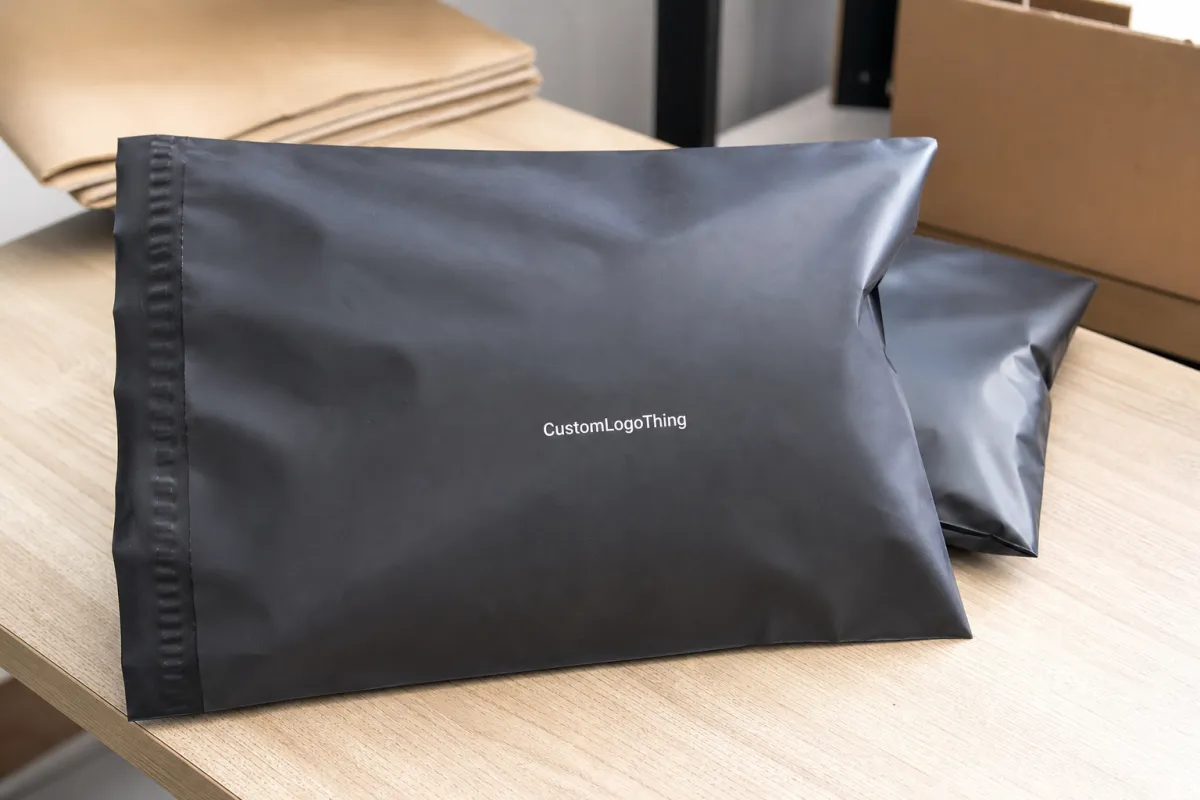
The cheapest quote often stops being the cheapest once the skipped pieces get added back in. A seam split, a damaged parcel, or a crushed 8 oz coffee bag can trigger a replacement order, a second freight charge, and a customer service headache that costs more than the original savings. Coffee roasters poly mailers unit cost only matters if the pack survives the route and still represents the brand well when it lands.
The better question is not "What is the cheapest bag?" It is "What is the lowest cost per piece that still protects the product, fits the shipping lane, and avoids ugly surprises?" That framing changes everything. Coffee roasters poly mailers unit cost should be judged against damage rate, rework, and order consistency. A lower sticker price with a higher failure rate is not a bargain. It is a future expense with a pretty quote attached.
In a small roastery I worked with, one broken seal turned into three separate costs: the replacement mailer, the extra outbound postage, and the time spent making the customer whole. The packaging line item looked tiny on paper. The repair bill did not. That is why the number on the quote can be misleading if it is treated like the whole story.
Coffee roasters use poly mailers for a few practical jobs:
- Lightweight bagged coffee, especially 4 oz, 8 oz, and 12 oz retail packs.
- Sampler packs and tasting kits that need a slim outer shipper.
- Merch add-ons like stickers, postcards, or small apparel items.
- Subscription orders that ship every month and need stable repeat pricing.
One of the fastest ways to inflate coffee roasters poly mailers unit cost is to order a different size for every format because the artwork changes or someone wants each SKU to feel new. That kind of fragmentation turns a simple buying problem into a replenishment puzzle. Standard sizes spread setup charges across more units, simplify reorders, and keep bulk pricing honest. A roaster with three well-chosen mailer sizes usually spends less than a roaster juggling six custom variations and a warehouse full of odd leftovers.
The brand side matters too. Poly mailers are not only a shipping shell. They are often the first branded surface a customer sees beyond the retail pouch. A mailer that arrives clean, flat, and well-fitted does its job quietly. A mailer that balloons, wrinkles, or looks too large for the product tells the customer the operation was guessed instead of designed. Guessing is expensive.
The cheapest mailer on paper is often the most expensive after one split seam and two reships.
That is why coffee roasters poly mailers unit cost should be measured as landed cost, not just factory price. Material, print, packaging, freight, and the cost of mistakes belong in the same calculation. Leave one out and the math starts flattering you for no reason.
What Coffee Roasters Poly Mailers Need To Do in Transit
A coffee mailer has a short job list, and it still fails when the spec is sloppy. It needs to resist moisture, stand up to abrasion, handle puncture risk, and protect the retail bag without wasting material. Coffee roasters poly mailers unit cost goes up when the mailer is overbuilt, and it also goes up when the mailer is underbuilt and triggers returns. The useful answer sits in the middle.
For 4 oz, 8 oz, and 12 oz coffee bags, the outer shipper does not need to be armored. It needs to be sized correctly. A pack that rattles inside the mailer shifts more, creases more, and puts more stress on the seams. A pack that is too tight bulges at the edges and creates pressure points. Poor fit is a cost problem wearing a sizing label.
Typical use cases include:
- 4 oz bags for samplers and gift packs that need a slim, neat presentation.
- 8 oz bags for core retail items where the mailer needs to stay flat and dependable.
- 12 oz bags for standard subscription and DTC shipments with a little more fill volume.
- Bundled orders with a bag plus a sticker sheet, postcard, or merch item.
- Sample kits that include multiple small packs in one outer mailer.
Plain stock poly mailers, Custom Printed Mailers, and higher-end finishes each solve a different problem. Plain stock is the lowest-cost option, and for some internal fulfillment runs it is enough. Custom printed mailers connect the shipper to the brand and help customers recognize the package before they open it. Thicker film, matte surfaces, and reinforced seals make sense when the parcel network is rough or the product mix is awkward. Those choices also push coffee roasters poly mailers unit cost upward, so there needs to be a real reason behind them.
Pretty print does not fix a bad pack. A flashy mailer that bulges or drifts around in transit still loses the order. It just makes the mistake more expensive to fix. Fit beats decoration. Every time.
For roasters sending subscriptions on repeat, the cleanest setup is usually a small set of standard mailer sizes matched to the actual packed dimensions of the coffee bag. That keeps inventory easier to manage and lowers coffee roasters poly mailers unit cost because the same spec gets ordered again and again. Predictability helps the price. Predictability helps the warehouse. Predictability helps the line keep moving.
If you want a broader look at packaging categories before you lock the mailer spec, our Custom Packaging Products page is a useful starting point. For a deeper look at mailer formats, the Custom Poly Mailers page shows the kinds of options that usually fit roaster shipments.
Specifications That Change Coffee Roasters Poly Mailers Unit Cost
This is the section where real savings either happen or vanish under the weight of fake savings. Coffee roasters poly mailers unit cost changes with film thickness, bag size, adhesive strength, seam construction, opacity, and print coverage. Those are not decorative details. They decide whether the mailer performs or burns money.
Film thickness is one of the clearest cost drivers. A typical range for coffee roaster mailers sits around 60-80 micron, or roughly 2.5-3.0 mil, depending on the format and the supplier. For lightweight single-bag shipments, 60-70 micron is often enough if the pack is tidy and the parcel lane is not abusive. Move to 80-100 micron only when the product is heavier, the corners are sharp, or the mailer needs better puncture resistance. Paying for thickness you do not need is a classic buyer tax.
Bag size matters more than most first-time buyers expect. The quoted size should be based on the packed coffee bag dimensions, not the label size on the retail pouch. Measure the actual sealed bag, including any gusset, zipper bulge, or folded closure. A mailer that looks perfect on paper can still be wrong once the bag is filled. Coffee roasters poly mailers unit cost stays lower when the dimensions are right the first time, because reorders and test iterations never get a chance to pile up.
Adhesive strength and seal construction are where cheap bags quietly fail. A weak peel-and-seal strip can open under heat or humidity. Stronger adhesive may add a little to the unit cost, but it usually beats the cost of complaints and replacement shipments. The same applies to seams. A straight, even seam sounds dull until a torn seam costs you the order and the review.
Opacity changes the price as well. Full concealment for branded coffee bags may require thicker film or heavier ink coverage. If the mailer only needs to protect the parcel and carry a simple logo, a lighter spec can work just fine. Ask what the bag actually needs to hide. Plenty of buyers ask for full opacity because it sounds premium, then pay for it even though the product inside is already in a printed retail pouch.
Print coverage is another direct lever. One-color logo printing is usually the least expensive route. Full-coverage graphics, edge-to-edge artwork, and multiple spot colors raise setup charges, ink usage, and production time. More ink does not automatically mean more brand value. It often just means more cost. That is how coffee roasters poly mailers unit cost creeps upward one unnecessary feature at a time.
| Option | Typical MOQ | Typical Cost Per Piece | Best For | Main Tradeoff |
|---|---|---|---|---|
| Plain stock mailer, 60-70 micron | 500-1,000 | $0.08-$0.16 | Test orders, internal fulfillment, low-volume SKUs | Little or no branding |
| Custom printed, 1 color, standard size | 1,000-3,000 | $0.15-$0.28 | Core roaster shipments with simple branding | Moderate setup charges |
| Custom size plus print, 2+ colors | 3,000-5,000 | $0.22-$0.38 | Higher-volume DTC orders and subscription packs | Higher tooling fees and artwork complexity |
| Heavy-duty or reinforced mailer | 3,000+ | $0.28-$0.45 | Fragile bundles, sharp corners, rough parcel lanes | Higher unit cost with limited need for some products |
That table is a working range, not a magic formula. Coffee roasters poly mailers unit cost still depends on print method, destination, freight mode, and how much artwork work is needed before production starts. The pattern is still clear: standard sizes and simpler print specs are cheaper. Custom dimensions and complicated finishes cost more. Not exactly surprising, but buyers still get caught by it every week.
The fastest sizing rule is simple. If the coffee bag already ships cleanly in a standard mailer, do not invent a new spec just to shave a millimeter. Standard stock sizes usually keep coffee roasters poly mailers unit cost lower because tooling fees are lower, the line runs faster, and the supplier is not building a special setup for you every time.
Custom dimensions only make sense when the standard bag wastes too much void space, the product shifts in transit, or the brand presentation suffers. Otherwise, the custom format is just a pricier version of the same outcome. Expensive versions of the same outcome are easy to sell and hard to defend later.
Coffee Roasters Poly Mailers Unit Cost: Pricing, MOQ, and Volume Breaks
Now for the part everyone asks about first and should probably ask about fifth. Coffee roasters poly mailers unit cost is shaped by the full cost stack: material, printing, setup charges, packaging, freight, duties, and any tooling fees tied to custom sizing or special features. A quote that hides those pieces is not cheaper. It is incomplete.
Material cost moves with thickness, resin quality, and whether the film is stock or custom. Printing cost moves with the number of colors, print coverage, and registration complexity. Setup charges cover the labor and machine work needed to get the run ready. Tooling fees show up when a custom size, special seal, or unique feature needs dedicated production work. None of this is mysterious. It just needs to be written down clearly, or buyers end up comparing apples to half-written quotes.
MOQ is the other big variable. Small runs carry a premium because the setup is spread across fewer units. Mid-size runs often hit the sweet spot where coffee roasters poly mailers unit cost starts dropping without forcing you to hold too much inventory. Higher volumes unlock the lowest cost per piece, but only if you can store and use the stock before it gets stale or damaged in the warehouse.
A simple way to compare quotes is to break them into landed cost bands:
- 500-1,000 units: best for tests and seasonal launches, but the unit cost is usually the highest.
- 1,500-3,000 units: often the first useful bulk pricing band for smaller roasters.
- 3,000-5,000 units: usually where coffee roasters poly mailers unit cost becomes noticeably more efficient.
- 10,000+ units: lowest cost per piece, but only sensible if usage is steady.
Do not let a low headline price distract you from expensive freight or oversized setup charges. Quotes can look excellent right up until shipping gets added, then the landed cost jumps enough to erase the difference. Compare the full order, not the factory number alone. If one quote is $0.04 cheaper per piece but adds $180 in freight and $120 in setup, the savings disappear quickly.
Bulk pricing should always be tested against the actual route to your warehouse. Ocean freight usually lowers unit cost on larger runs, while air freight can save time but raise the total cost in a hurry. On a small replenishment, air may be worth it. On a routine reorder, it often is not. Good buyers think in total landed cost, not just cost per piece.
For a rough feel, a roaster ordering 2,000 Custom Printed Mailers with a simple one-color design may see a very different coffee roasters poly mailers unit cost than a roaster ordering 10,000 units with the same size and artwork. The larger order usually wins on unit cost, but the cash tied up in inventory is also larger. That tradeoff is real. Ignore it and the accountant will remind you later.
If you want your quote to be useful, give the supplier the exact packed dimensions, the target MOQ, the print count, the finish, and the shipping destination. That short list cuts guesswork and lowers the chance of a wrong spec. It also makes the coffee roasters poly mailers unit cost easier to compare across options, which is the whole point.
Process and Lead Time: From Artwork To Shipment
Good packaging production is not complicated. It just punishes sloppy inputs. The normal workflow is spec confirmation, dieline review, artwork proof, sample approval, production, packing, and shipment. Coffee roasters poly mailers unit cost is part of that process, but timing matters just as much. A low price that misses your launch date is not a win.
Delays tend to happen in the same places every time: bad artwork files, unclear sizing, slow approvals, and last-minute spec changes. A supplier can only move as fast as the buyer approves. If the design team sends a logo in the wrong format and the production team waits three days for a size answer, lead time stretches and rush costs rise. Not glamorous. Very real.
Typical lead times look like this:
- Standard stock mailers: often 5-10 business days if inventory is ready.
- Simple custom printed runs: often 12-15 business days after proof approval.
- Custom size and print: often 15-25 business days, depending on setup.
- Complex jobs with special finishes: often 20-30 business days or more.
Rush schedules usually raise coffee roasters poly mailers unit cost because they squeeze production windows, increase labor pressure, and may force faster shipping. Air freight can shorten the schedule, but it can also wipe out the savings from the lower factory price. Ocean freight is usually kinder to the budget, though it asks for more planning. That is not really a packaging problem. It is a calendar problem wearing a freight bill.
If your roaster ships through parcel networks, ask whether the packaging has been checked against realistic transit stress. The ISTA testing framework is a good reference point for parcel simulation, drop testing, and distribution abuse. You do not need every mailer to go through a lab program, but you do need confidence that the pack can survive what carriers do to it. The packaging industry resource at packaging.org is also useful for general packaging guidance and material context.
The fastest way to shorten the quote cycle is to have these details ready before you ask:
- Packed coffee bag dimensions, not just pouch label size.
- Target quantity and preferred MOQ band.
- Number of print colors and approximate coverage.
- Mailer finish, thickness, and any special seal requirements.
- Shipping destination and preferred freight method.
- Artwork files in usable vector format.
- Your approval deadline and launch date.
That information helps the supplier quote the real job instead of guessing at it. It also keeps coffee roasters poly mailers unit cost tied to something meaningful, which is rarer than it should be.
Why Choose Us for Coffee Roasters Poly Mailers
Plenty of packaging sellers talk like every project is a miracle. It is not. The useful partner is the one who gives you a direct answer about fit, MOQ, and what you are actually paying for. At Custom Logo Things, the value is in accurate quoting, stable quality, and honest guidance on where coffee roasters poly mailers unit cost can come down without wrecking the spec.
That usually means matching the mailer to the actual shipment instead of the fantasy brief. If your product ships safely in a standard size, we will say so. If the print can be simplified without hurting the brand, we will say that too. Fewer custom variables usually means better bulk pricing, fewer setup charges, and less production friction. Strange how often that is the right answer.
Repeat orders matter in coffee. The same subscription box goes out every month, and the same retail pouch gets restocked again and again. That is where consistency saves money. Good proof checks, color control, and sample support reduce the risk of a bad run, and that keeps coffee roasters poly mailers unit cost stable across reorders. A stable spec is easier to plan, easier to store, and easier to price.
There is a tradeoff between flexibility and price. If you want a highly customized size, multiple print colors, and a specialty finish, expect a higher unit cost. If you can standardize around a cleaner spec, you usually get better pricing and faster production. That is not a slogan. It is basic manufacturing economics, the kind that keeps budgets from drifting into trouble.
If you need a packaging partner that treats the quote like a buying decision instead of a branding contest, that is the right model. Start with the product, the packed size, and the volume. Then build the quote around the real shipper, not the prettiest mockup.
Next Steps To Quote Coffee Roasters Poly Mailers
Before you request pricing, measure the packed coffee bag, decide the target quantity, and choose whether you want plain stock, lightly printed, or fully branded mailers. That three-part decision does most of the work. Coffee roasters poly mailers unit cost changes quickly across those options, so it helps to know which path you are actually buying.
Then pull together the details that make a quote usable: artwork files, preferred colors, the shipping destination, and the finish you want. If you already know your timing, mention it. Faster approval windows can change production strategy and freight method, which affects the final number. That is not a penalty. It is just the reality of moving freight and print work through a schedule.
Here is the comparison method I recommend:
- Ask for one quote at the lowest MOQ you would realistically accept.
- Ask for a second quote at a higher volume band to see where coffee roasters poly mailers unit cost drops.
- Compare landed cost, not just factory price.
- Check whether the lower price quietly removes a feature you actually need.
- Confirm that the packed dimensions still fit the mailer without stress.
That simple exercise usually exposes the real savings. Sometimes the cheapest path is a plain stock mailer with a clean label. Sometimes the better move is a Custom Printed Mailer that protects the brand and cuts down on secondary packaging. Either way, the choice should be based on fit, freight, and volume, not on a number that only works in a spreadsheet.
Coffee roasters poly mailers unit cost is not hard to understand once the spec is honest. Measure the packed product, compare MOQ bands, review setup charges, and ask what each extra feature actually buys you. Do that, and you will spend less time fixing avoidable mistakes and more time moving coffee.
Common Questions
What is a realistic coffee roasters poly mailers unit cost at small and larger MOQs?
Small MOQs usually sit in the higher cost band because setup charges and print work are spread across fewer pieces. For a plain stock mailer, the unit cost may land around $0.08-$0.16 at low quantities, while a custom printed run can move into the $0.15-$0.28 range or higher depending on size and freight. Once you move into larger volumes, coffee roasters poly mailers unit cost usually drops faster because the fixed costs get diluted. The landed number still matters more than the factory number, so compare shipping and setup before you decide.
Do coffee roasters poly mailers work for bagged coffee and sampler packs?
Yes, they work well for lightweight bagged coffee, sample sets, and bundled retail orders if the size is matched correctly. A 4 oz, 8 oz, or 12 oz coffee bag usually fits fine in the right mailer, but awkward shapes or very heavy packs may need a thicker film or a different packaging format. Coffee roasters poly mailers unit cost stays reasonable when the mailer is not oversized and the seal can close cleanly. A test pack is worth the effort. Guessing on dimensions is a fast way to pay twice.
How does print coverage affect coffee roasters poly mailers unit cost?
More print coverage usually means more setup time, more ink, and a higher cost per piece. A simple one-color logo is generally cheaper than full-coverage graphics or multi-color artwork. If price matters, keep the design clean and let the mailer shape do more of the visual work. Coffee roasters poly mailers unit cost rises quickly when the art requires extra passes or tighter registration, so simple artwork is often the smartest place to save money without making the package look cheap.
What do I need ready to get an accurate quote for coffee roasters poly mailers?
Have the packed bag dimensions, target quantity, print colors, finish, and delivery destination ready before you ask for pricing. Include whether you want plain stock, custom print, or a stronger adhesive or thicker film. If you know your launch date or replenishment window, say that too. Tight timelines can change freight and production decisions. Coffee roasters poly mailers unit cost is much easier to quote accurately when the supplier gets real inputs instead of a vague request for "something branded."
How long does production usually take after artwork approval?
Simple jobs with standard specs usually move faster than complex custom print orders. After proof approval, a basic custom run often takes around 12-15 business days, while custom size and print projects can take 15-25 business days or more depending on the exact spec. Shipping method matters too; air freight is faster but usually raises the total cost, while ocean freight is slower and kinder to the budget. If the schedule is tight, ask early whether the timing is worth the extra spend before the order is placed.
Measure the packed bag, compare at least two MOQ bands, and ask suppliers to quote landed cost instead of a loose factory number. If the mailer fits cleanly in a standard size, use it. If not, choose the smallest custom spec that protects the coffee, closes well, and keeps the shipment from rattling around like loose change. That is the practical path to a better coffee roasters poly mailers unit cost, and it is usually the one that saves the most money without making life harder in the warehouse.


