For buyers comparing toy retailer Poly Mailers Unit cost, the first mistake is treating the bag price as the whole story. The mailer itself is only one line in a larger chain that includes pick labor, inserts, labels, freight, and the waste created when a package is oversized for the product. A light plush in a compact mailer can move very cheaply. The same item in a corrugated carton with void fill may carry a much higher landed cost before it ever reaches the customer.
That is why experienced packaging teams compare poly mailers against the full shipment format, not just against another bag quote. A toy retailer needs to know whether a softer format protects margin, keeps pack-out moving, and still holds up to handling. For compact toys, blind-box items, accessory kits, and seasonal assortments, the bag often wins on speed. For dense or fragile products, the savings can vanish if the spec is too light.
The real decision is usually narrower than it sounds. Size, film gauge, closure type, print coverage, and MOQ do most of the work. Change one of those and the quote moves. Change three and the total cost can shift enough to alter the entire packing method.
Toy Retailer Poly Mailers Unit Cost: Where the Savings Start
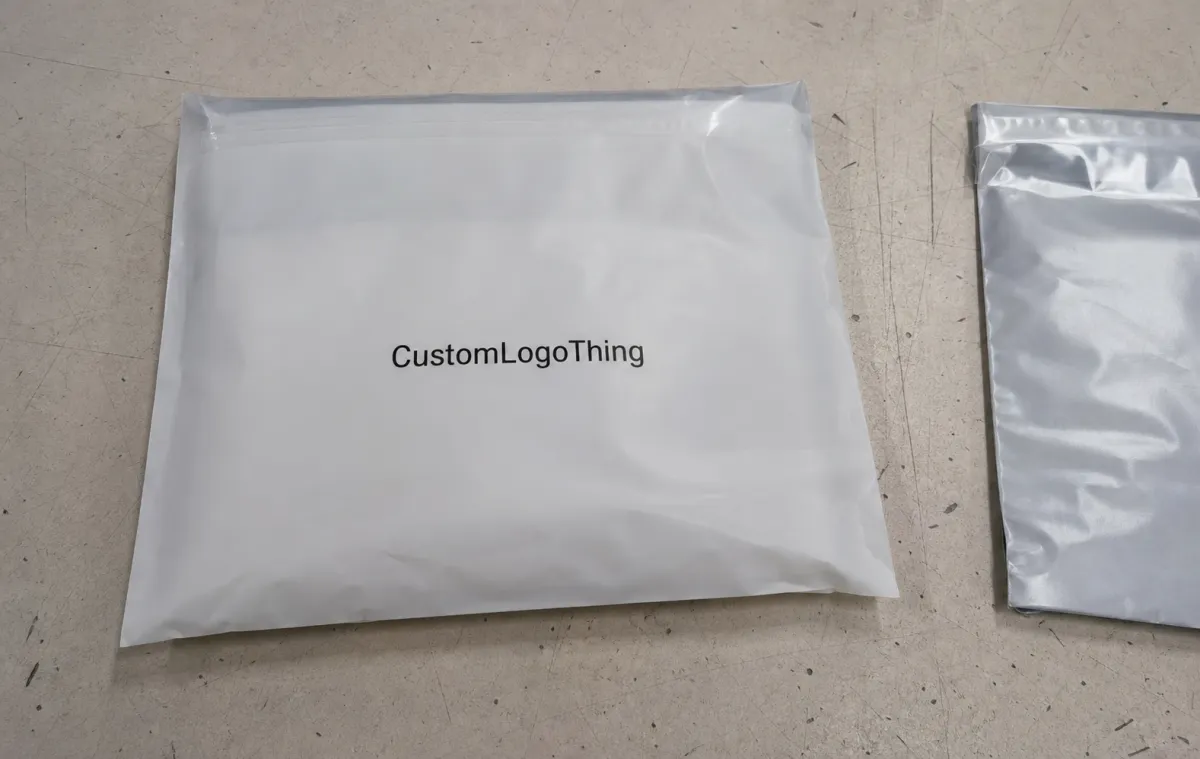
The savings start with weight and volume. Poly mailers do not ask for filler, heavy tape, or the cube that corrugated boxes require. That matters because toy retail programs often ship products that are irregular in shape but not especially fragile. Plush toys, small kits, and soft goods fit a flat package better than a rigid carton, and a flatter package usually means lower storage needs, simpler handling, and less freight pressure.
One overlooked gain is labor. A carton takes time to fold, tape, fill, and close. A mailer usually needs a product drop, a peel-and-seal flap, and a label. Multiply that difference across thousands of orders and the savings become visible in the labor report, not just on the purchasing sheet. A pack station that spends fewer seconds on each order also tends to stay steadier during seasonal peaks.
That does not mean every toy should ship in a mailer. Hard corners, protruding parts, batteries, and multi-piece sets can push the package beyond what a thin film should handle. The best cost outcome comes from matching the format to the product, not from choosing the cheapest substrate first and then hoping the product fits.
In practical terms, toy retailer Poly Mailers Unit cost is shaped by the whole system:
- Material use drops when the mailer is sized closely to the toy and any insert.
- Labor use drops when the closure is simple and the pack-out sequence stays consistent.
- Freight cost often falls because the shipment stays lighter and flatter.
- Storage cost improves because mailers stack densely and take less warehouse space.
There is a trap here. A very low quoted bag price can hide the wrong spec. If the mailer stretches, splits, or forces extra handling, the apparent savings disappear. Buyers should compare the bag against the cost of the entire order flow, not the invoice alone.
For many assortments, that means choosing the simplest film that still survives the route. For others, it means accepting a slightly higher unit price in exchange for fewer damages and less rework. The cheapest option is not always the most economical one. In packaging, that distinction matters more than the ad copy suggests.
Film Gauge, Size, and Closure Specs for Retail Toy Orders
Fit drives both cost and reliability. A mailer that is too large consumes extra film and looks loose at receiving. A mailer that is too tight can stress seams, compress corners, and create split edges during handling. For toy retail, the right dimensions should account for the product itself, any retail insert, and the space needed for a flat label area.
Film gauge is the next lever. For soft, light items, a 2.5 mil to 3 mil film is often enough if the seal quality is good and the contents have no sharp edges. Once the product includes hard plastic corners, batteries, rigid cards, or mixed-piece contents, buyers usually step up to 3 mil or 4 mil for better puncture resistance. The thicker film raises unit cost, but it can prevent expensive replacements later.
Closure design changes workflow. Peel-and-seal flaps are common because they keep pack-out quick and reduce dependence on tape. Tamper-evident closures add a little more security and a little more cost. Flap length also matters. Short flaps can fail under handling pressure; very long flaps add material without improving performance. Small details like that are easy to ignore until a production run starts moving through a warehouse.
Print finish is not just about appearance. Clear mailers help when the toy or internal packaging must be visible. Opaque films keep contents private and can make the outside look more polished. Printed mailers create stronger brand recognition, but they also bring proofing time and color control issues. Film does not behave like paperboard. Ink, glare, and image sharpness can shift on approval samples, so design teams should expect at least one round of checks before final release.
Before bulk approval, sample the bag and check three things: fit, seal strength, and scuff resistance. That review does not take long. It can prevent a costly order of bags that look fine on screen and fail after the first week in a warehouse.
Print and Branding Choices That Keep Pack-Out Fast
Branding should support the operation. The cleanest path for many toy programs is a stock or lightly branded mailer with a simple logo and a limited color count. That keeps setup under control and reduces the number of approval cycles. Full-coverage artwork can look stronger, especially for seasonal releases, but it usually adds prepress work and more room for color drift.
For short runs, a stock mailer plus a label is often more useful than a fully custom print. Labels can carry SKU data, barcode space, promo copy, return information, or age-related notes without changing the base bag. That flexibility matters when artwork changes often or when the retailer wants one mailer format across several toy lines.
The operational question is not whether the package looks attractive. It is whether the package can be assembled quickly and consistently. Clean file prep, one print location, and limited ink coverage usually reduce delays. If a supplier has to rebuild the art, resize the logo, or move warning copy at the last minute, production slows down and the quoted Toy Retailer Poly Mailers unit cost tends to rise.
A low print quote is useful only if the artwork is complete, the proof is accurate, and the run does not create rework on the packing floor.
There is also a practical brand limit. Toy shipments are not luxury packaging. A mailer needs enough visual identity to feel deliberate, but not so much decoration that it inflates setup cost or complicates receiving. Strong packaging for this category is usually restrained: a clear logo, consistent color, and information placed where it will survive transit.
When buyers compare print methods, the cleanest test is simple. Ask which option lowers labor, avoids reprints, and still keeps unit economics under control. The flashiest version is rarely the best one for a high-volume toy assortment.
Pricing, MOQ, and Unit Cost Breakpoints to Watch
MOQ matters because setup charges are spread across the run. That is why pricing often drops sharply at specific thresholds such as 3,000, 5,000, or 10,000 pieces. Those breakpoints vary by size, print method, and supplier, but the pattern is consistent: the larger the order, the easier it is for the factory to absorb setup and material prep.
Stock mailers and custom-printed mailers do not behave the same way. Stock bags often start lower because they skip print setup, while custom runs can carry plate charges, artwork prep, or tooling fees. None of those are hidden by nature. They simply need to be included in the comparison. A quote that ignores setup is not really a full quote.
A useful habit is to request pricing at three quantities instead of one. That reveals whether the price curve is meaningful or barely moving. It also makes freight sensitivity easier to see. A low ex-factory number can lose its advantage quickly once shipping is added, especially if the order is small or the timing is tight.
For Toy Retailer Poly Mailers unit cost, the practical bands often look like this:
| Option | Typical MOQ | Typical Unit Cost | Best Use Case | Cost Drivers |
|---|---|---|---|---|
| Stock poly mailers | Low to moderate | $0.12-$0.22 | Fast replenishment and unbranded shipments | Bag size, film gauge, freight |
| Lightly branded mailers | Moderate | $0.18-$0.32 | Logo presence with limited artwork | Setup charges, color count, proofing |
| Fully custom printed mailers | Higher | $0.25-$0.45 | Seasonal programs and strong brand presentation | Tooling fees, plate changes, print coverage |
Those ranges move with market conditions, material availability, and destination. They still give buyers a sensible frame of reference. If a quote falls well outside those bands, the buyer should ask what is included and what is not.
Some buyers push too hard on unit price and forget the procurement cycle. A cheaper number that arrives late can cost more than a slightly higher one that lands on time. In toy retail, timing often has a direct effect on revenue. A good quote protects both the margin and the launch window.
Production Steps and Lead Time From Artwork to Shipment
The production path is straightforward, but only if the brief is complete. It usually moves from RFQ to spec review, then proofing, prepress, production, inspection, packing, and shipment. Each step can go fast. Each step can also stop if a detail is missing.
Artwork is the most common source of delay. Low-resolution logos need rebuilding. Missing dimensions force new proofs. Color references without a standard can trigger back-and-forth that eats into the schedule. If the order supports a toy launch tied to a season or promotional window, those delays matter more than the buyer would like.
Digital proofs are usually enough for smaller runs when the layout is simple and the buyer mainly needs to verify placement. Larger runs may justify a sample or a press check, especially if the packaging has a hard deadline or carries brand-sensitive graphics. Not every order needs physical validation, but orders with higher value or tighter timing usually benefit from it.
Lead time depends on four things more than anything else: artwork readiness, print method, film availability, and quantity. A one-color run with clean files and available material can move quickly. A fully custom project with multiple revisions and special film can take longer than the initial estimate suggests. Buyers should plan around the slowest part of the process, not the fastest promise.
Packaging also needs to arrive before receiving capacity is exhausted. A shipment that lands in the wrong week can create a dock problem even if the pricing is excellent. The best schedule is one that places the packaging in the warehouse before the sell-through window opens and leaves enough time for approval and transit buffers.
That buffer is not wasted time. It is what prevents a rush order, a weekend freight charge, or a stopgap carton purchase because the mailers are stuck in transit. Supply chains rarely reward optimism.
Quality Checks, Compliance, and Damage Prevention for Toys
For toy shipments, quality is not a cosmetic issue. The mailer needs to survive handling, scuffing, stacking, and the short drops that happen in real distribution. Seal integrity matters. Puncture resistance matters. Edge stress matters. A package that looks fine at first glance can still fail if the toy has a rigid corner or an accessory that presses against the film.
Compliance language also needs attention. Suffocation warnings, recycled-content claims, and buyer-specific packaging instructions can affect layout and approval. If a claim appears on the bag, it should be accurate and legible after transit. That is especially true when the mailer includes a warning or label that supports child-safety messaging.
For performance testing, practical checks are usually more valuable than a polished render. Drop tests, rub tests, and warehouse handling simulations reveal more than a mockup. Many teams use ISTA test methods as a reference point for shipping stress, and the discipline is useful even for relatively simple mailers. A few minutes of testing can surface seam weakness or print scuffing before the order is locked.
If the packaging uses paper inserts, mixed materials, or sustainability claims, confirm the documentation early. Buyers who need certification support should understand what the supplier can actually prove. For chain-of-custody questions or certified fiber claims, FSC guidance is a better starting point than a marketing line in a catalog.
A short acceptance checklist helps keep defects out of production:
- Confirm dimensions against the toy and any insert.
- Inspect seal strength after a few opening and closing cycles where applicable.
- Rub-test print and barcode areas for scuffing.
- Check that warnings and SKU marks remain readable.
- Test a few units under real warehouse handling conditions.
That checklist protects margin in a direct way. A cheap bag that fails in transit is not cheap. A slightly higher-cost mailer that avoids rework often is.
How to Compare Suppliers Without Guessing on Total Cost
Price-only comparisons create bad decisions. Two suppliers may quote similar base numbers, but one includes freight guidance, proof support, and realistic lead times while the other adds those costs later. The better method is to compare landed cost. That means factoring in freight, setup, samples, and the cost of risk if the order needs a reprint.
Response quality matters too. A supplier that answers quickly, asks the right questions, and catches missing information usually saves more money than a quote that is a few cents lower. That is especially true in toy retail, where launch dates can be fixed and inventory windows are short. A slow or vague supplier can turn a low price into an expensive delay.
When evaluating options, ask for landed-cost scenarios at multiple quantities. That makes it easier to see whether the lower MOQ is actually useful or whether a larger run produces a much better price break. On repeat programs, that break can be substantial. On one-time seasonal runs, inventory risk may outweigh the savings from a larger batch.
Domestic and offshore sourcing both have real advantages. Domestic supply tends to help with shorter lead times, smaller replenishment orders, and lower inventory exposure. Offshore supply often lowers base pricing at scale, but the tradeoff is longer transit, larger MOQ requirements, and more room for timing risk. There is no universal winner. The right answer depends on launch timing, replenishment cadence, and how much buffer the retailer can carry.
Red flags are usually easy to spot if the buyer looks for them:
- Vague minimums that change after the first draft quote.
- Missing turnaround commitments.
- Inconsistent measurements between samples and spec sheets.
- Reluctance to provide sample support or proof approval steps.
- No explanation of tooling fees or setup charges.
A strong supplier should make toy retailer Poly Mailers Unit cost easier to understand, not harder. Clear math builds confidence. Confusing math usually hides either an incomplete quote or a spec that is not ready for production.
What to Send for an Accurate Quote
The fastest route to a usable quote is a complete brief. Include the toy dimensions, target bag size, quantity, print colors, closure type, shipping destination, and desired delivery window. If the mailer needs retail warnings, barcode space, or seasonal art, say so up front. That avoids revisions later, when delays are more expensive.
Artwork files help, but even a clean logo reference is better than a vague description. If the product is new, ask for a sample or a spec sheet before final approval so fit and finish are checked before production begins. A quick quote is useful only if it is accurate enough to place the order.
It also helps to request more than one quantity tier. Seeing how toy retailer poly mailers unit cost changes at different volumes makes the breakpoints visible. That is where the real purchasing decision lives. One price can be misleading; two or three volume levels reveal the pattern.
The most efficient workflow is simple:
- Approve the spec and confirm the bag dimensions.
- Review pricing at multiple quantities.
- Request a sample or digital proof.
- Confirm lead time and freight method.
- Reserve warehouse receiving space before launch.
That sequence keeps the order under control from the first quote to the first carton received. It also makes the final number less mysterious, which is useful in a category where packaging is supposed to disappear into the background once the toy is in hand.
When buyers treat toy retailer poly mailers unit cost as a landed-cost decision instead of a sticker-price decision, the result is usually better margin, fewer surprises, and a cleaner replenishment plan. The package becomes a cost tool instead of a cost leak.
What drives toy retailer poly mailers unit cost the most?
Quantity is usually the biggest factor because setup charges spread out as the run gets larger. Film gauge, print coverage, and closure style also move the number because they affect material use and production steps. Freight can be just as important as the base bag price once the order is landed.
What MOQ should a toy retailer expect for custom poly mailers?
Stock or lightly branded options can often start lower than fully custom printed runs. Higher MOQs usually unlock better unit pricing, so it is worth comparing at least two or three volume tiers. Ask for the minimum by size and print method rather than relying on one generic number.
Are printed mailers worth it for toy shipments?
They can be, if the brand benefit offsets setup cost and the artwork stays simple. One-color or limited-coverage designs are usually easier to keep cost-effective than full-coverage prints. Printed mailers tend to work best for direct-to-consumer orders, seasonal drops, and repeat-recognition programs.
How long does custom production usually take after approval?
Lead time depends on artwork complexity, print method, quantity, and whether materials are already available. Clean files and simple layouts move faster than projects that need multiple revisions. If the launch date is fixed, build in time for proofing and freight transit before stock gets tight.
What information do I need before asking for a quote?
Provide product dimensions, desired bag size, quantity, print count, closure type, and shipping destination. Include a target delivery date and any compliance or retailer requirements that could affect production. Send artwork files or logo references early so the supplier can quote accurately the first time.


