Buyer Fit Snapshot
| Best fit | compare embossing vs foil stamping for premium packaging for packaging buyers comparing material specs, print proof, MOQ, unit cost, freight, and repeat-order risk where brand print, material, artwork control, and repeat-order consistency matter. |
|---|---|
| Quote inputs | Share finished size, material target, print colors, finish, packing count, annual reorder estimate, and delivery region. |
| Proofing check | Approve dieline scale, logo placement, barcode or warning zones, color tolerance, and any recyclable or compostable wording before bulk production. |
| Main risk | Vague material claims, crowded artwork, or missing packing details can create delays even when the unit price looks attractive. |
Fast answer: Compare Embossing vs Foil Stamping for Premium Packaging should be specified like a repeatable production item. The safest quote includes material, print method, finish, artwork proof, carton packing, and reorder notes in one written spec.
What to confirm before approving the packaging proof
Check the product dimensions against the actual filled item, not only the sales mockup. Ask for tolerance on folds, seals, hang holes, label areas, and retail display edges. If the package carries a logo, QR code, warning copy, or legal claim, reserve that space before decorative graphics fill the panel.
How to compare quotes without losing quality
Compare board or film grade, print process, finish, sampling route, tooling charges, carton quantity, and freight assumptions side by side. A lower quote is only useful if the supplier can repeat the same color, closure quality, and packing count on the next order.
Compare embossing vs foil stamping, and you are really choosing between two premium signals that work in different ways: one is felt first, the other is seen first. On a shelf, two cartons can carry the same logo and still tell completely different stories, because embossing adds depth and shadow while foil stamping throws light back at the eye. In practice, the better choice depends less on taste and more on stock thickness, artwork scale, press control, and how the finish survives die cutting, shipping, and handling.
That is the part many teams miss. A finish can look perfect on a screen mockup and then behave kind of differently once it hits an actual carton, a rigid gift box, or a sleeve with a tight score line. If you are trying to compare embossing vs foil stamping for custom packaging, the smartest move is to look at feel, visibility, Cost, Lead Time, and production risk together rather than treating the finish as a decorative afterthought.
Practical rule: embossing tends to whisper luxury through texture, while foil stamping tends to announce luxury through contrast. Neither is automatically better; the stronger choice is the one that fits the stock, the artwork, and the customer experience you are trying to build.
Compare Embossing vs Foil Stamping: The Fast Answer
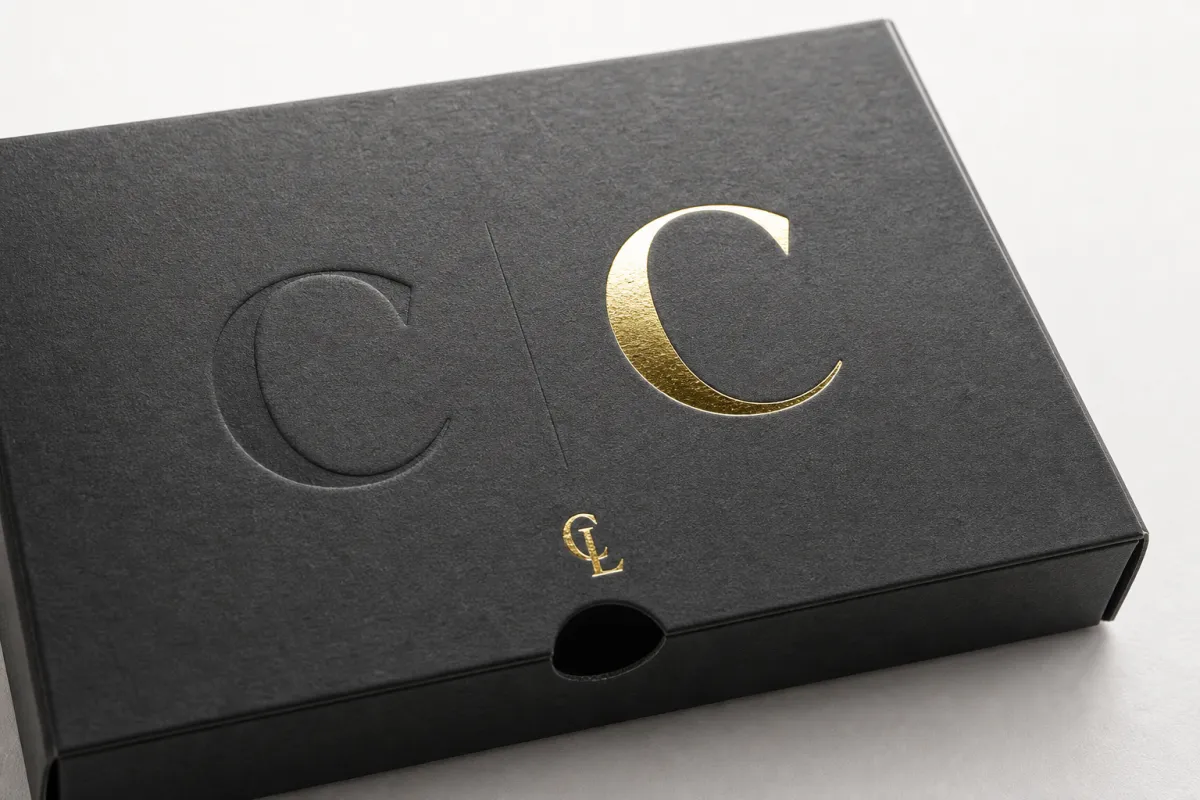
If you need the short version of compare embossing vs foil stamping, here it is: embossing is usually the better pick for restraint, tactile appeal, and material-first luxury, while foil stamping is usually the better pick for shelf visibility, celebration, and a premium cue that reads from a few feet away. That answer sounds simple, but the real decision is a little more technical than most design decks admit.
Embossing creates a raised impression by pressing a male and female die into the stock. It changes the surface without adding a printed color layer, so the finish often feels quiet, architectural, and confident. Foil stamping transfers a metallic or pigmented layer onto the surface using heat and pressure, which creates shine, contrast, and a more obvious signal that the package is special. Compare embossing vs foil stamping across those two effects and the choice becomes clearer very quickly.
Here is the honest part: most bad finish decisions happen because someone chooses from mood board references alone. I have seen teams fall in love with a photo of a deep blind emboss on cotton stock, then discover their actual carton is too thin to hold the impression. I have also seen metallic foil look stunning in a design presentation, then smear or misregister because the artwork was too fine for the substrate. Compare embossing vs foil stamping with the real production recipe in hand, not just the artwork file.
The strongest packaging often uses both techniques, but only when the budget, the layout, and the stock can support the extra setup. A foil-stamped mark inside an emboss, or a raised seal with a thin foil edge, can create a memorable unboxing moment. Still, extra passes mean extra time, more spoilage risk, and tighter control during press setup. That is why compare embossing vs foil stamping is not only a style decision; it is a production decision.
- Embossing works best for texture, subtlety, and high-end paper feel.
- Foil stamping works best for shine, contrast, and visual emphasis.
- Hybrid finishes work best when the brand needs both touch and flash.
- Production fit matters just as much as design fit, especially on folding cartons and rigid boxes.
For brands that want packaging buyers, retail teams, or e-commerce customers to react instantly, compare embossing vs foil stamping by asking one question: should the package speak in texture, or should it speak in light? That question sounds simple, but it usually points you toward the right finish faster than a long design review.
Top Options When You Compare Embossing vs Foil Stamping
There is more than one version of each finish, and that is where compare embossing vs foil stamping gets more useful. Not every emboss feels the same, and not every foil behaves the same. If your team is choosing packaging for a luxury candle box, a rigid fragrance carton, a subscription sleeve, or a boutique apparel tag, the right variant matters as much as the category.
| Finish | Look and Feel | Production Complexity | Best Use Case |
|---|---|---|---|
| Blind embossing | Raised texture with no added color | Moderate; depends on stock thickness and die depth | Quiet luxury, artisan brands, textured paper stocks |
| Registered embossing | Raised area aligned to printed artwork | Higher; registration must be tight | Logos, seals, and marks that must match print precisely |
| Multi-level embossing | Several depth levels in one design | Highest; more die detail and press control | Hero packaging, premium gift boxes, collector editions |
| Metallic foil stamping | Shiny reflective surface, strong contrast | Moderate to high; depends on area and detail | Luxury labels, holiday packaging, beauty, spirits |
| Matte or pigment foil | Color without mirror shine | Moderate | Modern branding, understated premium cues |
| Hybrid emboss + foil | Raised texture with reflective detail | High; extra setup and tighter tolerances | Hero products, gift sets, limited runs |
Blind embossing is the most understated option. It lets the paper do the talking, and on a heavy uncoated stock it can feel incredibly rich. Registered embossing is more demanding because the raised area must sit exactly where the print or foil already exists. Multi-level embossing takes that further with varied depths, which can look beautiful but is less forgiving on thin board. Compare embossing vs foil stamping under those conditions and you start to see that texture is not one thing; it is a family of effects.
Foil stamping also has more variety than many buyers realize. Metallic foil is the obvious choice, but matte foil and pigment foil can be better for brands that want color and definition without a mirror finish. Specialty foils can mimic holographic effects or offer a softer sheen, though I would only recommend those when the art direction can support the look. Compare embossing vs foil stamping with a real swatch book in hand and the subtle options become much easier to judge.
Blind embossing, registered embossing, and multi-level embossing
Blind embossing is often the cleanest route when the substrate is thick and the logo is simple. It works especially well on natural textured stocks, premium folding cartons, and rigid boxes with enough board strength to hold the impression. Registered embossing is more exacting because the impression must sit on top of an already printed element, and that means the die, press, and artwork all need to line up. Multi-level embossing is the showpiece version, but it also needs careful paper selection, because deep relief can flatten if the board is too soft.
Metallic foil, matte foil, pigment foil, and specialty foil
Metallic foil is the familiar premium signal, but matte foil can be smarter for brands that want elegance without too much shine. Pigment foil is useful for strong brand colors, especially when the carton surface is dark or textured. Specialty foil can add dramatic visual movement, though it can also overpower small packaging if the artwork is already busy. Compare embossing vs foil stamping across these variants and you will usually notice that the best foil choice is not always gold; sometimes it is simply the most readable finish for the layout.
Hybrid effects that combine both methods
A hybrid treatment can be powerful when it is used sparingly. A foiled logo sitting inside a shallow emboss can catch the eye in a way that plain print cannot. An embossed seal beneath a thin foil edge can make a carton feel expensive in the hand before the customer even opens it. Still, hybrid work raises the stakes on registration, stock choice, and press discipline, so I would only push for it when the packaging needs a real premium anchor rather than a decorative flourish.
For real packaging categories, the choice shifts by format. A rigid gift box can carry a deep emboss or a broad foil panel with little trouble, while a folding carton may need narrower artwork and a shallower impression. Hang tags can handle sharper detail because they are small and usually printed on heavier stock. Sleeves and inserts often respond well to foil because the finish gives quick recognition, while embossing can be more subtle unless the paper has real body. Compare embossing vs foil stamping in each format, and the stock starts making decisions for you.
Detailed Reviews: How Each Finish Performs in Real Packaging
Here is where compare embossing vs foil stamping gets practical. On a press sheet, both techniques can look impressive. After folding, scoring, shipping, and a few days of handling, the details that matter are different: edge sharpness, visible depth, scuff resistance, and how the finish ages under ordinary use.
Embossing in real use
Embossing excels when the brand wants tactility first. A raised logo on a cotton-feel carton or a soft-touch laminated rigid box creates a hand-feel that people remember, and that memory often lasts longer than a flashier print effect. The downside is visibility. Compare embossing vs foil stamping on a crowded retail shelf and embossing can disappear if the lighting is flat or the relief is too shallow. If the logo lines are too thin, the raised edges may soften and lose definition, especially on lighter board.
In practice, embossing rewards simple shapes, wider strokes, and clean negative space. Tiny serifs, hairline borders, and crowded lettering tend to lose impact. A good emboss die can make a mark feel expensive, but a bad one can make the carton look pressed flat and tired. If the substrate is too thin, the reverse side may show a bruise or the panel may warp near a score. That is why compare embossing vs foil stamping cannot stop at artwork; it has to include board thickness and layout discipline.
Foil stamping in real use
Foil stamping is the opposite in a lot of ways. It gives immediate visual signal and usually looks better than embossing in dim retail lighting, photo shoots, and social content because it reflects light so well. That is a major reason beauty, spirits, and gift packaging use it so often. Compare embossing vs foil stamping on a box that has to stand out from across a counter, and foil often wins on first glance.
The weak point is precision. Small typography, thin lines, and dense artwork can fill in or break apart, and uneven stocks can cause minor transfer issues. On rough uncoated paper, some foils hold beautifully, while others can look spotty or dull. Foil also shows scratches more easily than a plain printed surface, especially on corners and fold edges. If the carton is going through mailers or warehouse handling, I would want a sample tested under the kind of abuse the package will actually see.
“A finish should survive the journey, not just the render.” That is a good packaging rule for compare embossing vs foil stamping, and it saves a lot of disappointment later.
Hybrid finishes under different lighting
Hybrid finishes are where compare embossing vs foil stamping can become more than a binary choice. Under soft studio light, a raised foil mark can look rich and dimensional. Under hard retail lighting, that same package may become dramatic, almost jewel-like, because the foil catches highlights while the emboss holds shadow. This is why samples matter so much. I have seen a hybrid design feel restrained in one room and theatrical in another, simply because the light angle changed.
Common failure modes I watch for
There are a few issues I watch closely whenever a team compare embossing vs foil stamping for production. One is a flattened emboss depth caused by stock that is too soft or too thin. Another is cracked foil on tight curves or near folds, especially if the die cut is crowded close to the stamped area. Registration drift is another headache, and it becomes more obvious when the foil has to sit directly over printed elements. Finally, some designs look premium on screen but feel ordinary once they are in hand because the logo scale is too small to support either finish.
- Embossing is strongest when the mark is bold, the stock is thick, and the texture is meant to be touched.
- Foil stamping is strongest when the mark must be seen fast and read from a distance.
- Hybrid work is strongest when the packaging needs memory and shelf impact in the same object.
For brand personality, embossing usually reads as quieter, more editorial, and sometimes more traditional. Foil stamping tends to read as brighter, more festive, and more immediate. Neither one is locked into a single style, though. A matte foil on a black carton can feel modern and restrained, while a blind emboss on a textured kraft board can feel artisanal and warm. Compare embossing vs foil stamping with the brand voice in mind, not just the logo artwork.
Cost, Pricing, and MOQ: Compare Embossing vs Foil Stamping
Cost is where many buyers get surprised, because compare embossing vs foil stamping is not just about the per-unit effect. Tooling, setup, spoilage, proofing, and the number of passes on press all shape the final number. A finish that looks simple in a render can still be expensive if it needs a custom die, precise registration, or extra make-ready time.
The main cost drivers are predictable. You pay for the die or plate work, the press setup, the foil or tooling material, and the waste that happens while the operator dials in pressure and heat. If the artwork needs multiple finishes, or if the finish has to align perfectly with a printed element or a die-cut window, the quote usually climbs. Compare embossing vs foil stamping with those variables in mind and you can see why a basic mark can price very differently from a detailed one.
For mid-sized packaging runs, simple blind embossing can sometimes come in below foil stamping if the artwork is straightforward and the impression is shallow. A practical range for a run around 5,000 units might land near $0.07-$0.18 per unit for a simple emboss, plus a tooling charge, while foil stamping might land closer to $0.10-$0.30 per unit depending on coverage, foil type, and registration demands. Complex work can move higher fast. Deep multi-level embossing, specialty foil, or a hybrid treatment can all push the project into a different price bracket.
Small quantities are especially sensitive to setup cost. If you are ordering only a few hundred cartons, the die charge and press setup get spread across fewer pieces, which makes the unit price feel steep. That is not a pricing trick; it is simply how print production works. Compare embossing vs foil stamping at low quantity and the gap between them can narrow or widen based on how much setup each one requires.
| Cost Factor | Embossing | Foil Stamping | Hybrid |
|---|---|---|---|
| Tooling / die cost | Moderate | Moderate | Higher because both processes are involved |
| Setup time | Usually shorter for simple marks | Often longer due to heat and registration checks | Longest in most cases |
| Unit cost on 5,000 pieces | About $0.07-$0.18 for simple work | About $0.10-$0.30 depending on coverage | About $0.20-$0.45 or more |
| Best value scenario | Bold logo on thick stock | Simple metallic mark on a clean carton | Hero packaging with real shelf importance |
If you are quoting a project, give the supplier the dieline, the exact art size, the quantity, the substrate, and whether the finish sits on one panel or several. That helps avoid a vague number that shifts later. I would also ask for any cost jump tied to rush service, extra proof cycles, or a second version of the same artwork. Compare embossing vs foil stamping with a real quote sheet in front of you, because setup and waste often explain the difference better than the per-unit line alone.
For sustainability-minded brands, it is worth checking whether the finish can fit with your broader material strategy. Foil and embossing are both decorative processes, but the carton still needs to be recoverable in the local waste stream if that matters to your brand promise. For broader packaging and recovery context, resources from the EPA recycling guidance and the FSC standard system can be useful when you are balancing finish choice with material responsibility.
Process and Timeline: What Each Finish Adds to Production
Timeline matters more than most people expect. Compare embossing vs foil stamping and you are also comparing two different production paths, each with its own proofing steps and its own risk points. A project that looks easy in prepress can still take extra days if the stock changes, the logo scale gets revised, or the first test impression does not hold enough depth.
The embossing workflow usually starts with artwork review and die planning. The team checks line weight, the minimum text size, and whether the die needs a simple single-level relief or a more complex multi-level build. After that comes die making, then a press test, then depth adjustment if needed, and finally the live run. Compare embossing vs foil stamping at this stage and embossing tends to be more sensitive to stock thickness and pressure, because the finish is physically changing the board.
Foil stamping has its own sequence. The file needs clean vector art, then the die or plate gets made, the foil type gets selected, and the press is calibrated for heat, pressure, and dwell. Registration is usually the critical step. If the foil has to land over print, even a tiny shift becomes noticeable. Compare embossing vs foil stamping and foil often needs a little more attention to temperature control, while embossing often needs a little more attention to depth and crush.
Revisions are where schedules slip. A small change in line weight can force a new proof. A stock substitution can alter the impression or the foil adhesion. A design that sits too close to a fold or die cut can behave differently after the carton is trimmed. That is why I always tell buyers to lock the file early and approve a physical sample before they commit the full run. Compare embossing vs foil stamping under deadline pressure and the safest route is the one with the fewest last-minute changes.
Combining both finishes adds another layer. Sometimes it is a second pass, sometimes a more complex setup, but either way it usually adds lead time. For a straightforward job, a simple emboss or foil job may add only a modest amount of time to the production schedule. A hybrid can extend that noticeably, especially if the team wants tight registration and a finish that remains consistent across a large quantity.
Typical planning windows vary by plant and season, but a simple finish often needs a few extra business days for tooling and proofing, while a more detailed hybrid can add a week or more. If the project also includes lamination, spot UV, or UV coating, that can introduce more sequencing decisions because the finish has to be compatible with the rest of the print build. Compare embossing vs foil stamping with the full production stack visible, not just the decoration step.
There is also a practical shipping issue. If the finished boxes have to survive parcel handling, I prefer to think about transit testing before signing off on a deep emboss or fragile foil edge. The ISTA test methods are a good reference point when you want to understand how a package might behave after drop, vibration, and compression. That is especially useful for premium Boxes That Ship directly to consumers and still need to look flawless on arrival.
- Embossing usually needs stronger stock control and depth checks.
- Foil stamping usually needs tighter temperature and registration control.
- Hybrid work usually needs the most proofing and the longest schedule.
How to Choose the Right Finish for Your Brand
The best way to compare embossing vs foil stamping is to decide what the packaging has to do in the real world. Does it need to sit quietly on a shelf and feel refined in the hand? Does it need to flash under store lighting and photograph well for social and e-commerce? Does it need to survive repeated handling, folding, or shipping without losing its edge?
Choose embossing if your brand voice leans toward quiet confidence, material honesty, and a more tactile experience. It works well for natural fibers, premium paper stocks, artisan goods, and brands that want the carton itself to feel substantial. Compare embossing vs foil stamping in this kind of design and embossing often feels more intimate because the customer discovers it by touch.
Choose foil stamping if your packaging needs instant recognition, a stronger retail signal, or a celebratory tone. It is especially effective for cosmetics, fragrance, holiday sets, gifts, and limited editions where the package should catch attention quickly. Compare embossing vs foil stamping in these cases and foil often wins because it communicates premium value before the box is even opened.
Choose both if the packaging is a hero piece. A rigid box for a flagship product, a gift set for the holiday shelf, or a collector edition sleeve can justify the added setup. But the artwork needs room to breathe. If you crowd the design, the two finishes start competing instead of cooperating. Compare embossing vs foil stamping as a pair only when the layout can carry the weight.
The substrate matters more than many brands expect. Heavy SBS board, rigid chipboard, and smooth coated carton stock usually support cleaner results than soft or heavily textured papers. A very textured sheet can make foil less crisp, while a thin board can flatten a raised impression. Lamination can change the feel again: soft-touch lamination can make embossing feel almost velvety, but it can also soften the impression if the board is too light. Spot UV and UV coating can add another layer of contrast, though they are visual effects, not a substitute for poor finish planning.
Here is the simple rule I use after looking at a lot of premium packaging: if the brand story is built on feel, start with embossing; if it is built on shine, start with foil; if it must do both, test a hybrid. Compare embossing vs foil stamping after you know the audience, the distribution channel, and the stock. That order saves time and usually saves money too.
- Audience: who is opening the package, and where?
- Art size: can the logo hold detail at the chosen scale?
- Stock: will the board support the depth or the foil edge?
- Finish stack: are you also using lamination, spot UV, or UV coating?
- Fulfillment: will the package be shipped, stacked, or hand-delivered?
Our Recommendation and Next Steps
If you are still deciding after you compare embossing vs foil stamping, order samples on the exact stock the project will use. That one step saves more bad decisions than any mood board ever will. The same finish can look elegant on a coated carton and flat on an uncoated one, or rich on a rigid board and weak on a thin folding carton. Real paper, real board, real pressure.
Set up a side-by-side test with three versions: one blind emboss, one foil-stamped version, and one hybrid if the budget allows it. View all three under the same light and hold them at the same distance. Score them for feel, visibility, durability, and production risk. Compare embossing vs foil stamping that way and the answer usually becomes obvious within minutes.
Before quoting, lock down the artwork rules. Confirm the minimum line thickness, the maximum coverage area, the exact relationship to folds and die cuts, and whether the finish sits before or after lamination. If you plan to use spot UV or a separate UV coating layer, make sure everyone understands the sequence. That detail matters more than it sounds, because finish order can affect adhesion, registration, and the way the carton reads in hand.
A short decision sheet helps the whole team. Put the brand goal, budget ceiling, target lead time, substrate choice, and fallback option on one page. That way the final decision is not just personal preference from the last review meeting. Compare embossing vs foil stamping with that sheet in front of you, and you will usually make a cleaner decision faster.
For packaging buyers, the practical takeaway is simple: compare embossing vs foil stamping with samples, pricing, and schedule in hand, then choose the finish that supports the packaging experience from first glance to final unboxing. If the box needs to feel understated, embossing is often the better fit. If the box needs to shine, foil stamping usually wins. If the package has to do both, build a sample and let the stock tell the truth.
Is embossing cheaper than foil stamping?
Often yes for simple artwork, because blind embossing can avoid foil material and color matching. Foil stamping may cost more when coverage is large, the logo is detailed, or registration has to be very exact. For small quantities, either option can feel expensive because setup cost gets spread across fewer units.
Which looks more premium when I compare embossing vs foil stamping?
Embossing usually feels more premium when the brand wants restraint, texture, and a material-first look. Foil stamping usually looks more premium when the goal is shine, contrast, and immediate shelf recognition. The better choice depends on whether the packaging should whisper luxury or announce it.
Can I combine embossing and foil stamping on the same package?
Yes, and it is often the strongest option for hero packaging or gift sets. The combination works best when the design has enough space, the stock is thick enough, and the budget allows for extra setup. Use a physical sample to make sure the foil still reads cleanly after the emboss adds depth.
How much extra lead time does foil stamping usually add?
Foil stamping can add time for die preparation, foil selection, press setup, and registration testing. Complex jobs with multiple foil areas or tight artwork often need more proofing than a simple blind emboss. Ask for a sample proof early so the schedule does not get pushed back by surprise changes.
What stock works best when I compare embossing vs foil stamping?
Heavier, smoother stocks usually produce cleaner embossing and sharper foil edges. Very thin or very textured papers can reduce definition, flatten detail, or create registration issues. Always test the actual production stock before approving the final run, because compare embossing vs foil stamping only becomes meaningful once the paper is real.
The cleanest decision path is simple: choose embossing if the sample has to win through touch, choose foil stamping if it has to win through light, and approve both only after a physical proof shows the finish survives the actual stock, the actual press settings, and the actual handling your package will get.