Buyers often ask for fitness Premium Cuffed Beanies lead time before the spec is locked, and that is where schedules get distorted. A cuffed beanie looks simple, but production still has multiple steps: yarn selection, knit density, cuff construction, decoration, labeling, inspection, and packing.
That matters because a launch date is not the same as a production-ready order. Manufacturers need clear artwork, quantity, yarn direction, packaging requirements, and delivery terms before they can give a quote that is actually useful. A blank beanie can move quickly; a custom cuffed beanie with branded finishing usually cannot.
The useful question is not just, “How many days?” It is, “Which decisions control the days?” Once the order is split into approvals, sourcing, knitting, decoration, inspection, and shipping, the timeline becomes easier to quote and easier to manage.
A fixed launch date is a production constraint. Every unclear detail adds either time, cost, or both.
Why premium cuffed beanie lead times surprise buyers
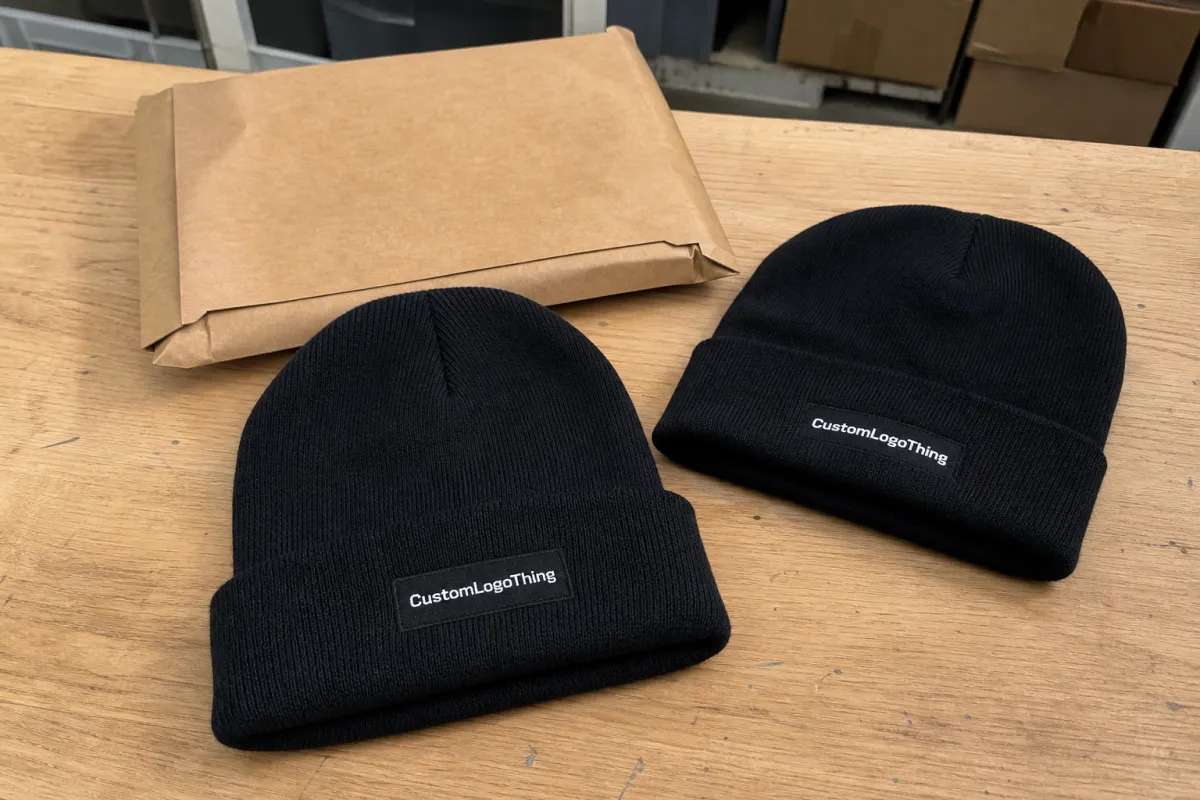
Most delays come from hidden work. The body of the beanie may be straightforward, but the cuff, logo method, yarn count, and finishing steps each create their own queue. Buyers see one product; the factory sees knitting, trimming, inspection, packing, and approval gates before bulk production even starts.
Fitness buyers also tend to think in launch windows while suppliers think in inputs. If artwork is not final, the color match is still open, or the logo method has not been confirmed, the order is not ready to move. The calendar will not wait for the launch plan to catch up.
“Premium” usually means tighter tolerances, not just a nicer look. Buyers expect cleaner cuff folds, more consistent stitching, fewer loose ends, better color alignment, and repeatable sizing. Those are quality improvements, but they take extra control on the factory floor and more checking during packing.
The practical lesson is simple: do not ask only for days. Ask which part of the order is most likely to become the bottleneck. In most cases, it is approval, sourcing, or decoration complexity.
What fitness premium cuffed beanies lead time actually includes
Fitness Premium Cuffed Beanies lead time is a chain, not a single number. For a custom program, the path usually runs through inquiry, spec review, quote, proofing, sourcing, knitting, cuffing, decoration, finishing, inspection, packing, and shipping. One slow step can control the entire order.
- Inquiry and spec review: the supplier checks artwork, quantity, size range, knit direction, logo method, and destination.
- Quote: pricing is built from materials, setup, decoration, sampling, and freight assumptions.
- Sample or proof: artwork placement, cuff depth, and color expectations are tested.
- Material sourcing: yarn, labels, patches, hang tags, and packaging components are reserved or made.
- Knitting and cuffing: the body is produced and the cuff is formed to spec.
- Decoration: embroidery, woven patch application, knit-in graphics, or labeling is completed.
- Finishing and inspection: loose threads, size consistency, stitch quality, and color alignment are checked.
- Packing and shipping: cartons, inner packs, carton marks, and transit method are finalized.
The clock usually pauses in the same places: artwork approval, PMS matching, sample revisions, and purchase order confirmation. A factory may quote 15 business days of production and still miss your date if approvals drift for a week. The production line is only one part of the schedule; the approval chain matters too.
If the launch date is fixed, treat proof approval like a hard deadline. Also ask each supplier what they include in “lead time.” Some count from deposit and artwork approval; others include sample time or assume the spec is already locked. Those definitions can differ by more than a week.
What drives cost, pricing, and MOQ
Price is usually the sum of several decisions, not one feature. Yarn quality, knit density, cuff depth, logo method, color count, and packaging all affect both unit cost and timing. Custom labels, branded belly bands, and retail hang tags are extra moving parts, not afterthoughts.
MOQ follows the same logic. Minimum order quantity is mostly a factory-efficiency issue: setup, sampling, matching, and inspection do not shrink much when the run gets smaller. That is why low-volume orders often carry a higher unit price.
For buyers comparing options, the difference between a promotional beanie and a premium fitness version can be significant. A basic run may use standard yarn, a simple woven label, and plain packaging. A premium run may ask for denser knitting, a cleaner cuff, raised embroidery, and retail-ready presentation. They are not priced like the same product.
Material choice is one of the clearest cost drivers. Basic acrylic is usually the least expensive and easiest to source. Acrylic-wool blends often cost more but can improve hand feel and warmth. Recycled yarn may support sustainability claims, though it can narrow color options or lengthen sourcing if the exact shade is not stocked.
| Order type | Typical MOQ | Indicative unit price | Typical production window | Main trade-off |
|---|---|---|---|---|
| Promotional cuffed beanie | 300-500 pcs | $3.20-$5.00 | 10-15 business days after approval | Lower finish detail, simpler decoration |
| Team or club beanie | 500-1,000 pcs | $4.80-$7.50 | 12-18 business days after approval | Better structure, more branding options |
| Retail-oriented premium beanie | 1,000-3,000 pcs | $6.50-$10.50 | 15-25 business days after approval | Higher finish standards, more setup work |
Those ranges are not universal, but they do reflect the way premium details raise both cost and coordination. A structured embroidered logo, a woven patch with edge finishing, or specialty trim usually adds more than a plain woven label. Buyers run into trouble when they expect a premium finish without budgeting for the premium process.
If packaging matters, ask whether the supplier can offer FSC-certified paper components such as hang tags or insert cards. The FSC chain-of-custody framework at fsc.org is a useful reference when paper sourcing needs to match a retail or sustainability brief. For transit packaging, it is also worth asking whether cartons or ship-ready packs are tested against a distribution profile such as ISTA methods.
Spec choices that shorten or stretch production
Some spec choices barely show up to the end customer but matter a lot to the factory. Gauge is one of them. A tighter gauge can look cleaner, but it usually demands more careful knitting control. Yarn blend matters too, especially when color matching is involved.
The cuff is another timing lever. A consistent cuff depth helps the factory hold repeatability across the run. If the logo has to sit at an exact height, that adds another check. The same is true for decoration complexity: knit-in graphics, embroidery, woven patches, and mixed-method branding all have different setup paths.
Standard components can save time. A stock label format or common packaging style may trim days from the front end. Fully custom trims usually add time because they create another proof, another supplier, or another color decision. Custom-dyed yarn is the clearest example; it can add two to four weeks if the shade must be developed and approved.
Consistency across colorways matters more than many buyers expect. If one style has three logo colors and another has six, the factory is not just swapping thread. It is managing more setup, more approval risk, and more points where the order can pause. In practice, a sharper design with fewer color changes often ships faster than a busier one with multiple variations.
Finishing can stretch the schedule too. A brushed interior may change the feel but can increase pilling risk if the yarn quality is weak. An extra wash stage can improve softness but may slightly alter dimensions. If speed matters, simplify the spec where you can while keeping the visual idea strong.
Step-by-step plan for getting a realistic quote
If you want a quote that helps you decide, start with the use case. A gym launch, a fitness brand drop, a team uniform, and a resale item all lead to different recommendations. A supplier quoting for retail will think differently from one quoting for a short event run.
- Define the use case and target audience.
- Confirm quantity, size range, and color count.
- Choose the decoration method and logo placement.
- Gather clean artwork and any brand color references.
- State packaging needs, including hang tags or polybag options.
- Give the delivery destination and preferred transit mode.
- Request a line-by-line quote with setup, decoration, and freight separated.
- Ask for the date the order is considered fully locked.
The more you leave unsaid, the more the supplier has to assume. Assumptions usually get priced in as cushion, which affects both money and time. A vague request may still get you a number, but it will be a defensive one.
Ask for sample timing separately from bulk timing. If the quote only counts production days, the real calendar may be longer because the sample still needs to be developed, approved, or revised. Buyers who separate those two numbers avoid the most common planning error: assuming the order has already started when it has not.
If the quote does not show setup, decoration, packaging, and freight separately, you are not comparing suppliers yet.
For a brand managing fitness Premium Cuffed Beanies lead time, this quote structure matters more than a few cents on unit price. It is what lets you decide whether to simplify the spec, shift the delivery mode, or increase quantity to improve unit economics.
Common mistakes that add weeks
Late artwork changes are the classic problem. A buyer approves the proof, then wants a small logo tweak, and the process goes back to the front. On a cuffed beanie, even a small visual change can affect placement, thread count, or patch size.
Ignoring yarn availability is another trap. A shade may look easy to source until the order lands in peak season or the preferred blend is tight. Then the lead time stretches while the factory waits for material confirmation.
Decoration method can also add time. Embroidery may be quick if the artwork is simple, but dense stitch counts can increase machine time and raise the risk of distortion on a flexible knit surface. A woven patch can solve the density issue, though it adds another component to source and approve. Knit-in graphics look integrated, but they are harder to revise at the last minute.
Shipping errors create their own delays. If you only look at factory completion and forget customs clearance, transit mode, or final-mile distribution, the timeline can still break. Air freight reduces transit time but does not fix production delays. Ocean freight works for bulk, but it needs more buffer.
- Artwork drift: protect the final logo file.
- Color drift: confirm yarn and thread references early.
- Approval drift: set hard response deadlines.
- Shipping drift: build in customs and transit time.
- Fit drift: approve a physical sample before bulk.
Expert tips for faster approvals and cleaner reorders
The best way to speed up future orders is to standardize the first one. Save a spec sheet that includes yarn blend, gauge, cuff depth, logo method, packaging style, and approved color references. That gives the factory less to interpret on the next run.
Keep three files: one approved physical sample, one digital spec file, and one final artwork file. If the sample and the file disagree, ask which one governs before anything moves forward. That simple step prevents version confusion later.
It also helps to name one decision-maker on the buyer side. The more people who can comment, the slower the approval loop tends to move. For retail launches, team drops, or event programs, a small buffer is cheaper than a missed date.
Reorders become easier when the original order has clean records. Keep the approved artwork in vector form. Keep thread or Pantone references tied to the actual approved sample, not just the concept file. Record the finished dimensions, cuff depth, and packaging count.
If you are mapping fitness premium cuffed Beanies Lead Time for a new order, the safest sequence is simple: lock specs, get a line-by-line quote, approve the sample quickly, and place the order only when the timeline feels real.
What affects fitness premium cuffed beanies lead time the most?
Decoration complexity, yarn availability, sample approval speed, and custom labels or packaging are the biggest drivers. Simple specs with standard components usually move faster than orders that require custom-dyed yarn or multiple logo placements.
How long is a typical cuffed beanie production timeline?
It depends on whether the item is stock-based or fully custom, but buyers should expect quoting, proofing, production, inspection, and shipping to all sit in the schedule. The fastest projects are the ones where specs are locked early and approvals happen without revision cycles.
Why does premium beanie pricing change with order quantity?
Small orders usually cost more per unit because setup, sampling, and inspection work are spread across fewer pieces. Larger runs often improve unit economics, especially when the design and materials stay consistent.
Can I speed up a custom fitness beanie order without cutting quality?
Yes: use standard yarn colors, simplify decoration, approve artwork quickly, and avoid late-stage design changes. A clean tech pack and one clear decision-maker can reduce back-and-forth enough to protect both quality and timing.
What should I ask for before approving a quote?
Ask for the full breakdown: product cost, setup charges, decoration method, sample fees, packaging, freight, and estimated turnaround. Also confirm the MOQ, approval milestones, and the date the supplier considers the order fully locked.
Is a faster lead time always worth paying for?
Not always. Rush production can make sense if the launch date is fixed, but it often leaves less room for sample revisions and may limit yarn or packaging choices. The better question is whether the speed gain is bigger than the risk of a compromised finish.


