Buyer Fit Snapshot
| Best fit | Compare Kraft Boxes vs Corrugated projects where brand print, material claims, artwork control, MOQ, and repeat-order consistency need to be specified before quoting. |
|---|---|
| Quote inputs | Share finished size, material target, print colors, finish, packing count, annual reorder estimate, ship-to region, and any compliance wording. |
| Proofing check | Approve dieline scale, logo placement, barcode or warning zones, color tolerance, closure strength, and carton packing before bulk production. |
| Main risk | Vague material claims, crowded artwork, missing packing details, or unclear freight terms can make a low unit price expensive after revisions. |
Fast answer: Compare Kraft Boxes vs Corrugated: Material, Print, Proofing, and Reorder Risk should be specified like a repeatable production item. The safest quote records material, print method, finish, artwork proof, packing count, and reorder notes in one written spec.
Production checks before approval
Compare the actual filled-product size with the drawing, then confirm tolerance on folds, seals, hang holes, label areas, and retail display edges. Reserve space for logos, QR codes, warning copy, and material claims before decorative graphics fill the panel.
Quote comparison points
Review material grade, print process, finish, sampling route, tooling charges, carton quantity, and freight assumptions side by side. A quote is only useful when the supplier can repeat the same color, closure quality, and packing count on the next order.
People often ask how to compare kraft boxes vs corrugated, and the first mistake usually starts with the terminology. A “kraft box” is not always a separate structural category. In buying conversations, it can mean a corrugated box with a kraft outer liner, a solid kraft paperboard carton, or a hybrid build that uses inserts to carry most of the load. Those are not the same thing. Their stack performance, crush resistance, and shipping failure modes change the moment the board construction changes.
Packaging buyers do not get rewarded for admiring cardboard. They get rewarded for keeping products intact, reducing returns, and protecting margin from freight and damage claims. A lightweight apparel kit, a subscription box, and a fragile glass set fail in different ways, which means the wrong carton can add replacement costs, support tickets, and lost repeat orders that dwarf the few cents saved on unit price. The right structure is usually the one that survives the route after it leaves the dock.
If you are sourcing from Custom Packaging Products or reviewing Custom Shipping Boxes, the useful question is simple: is the package supposed to present, protect, or do both? That answer usually points toward kraft paperboard, corrugated board, or a hybrid construction that borrows from both.
Quick answer: when kraft boxes beat corrugated
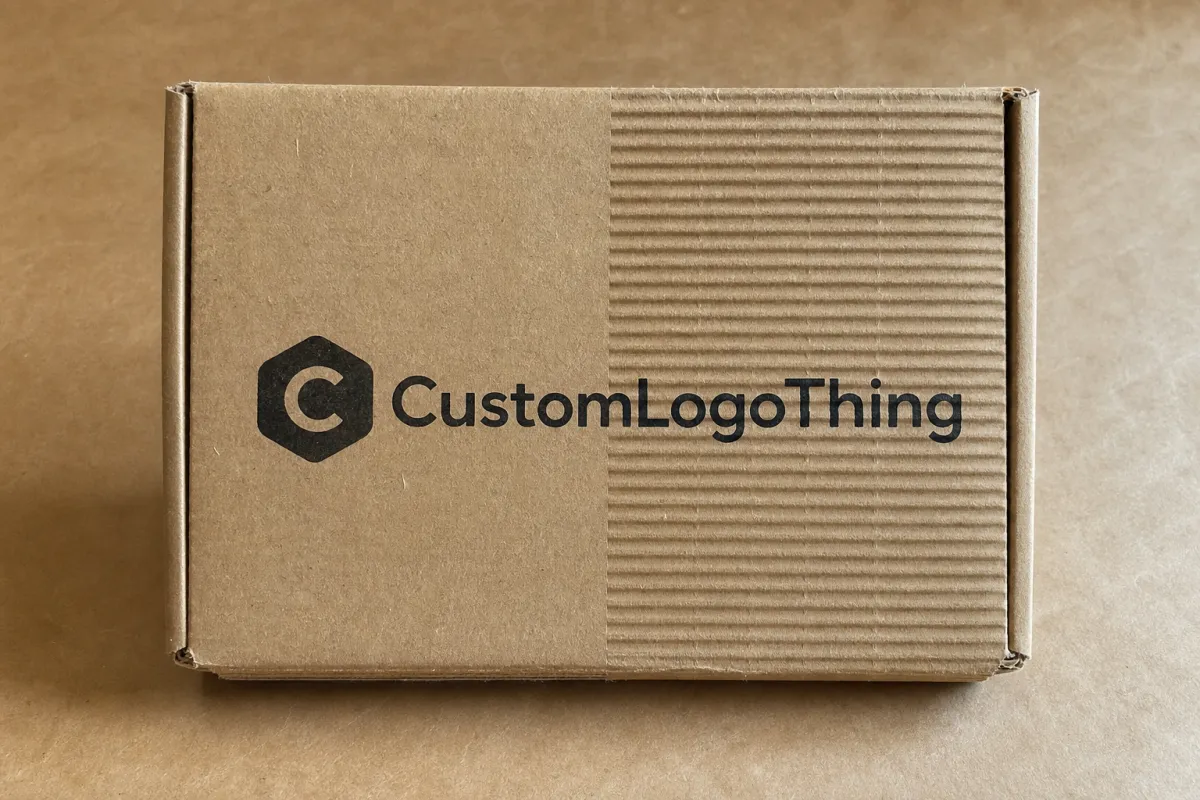
Here is the short answer. Kraft boxes usually win on appearance, lighter weight, and a cleaner shelf or unboxing look. Corrugated boxes usually win on protection, stacking strength, and parcel shipping performance. If a product has to survive conveyor drops, truck compression, and rough handling, corrugated is the safer starting point. If the shipment is light, the route is controlled, and presentation matters more than abuse resistance, kraft paperboard can make sense.
The naming problem causes more mistakes than the material itself. Buyers say “kraft box” and picture one thing, then receive a sample that turns out to be a corrugated mailer with a kraft face. That distinction matters. A solid kraft folding carton, a single-wall corrugated carton, and a kraft-faced mailer can sit side by side on a sample table and still behave very differently once they are filled, taped, stacked, and pushed through a carrier network.
Three common cases make the difference easier to see. A lightweight retail gift set may fit well in a kraft carton because the product is already secured by inserts and the box will be handled mainly once, by the customer. A beauty subscription kit usually benefits from corrugated because it sees more compression, more rehandling, and more package movement inside the fulfillment chain. A fragile ceramic item often needs corrugated plus internal cushioning, even if the kraft version looks more premium. Same color family. Different failure points.
If the carton collapses before the customer sees the product, the prettiest surface in the room does not save the order.
The smarter question is not “Which one looks nicer?” It is “What kind of damage are we trying to prevent?” Corner crush, puncture, lid bowing, humidity warp, and insert migration all point to different constructions. That is why a decision to compare kraft boxes vs corrugated should be treated like a transit test, not a finish choice.
One practical rule holds up across categories: if the shipment moves through parcel carriers, mixed warehouse handling, or long replenishment routes, corrugated is usually the baseline worth starting from. Kraft paperboard still has a place, but its lane is narrower. The sections that follow break down structure, performance, Cost, and Production speed so the box can match the job instead of the label.
Top options compared: kraft boxes, corrugated boxes, and hybrids
Four common builds deserve to be separated before quotes get compared. The first is solid kraft paperboard cartons. The second is single-wall corrugated cartons, the workhorse for ecommerce. The third is double-wall corrugated cartons for heavier or more fragile shipments. The fourth is hybrid construction, where a kraft face sits on top of corrugated structure, or kraft paperboard is paired with inserts, sleeves, or partitions to carry the load.
Solid kraft paperboard feels more precise in the hand. Edges are crisp. Print can look sharp, especially with restrained branding, black ink, or a minimalist one-color or two-color layout. The tradeoff is thickness and structural reserve. Once product weight climbs or handling gets rougher, the safety margin narrows quickly. Kraft is not weak by definition; it is simply built for a different kind of load.
Corrugated cartons use a different logic. The fluting between the liners creates spacing, stiffness, and shock absorption. That construction is why a single-wall shipping box often outperforms a visually similar kraft carton in a drop test. Double-wall adds another layer of resistance and shows up often in heavier parts, dense kits, and shipments that spend time stacked in transit. The cost is bulk, weight, and sometimes a more industrial feel unless the graphics carry real design intent.
Hybrid structures sit between the two. A kraft outer liner can improve shelf appeal or brand polish while corrugated provides the actual transit performance underneath. Brands selling direct-to-consumer tend to land here more often than they expect, because the customer sees the box, while the carrier sees the abuse. That split matters. A package can feel premium and still survive shipping if the structure underneath does its job.
| Option | Best use case | Typical strength | Presentation | Common MOQ range | Notes |
|---|---|---|---|---|---|
| Solid kraft paperboard carton | Light retail goods, gift sets, presentation-first packaging | Light to moderate | Clean, premium, minimal | 1,000-5,000 units | Works best with internal cushioning and short shipping lanes; exact MOQ varies by supplier and print method |
| Single-wall corrugated box | Ecommerce, subscription boxes, general parcel shipping | Moderate to high | Functional, can be branded well | 500-5,000 units | Common sweet spot for cost and protection in standard shipping programs |
| Double-wall corrugated box | Heavy items, fragile goods, stack-heavy fulfillment | High | More utilitarian | 500-2,500 units | Higher board cost but often lower damage risk and better pallet performance |
| Hybrid kraft-faced corrugated | Premium shipping programs, branded direct-to-consumer orders | Moderate to high | Best balance of brand and strength | 1,000-5,000 units | Good compromise if appearance and transit survival both matter |
Three variables usually tip the scale: product weight, shipping method, and the amount of unboxing pressure on the package. Cosmetics, apparel, and small accessories often work with kraft or kraft-faced hybrids. Electronics, glass, and dense kits usually justify corrugated. Retail shelf-ready packaging can go either way, but only if the carton is not carrying the full protective burden by itself.
Finishing deserves more attention than it gets. A kraft surface can carry strong graphics, but it will not hide bad engineering. Corrugated can look much more refined than many buyers assume if the print direction is intentional and the proportions are right. The best-looking carton is not always the thinnest one. It is usually the one that arrives square, clean, and unopened.
Detailed reviews: strength, protection, and real shipping abuse
Honest packaging testing starts with the carrier, not the studio table. In shipping, the measurements that matter are edge crush resistance, puncture resistance, compression under stacking, and how the board behaves in cold or humid conditions. Those numbers say more than polished sales language ever will.
Corrugated tends to perform better in parcel networks because the flute acts like a built-in buffer. That structure helps absorb impact when the box is dropped, set down hard, or pushed through automated handling equipment. In warehouse use, it also resists stacking pressure better than many paperboard builds. If cartons sit in storage for weeks or pallets are stacked high, that compression advantage can decide the outcome before the order ever ships.
Kraft paperboard has a place, but it is less forgiving. It can do well with lightweight products, especially when the contents are already protected by trays, molded pulp, foam, or paper inserts. A jewelry set, a carded accessory bundle, or a compact apparel gift box may travel acceptably in kraft if the route is short and the fulfillment process is controlled. Once the item gets heavier, denser, or more fragile, the margin falls quickly.
That is the point where many buyers misread the tradeoff. A carton can look polished and still be the wrong tool. A box that fails in a three-foot drop test, or crushes after a week under pallet load, creates a cost spiral: damage, refunds, reships, and lower confidence on the next order. Spending a little more on corrugated often reduces total cost because it lowers the cost of failure. Packaging math rarely ends with the line item.
These are the test cases worth running before signing off on a structure:
- Fragile glass: Corrugated with dividers or custom inserts, usually single-wall at minimum and double-wall if the item is heavy.
- Heavy accessories: Corrugated, because weight increases corner and bottom-panel stress.
- Apparel bundles: Kraft can work if the bundle is light and presentation-led, but corrugated still gives better parcel tolerance.
- Multi-piece kits: Corrugated often wins because shifting contents create puncture and abrasion risk.
Packaging standards help make the comparison less subjective. ISTA test methods are commonly used for transit simulation, while ASTM methods are often used for board and material performance. If you want to compare protection claims against a neutral framework, those standards matter more than supplier adjectives. For a broader look at packaging waste and recovery, the ISTA site is useful for test-based thinking, and the EPA provides background on waste and recovery considerations.
Humidity is another variable that gets ignored until a summer shipment goes wrong. Corrugated and kraft both rely on paper fibers, so both are sensitive to moisture, but their response can differ. In a damp warehouse or a seasonal shipping swing, storage conditions can change real-world performance in ways that never show up on a sample sheet. A carton that looks fine in January may soften in a humid loading area by July. That is not universal, but it happens often enough to test.
The blunt conclusion is easy to defend. If protection matters, corrugated is usually the safer engineering choice. Kraft can be excellent for presentation and moderate loads, but in abuse-heavy shipping environments, a prettier carton is not a substitute for structural reserve.
Process and turnaround: from sample to production steps
Lead time is rarely just a printing question. It is a chain of decisions, and every extra decision adds time. The first checkpoint is usually dieline approval, where dimensions, panel layout, tuck style, inserts, and closure method get locked. Simple structures move through that stage quickly. Boxes with special inserts, locking tabs, or unusual panel ratios tend to invite more back-and-forth.
After the dieline is approved, many programs move to prototyping or a sample run. That is where packaging teams catch fit issues, board stiffness problems, and artwork placement mistakes. A clean sample can prevent a production headache later. A bad one can trigger two or three revision cycles, and those cycles are often what push a project past the original calendar.
Corrugated usually demands more engineering review because the structure itself carries more of the burden. Board grade, flute selection, crush strength, and fold behavior all matter. Kraft paperboard cartons can sometimes move faster if the design is straightforward and the print plan is simple. A two-color kraft carton with no special finish is easier to produce than a multi-part corrugated mailer with inserts and a custom closure system.
A typical production path looks like this:
- Artwork setup and prepress review
- Dieline confirmation and fit check
- Sample or prototype approval
- Printing
- Die cutting, scoring, and folding
- Optional finishing such as varnish, lamination, or spot color work
- Final inspection and shipment
For simple projects, final production often lands in the 10-15 business day range after approval. More complex corrugated programs can take longer, especially when inserts, partitions, or secondary tooling enter the picture. If the job needs compression testing or more than one sample revision, add time rather than subtracting it. A lower unit price can turn into a slower launch, and that delay can cost more than the cartons themselves.
One operational lesson keeps showing up in packaging programs: a slower but simpler structure can outperform a cheaper but more complicated one. If a team has to coordinate multiple sign-offs, a custom insert supplier, and tighter print tolerances, the hidden cost is not only labor. It is also the risk of missing a launch window. That miss can be more expensive than any board upgrade.
For brands running several SKUs, consistency matters more than people expect. Standardizing one box type across a product line makes sourcing easier, storage simpler, and reordering more predictable. That is one reason corrugated remains dominant in ecommerce fulfillment. The manufacturing route is familiar, repeatable, and easier to scale when order volume rises.
Cost and pricing: MOQ, quote factors, and unit cost
Raw box price is only part of the bill. The real number is landed cost: board, print, inserts, freight, storage, damage allowance, and the cost of reshipping when a box fails. That is the part of the conversation that turns compare kraft boxes vs corrugated from a design preference into a purchasing decision.
Unit cost depends on several inputs. Board grade is the obvious one. A lighter kraft paperboard carton usually prices differently from a single-wall or double-wall corrugated box. Size matters too, because larger footprints use more fiber and can trigger different tooling or shipping efficiencies. Print coverage changes cost as well. Full-coverage color work, coatings, and specialty finishes raise the number faster than a simple one-color logo.
MOQ can change the answer more than buyers expect. A box with a slightly higher unit cost may still be the better purchase if the minimum order is lower or if storage space is tight. Inventory risk is real cost. If forecast confidence is shaky, buying fewer cartons with a slightly higher unit price can protect cash flow and reduce obsolescence. Seasonal promotions and short product runs make that trade even sharper.
Before approving a run, these are the pricing variables I would check first:
- Board thickness or flute selection: thicker is stronger, but not always necessary.
- Print coverage: full bleed and multiple colors increase cost.
- Finishes: matte coating, aqueous coating, and specialty laminations add expense.
- Insert count: every divider or partition adds material and labor.
- Quantity: higher volume usually lowers unit cost, but only if storage fits the plan.
For rough budgeting, a simple kraft paperboard retail carton may land in a lower unit-cost band than a Custom Corrugated Mailer at smaller volumes, but the comparison is not fixed. A plain corrugated box with limited print can be surprisingly economical, especially at scale. At 5,000 units, the gap between a simple kraft build and a simple corrugated build may be only a few cents per carton. Once damage rates are folded in, the cheaper option can reverse itself.
Quote traps show up all the time. One supplier may quote the box only, while another includes freight. One may assume a standard insert, while the other is quoting the carton without it. One may include overage for waste, while the other does not. If the printed unit price is the only number under review, a 10-20% swing in total program cost can hide in plain sight.
Freight deserves its own line of thought. Corrugated can be bulkier, and dimensional weight can hit parcel economics if the carton is oversized. A lighter kraft carton that damages the product, though, can force reships that are even more expensive. The cheapest carton on paper is not always the cheapest carton in practice. The deciding factor is whether the box protects the order well enough to avoid a second trip.
One rule works especially well for high-value products: do not chase the lowest carton price by cents alone. Spend enough to protect the order. In many cases, a few cents more per unit is cheaper than one broken replacement, one refund, and one lost future order.
How to choose between kraft and corrugated for your operation
The cleanest way to choose is to score the box against the actual conditions of your operation. Start with product weight. Then look at drop risk, stacking pressure, and shipping distance. Finish by asking who touches the box after it leaves your team. A customer opening a carton in a living room creates a different standard than a parcel network with multiple handoffs and conveyor transfers.
If branding leads the decision, a kraft-facing structure may be enough, especially for direct-to-consumer programs with controlled pack-out and internal protection. If the brand promise depends on a strong premium feel, hybrid constructions can solve part of the problem. If the goal is to cut breakage in general parcel shipping, corrugated should usually be the default rather than the fallback.
Sustainability needs a careful read. Kraft and corrugated are both paper-based and can be recyclable in many markets, yet the better environmental outcome depends on source fiber, the amount of material used, and how often damaged orders have to be replaced and reshipped. A right-sized corrugated carton made from responsibly sourced fiber may be the better practical choice than a thinner box that fails and travels twice. FSC-certified material can matter when sourcing requirements are part of the brief; the FSC site explains the certification framework.
Operational filters matter too. Warehouse humidity, storage space, and automation compatibility all influence the real economics of the carton. A structure that runs cleanly through the pack line saves labor. A box that stacks efficiently saves floor space. Poor score lines or awkward folds slow down fulfillment in ways that seem small until the weekly labor report arrives.
For a quick rule of thumb, use this:
- Choose the lightest structure that still survives the worst realistic shipping scenario.
- Use kraft paperboard if presentation is the priority and transit stress is controlled.
- Use corrugated if the parcel will face stacking, drops, or long carrier handling.
- Move to a hybrid only if brand polish and transit strength both need to live in the same box.
That framework is simple, but it prevents a common mistake: choosing packaging by appearance and trying to engineer protection after the fact. Start with the load path, then build the branding around it.
If the choice still feels close, a side-by-side sample review usually settles the argument faster than another round of spec-sheet analysis. Fill both boxes the same way, stack them, shake them, drop them, and inspect the corners after. Real abuse reveals more than any sales pitch.
Our recommendation: next steps for a real packaging test
The best decision here is measured, not imagined. Order two or three sample builds, pack the same SKU in each version, and ship them through normal channels. Then inspect the evidence: corner crush, lid integrity, scuffing, insert movement, and customer response. If one format has a materially lower damage rate, the case is closed.
Use the same fill method, same tape, same courier service, and same product weight for every test. If one sample gets extra bubble wrap and the other does not, the comparison is already distorted. Fair testing matters because packaging teams often overestimate how much protection the product needs, or underestimate how much abuse the route will deliver.
For a small pilot, I would track at least six numbers:
- Unit cost at the target quantity
- MOQ and whether it fits forecast risk
- Lead time from approval to receipt
- Damage rate after real shipment tests
- Unboxing quality from a customer perspective
- Reorder speed for the next production cycle
Once the test is finished, revise the dieline if needed, request a final quote, and scale the winner across the SKUs that share similar weight and transit risk. One box may work for apparel and accessory bundles, while another is better for fragile or heavy items. That split is normal. Packaging rarely needs one universal answer; it needs the right answer for each shipping profile.
If presentation and protection both matter, ask whether a kraft-faced corrugated build solves the problem without forcing a tradeoff. If the item is light enough, a simple kraft carton may still be the smartest option. If the item is fragile, dense, or expensive to replace, corrugated usually earns its place very quickly.
That is the practical endpoint of compare kraft boxes vs corrugated: do not choose by habit, and do not choose by color alone. Choose the structure that survives the shipment, fits the budget, and supports the brand story without creating preventable damage.
FAQ
Are kraft boxes stronger than corrugated boxes for shipping?
Usually no. Corrugated is built to absorb impact and resist stacking better, especially in parcel shipping. Kraft paperboard can work for lighter products or presentation-first packaging, but if damage risk matters, corrugated is often the safer default.
Is a kraft box the same as a corrugated box?
Not always. “Kraft” often describes the outer paper color or paper type, not the internal structure. Many corrugated boxes have a kraft outer liner, which is why the terms get mixed up. Always check the actual board build before you compare specs.
Which option is cheaper: kraft boxes or corrugated boxes?
It depends on size, board grade, print coverage, and quantity. Kraft can be cheaper for simple lightweight cartons, while corrugated may cost less overall if it reduces breakage, re-ships, and customer complaints. Raw box price is only part of the total cost.
What is the best box for ecommerce shipping and fulfillment?
Corrugated is usually the safer choice for parcel shipping and warehouse handling. Kraft-facing hybrid boxes can work if the product is light and presentation matters a lot. For fragile or heavy items, protection should come first.
How do I decide based on MOQ and turnaround time?
Ask for both structures with the same dimensions and print requirements, then compare MOQ, sample approval timing, and production steps. If speed matters most, the simpler structure with fewer revisions often wins, even if the unit price is a little higher.
For most brands, the smartest path is to test both, compare the transit results, and then commit to the structure that protects the product without inflating total cost. That is the practical way to compare kraft boxes vs corrugated, and it usually leads to fewer damage claims, better margins, and a more dependable packaging program.