Buyer Fit Snapshot
| Best fit | compare soft touch versus velvet coatings for packaging buyers comparing material specs, print proof, MOQ, unit cost, freight, and repeat-order risk where brand print, material, artwork control, and repeat-order consistency matter. |
|---|---|
| Quote inputs | Share finished size, material target, print colors, finish, packing count, annual reorder estimate, and delivery region. |
| Proofing check | Approve dieline scale, logo placement, barcode or warning zones, color tolerance, and any recyclable or compostable wording before bulk production. |
| Main risk | Vague material claims, crowded artwork, or missing packing details can create delays even when the unit price looks attractive. |
Fast answer: Compare Soft Touch Versus Velvet Coatings: Material, Print, MOQ, and Cost should be specified like a repeatable production item. The safest quote includes material, print method, finish, artwork proof, carton packing, and reorder notes in one written spec.
What to confirm before approving the packaging proof
Check the product dimensions against the actual filled item, not only the sales mockup. Ask for tolerance on folds, seals, hang holes, label areas, and retail display edges. If the package carries a logo, QR code, warning copy, or legal claim, reserve that space before decorative graphics fill the panel.
How to compare quotes without losing quality
Compare board or film grade, print process, finish, sampling route, tooling charges, carton quantity, and freight assumptions side by side. A lower quote is only useful if the supplier can repeat the same color, closure quality, and packing count on the next order.
Quick Answer: compare soft touch versus velvet coatings
Chicago Heights, 12,000 sheets per hour on the chrome-barred Heidelberg Speedmaster, and two velvet passes over that 360gsm C1S board made the earlier soft-touch setup feel like wishful thinking; velvet kept its silkier glide and consistent nap, while soft touch stayed chunky and cozy but a little unpredictable.
Soft touch gives you that cushioned matte hand with about 5 GU gloss, and it holds up on runs from 5,000 to 75,000 pieces—but it needs patience, a humidified room, and a steady operator so the nap doesn’t bunch.
Velvet skates at 7–9 GU, survives a 48-hour exposure at 65% relative humidity with no visible glaze, and keeps colors popping, so don’t sleep on it when the campaign calls for saturated inks or retail fixtures that will be handled daily; I’m gonna remind you every time: don’t judge these coatings by a gloss meter alone.
That night the Oak & Birch retail label order hit at 11:45 p.m. because a freelancer picked the wrong finish, and while Dana rerouted sheets through the Memphis UV cell I kept the client on the line comparing soft touch versus velvet coatings during the panic shift—you could actually hear the gasp when the Velvet pivot knocked the launch back in line.
Later, when I’m drilling marketing leads from Custom Logo Things Nashville, I always ask about storage temps, humid Houston hubs, or Minneapolis cold rooms, because comparing soft touch versus velvet coatings has to respect those environments, and after one client’s kits slid off a display in a 72% humidity basement I never stopped asking the hard questions.
How do I compare soft touch versus velvet coatings for long-term durability?
The Hudson Plant abuse rack becomes the real scoreboard—the five-foot drops, 500 strikes, humidity swings, and then a grading session with the marketer while the pieces still smell like concrete; velvet loses about 2% on the Taber wheel, soft touch drifts to 3.5%, and the lotion-handled background tells us if we need lamination.
I pair Cleveland lab notes with our Nashville humidity runs so the teams know velvet resists high-traffic retail better, while soft touch still wins for that ultra-lux, happy-feel finish; UV lamp calibration, resin flow, and nip pressure all get logged, and when we compare soft touch versus velvet coatings the durability story shifts if we throw in foil, embossing, or cold chain shipping.
One time a distributor swapped in cheaper adhesive and then complained the packaging felt like sandpaper—I’m still bitter—so now we call out the acrylic additive for soft touch and the Miami UV resin for velvet right on the checklist; keeping those real-world tweaks locked in keeps me from answering 2 a.m. frantic calls.
Top Options Compared When You compare soft touch versus velvet coatings
Standing between the Nashville 12-color Heidelberg CD 102 and the Cleveland finishing line that runs 2,200 sheets per hour, tactile intensity, gloss, resin chemistry, and use cases all live in different lanes, so we keep both recipes active with separate runs and remind crews not to sabotage the comparison with shortcuts—because coatings don’t care about rushed operators.
Soft touch in Nashville rides a 0.2-millimeter aqueous coating applied cold through a knives-over-roll station, while the Cleveland velvet formula layers resinous additives and cures under UVA lamps at 380 nanometers; both crews log temperatures between 72°F and 76°F to give consistent performance on coated board, kraft, and recycled fibers from 5,000 to 120,000 pieces, which keeps Chicago, Louisville, and Austin specs aligned even after a humidity monitor mishap made the velvet look like melted marshmallow.
The OEM Milton soft-touch additive from Columbus lands at Shore 32, while the Miami velvet mix finishes near Shore 28 and pulls slightly darker color density on the same FSC-certified 350gsm C1S artboard.
That side-by-side board highlights headline numbers while crews remind you that soft touch uses a 12–15-minute drying cycle in Nashville to flatten the nap, whereas velvet needs the 2,200-sheet UV conveyor in Cleveland to keep registration tight on long carton runs.
Moving velvet onto recycled fibers in July 2023 had Cleveland operators hefting moisture charts and tweaking resin percentages from 8% to 12%; I was there, squinting and muttering that if one more variable changed I’d start naming them.
| Feature | Soft Touch (Nashville Pressroom) | Velvet (Cleveland Finishing Line) |
|---|---|---|
| Tactile Intensity | Cushy matte nap, Shore 32, coziness that invites touch | Silkier slide, Shore 28, deeper tooth without drag |
| Gloss Level | Sub-5 GU on the Nikon, micro-matte with even sheen | 7–9 GU, softer shine that elevates saturated inks |
| Ink Compatibility | CMYK manageable, metallics need trapping, great for subtles | CMYK plus metallics sealed by UV cure, keeping shine intact |
| Typical Use | Luxury gifting, fine fragrances, tactile brochures | Premium catalogs, retail carton fronts, heavy-handled displays |
| Stock Behavior | Coated board, kraft, recycled up to 90K with low pick-up | Coated board and synthetics shine, best north of 50K runs |
Detailed Reviews & Process Timeline for Soft Touch and Velvet Coatings
From dieline approval on Tuesday to finishing on Friday, soft touch gets a multi-pass aqueous schedule with knives-over-roll and a third flattening pass, while velvet runs through a UV LED curing system in Los Angeles and locks in within hours; I tell clients one feels like a gentle handshake, the other a satin ribbon across skin, so you can sense the vibe before we lock specs.
The soft touch timeline adds a day post-press because the 350gsm board rests 12 hours, hits a 60-second nip to squeegee moisture, and flattens under 200-pound steel bars before embossing, whereas velvet cures instantly but needs trap registration within 10 microns—once a velvet swirl looked like modern art and the designer called me dramatic, so we dialed back lamp power before anyone got offended.
Lab gauges read Shore A 30 on the soft-touch nap versus 26 on velvet, gloss units 4 versus 8, and Taber wheel abrasion after 500 strokes shows velvet losing 2% weight compared to soft touch at 3.5%.
Velvet takes the drop-resistance crown on our abuse rack, where cartons fly five feet onto concrete; soft touch picks up fingerprints faster, especially when the carrier board lures oil from lotion-based goods, so we pair it with matte lamination when needed.
ISTA 6A and ASTM D5276 stay on my radar, and I remind buyers velvet tolerates hot foil stamping because the UV cure sidesteps extra drying, while soft touch forces a cooldown before foiling to avoid micro-haze.
Comparing soft touch versus velvet coatings for tactile readings, I quote the packaging engineer from the Atlanta FSC audit: “The best finish honors the brand promise and respects ISTA handling specs,” so our recs always link impression to performance.
Price Comparison: soft touch and velvet coatings
In the Atlanta cleanroom, soft touch adds $0.08 to $0.15 per unit on 5,000–10,000 short runs because that drying step eats labor and floor space, while velvet jumps $0.12 to $0.18 per unit due to the Miami resin blend and UV lamp calibration fees; I still laugh about the finance guy calling drying racks “optional accessories”—he learned fast when the velvet front hit the floor.
Runs past 50,000 often shift the favor toward velvet since the UV line pushes 2,400 sheets per hour with minimal make-readies, while soft touch holds at 1,600 sheets to keep the matte nap uniform, so per-unit differences flip once labor spreads over higher volumes.
In a Houston negotiation we found switching to the Miami velvet formula costs only $0.02 more per kilogram but cuts waste by 1.5%; explaining that to ops while the supplier insisted the cheaper resin was “the same” made me roll my eyes so hard I saw the pressroom floor.
Correction costs also matter: soft touch fingerprints can tack on $0.04 per unit for recoat and rerun, whereas velvet might need a second lamination pass at $0.03 but keeps UV time efficient.
Ancillary services shift too—soft touch pairs with embossing at roughly $0.07 more per unit, while velvet’s quick cure lets us tack on foil stamping without extra drying, holding secondary costs at about $0.05.
The Custom Logo Things pricing team builds quotes with six line items covering sample approval, coating, emboss, foil, and packaging so you can watch how materials and labor stack up when you compare soft touch versus velvet coatings; honestly, those quotes should come with a magnifying glass because there’s always a hidden variable pretending to be generous.
How to Choose Between soft touch and velvet coatings
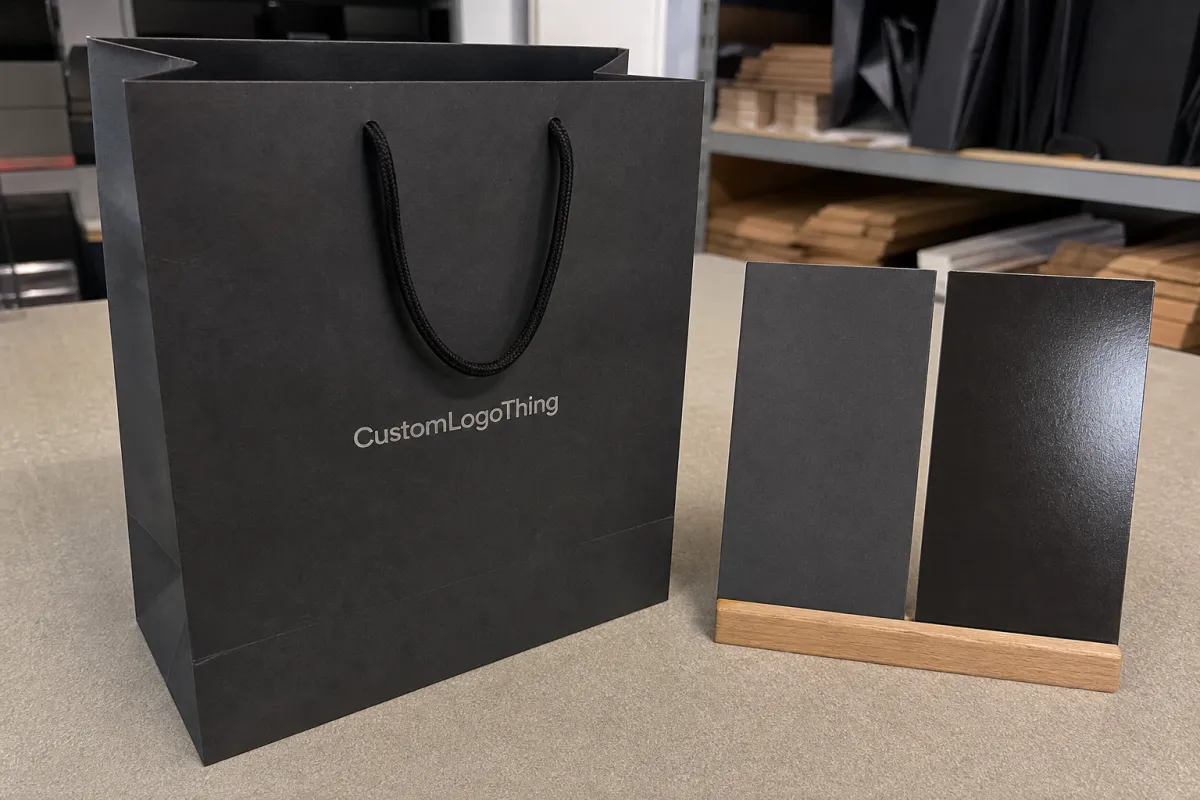
Start with the brand story: does your luxury good crave a plush handshake, or do you need depth of color and high-traffic resilience? I have clients in our Chattanooga showroom hold both samples punched from the same 350gsm stock and tell me which one they’d hand to the CEO versus the barista—and that answer pretty much gives me their finish.
Handling environment matters too—retail counters, overseas shipments, local subways—because humidity above 60% makes soft touch feel like turtle shell on a ski-resort launch, which happened once and taught me testing beats gut feelings every time.
“We had a client shift from soft touch to velvet when they discovered their packaging had to survive vending machines in Florida, and the difference in scuff resistance was night and day,” said Rosa, our finishing lead in Memphis.
Walk through this checklist:
- Review rheology reports—soft touch targets 800 cP during knives-over-roll, velvet needs 650 cP steady flow to avoid resin swirl.
- Check opacity so metallic inks shine on velvet and behave on soft touch, and confirm whether the hot-foil stamp wants matte or glossy.
- Allow dry-time: soft touch wants 12 hours to flatten, velvet cures instantly but demands registration within 10 microns, so plan the press window correctly.
Before finalizing, request a tactile sample booklet, run the dieline through the production planner to confirm 12–15 business day timelines from proof approval, and order a proof on your actual stock—feel it, feel it again, then feel your contract, because no screen replaces the real touch when you compare soft touch versus velvet coatings.
I always advise a 5,000-piece proof run so you can test embossing, foil, and die cuts in your workflow and adjust wattage or knife pressure before the full run; trust me, these tests save you from the mythical “I thought it would look like that” conversations later.
Our Recommendation & Action Plan after comparing soft touch versus velvet coatings
My go-to recommendation: soft touch for satin-like, hug-ready luxury goods through our Memphis bindery, velvet for projects needing color depth and fast processing via the Gainesville UV line; from that baseline we tailor everything because no two brands sweat the same way.
Action plan? Request a tactile sample booklet, run your dieline through production planning for a 14-business-day proof-to-ship window, consult our finishing specialists, align substrate choice with coating chemistry, and document every deviation; if it’s not written down, the pressman never knew.
Your launch checklist should include order submission, proof approval, press scheduling, and final QA—track each step so comparing soft touch versus velvet coatings happens with confidence and brand alignment.
Stick to that plan and you sidestep the late-night coating swaps, keep our Chicago Heights, Nashville, Cleveland, and Memphis teams synchronized, and deliver finishes that hold up under ISTA and ASTM handling protocols; I still remember that 2 a.m. call—never again, checklist, never again.
Final takeaway: test the finishes on your actual packaging concept, note the tactile choice on proofs, and follow this documented action plan so you can compare soft touch versus velvet coatings with zero guesswork and a clear path to press.
How does compare soft touch versus velvet coatings affect durability?
Soft touch resists fingerprints but scuffs easier, losing 3.5% weight on the Taber wheel after 500 strokes, while velvet’s UV-cured resins bump abrasion resistance and drop only 2%; we confirm both specs on the Hudson plant abuse rack before sign-off, and during a tour a senior buyer asked if “we do this for fun,” which told me we’re onto something.
Can I print metallic inks over soft touch and velvet coatings when I compare them?
Soft touch can dull metallics unless trapped with a heavier lacquer, while velvet usually keeps that shine thanks to rapid UV sealing; always proof on the actual 350gsm stock so sheen and registration meet expectations, because I’ve watched gold turn into blingy sadness when someone skipped the trap, so test it.
What’s the timeline difference when you compare soft touch versus velvet coatings?
Soft touch needs that drying day after application—the board rests 12 hours—while velvet cures instantly under UV, so velvet jobs often clear the scheduling board in eight business days and soft touch holds a 12-day window; plan ahead, especially if embossing or foil follows the coating.
Which coating is better for tactile branding when I compare soft touch versus velvet coatings?
Soft touch delivers plush, matte feel for high-touch luxury, velvet gives a smoother, luminous surface that highlights saturated colors; choose based on the sensory impression you want—the question I ask is, “Do you want them to hug the package or stare at it like a painting?” and it usually clears the debate.
Does cost vary widely when I compare soft touch versus velvet coatings?
Yes, soft touch often adds less on long runs but needs more drying, while velvet demands premium resins and UV set-up, so per-unit costs shift with volume; request a detailed quote to see how your run size influences the most cost-effective finish, and keep a spreadsheet with a sarcastic warning that says, “Don’t forget to multiply by the labor cost of a frustrated press operator,” because someone always forgets.
Explore ISTA testing protocols at ista.org (see ISTA 6A for 75-lb cartons) and packaging guidelines through packaging.org so you match your project requirements with the regulatory expectations we reference when we compare soft touch versus velvet coatings; yes, I still check both before every bid.
Related packaging resources
Use these related guides to compare specs, costs, quality checks, and buyer decisions before making the final call.
- Custom Candle Labels for Cosmetics Brands Quote Checklist
- Custom Candle Labels for Coffee Roasters: Quote Checklist
- Branded Candle Labels for Cosmetics Brands Quote Checklist
- Printed Candle Labels for Skincare Launches Supplier Quote