Buyer Fit Snapshot
| Best fit | Compostable Corrugated Boxes Quote projects where brand print, material claims, artwork control, MOQ, and repeat-order consistency need to be specified before quoting. |
|---|---|
| Quote inputs | Share finished size, material target, print colors, finish, packing count, annual reorder estimate, ship-to region, and any compliance wording. |
| Proofing check | Approve dieline scale, logo placement, barcode or warning zones, color tolerance, closure strength, and carton packing before bulk production. |
| Main risk | Vague material claims, crowded artwork, missing packing details, or unclear freight terms can make a low unit price expensive after revisions. |
Fast answer: Compostable Corrugated Boxes Quote: Pricing and Lead Times should be specified like a repeatable production item. The safest quote records material, print method, finish, artwork proof, packing count, and reorder notes in one written spec.
Production checks before approval
Compare the actual filled-product size with the drawing, then confirm tolerance on folds, seals, hang holes, label areas, and retail display edges. Reserve space for logos, QR codes, warning copy, and material claims before decorative graphics fill the panel.
Quote comparison points
Review material grade, print process, finish, sampling route, tooling charges, carton quantity, and freight assumptions side by side. A quote is only useful when the supplier can repeat the same color, closure quality, and packing count on the next order.
A compostable corrugated boxes quote should read like a production agreement that a plant can actually build from, not a puzzle made out of board grades, print coverage, inserts, and freight assumptions. Two suppliers can look at the same dimensions and return numbers that sit far apart, and that usually means one of them is pricing a heavier board, a tighter tolerance, a different finishing step, or a more realistic run condition. That kind of spread is normal in packaging. The trouble starts when a compostable corrugated boxes quote leaves too much unstated and the buyer only discovers the missing pieces after approval.
Custom Logo Things helps buyers sort through those differences before they turn into expensive surprises. The cleanest path is usually the simplest one: send a complete spec, ask for a direct unit price, and confirm the assumptions behind the number. A compostable corrugated boxes quote becomes useful only when it shows what is included, what is not, and which choices can move the price later. I’ve seen a board swap add more to the total than the print upgrade, which is why the details matter so much.
Most delays begin with one small omission. Internal size gets written down as external size. The insert gets left out of the request. Artwork arrives as a JPEG instead of a vector file. Then the schedule slips while everyone corrects the drawing, the material callout, and the math. A careful compostable corrugated boxes quote avoids that chain reaction by starting with the right inputs and ending with a number that matches the shop floor, not just the spreadsheet. It sounds basic because it is basic, and basic mistakes are usually the expensive ones.
Why a Compostable Corrugated Boxes Quote Can Change Fast
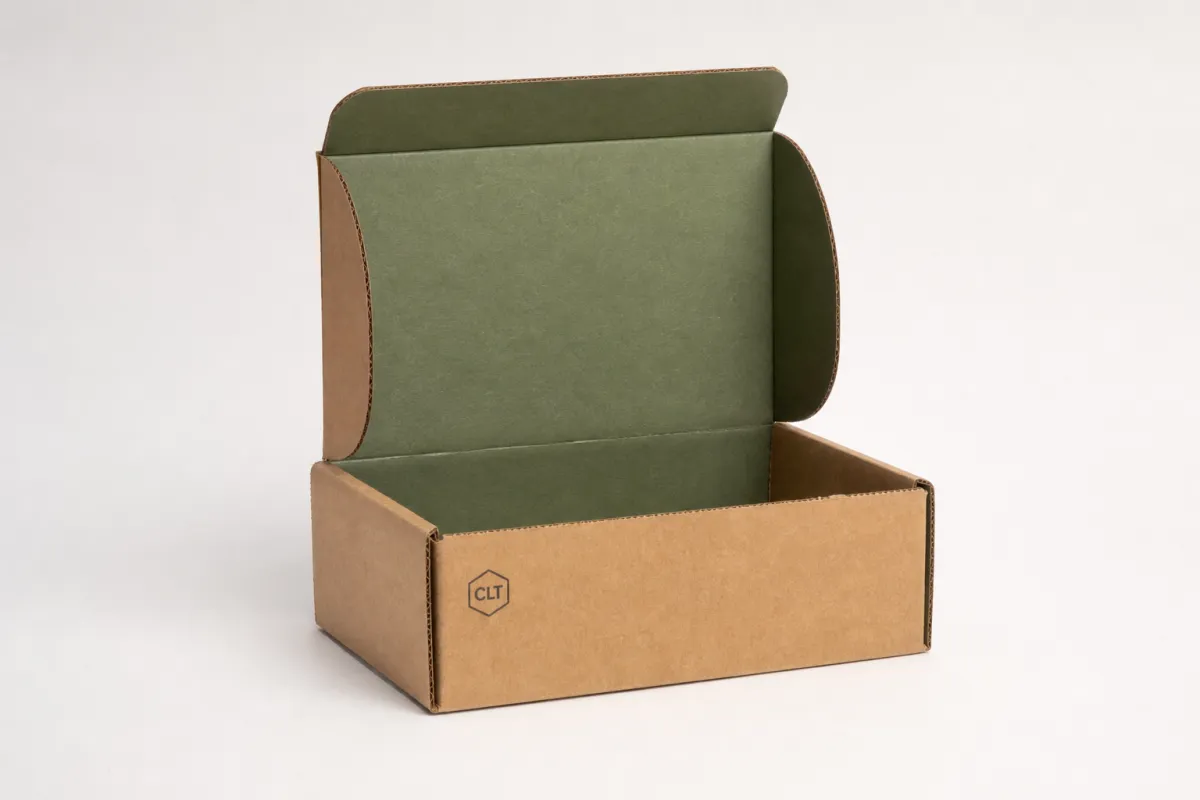
A compostable corrugated boxes quote can move for reasons that have little to do with the shell shape itself. The same footprint can price very differently if one buyer asks for stronger board, more print coverage, a tighter cut, a different closure, or a shipping spec that demands more from the structure. The box is part of the price, but the details around it often matter just as much. In practice, the quote is built from a stack of small decisions, and each one leaves a mark on the final number.
Board grade tends to set the tone first. A light mailer might work on a lower-weight single-wall board, while a retail-ready shipper or a heavy product carton may need stronger kraft liners and a better flute profile. If the box has to survive stacking, long transit, or rough handling in a warehouse, the compostable corrugated boxes quote will reflect that need. Stronger board costs more because it gives the product a better chance of arriving intact, and there is no real way around that tradeoff.
Print changes the picture too. A simple one-color logo on a single panel sits in a very different pricing lane than full-coverage branding with tight registration, multiple panels, or a white-underprint effect. Add a window cutout, a tear strip, or a custom insert, and the quote shifts again. Freight can change the total as well, especially on smaller runs where shipping costs do not spread out across enough units to soften the impact. A buyer who only asks for the lowest unit price can get fooled by the freight line later, which is a pretty annoying way to learn the lesson.
The common mistake is asking for a headline number before the spec has been settled. That is how buyers end up comparing a quote that looks attractive on the surface and fails later when the missing details are added. A dependable compostable corrugated boxes quote should always be judged against the same set of assumptions: same dimensions, same print method, same board, same packing style, same ship point.
The cheapest quote is rarely the best one. The one that survives sampling, production, and delivery without a trail of change orders usually proves more valuable. Good buyers know that a low number on paper means little if it collapses the moment the factory starts building boxes. That is the kind of thing that makes procurement teams lose sleep, and for good reason.
“The quote that survives production is the quote that named the flute, the print side, and the freight zone.”
If you already know you need a shipper rather than a decorative sleeve, it helps to compare structure options early. Our Custom Shipping Boxes page is a useful starting point, but the real value comes from matching the box style to the load, not just the logo.
Compostable Corrugated Boxes Quote: What the Product Includes
A compostable corrugated boxes quote should describe the actual build, not just the outside dimensions. Corrugated board is made from liners and a fluted medium, and those layers do the work. The outer liner may be kraft or white-top. The flute can be E, B, C, or a double-wall build if the package needs more compression resistance. Each choice affects strength, print quality, weight, and cost, which means each choice Affects the Quote.
The compostable claim deserves a close read. A fiber-based corrugated box often fits better with green packaging goals than a plastic-heavy packout, yet the claim still depends on the full material stack. Water-based inks, starch-based adhesives, and paper-based inserts are generally simpler than film windows, laminated finishes, or specialty coatings. If the package includes non-fiber parts, the compostable corrugated boxes quote should say that directly. Buyers should ask which pieces are fiber-based, which are not, and what documentation is available for each claim. I’m not going to pretend every corrugated build is compostable just because it is made from paper; the coating, liner treatment, and accessory parts can change the story fast.
That is where confusion often starts. A box body may be recyclable or fiber compostable in practical terms, but an adhesive strip, a coating, or a window film can change the end-of-life story. If a supplier is promising full compostability, ask for proof rather than slogans. A good supplier can explain where the structure meets the claim and where it does not. That honesty matters more than the marketing language, especially if the box will be used in a program that has to stand up to retailer review or internal sustainability reporting.
The quote also needs to account for add-ons. A die-cut window, a folded insert, internal partitions for fragile products, or a tear strip for easy opening all use more material and labor. Branded print across multiple panels does the same thing. A simple shipper and a premium retail mailer are not the same product, even if the outer dimensions match. Those differences can feel small when you are looking at a sketch, but they show up quickly in a production estimate.
For buyers working toward eco-friendly packaging goals, the better question is not “Is it green?” but “What exactly is it made of, and what happens after use?” That approach supports a real circular economy mindset without paying extra for features that do nothing for shipping performance or product protection. It also keeps the conversation grounded, which is useful when several departments are trying to weigh in at once.
If you need more than a box shell, review the rest of our Custom Packaging Products. Bundling inserts or related components can sometimes reduce waste and make the quoting process easier to manage.
Useful authority sources can help separate packaging facts from marketing language. The Packaging Machinery Manufacturers Institute offers helpful packaging context, and FSC explains forest sourcing standards that matter when buyers want certified fiber.
Specifications That Affect Fit, Strength, and Compliance
A compostable corrugated boxes quote is only as accurate as the spec sheet behind it. If the buyer gives the wrong size format, the wrong board grade, or no print detail, the number can drift before the first sample is even cut. The basics matter more than many teams expect. Internal dimensions, external dimensions, flute type, board grade, and print side should all be clear from the start.
These are the kinds of details that save time: whether the dimension is inside or outside; whether the product weighs 1 lb or 8 lb; whether the box is retail-facing or only used as transit packaging; whether the artwork sits on one panel or wraps around the full shell. Those answers let the supplier build a compostable corrugated boxes quote that fits the product instead of forcing a round number into a job that needs precision. I have watched projects stall for days because someone wrote “10 x 8 x 4” without saying whether that was inside or outside, and that tiny gap turned into a bunch of extra emails nobody wanted.
- Internal dimensions: The usable space inside the box, which matters for fit and insert design.
- Outside dimensions: Needed for freight planning and carton stacking.
- Flute profile: E flute for print and compact size, B flute for balance, C flute for better compression, and double-wall for heavier loads.
- Board grade: Impacts strength, weight, and cost.
- Print side: Outer liner only, inside and outside, or full wrap.
Performance data matters too. ECT, burst strength, and compression resistance are not just technical labels. They tell you whether the box can hold up in transit, on a pallet, or in a distribution center. A sharper render does not stop a crushed corner. For shipping programs, buyers often want the pack to align with distribution testing such as ISTA methods or similar drop and vibration profiles. That is not mandatory for every order, but it is a sensible checkpoint when the product has to survive more than a short local trip.
Compliance can change the compostable corrugated boxes quote as well. Some buyers need FSC-sourced fiber. Others need recycled content targets. Some need wording that avoids overclaiming about compostability. A few need a retailer standard or food-contact secondary packaging guidance. The supplier should not guess at those requirements. If the packaging needs documents, ask for them before production starts. A trustworthy quote says what can be documented and what cannot.
Artwork deserves the same attention. Vector files print more cleanly than raster images. Bleed should be set correctly. Color limits should be realistic. One-color print often costs less and runs cleaner on corrugated board. Two-color adds complexity. Full coverage can look strong, but it raises cost and usually asks for more careful setup. None of that is exotic. It is simply the difference between a tidy run and a frustrating one.
A useful rule: if the quote does not mention the spec, the spec is probably not locked. That is where surprises slip in. A solid compostable corrugated boxes quote names the exact board, the exact size, the exact print method, and the exact expectation for compliance documents. Anything less is a draft.
Cost, Pricing, MOQ, and Unit Cost Breakdown
A compostable corrugated boxes quote is usually driven by five things: board choice, box size, print complexity, order volume, and shipping distance. The nice part is that all five are visible. The hard part is that buyers often compare only the unit price and ignore setup or freight. That is how a quote that looked inexpensive turns expensive once the order lands.
MOQ matters because low-volume runs carry more setup cost per box. A run of 500 boxes may have a much higher unit cost than a run of 5,000 because the tooling, setup, and changeover are spread across fewer pieces. Higher volume lowers unit cost, but it also ties up cash and storage space. There is always a tradeoff, and a compostable corrugated boxes quote should make that tradeoff easy to see.
Setup charges deserve their own line. Die cutting, printing plates, sampling, and special tooling should not disappear inside a vague all-in number. They are real costs, and they can vary from supplier to supplier. If a vendor offers a suspiciously low opening price, ask what is included. If the answer stays vague, the final invoice may tell the rest of the story.
For practical planning, these are the kinds of ranges buyers often see on custom corrugated work, depending on specs and quantity:
| Quote Type | Typical MOQ | Unit Cost Range | Setup Range | Lead Time |
|---|---|---|---|---|
| Simple fiber-based mailer, one-color print | 500-1,000 | $0.45-$0.90 | $80-$250 | 10-15 business days |
| Branded die-cut shipper with inserts | 1,000-3,000 | $0.85-$1.65 | $180-$500 | 12-20 business days |
| Heavy-duty structure with special finish or compliance checks | 2,000-5,000 | $1.40-$3.25 | $300-$900 | 15-25 business days |
Those ranges are directional, not universal. A compostable corrugated boxes quote for a repeat program can land lower than a small one-off run, and a difficult artwork file can push setup higher even when the board is simple. Freight can also affect the total more than buyers expect, especially if boxes ship by pallet instead of as consolidated cartons. If the ship point is farther away or the cartons are dense enough to require a different freight class, the final number can budge in a hurry.
If you want to save money Without Cutting Quality, the best changes are the ordinary ones. Standardize the box size. Reduce print coverage where possible. Combine SKUs that fit the same structure. Avoid custom inserts unless they truly reduce damage. Pick the lightest board that still passes the handling test. That is not flashy, but it protects margin and keeps the compostable corrugated boxes quote honest.
Here is the blunt version: the cheapest box is not always the cheapest package. If a box fails in transit, the carbon footprint gets worse because replacements have to be shipped. Better structure often supports both the budget and the sustainability story. That is how zero waste thinking should work in packaging: fewer failures, fewer reprints, fewer rush shipments, and fewer of those annoying little fixes that pile up into real cost.
A useful buyer check is to ask for tiered pricing. A quote at 1,000, 3,000, and 5,000 units shows the breakpoint where the unit price starts to make sense. A good compostable corrugated boxes quote should show those tiers without making you ask for them more than once.
Quote Process, Timeline, and Lead Time
A compostable corrugated boxes quote should follow a straightforward path: request intake, spec review, price confirmation, sample approval, production release, and shipment planning. If any step is vague, the timeline becomes vague too. That is how simple jobs turn frustrating. The process does not need to be fancy. It needs to be disciplined and clear enough that everyone knows what happens next.
The fastest quotes come from clean input. Send dimensions, quantity, product weight, artwork, target ship date, and any sustainability documents you need. If you already have a dieline or a photo of the existing pack, send that too. One well-prepared request often removes a long chain of back-and-forth. A supplier can build a better compostable corrugated boxes quote when they do not have to guess whether the box is a mailer, a display shipper, or a protective transit carton.
Lead time depends on how much is changing. A repeat job with no artwork revision can move quickly. A new structural design needs more attention. If sampling is required, add days. If the buyer wants a certification review or a retail compliance check, add more days. For many custom corrugated programs, a realistic window after approval is often 12-20 business days, though more complex runs can move outside that range. Rush requests can work on some jobs, but rushing a bad spec only gets you to the problem faster.
Delays usually come from the same small set of issues:
- Missing dimensions or unclear size reference.
- Artwork sent in the wrong file type.
- Sample revisions after the first proof.
- Unclear approval authority on the customer side.
- Late changes to inserts, coatings, or print coverage.
That is why a compostable corrugated boxes quote should stay live until the sample is approved. Some buyers treat approval as the finish line. It is really the point where the spec becomes stable enough to build against. If someone changes the print or the closure after that, both the schedule and the cost can shift.
Some parts can move faster than others. Artwork proofing can be quick if the file is clean. Sample review can move quickly if the buyer knows what they want. Production can run fast when the shop already has the right board on hand. What cannot be rushed safely is the stage where the spec is still unsettled. Someone has to lock the details, or the final invoice will carry the cost of indecision.
For buyers focused on green packaging, lead time also touches the sustainability story. A rushed reprint after a mistake adds waste, freight, and emissions. A clean first-pass compostable corrugated boxes quote is one practical way to keep the carbon footprint in check while avoiding a stack of wasted board. That is the kind of quiet efficiency that actually matters.
Why Choose Us for Compostable Corrugated Boxes
Custom Logo Things focuses on making a compostable corrugated boxes quote clearer, faster, and easier to compare. That sounds plain because it is plain. Buyers do not need a sales script. They need a supplier that explains what will work, what will not, and what it will cost before anyone starts cutting board. Clear quoting saves time, and it also saves those awkward moments where the sample looks right and the invoice does not.
Design and manufacturing support matter here. A good packaging partner should be able to tell you whether the structure is underbuilt, whether the print area is too ambitious, or whether the insert is doing more harm than help. That guidance is not about upselling. It is about keeping the box functional and the budget under control. A stronger spec can reduce damage claims. A lighter spec can trim material cost. The right answer depends on the use case, and a proper compostable corrugated boxes quote should reflect that.
Consistency matters just as much. Repeat orders should match the approved sample, not drift because someone guessed at the flute or swapped a liner without telling you. Buyers who run recurring packaging programs need repeatability. The first pallet and the tenth pallet should behave the same way. That is the difference between a supply chain and a scavenger hunt, and nobody wants the scavenger hunt version.
Here is where many suppliers get lazy: they quote a box, not a packaging system. We look at the outer shipper, the insert, the branding, the storage stack, and the handling path together. That approach usually produces a better compostable corrugated boxes quote because the structure is tied to real production conditions instead of a pretty mockup that never sees a warehouse. That kind of thinking is usually worth more than a slick render.
We also keep the conversation grounded. If a box needs a different board, we say so. If a print effect is going to raise the price, we say so. If the order quantity is too low to justify a custom tool, we say so. Some people want a supplier who nods at everything. That gets expensive quickly. A direct answer early is better than a polite problem later.
If you are comparing suppliers, look at the whole package. Compare board grade, print method, MOQ, tooling, freight, and sample terms. Then compare the responsiveness of the quote itself. A slow or unclear compostable corrugated boxes quote often turns into a slow or unclear production run. That pattern is not subtle.
If you want to talk through a packaging change, use our Contact Us page and send the basic specs. One clean request is worth more than five vague ones.
Next Steps After Your Quote Request
Once you ask for a compostable corrugated boxes quote, send the details that let the quote stand on its own. The cleaner the input, the fewer follow-up questions you will get. At minimum, send internal dimensions, quantity, product weight, print coverage, ship date, and any documentation you need for compostability, FSC sourcing, or retailer compliance. If you have a dieline or sample photo, include it. That removes guesswork quickly.
A simple comparison checklist helps too. Use it across every supplier so you are not comparing apples to pallets:
- Board grade: Same flute and liner quality on every quote.
- Print method: Same color count and coverage.
- MOQ: Same minimum order and tiered pricing.
- Tooling: Same die charges and sample fees.
- Freight: Same shipping terms and ship point.
- Sample terms: Same approval path before production.
That list sounds plain because it is plain. Plain is useful. Plain keeps people honest. A strong compostable corrugated boxes quote should already answer those questions, but a comparison sheet makes it easier to spot where one supplier is pricing a heavier spec or hiding setup inside the unit cost.
Approve the spec sheet before approving production. Then approve the sample. Then lock the order. That order matters. Skipping steps is how packaging teams end up arguing after the run starts. Nobody enjoys that, and nobody gets paid extra for it. The little pause up front usually saves a whole lot of cleanup later.
If your program includes multiple pack types, review our Custom Packaging Products so you can see what else can be standardized across the line. Sometimes a small structure change reduces inserts, reduces waste, and tightens the whole packaging system.
The fastest way to get a useful compostable corrugated boxes quote is still the simplest: one clean spec, one artwork file, and one deadline. Send those three things, and the quote can actually mean something. That is the point. Not a vague promise, not a polished pitch, just a compostable corrugated boxes quote that holds up when the boxes hit the dock.
What details do I need for a compostable corrugated boxes quote?
Send internal dimensions, quantity, product weight, print coverage, and whether you need inserts or special closures. Include any certification or sustainability requirements up front so the quote reflects the right materials from the start. If you have a dieline or sample photo, include it. It cuts back-and-forth fast.
Why does one compostable corrugated boxes quote cost more than another?
The biggest drivers are board strength, box size, print complexity, and order volume. Freight and setup charges can move the total more than people expect, especially on smaller runs. Two quotes that look similar on paper can still be very different once you compare specs line by line.
What is a normal MOQ for compostable corrugated boxes?
MOQ depends on the factory setup, box style, and print method, so there is no single universal number. Simple, standard boxes usually allow lower MOQ than fully custom structures with special tooling. Ask for tiered pricing so you can see the unit cost at your target volume and the next break point.
How long does production take after I approve the quote?
Simple repeat jobs are faster than new custom boxes, which need sampling and approval time. Artwork changes, structure revisions, and certification checks add days, sometimes more if samples need rework. If the deadline matters, say it early. Rush requests are easier to manage before the quote is locked.
Can you quote printed compostable corrugated boxes with inserts?
Yes, but the insert material, print coverage, and box structure all need to be specified together. If the insert holds a product securely, it can reduce damage and may save money versus overbuilding the outer box. The cleanest quote comes from one spec sheet that shows the box, insert, print, and packing method in one place.
If you are about to request a compostable corrugated boxes quote, the smartest move is to lock the spec first, then compare suppliers on the same exact build. That keeps the decision tied to real cost, real performance, and real documentation instead of a polished headline number that falls apart once production starts.


