Buyer Fit Snapshot
| Best fit | Compostable Mailer Boxes With Logo projects where brand print, material claims, artwork control, MOQ, and repeat-order consistency need to be specified before quoting. |
|---|---|
| Quote inputs | Share finished size, material target, print colors, finish, packing count, annual reorder estimate, ship-to region, and any compliance wording. |
| Proofing check | Approve dieline scale, logo placement, barcode or warning zones, color tolerance, closure strength, and carton packing before bulk production. |
| Main risk | Vague material claims, crowded artwork, missing packing details, or unclear freight terms can make a low unit price expensive after revisions. |
Fast answer: Compostable Mailer Boxes With Logo: Materials, Cost, Fit should be specified like a repeatable production item. The safest quote records material, print method, finish, artwork proof, packing count, and reorder notes in one written spec.
Production checks before approval
Compare the actual filled-product size with the drawing, then confirm tolerance on folds, seals, hang holes, label areas, and retail display edges. Reserve space for logos, QR codes, warning copy, and material claims before decorative graphics fill the panel.
Quote comparison points
Review material grade, print process, finish, sampling route, tooling charges, carton quantity, and freight assumptions side by side. A quote is only useful when the supplier can repeat the same color, closure quality, and packing count on the next order.
A pretty box is not enough. Compostable mailer boxes with logo can do real work for a brand, but only if the board, adhesive, coating, and print method survive the same reality check: can the package handle a rough delivery network and still break down as promised?
That question sounds simple. It usually is not. Plenty of "eco-friendly" packaging looks convincing on a product page and then falls apart in the first damp warehouse, the first stack of parcels, or the first careless conveyor. If you are paying for compostable mailer boxes with logo, you want more than a tidy sustainability story. You want a shipper that protects the product, supports your eco-friendly packaging goals, and does not quietly raise your carbon footprint through oversized cartons, wasted board, and rework.
For ecommerce brands, these boxes sit in an awkwardly important middle ground. They are not a fragile presentation carton, and they are not a plain utility mailer either. They are the branded outer layer that tells the customer someone paid attention. That message only lands when the box fits properly, prints cleanly, and keeps its shape in transit.
I have watched teams spend weeks arguing over artwork while the actual shipping spec stayed fuzzy. The art direction mattered, sure, but the box that arrived slightly too large ended up costing more in freight and filler than the logo ever justified. That is the part people miss when they are trying to look sustainable on launch day.
What Compostable Mailer Boxes With Logo Really Mean
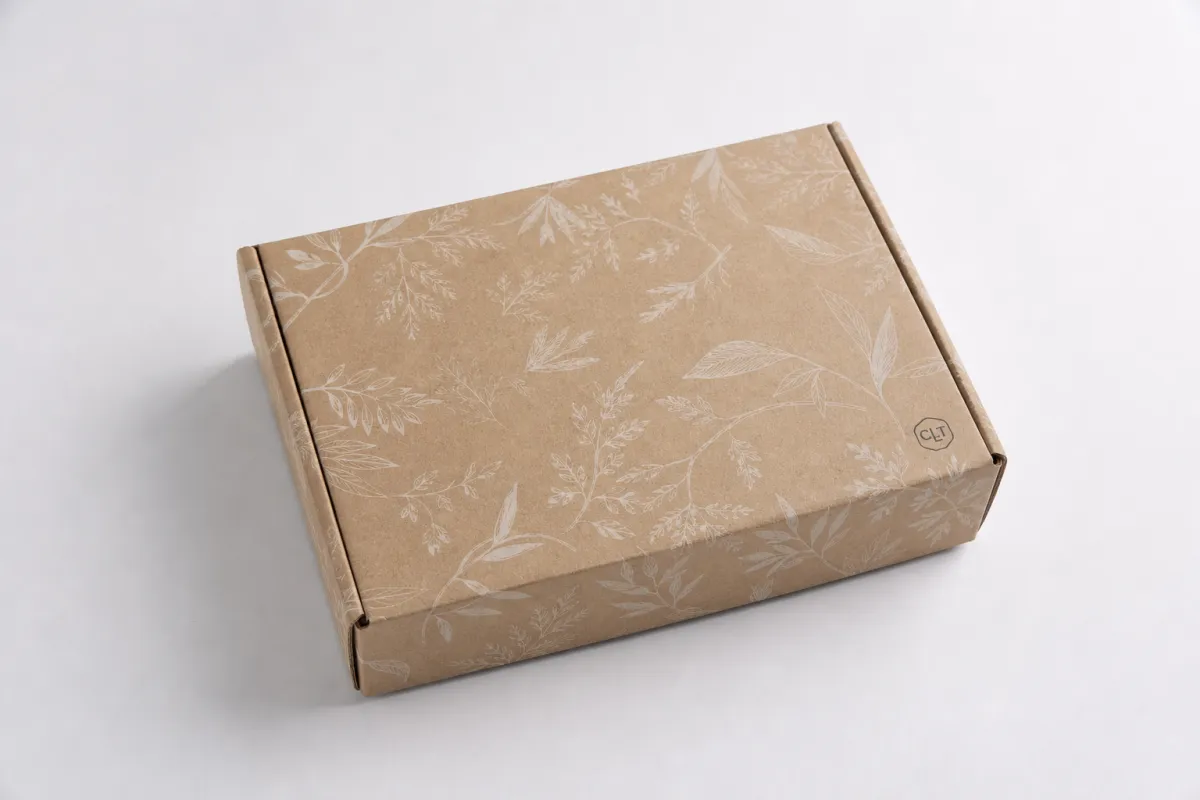
Compostable mailer boxes with logo are branded shipping boxes made from materials designed to break down under composting conditions. The phrase gets thrown around loosely, which is part of the problem. Compostable is not the same thing as biodegradable, recyclable, or "green if nobody asks a follow-up question."
Here is the practical version. Compostable means the material is expected to convert into water, carbon dioxide, biomass, and smaller residue under specified conditions and within a defined time frame. Biodegradable is looser and often too vague to mean much without a real environment attached to it. Recyclable means the material can re-enter a recycling stream, assuming the local system actually accepts it. Recyclable-with-caveats is the awkward phrase brands use when the material technically belongs in a bin but coatings, inks, contamination risk, or local rules make that route uncertain.
That difference matters. A box can look earth-friendly and still fail the compost test if the coating blocks breakdown, the adhesive uses the wrong chemistry, or the ink system adds a layer that does not belong there. I have seen buyers spend money on compostable mailer boxes with logo only to discover that the disposal instructions were vague enough to function as marketing, not guidance.
The use case is fairly narrow, which is exactly why it works. These boxes make sense for lightweight, flat, or moderately protected products: apparel, books, supplements, accessories, small beauty items, and subscription kits. Heavy goods, sharp edges, and crush-prone products need a stronger spec. A branded carton is not a shield. It is packaging. Its job is to survive shipping, not to perform miracles.
Customers notice the difference immediately. A crisp logo does not rescue a box that arrives bent, damp, or oversized by an inch on every side. The result is a contradiction: "we care about sustainability, but not enough to fit the product properly." That is a rough message for a brand trying to build trust in the circular economy or reduce waste honestly.
If you are still comparing formats, our Custom Packaging Products page is a useful starting point, and Custom Poly Mailers are worth checking if your product only needs a lighter outer layer instead of a rigid box.
One more thing: compostable branding should never be a substitute for careful sourcing. FSC-certified paperboard, controlled adhesives, and the correct print system matter. Ask for proof, not adjectives. A supplier who can explain the chemistry is more useful than one who can decorate a quote with buzzwords.
There is also a legal side to the claim. In the U.S., "compostable" is not a free-floating label; it has to match the actual structure, the disposal environment, and any applicable certification basis. Depending on the material stack, standards like ASTM D6400, ASTM D6868, or EN 13432 may be relevant. If a vendor cannot name the standard they are working to, that is a signal to slow down, not a detail to brush past.
How Compostable Mailer Boxes With Logo Work in Transit
Compostable mailer boxes with logo work because the structure does the heavy lifting, not the slogan. A sound mailer box usually depends on folded fiberboard, accurate score lines, enough caliper to resist crush, and a closure that stays shut after repeated handling. The logo sits on top of that system. It should not interfere with it.
Board selection comes first. Lighter board lowers cost and trims freight weight, but it leaves less room for abuse. Heavier board increases stiffness, stackability, and product protection, though it raises material cost and can change how the folds lock. Most brands end up somewhere between "cheap but flimsy" and "overbuilt for a scarf." The right point depends on product weight, fill volume, and how punishing the parcel network is likely to be.
The logo can be applied with flexographic printing, digital printing, or another approved system depending on quantity and surface. Flexo usually wins on larger runs and simple spot-color graphics. Digital opens more options for shorter runs and variable layouts. The finish matters because some coatings, laminations, and inks are not compatible with compostability claims. If the material has to remain compostable, ask how the print system affects that claim before you sign off on the art. "Eco" on the quote is not chemistry.
Transit is where the romance ends. A box gets compressed in a sort, bumped in a truck, dropped onto a conveyor, and stacked under heavier parcels. That is normal. For compostable mailer boxes with logo to earn their keep, they need real crush resistance, honest moisture tolerance, and closure integrity. A weak seam or a flap that pops open can ruin the whole shipment. So can a logo panel printed in a way that smears after damp handling.
If you want a technical reference point, look at shipping performance tests like ISTA procedures. They are not packaging fairy dust, but they are far better than guessing. For disposal and recovery basics, the EPA's composting resources at EPA composting guidance help clarify what real composting conditions look like.
End-of-life logic needs to be plain. Compostable mailer boxes with logo are not magic. They are only compostable in the right environment, under the right conditions, with the right collection path. Industrial composting and home composting are not interchangeable. If a supplier cannot tell you which one applies, that is a problem, not a detail.
Think of the packaging as a chain. Board, adhesive, ink, seal, distribution, and disposal all have to hold together. One weak link makes the environmental claim shaky and the shipping experience worse. That is why the cleanest-looking box is not always the best box.
Sizing, Materials, and Print Factors That Change Results
Wrong dimensions cost more than the right material ever saves. Oversized compostable mailer boxes with logo burn through board, add freight volume, invite movement inside the pack, and make the brand look careless. Too small, and the box bulges or crushes the product. Sizing is not clerical work. It is a cost decision and a performance decision.
Start with the actual product footprint, not the marketing photo. Measure the product with any insert, protective wrap, or tissue that ships with it. Then add only the clearance you need. A flat apparel box may need minimal extra room. A fragile accessory kit may need more room for padding or a fitted insert. The aim is to fit the item, not to leave it swimming in empty fiberboard.
Material choice changes the result fast. A thinner board may be enough for lightweight goods and can keep the price accessible. A stronger board or higher caliper construction improves stacking and reduces corner crush. If moisture is a concern, the finish has to be chosen carefully because many water-resistant treatments are not compost-friendly. This is where buyers get tripped up. They ask for "better protection," and the supplier quietly adds a surface treatment that complicates the sustainability claim.
Print choices matter too. One-color printing on kraft or natural board often looks cleaner and more premium than a crowded full-bleed design. A lot of brands assume more color equals more value. Not always. Sometimes it just means more ink, more setup, and less clarity. For compostable mailer boxes with logo, a restrained logo placement, a single accent color, and a well-chosen matte surface can feel more premium than a loud box that tries too hard.
The inside of the box matters as well. Interior print can strengthen the unboxing sequence, but it adds cost and can complicate compostability depending on the ink and coverage. Inserts are another decision point. A paperboard insert may be compost-friendly if designed correctly. Foam is a different conversation, and not a flattering one.
A compostable label is not a free pass. If the coating blocks breakdown or the box arrives crushed, the planet does not care about your marketing deck.
Here is a simple comparison of common options:
| Option | Typical Use | Approx. Unit Cost at 5,000 | Main Tradeoff |
|---|---|---|---|
| Natural kraft mailer, one-color logo | Light apparel, accessories, low-friction ecommerce | $0.42-$0.68 | Best value, but limited visual impact |
| Heavier compostable board, one- to two-color print | Subscriptions, beauty kits, moderate protection needs | $0.58-$0.92 | Better crush resistance, slightly higher freight and board cost |
| Higher-coverage branded mailer with inside print | Premium unboxing, influencer kits, presentation-focused orders | $0.78-$1.25 | Stronger brand moment, but print and setup costs climb quickly |
The best spec is not the fanciest spec. It is the spec that protects the product, fits the shipment, and keeps the environmental claim honest. That is the boring truth. Boring usually saves money.
For brands trying to align packaging with zero waste goals, the best move is often a smaller, smarter box rather than a larger "sustainable" one. A tight fit reduces board usage, lowers dimensional shipping charges, and cuts down on filler. That is how green packaging starts acting like a business decision instead of a slogan.
And yes, sometimes the simplest board finish wins the day. I have seen buyers want soft-touch coatings and metallic inks, then realize the minimal look tells a better story and keeps the carton easier to qualify. It is kinda satisfying when the cleaner option is also the smarter one.
Production Steps and Timeline: From Dieline to Delivery
Compostable mailer boxes with logo should move through production in a disciplined sequence. First, you give the supplier product dimensions, target quantity, shipping requirements, and any sustainability constraints. Then the structure gets selected. Then a dieline is reviewed. Then artwork is checked against that dieline. Then the proof is approved. Production starts only after that. Skip a step and you tend to pay for it later.
The dieline is not a decorative PDF. It is the map. It shows folds, glue zones, bleed areas, and no-print areas. If your logo lands on a flap or crease, it may look fine on screen and fail on the finished box. Good suppliers earn their fee by catching those problems before the press runs, not after 3,000 units are already stacked in a carton on the floor.
Sampling is cheap insurance. A physical sample exposes weak seams, incorrect depth, print placement issues, and closure friction. It also tells you whether the product rattles inside the box. That detail matters more than people admit. A polished graphic cannot cover up a package that sounds broken every time the courier lifts it.
For compostable mailer boxes with logo, the timeline usually includes artwork prep, proofing, any tooling or plate work, production, curing or drying, packing, and freight booking. A simple order with ready files might move in roughly 12-18 business days after proof approval, depending on factory load and shipping method. More complex runs take longer. If a supplier quotes something unrealistically fast, ask what part of the process they are skipping. Usually it is the part you will complain about later.
Rush orders are possible, but they come with tradeoffs. The fastest jobs are usually the ones with simple art, one print method, no custom inserts, and clear payment and approval timing. What slows urgency? Missing dieline approval, file cleanup, change requests after proofing, or surprise quantity changes. The production line does not care that your launch date moved. It only cares that the spec keeps changing.
There is also a documentation piece. Ask for compostability paperwork, material details, and the basis for any claims. If the supplier mentions FSC certification, verify whether it applies to the board source and chain of custody. If they mention ASTM references, make sure they can explain the exact standard and why it applies to your structure. If they cannot, the language may be decorative.
Compostable mailer boxes with logo are easiest to execute when the files are clean, the dimensions are locked, and the print plan is realistic. That is the real shortcut. Good preparation saves more time than any rush fee.
One practical habit that saves headaches: ask for a pre-production proof that shows the exact panel order, logo placement, and any warning copy or disposal text. A supplier can be confident and still miss a flap orientation, and that tiny mistake is the sort of thing that makes a whole batch feel off. Nobody wants to discover that after the cartons are in a freight container.
Cost, Pricing, MOQ, and Quote Traps to Watch
Money tends to tell the truth quickly, so let's stay there. The cost of compostable mailer boxes with logo depends on size, board weight, print complexity, quantity, finishing, and shipping distance. That sounds broad because it is broad. Packaging pricing is a stack of small decisions, not one tidy number.
Quantity has the biggest impact. A 1,000-unit run can look expensive on a per-box basis because setup costs are spread over fewer pieces. At 5,000 units, the unit price usually drops enough to make branding feel reasonable. At 10,000 units or more, board economics often improve and print setup gets easier to absorb. That does not mean you should overbuy. It means the math changes with volume.
Moq, or minimum order quantity, is not a conspiracy. It exists because tooling, plate setup, labor, and press changeovers cost real money. Some suppliers can support lower runs with digital print or simpler construction. Others need a higher minimum to make the job viable. If your brand is testing a new SKU, that minimum matters more than a glossy sample deck.
Watch the landed cost, not just the unit quote. A cheap-looking quote can grow teeth once you add samples, freight, duties, packaging cartons, palletization, and rush charges. Suddenly the "budget" option is not budget at all. Compostable mailer boxes with logo should be compared line by line, not by a single nice-sounding price.
Use this checklist when you compare quotes:
- Exact outer and inner dimensions
- Board type, caliper, and any coating or treatment
- Print sides, color count, and coverage
- Proofing method and sample terms
- Lead time after approval, not after inquiry
- Freight terms, carton counts, and pallet details
- Any compostability documentation or certification notes
That last point gets skipped too often. If the supplier cannot explain whether the adhesive, ink, and coating support the claim, then the box may still be useful, but the "compostable" story needs a closer look. A buyer should not have to decode the fine print with a magnifying glass.
Here is the blunt version: if two quotes differ by a lot, one of them is missing something. Maybe artwork setup is excluded. Maybe freight assumes a different destination. Maybe print coverage is not the same. Maybe one supplier is pricing a cleaner structure while another hides the real cost in extras. Ask questions until the quotes become comparable. That is not being difficult. That is buying packaging like a grown-up.
If you are already building a packaging line, consider how these boxes fit with the rest of the system. A branded mailer may pair well with a low-ink insert, a paper label, or a lighter external shipper. A full premium kit with multiple print passes makes sense only if the product margin can support it. The math should support the design, not the other way around.
One extra trap: quotes can look attractive because they assume a different board grade, a shorter transit route, or a weaker print spec. I have seen teams approve the lowest number and then spend the next two weeks trying to "upgrade" the job back to the version they actually wanted. That usually costs more than getting the right version quoted in the first place.
Common Mistakes Brands Make With Sustainable Mailers
The biggest mistake is treating sustainable packaging like a finish, not a system. Brands order compostable mailer boxes with logo, then forget to check whether the local disposal path actually supports composting. That is how good intentions turn into a very expensive virtue signal.
Another common problem is overbranding. Too many colors, too much ink coverage, too many finishes, too much hype. The box starts looking busy and can become harder to keep within a compostable spec. A cleaner natural look often works better anyway. It reads as honest. It also tends to cost less.
There is also a mismatch issue. A premium product shipped in a weak box feels cheap. A fragile item shipped in a light-duty box feels careless. Either mistake makes the packaging look like an afterthought. I see this often with brands that upgrade the logo before they upgrade the structure. The logo is not the hero. The fit is the hero.
Another failure point is the unboxing sequence. If the logo is hidden by a flap, if the opening tab tears badly, or if the insert rattles around inside, the customer notices. They may not know the material spec, but they know when a box opens badly. Compostable mailer boxes with logo should make the opening feel tidy and deliberate. That small bit of friction can spoil the entire presentation.
Here is a simple reality check before you approve production:
- Does the box fit the product without excess void space?
- Does the print stay readable on a natural board tone?
- Does the adhesive, coating, and ink system match the compostability claim?
- Does the shipping box survive a real transit test, not just a desk test?
- Does the packaging match the product price point and brand voice?
If the answer to any of those is "sort of," the spec is not ready yet. That is not negativity. That is how you avoid reprints, returns, and awkward customer emails. Packaging mistakes are usually cheaper to fix before the order lands.
Brands also overestimate how much consumers care about buzzwords and underestimate how much they care about experience. A clear logo, a tight fit, and an honest sustainability claim usually beat a crowded sustainability manifesto printed across every panel. Customers want reassurance, not a lecture.
That is why compostable mailer boxes with logo work best when they are simple, well-fitted, and documented. Good packaging disappears into the shipping process in the best possible way. It does its job, gets out of the way, and leaves the product to do the selling.
Expert Tips and Next Steps Before You Order
Build a one-page spec sheet before you request quotes. Include dimensions, target quantity, product weight, print sides, color count, preferred board, insert needs, and shipping destination. That one page keeps every supplier pricing the same job. Without it, you will compare three different products and call it a comparison. That is how quote confusion happens.
Test the real product, not a concept. Put the item in the sample, close the flap, shake it, stack it, and ship a few pieces through normal courier handling. That gives you a much better read on compostable mailer boxes with logo than a render ever will. If the box fails, change the board or dimensions before you approve production. A small structural change is far cheaper than a full reprint.
Ask for proof details in writing. Ask what changes if the logo coverage expands, if the adhesive changes, or if the coating needs to be adjusted for moisture resistance. Ask whether the supplier can document FSC sourcing, compostability claims, and the print method used. If they answer clearly, good. If the answer is vague, keep moving. This is packaging, not a treasure hunt.
My practical order of operations is simple:
- Compare two to three quotes with the same spec
- Request a sample or physical proof
- Run a fit and transit test with the real product
- Confirm MOQ, lead time, and freight terms
- Approve artwork only after dieline review
- Place the order once the details are locked
That process may not sound thrilling. Fine. It works. And in packaging, boring usually means fewer surprises. If you are trying to reduce waste, control the carbon footprint, and still ship a branded product That Feels Premium, that is the move. No drama required.
Compostable mailer boxes with logo are a strong option when the product is light enough, the structure is sized correctly, and the claim is backed by the actual material system. Get those three parts right and the packaging supports the brand instead of fighting it.
For brands ready to move, the next step is not guessing. It is comparing the structure, confirming the print plan, and locking the spec before the quote turns into a headache. Do that, and compostable mailer boxes with logo become a practical, branded shipping solution instead of a nice idea that collapses under real use.
Are compostable mailer boxes with logo actually compostable at home?
Not always. Many compostable materials are designed for industrial composting, not a backyard pile. Check the certification and disposal instructions, because inks, coatings, and adhesives can change the answer. If home composting matters, ask for a written material breakdown Before You Order compostable mailer boxes with logo.
How much do compostable mailer boxes with logo usually cost?
Price depends on size, board weight, print coverage, quantity, and shipping distance. Lower quantities usually carry a higher unit cost because setup gets spread across fewer boxes. For compostable mailer boxes with logo, always compare landed cost, not just the quoted unit price, or freight will wreck the math.
What file do I need for compostable mailer boxes with logo artwork?
A vector logo file is the safest starting point, usually AI, EPS, or a clean PDF. You also want the supplier's dieline so the logo does not land on a fold, flap, or glue zone. If color matters, provide Pantone references or exact print values instead of vague brand names for your compostable mailer boxes with logo.
What MOQ should I expect for compostable mailer boxes with logo?
MOQ varies by print method and structure, but custom packaging usually has a minimum run. Digital or simplified print can sometimes support lower quantities than full production tooling. Ask whether the MOQ changes if you choose one-color print, a different size, or a simpler finish for compostable mailer boxes with logo.
How do I test if compostable mailer boxes with logo are strong enough?
Run a real product-fit test first, then ship a few samples through normal courier handling. Check crush resistance, seam integrity, and whether the box holds shape after stacking or vibration. If the box fails any of those tests, change the board or dimensions before you approve production of compostable mailer boxes with logo.


