Buyer Fit Snapshot
| Best fit | Create Custom Packaging Designs Better projects where brand print, material claims, artwork control, MOQ, and repeat-order consistency need to be specified before quoting. |
|---|---|
| Quote inputs | Share finished size, material target, print colors, finish, packing count, annual reorder estimate, ship-to region, and any compliance wording. |
| Proofing check | Approve dieline scale, logo placement, barcode or warning zones, color tolerance, closure strength, and carton packing before bulk production. |
| Main risk | Vague material claims, crowded artwork, missing packing details, or unclear freight terms can make a low unit price expensive after revisions. |
Fast answer: Create Custom Packaging Designs Better: Material, Print, Proofing, and Reorder Risk should be specified like a repeatable production item. The safest quote records material, print method, finish, artwork proof, packing count, and reorder notes in one written spec.
Production checks before approval
Compare the actual filled-product size with the drawing, then confirm tolerance on folds, seals, hang holes, label areas, and retail display edges. Reserve space for logos, QR codes, warning copy, and material claims before decorative graphics fill the panel.
Quote comparison points
Review material grade, print process, finish, sampling route, tooling charges, carton quantity, and freight assumptions side by side. A quote is only useful when the supplier can repeat the same color, closure quality, and packing count on the next order.
How to Create Custom Packaging Designs That Sell Better
If you are trying to figure out how to create Custom Packaging Designs, the first surprise is usually not color, typography, or finish. It is fit. A box can look polished in a mockup and still fail the moment the product is placed inside. The insert is a little too loose, the panel is a touch too shallow, the shipping method was never tested, and the problem is already baked into the production file. That is why this work is not just visual. It is planning, engineering, and branding sitting at the same table.
Custom Packaging Design covers the whole system behind a box, pouch, sleeve, mailer, or rigid setup piece: structure, board grade, graphics, finish, and the practical details that decide whether the pack feels premium or awkward. Put another way, how to Create Custom Packaging designs means treating product packaging and package branding as one decision. The buyer experiences both in the same motion, whether they are lifting a lid, pulling a tab, or tearing open a mailer.
A fragile cosmetic jar, a subscription kit, and a retail mailer all tell the same story in a different accent. A jar that rattles inside a beautiful carton still feels cheap. A mailer that looks clean but crushes at the corners still sends refunds downstream. I have seen that happen more than once, and it is never the color that saves the job. It is the structure.
The path is straightforward enough to describe and messy enough to demand attention: define the product brief, choose the structure, build the dieline, place the artwork, review samples, and approve production with confidence. Budget control, timeline risk, and structural mistakes sit in the middle of that process, not on the edge. If you need a place to compare materials and formats, browse Custom Packaging Products to see how different box styles fit different jobs.
A beautiful box that lets the product move inside is still unfinished.
How do you create custom packaging designs?
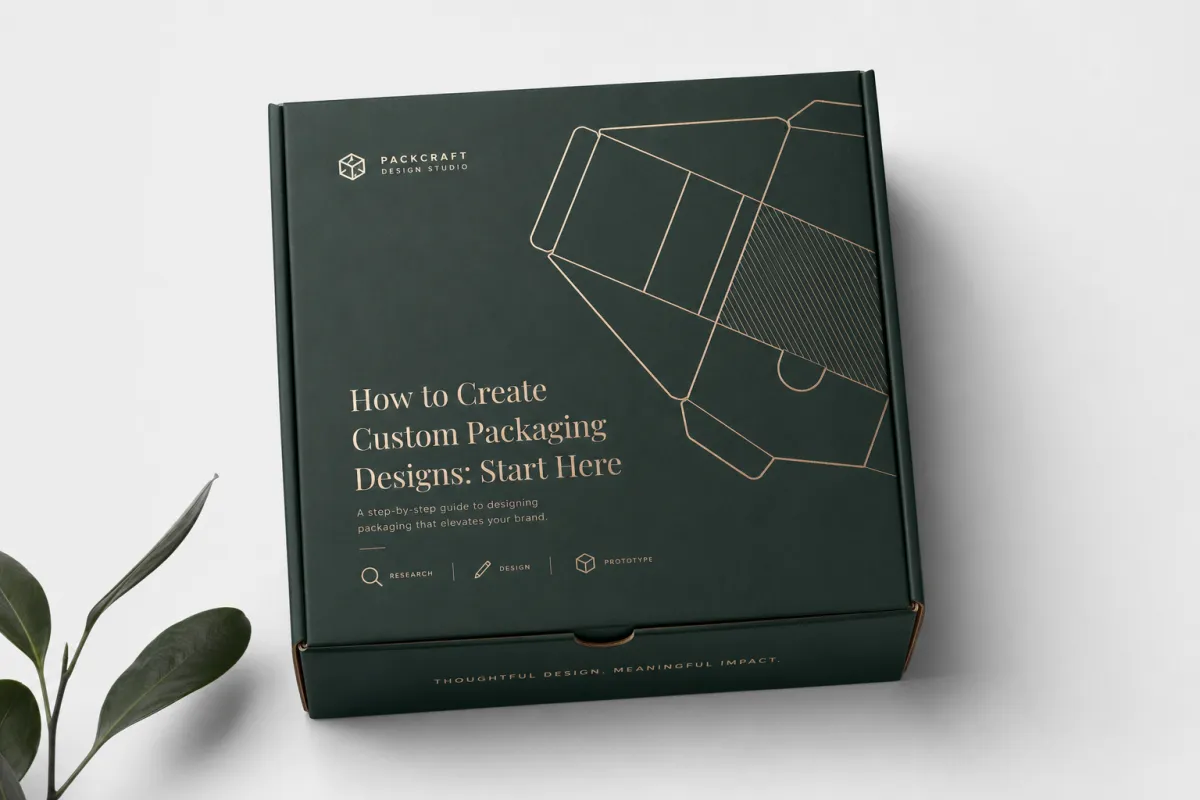
The simplest way to approach how to create Custom Packaging Designs is to start with function and build the visual layer after that. Packaging is not a billboard pretending to be a container. It has to protect, ship, display, and often introduce a product for the first time. That first touch matters because it shapes perceived quality, the unboxing experience, and whether the price feels justified.
A useful definition helps. Custom Packaging Design is the mix of structure, materials, graphics, finishes, and functional details that shape how a product is protected and presented. A folding carton printed in CMYK behaves very differently from a rigid box with foil and embossing, and both differ from a corrugated mailer made for parcel handling. That is why the process begins with the product itself, not with the artwork file.
Take a skincare brand shipping a glass jar. The jar may only stand 80 mm tall, yet once you account for the cap, label, insert, and transit clearance, the inside dimensions can grow quickly. Miss that by even a few millimeters and the jar can rub, shift, or tip in shipping. The damage is visible, but the weaker first impression may matter more. Strong packaging design balances protection, shelf appeal, and assembly speed so the same box works on the packing line and in the customer’s hands.
That same logic explains why so many brands misread retail packaging. Time goes into color and finish while practical constraints are left out: how the carton opens, where the seam lands, how much room a barcode needs, and whether an insert can be assembled quickly. Good branded packaging is memorable because it is easy to use. Decoration helps. Clarity does the heavy lifting.
A useful test for how to create custom packaging designs is simple: if the graphics vanished, would the structure still protect the product and make sense on the line? If the answer is no, the project is not ready. If the answer is yes, the artwork can do its job without covering structural weakness.
That same thinking applies to sales channels. A shelf-ready box needs clear front-panel communication, strong shelf presence, and a clean face. An e-commerce box needs transit strength, efficient pack-out, and enough room for labels, seals, and handling marks. Better results come from designing the package with the channel already in mind, because the channel decides which details matter most.
How Custom Packaging Design Works From Brief to Production
Once the product need is clear, the workflow becomes a sequence instead of a guessing game. Strong projects start with a brief that includes exact product dimensions, weight, fragility, sales channel, quantity, budget, and compliance requirements. Skip that part and the design team starts making assumptions. Assumptions tend to show up later as revisions, waste, or fit problems.
The process usually moves from structure selection to dieline creation, then to artwork layout, sample development, revision, and production approval. A dieline is the flat template that shows folds, cut lines, glue tabs, and panel sizes. It is the map for the package. Once that map is right, how to create custom packaging designs gets much easier because the artwork can be placed where it belongs instead of being squeezed into a shape that does not exist in production.
One point gets missed often: a marketing file is not the same thing as a production-ready packaging file. A design can look perfect on screen and still fail on press if it ignores bleed, safe zones, or the way text crosses a fold. Many carton jobs need around 3 mm of bleed, clear space away from the trim edge, and careful attention to glue areas and hidden panels. That is not a cosmetic footnote; it is part of the production discipline behind good custom packaging design.
The timeline is more layered than many buyers expect. A straightforward folding carton can move quickly when the dieline already exists, but sample rounds, structural changes, and color approval can add days or weeks. A simple run may need 10 to 15 business days after proof approval, while projects with inserts, specialty finishes, or structural revisions often take longer. I say “often” on purpose. Every supplier works a little differently, and a late board change can stretch the calendar faster than most teams expect.
Packaging work rarely moves in a straight line. A team may begin with artwork, discover the closure needs more strength, revise the board grade, adjust the insert, and circle back to the graphics. That loop is normal. It is better to correct the package once during design than to discover a weak fit after thousands of units are already printed. Good package branding usually comes from several practical decisions that were tested, not from one perfect creative idea.
For brands shipping parcels, transit testing matters. The ISTA test procedures are widely used to evaluate packaging against drop, vibration, and handling stress, and they are a smart reference point if your box will face courier sorting or repeated movement. For material sourcing, the FSC certification framework is useful if the project needs documented responsible forestry. These are not decorative badges; they are practical signals that help align design with real-world performance and sourcing goals.
One rule is worth keeping close: the design is not finished when the render looks good. It is finished when the box opens correctly, the product fits correctly, the print reads clearly, and the production team can run it without confusion.
Key Factors That Shape Custom Packaging Design Choices
Every strong project starts with tradeoffs, and how to create custom packaging designs depends on how well those tradeoffs are handled. Material choice is one of the biggest. Paperboard is common for folding cartons and retail packaging because it prints cleanly and keeps costs under control. Corrugated board makes more sense when shipping strength matters more. Rigid chipboard creates a premium feel, though it costs more and usually ships in a larger, heavier form. Inserts can be paperboard, molded pulp, foam, or corrugated, depending on how much cushion the product needs.
Structure matters just as much. Mailer boxes fit e-commerce and subscription programs because they combine protection with a tidy opening experience. Sleeves work well when a brand wants to elevate an existing package or add seasonal branding without rebuilding the entire format. Display boxes can improve shelf visibility, while folding cartons remain the workhorse for cosmetics, supplements, small electronics, and many consumer goods. If you are serious about how to create custom packaging designs, the structure has to match the selling environment, not just the mood board.
Printing and finishing decisions can shift both the look and the price quickly. CMYK printing handles most full-color work. Spot colors help with exact brand matches or bold solid areas. Foil stamping, embossing, debossing, soft-touch coating, and aqueous coating all affect tactile feel and perceived value. A soft-touch laminate on a rigid box can create a quiet matte hand-feel that reads as premium, while a high-gloss aqueous coating on a mailer can stand up better against scuffs. Those choices belong in the packaging plan because they influence both brand perception and production cost.
Brand alignment is copied often and thought about too little. Packaging should match the product position and buyer expectation. A clinical supplement line should not look like a playful snack brand. A luxury candle should not borrow the same visual language as a discount club pack. The best branded packaging feels native to its category while still standing apart from the shelf crowd. That balance sits at the center of how to create custom packaging designs that feel credible.
Operational reality deserves equal weight. Boxes need to fit shipping cartons, storage racks, and packing benches. Inserts need to assemble fast enough that labor does not get swallowed by each unit. Graphics need to survive folding, scuffing, and pallet movement. Sustainability goals matter too, but they have to rest on what the package can actually do. Recycled content, paper-based alternatives, and right-sized structures can reduce waste, yet the design still has to protect the product and keep returns low. That is the factory-floor side of how to create custom packaging designs, and it is where many attractive concepts are lost or won.
Buyers also appreciate clear structure choices for a simple reason: fewer surprises. A project built on standard board grade, standard folds, and standard print methods is easier to schedule. A project that asks for specialty materials, heavy coverage, metalized film, or complicated insert work should expect extra setup and extra review. Honest planning makes how to create custom packaging designs more predictable and easier to budget.
How to Create Custom Packaging Designs Step by Step
If you want a practical method for how to create custom packaging designs, use a step-by-step workflow and do not skip the messy middle. That middle is where fit, finish, and usability get tested. It is also where expensive mistakes are stopped. The sequence below is simple, but each step should be documented so the team can trace decisions later.
-
Define the product and use case. Start with exact dimensions, weight, fragility, the sales channel, and the impression you want the package to create. A glass bottle shipped direct-to-consumer needs a different approach than a boxed accessory sold in retail packaging. For how to create custom packaging designs, this first brief is the base for every later decision.
-
Choose the packaging format before artwork. Ask for a proper dieline and confirm the box style before committing to layout. A mailer, sleeve, folding carton, and rigid box all have different panel sizes, folds, and hidden areas. Start with artwork first and you may discover too late that the logo lands on a seam or the copy sits in a glue area. That is one of the fastest ways to derail the process.
-
Build the visual hierarchy. Decide what should be seen first: logo, product name, flavor, size, claims, or one benefit statement. Good packaging has a hierarchy, not a collage. The front panel should tell the customer what the product is in a few seconds, while the side and back panels can carry supporting detail. This is where how to create custom packaging designs becomes a branding exercise as well as a structural one.
-
Prepare artwork for print reality. Set correct bleed, safe zones, and image resolution. Keep raster images at least 300 dpi at final size when possible, and make sure small text stays readable after folding. Watch grain direction, fold lines, and adhesive tabs. A file that looks clean on a monitor can still print badly if production details are ignored. Real production readiness is a major part of how to create custom packaging designs.
-
Review digital proofs and physical samples. A digital proof catches layout errors, but it does not replace a sample. A structural sample or prototype can expose fit issues, edge crush problems, or closure weaknesses. If the product is fragile, place the actual item in the prototype and handle it the way a customer would. That hands-on check is one of the best tools in the workflow because it exposes issues flat files cannot show.
-
Revise, approve, and release production with a checklist. Confirm materials, quantity, finish, color references, barcode placement, and any special instructions before sign-off. A short approval checklist saves time later because everyone sees the same final spec. Once the order is released, changes become expensive. Careful project control is the quiet discipline behind how to create custom packaging designs that arrive on time and match intent.
There is a reason this process works. It keeps the design close to the product and the production reality instead of letting the idea drift into a presentation-only exercise. The buyer sees a package that feels finished. The plant sees a package that can run. That balance sits at the heart of how to create custom packaging designs that last beyond the first launch.
Sample testing should mirror the real use case. If the package will be stacked, tape-sealed, palletized, or mailed through a courier network, test it that way. A soft retail carton can perform beautifully on a shelf and still fail in a parcel run. Packaging is a working object. The more honest the test, the better the result. That is why the process always needs a physical check before the press run begins.
Custom Packaging Design Cost, Pricing, and Budget Planning
Budget is where creative plans meet reality, and how to create custom packaging designs gets easier when the numbers are transparent. The biggest cost drivers are material grade, box style, print coverage, finishing effects, tooling, inserts, and the size of the run. A simple two-color carton in a standard board can cost far less than a rigid box with foil, embossing, and a custom tray.
As volume rises, the unit price usually falls because setup costs are spread over more units. That said, higher quantities also tie up more cash and more storage space. A 10,000-piece order may look efficient on paper, but if sell-through is slow, inventory sits in the warehouse. Smart planning looks at unit cost and carrying cost together, not just the first quote.
Hidden expenses show up often. Sample fees can appear early. Dieline setup may be included or billed separately. Plates, dies, or cutting tools can add to the first order. Freight often changes the landed cost more than buyers expect, especially for rigid boxes or heavy corrugated runs. Revisions after the first proof cost time and sometimes money. A clean quoting process is part of how to create custom packaging designs because it helps everyone compare the same assumptions.
| Packaging Option | Typical Use | Common Unit Range at 5,000 Pieces | Strengths | Tradeoffs |
|---|---|---|---|---|
| Folding carton | Cosmetics, supplements, small retail goods | $0.18-$0.45 | Good print detail, efficient shipping, flexible branding | Less crush protection without an insert or outer shipper |
| Corrugated mailer box | E-commerce, subscriptions, direct-to-consumer sets | $0.55-$1.20 | Better transit strength, clean unboxing, easy pack-out | Heavier than paperboard; premium finishes can raise cost |
| Rigid setup box | Gift sets, premium accessories, luxury product packaging | $2.10-$6.50 | High perceived value, sturdy feel, strong presentation | Higher material and labor cost; more shipping volume |
| Sleeve or belly band | Brand refreshes, secondary branding, seasonal promotions | $0.06-$0.18 | Low cost, fast branding update, easy to apply | Limited protection; depends on the package underneath |
This kind of comparison helps because it shows where to spend and where to simplify. If the product needs visual impact and a premium feel, a better board, sharper print, or a cleaner finish may be worth it. If the product is hidden inside a shipper, the structure and insert may matter more than a fancy outer surface. That is one of the practical truths behind how to create custom packaging designs: not every dollar belongs in decoration.
I also recommend asking for quotes with identical specs from each supplier. Same board grade, same dimensions, same print coverage, same finish, same quantity. Otherwise the comparison becomes misleading because one quote may look cheaper simply because it removed a coating or changed the material. Accurate quotes make how to create custom packaging designs easier to manage and easier to defend in a budget review.
For a packaging buyer, the most useful question is not “What is the cheapest box?” It is “What package gives the best balance of protection, shelf impact, and landed cost?” That is the question that keeps the work tied to business reality.
Common Mistakes to Avoid in Custom Packaging Design
The fastest way to waste time is to design graphics before confirming the actual box style. A polished layout can fall apart the moment folds, seams, or closures enter the picture. I have seen projects where the front panel looked strong on screen, then the logo landed too close to a crease and the final box lost its balance. That kind of problem is easy to avoid if how to create custom packaging designs starts with structure instead of decoration.
Overdesigning is another trap. Too many colors, too much copy, and too many finishes can make the package harder to read and more expensive to produce. Customers usually scan a package for the product name, a clear benefit, and a size or variant cue. They do not need every possible message competing for space. Strong branded packaging tends to be simple, deliberate, and easy to understand at a glance.
Shipping and handling get ignored too often, especially for fragile products. A cosmetic jar, glass bottle, candle vessel, or electronic accessory may need more than a pretty carton. It may need a custom insert, stronger board, a tighter closure, or a corrugated outer. If the product shifts during transit, the package is not finished yet. That is where the work becomes an engineering decision as much as a visual one.
Testing under real conditions matters. Drop tests, vibration checks, shelf stacking, and repeated open-close cycles can reveal failures that a mockup will never show. If the packaging will be assembled on a line, have someone time the assembly. If the box will be opened by a customer multiple times, test the hinge, flap, or tear strip. Good custom printed boxes are judged by what happens after the photo shoot. That is why how to create custom packaging designs should always include a sample phase.
Regulatory and retail requirements also need attention. Barcodes need quiet space around them. Nutrition panels, warnings, recycling marks, and product claims need to be placed with care. If the package goes into wholesale or club retail, there may be display or labeling rules that affect the layout. Ignoring these details can force a late redesign. Smart planning keeps compliance in the brief from the beginning, not as a cleanup task at the end.
There is a useful mindset shift here: do not ask whether the package is attractive before asking whether it is accurate. Accuracy first. Appeal second. If a package is accurate, the branding has a chance to do its job. If it is inaccurate, the design is merely decorative.
Expert Tips and Next Steps for Better Packaging
The strongest packaging usually says one clear thing first. That might be the product name, the hero benefit, the variant, or the brand promise. Whatever the message is, it should not have competition from five other equally loud messages. One of the best habits in how to create custom packaging designs is deciding which message earns the front panel and which details belong on the side or back panels.
I also like to compare three versions side by side: one minimal, one brand-forward, and one sales-driven. The minimal version strips the package to essentials. The brand-forward version leans on identity, texture, and tone. The sales-driven version pushes claims and conversion cues. Reviewing all three makes it easier to see what the package actually needs rather than what feels exciting in a single mockup.
Sample packs and press proofs are worth the effort whenever the budget allows. Color on screen rarely matches paper exactly, and finish samples tell you a lot about hand-feel, glare, and scuff resistance. A soft-touch coating that looks rich in a render may feel too muted in person; a gloss finish may look perfect on a shelf but show fingerprints. That hands-on review keeps the process honest.
Build a reusable checklist for future SKUs. Keep standard dimensions, artwork rules, barcode placement, legal copy positions, approved board grades, and finish preferences in one place. That makes new launches faster and cuts down on repetitive mistakes. Once a brand has a working system, each new package becomes less of a guessing game and more of a controlled variation. That is how good package branding compounds over time.
If you need a next move, keep it simple: gather your product specs, request a dieline, and review a prototype before the first large run. If you already know the format you want, start with custom printed boxes that match your shipping and shelf needs, then build the graphics around the actual structure. If you are comparing material options, the right packaging options page can help narrow the field before you commit.
That is the practical path for how to create custom packaging designs that do more than look polished. They protect the product, support the sale, and stay manageable in production. A package that does all three is usually the one that gets approved faster and performs better after launch. If you remember only one thing, make it this: print the dieline full size, place the actual product inside, and test the package the way it will really be used before you sign off on the run.
Frequently Asked Questions
What do I need before I start creating custom packaging designs?
Have exact product dimensions, weight, fragility, and the sales channel ready before any artwork starts. The first step in how to create custom packaging designs is gathering the facts that determine structure and print setup. It also helps to collect brand assets, legal copy, barcode needs, and any retail or shipping requirements in one brief so nothing gets missed later. If you can, add a sample product to the brief; a photo alone rarely tells the whole story.
How long does it take to create custom packaging designs?
Simple projects can move quickly if the dieline is ready and the artwork is straightforward. Sample rounds and structural revisions usually add the most time, especially when fit or color needs adjustment. Production lead time then depends on volume, material availability, finishing, and freight scheduling. For most teams, the slowest part is not the art file; it is waiting on a physical sample and then revising it.
What drives custom packaging design pricing the most?
Material choice and structural complexity are usually the biggest pricing drivers. Special finishes, large print coverage, inserts, and tooling can raise the total quickly, which is why how to create custom packaging designs should always start with a realistic budget. Higher quantities lower the unit cost, but they can increase upfront spend and storage needs. Freight can also surprise buyers, especially on heavier rigid boxes or large corrugated runs.
Should I choose the box style before the artwork when creating custom packaging designs?
Yes, the structure should come first because the dieline controls where artwork, folds, and seams will land. That rule is central to how to create custom packaging designs because the graphics need to respect the actual production shape. Once the box style is fixed, the layout can be built around the real package instead of a guess. If you reverse that order, you are pretty much designing blind.
How do I know if my custom packaging design is ready for production?
It should fit the product correctly, with confirmed dimensions and closure performance. The proof should show accurate colors, copy, bleed, and safe zones before approval. A physical sample or prototype should pass handling and shipping checks whenever possible, because how to create custom packaging designs is only truly ready when it works in real use. If the sample rattles, crushes, or opens awkwardly, it is not ready yet, no matter how nice the render looks.

