Buyer Fit Snapshot
| Best fit | Compostable Packaging Inserts Manufacturer projects where brand print, material claims, artwork control, MOQ, and repeat-order consistency need to be specified before quoting. |
|---|---|
| Quote inputs | Share finished size, material target, print colors, finish, packing count, annual reorder estimate, ship-to region, and any compliance wording. |
| Proofing check | Approve dieline scale, logo placement, barcode or warning zones, color tolerance, closure strength, and carton packing before bulk production. |
| Main risk | Vague material claims, crowded artwork, missing packing details, or unclear freight terms can make a low unit price expensive after revisions. |
Fast answer: Compostable Packaging Inserts Manufacturer: Material, Print, Proofing, and Reorder Risk should be specified like a repeatable production item. The safest quote records material, print method, finish, artwork proof, packing count, and reorder notes in one written spec.
Production checks before approval
Compare the actual filled-product size with the drawing, then confirm tolerance on folds, seals, hang holes, label areas, and retail display edges. Reserve space for logos, QR codes, warning copy, and material claims before decorative graphics fill the panel.
Quote comparison points
Review material grade, print process, finish, sampling route, tooling charges, carton quantity, and freight assumptions side by side. A quote is only useful when the supplier can repeat the same color, closure quality, and packing count on the next order.
A compostable packaging inserts manufacturer does far more than cut a shape and call it sustainable. The real work sits at the intersection of protection, presentation, and shipping performance. A product can be beautifully made and still arrive scuffed, dented, or loose in the carton if the insert does not hold it steady during transit. One sloppy corner can undo a premium unboxing in seconds, and the customer does not care that the packaging looked fine in a sample photo.
That is why this field pulls together packaging design, material science, and warehouse reality. A serious compostable packaging inserts manufacturer selects the substrate, engineers the geometry, prototypes the fit, and then repeats that design at production scale without drifting off spec. The best result does not wave a green flag and hope the product survives. It protects the item, keeps the package looking intentional, and still fits the disposal story the brand wants to tell.
Terminology causes a lot of confusion, and confusion gets expensive fast. Compostable, biodegradable, recyclable, and recycled-content are not interchangeable labels. Compostable means the material is designed to break down under defined composting conditions, usually industrial composting unless a verified home-compostable claim exists. Biodegradable is much broader and, frankly, too vague to carry much weight in a procurement conversation. Recyclable means a material may enter a recycling stream, but only where local collection and sorting systems accept it. Recycled-content means recovered feedstock is present; it says nothing about how the insert behaves after use. A trustworthy compostable packaging inserts manufacturer should spell those differences out plainly instead of hiding behind marketing copy, because buyers need a claim that matches the finished insert, not the sales deck.
The right insert is not the thickest one. It is the one that balances cushioning, retention, stackability, and visual order. That balance matters in premium product packaging, Custom Printed Boxes, subscription kits, and plain shipping cartons that still need to feel considered. A manufacturer that understands branded packaging treats the insert as part of the whole system, not as a scrap of filler tucked inside the box.
A good insert does more than stop movement. It gives the packer a clear home for the product, which reduces mistakes on the line and makes the finished package look deliberate instead of improvised.
I’ve sat in sample reviews where everyone nodded at the rendering, then went quiet when the actual product showed up with a shoulder flare, a cap height nobody had measured, or a glossy surface that slipped more than expected. That is the moment the real work begins. If you want a partner who thinks that way, start with the broader packaging system rather than one component. The team behind About Custom Logo Things understands that a protective insert only works if it matches the carton, the brand, the shipping lane, and the way the customer actually opens the box.
What a compostable packaging inserts manufacturer really does
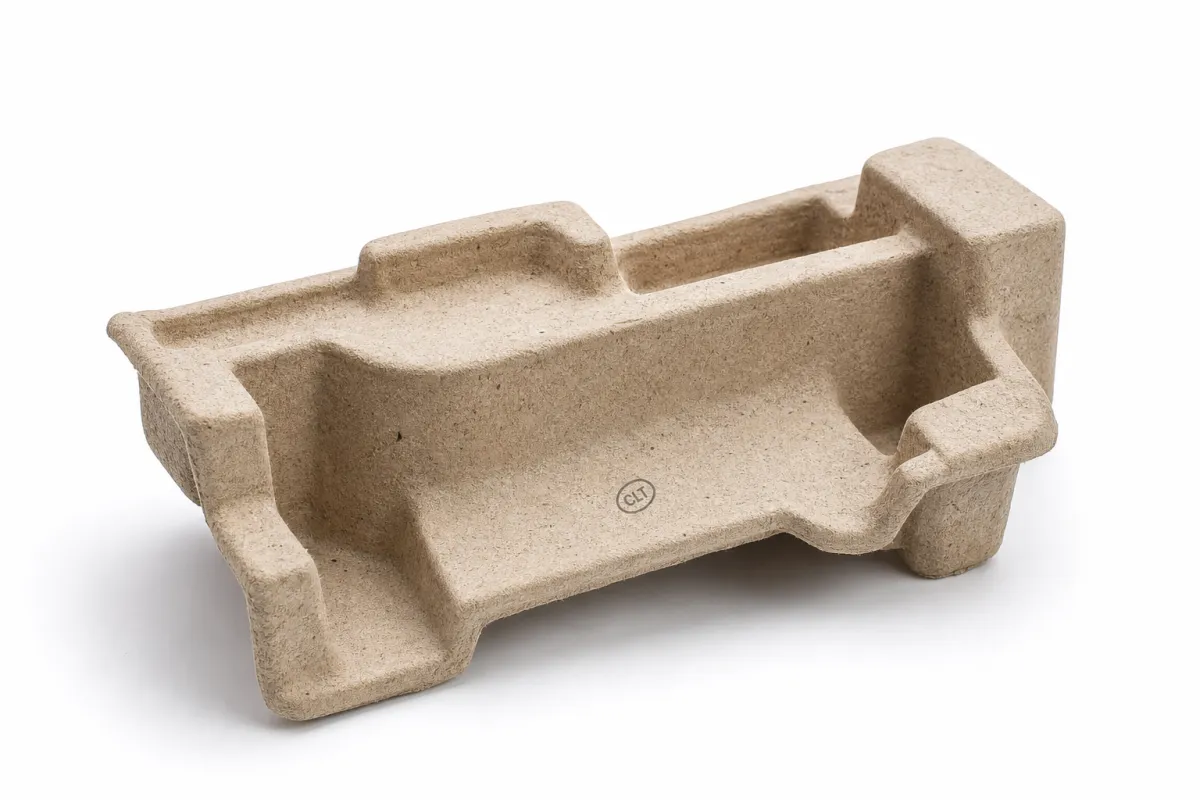
A compostable packaging inserts manufacturer translates product risk into physical structure. That sounds tidy on paper and messy in real life. A bottle, candle, cosmetic kit, glass jar, and electronics accessory all need different retention profiles. Some need corner support. Some need suspension. Some need a pocket that keeps the item from twisting under vibration. The manufacturer has to decide whether the insert should cradle, clamp, suspend, nest, or simply stabilize.
Material selection comes first, but not in the shallow way people often imagine. Molded fiber and molded pulp are common because they create rigid, renewable structures that perform well when the geometry is right. Bagasse-based structures, paperboard die-cuts, and some plant-based foam formats also appear in the mix, though each brings different performance and disposal tradeoffs. A knowledgeable compostable packaging inserts manufacturer does not start with the material and force the product to fit. The product, the shipping method, the warehouse environment, and the end-of-life goal shape the recommendation.
Prototyping matters just as much. I have seen inserts that looked perfect in a mockup but failed as soon as a product revealed a raised logo, an uneven base, or a finish that needed more clearance than anyone expected. A sample on a desk can fool everyone. A sample inside a finished carton tells the truth. That is one reason careful compostable packaging inserts manufacturer teams insist on fit testing before production approval.
Another misunderstanding deserves a direct answer: compostable does not automatically mean weak. Good design can make a structure surprisingly strong because shape matters as much as thickness. Ribs, shoulders, locking lips, pockets, and reinforced corners all help control movement without simply adding bulk. The design creates strength. The material supports it.
That distinction affects more than damage rates. It changes how the package feels in the customer's hands. If the product sits squarely, the insert does not crumble during handling, and the opening experience feels tidy, the brand looks more credible. That matters for luxury retail packaging, direct-to-consumer packaging, and everyday product packaging alike.
Here is the simplest way to break down the manufacturing role:
- Material selection: Choose a compostable substrate that fits the product, shipping lane, and disposal claim.
- Structural design: Build the geometry around movement control, cushioning, and visual presentation.
- Prototyping: Make samples, test the fit, and adjust for real tolerances.
- Validation: Check against drop risk, compression risk, vibration, and warehouse handling.
- Production: Repeat the approved design with consistent quality and predictable pack-out behavior.
The most useful compostable packaging inserts manufacturer is the one that can tell you where the design is doing real work and where it is carrying extra cost with no benefit. That kind of candor saves money and usually improves the final package. It also tends to be the first sign that you are talking to a real packaging partner, not just a supplier with a pretty sample tray.
How compostable packaging inserts work in real shipping conditions
Protective inserts are judged in motion, not on a CAD drawing. A compostable packaging inserts manufacturer needs to account for vibration, compression, shock, and friction, because those are the forces that show up in actual distribution. Ground transit can rattle products for days. Fulfillment centers can stack cartons under pressure. A truck lane with temperature swings and humidity changes can cause fiber-based structures to soften or warp if the design is not thought through.
That is why the best inserts do not rely on thickness alone. They use compression resistance to support the load, shock absorption to soften impact, and friction fit to hold the product still. Product immobilization matters more than many teams expect. If the item can move inside the package, it can chip, scuff, or knock into another component even if the insert itself looks sturdy. A good compostable packaging inserts manufacturer understands that movement is usually the enemy, not just force.
Different material families behave differently. Molded fiber is strong in compression and can be tuned with wall thickness and ribbing. Molded pulp blends may offer smoother surfaces or more consistent forming depending on the process. Paperboard die-cuts are efficient for flat-shipping, branding, and nested applications, but they often need careful geometry to deliver comparable shock control. Some plant-based foams can cushion well, although the disposal path and certification claims need careful review. A specific design brief lets the manufacturer choose the material that works hardest for the application instead of defaulting to whatever is closest at hand.
Shipping conditions change the equation. A package that performs well in a dry, short-lane domestic shipment may struggle if it sits in a humid warehouse, crosses multiple carriers, or spends extra days in transit. A compostable packaging inserts manufacturer should ask where the package is going, how long it sits before delivery, and whether the carton is being used for direct-to-consumer shipping, retail display, or both. Those details change the design more than many buyers realize.
For testing, standardized methods help create a common language. Many packaging teams use distribution testing concepts from groups like ISTA to simulate drop, vibration, and compression risk in a repeatable way. That does not replace real pack-out testing, but it gives structure to the conversation and reduces guesswork. A vendor who can discuss those methods without getting dramatic is usually the kind of vendor you want.
Design details make a real difference:
- Ribbing: Adds stiffness without excessive material use.
- Corner supports: Protect weak points in rectangular or glass-heavy products.
- Nesting geometry: Holds the product at repeatable depths for consistent presentation.
- Product-specific pockets: Keeps irregular items from twisting or slipping.
- Clearance zones: Prevents pressure on caps, labels, fragile finishes, and seams.
Compostability still needs a reality check. A material may carry an industrial compostability claim, but that does not guarantee local acceptance, collection, or actual composting after use. The package must be labeled honestly, and the brand should avoid implying backyard compostability unless the material and finished structure truly support that claim. A responsible compostable packaging inserts manufacturer should help you match the claim to the finished part, not just the resin or fiber input.
That is where a grounded compostable packaging inserts manufacturer stands apart from a supplier simply selling a sheet or a molded shape. The manufacturer is engineering a part of the product experience, not just a piece of fill.
Key factors a compostable packaging inserts manufacturer should evaluate
Before anyone talks about price, a compostable packaging inserts manufacturer should understand the product itself. Weight, shape, center of gravity, finish, and fragility all matter. A short glass bottle behaves differently from a tall one. A candle with a centered wick and wax lip behaves differently from a candle in a thin-wall vessel. A cosmetic jar with a polished lid surface needs different contact points than a matte carton accessory.
Fit tolerances are especially important in premium packaging. If the product sits too tightly, it can scrape or bind during insertion. If it sits too loosely, it can rattle and damage itself. In branded packaging, that fit also affects the emotional feel of the opening experience. The insert should look intentional, not like a generic spacer hidden inside the box. The best compostable packaging inserts manufacturer understands that function and presentation usually need to be solved together.
Buyers should also review sustainability criteria with real specificity. Ask what the substrate is made from, what additives or coatings are present, and what certification or test standard backs the claim. For fiber sourcing, FSC can support responsible supply chain expectations, but it is not a compostability certification by itself. For compostability claims, ask whether the material meets a recognized standard such as ASTM D6400 or EN 13432, and whether the claim applies to the finished insert after inks, adhesives, and coatings are included. For broader material management context, the U.S. EPA has useful public guidance on sustainable materials management at EPA sustainable materials resources. That kind of reference helps separate a true environmental claim from a line that sounds nice but lacks detail.
Durability tradeoffs deserve an honest discussion. Compostable structures can be sensitive to moisture, edge crush, dusting, or prolonged compression. In some programs, that is fine because the carton is short-lane, dry, and assembled near the point of shipment. In other programs, the insert may need a secondary wrap or a barrier layer to protect the product finish. A seasoned compostable packaging inserts manufacturer should flag those risks early instead of discovering them after the first production run.
Operational factors matter more than teams sometimes expect. If an insert is slow to pack, stacks poorly, or takes too much warehouse space, the unit cost on paper may hide a labor problem. A good design should nest efficiently, ship flat if possible, and integrate cleanly with cartons, sleeves, or retail-ready packs. That is true for custom printed boxes and for simple brown shipper systems alike.
When reviewing options, ask these questions:
- Does the insert hold the product without relying on excess material?
- Does it still perform after vibration, stacking, and humidity exposure?
- Does the disposal claim match the actual finished insert?
- Can warehouse staff pack it quickly and consistently?
- Does it support the look and feel of the product packaging?
Those questions force the conversation toward real-world performance. That is where a strong compostable packaging inserts manufacturer earns trust. A clean spec sheet is nice. A part that survives pack-out and transport is better.
If your team is sorting through options for Custom Packaging Products, think about the insert, carton, and print strategy as one package branding system. A good material choice can reduce waste, but only if the structure is actually efficient and the box is sized correctly. Oversized cartons make even a smart insert look expensive in the wrong way.
Process and timeline: from concept to production steps
The process with a compostable packaging inserts manufacturer usually follows a predictable path, though the speed varies based on product complexity and the number of revision rounds. Discovery comes first. That means collecting product dimensions, weight, finish, fragile areas, shipping method, and the desired sustainability claim. Without that information, any early recommendation is just a guess dressed up as expertise.
Next comes sampling and structural recommendations. The manufacturer may propose one or more materials, sketch the cavity layout, and then build a prototype or sample run. At this stage, the most useful input is often visual. Photos of the product, close-ups of the bottom and top, and a view of how the item sits in the carton can reveal clearance issues that measurements alone do not show. A good compostable packaging inserts manufacturer will ask for all of that because dimensions on a spec sheet do not tell the whole story.
Then comes CAD or dieline development, depending on the format. Paperboard-based inserts may move through dielines and cut patterns quickly. Molded fiber and pulp formats may need mold preparation, tooling review, or forming adjustments. A first-time custom project often takes longer than a reorder because the first job is doing the engineering work that future orders will rely on. If a team rushes this stage, they often pay for it later in damaged goods, rework, or repacking labor.
Testing should not be skipped just to save a few days. Fit test the product in the finished pack-out. Shake it. Turn it sideways. Close the carton. Stack it. If the item is for shipment, run a basic drop or transit simulation. I’ve seen teams skip one round of testing and then spend a week explaining cracked lids, broken corners, and a warehouse crew that suddenly hated the new pack-out. The best manufacturers communicate milestones clearly, call out risks early, and keep the project moving without pretending every sample is final on the first try.
From a timeline standpoint, a practical range for first-time custom work is often something like:
- Initial discovery and concepting: 2-5 business days if the inputs are complete.
- Prototype development: 5-10 business days depending on material and forming method.
- Revision and approval: 3-7 business days, sometimes longer if the pack-out changes.
- Production for approved repeat runs: often 10-20 business days once the system is set.
Those ranges depend on material availability, tooling readiness, and order volume. A first order may run slower because the plant has to dial in the structure. Reorders usually move faster because the geometry is already locked. That is why buyers should never plan a launch around sample approval alone; they should also account for final production and freight. A six-day delay in approval can turn into a three-week problem if the carton is sitting in a warehouse waiting for the insert.
The most organized compostable packaging inserts manufacturer will keep those milestones visible so the buyer can coordinate the carton, artwork, fulfillment schedule, and launch date. That coordination is part of real package branding, even if nobody puts it in those exact words during the first call.
Cost and pricing: what drives unit cost and MOQ
Pricing with a compostable packaging inserts manufacturer usually comes down to five things: material, geometry, tooling, finish, and volume. Material choice often drives the biggest swing. Molded fiber can be economical at scale, but it may require tooling and a certain production volume to make sense. Die-cut paperboard can be less expensive for flat-shipping formats, especially when the insert is simple and nests efficiently. More complex shapes, premium surface needs, or specialty barrier layers push cost upward.
MOQ matters because setup costs have to be spread across the run. If a project needs a mold or dedicated tooling, the first order often carries setup and amortization costs that disappear or shrink on reorders. That is why prototype pricing and production pricing should never be treated as the same thing. A sample run may cost more per unit because it is doing development work, not simply delivering product. A buyer who treats a prototype like a final quote usually ends up annoyed for the wrong reason.
Here is a practical comparison of common compostable options for protective inserts:
| Insert type | Typical unit cost at 5,000 pcs | Best fit | Main tradeoffs |
|---|---|---|---|
| Molded fiber | $0.28-$0.55 | Rigid protection, premium product packaging, good stack strength | Tooling can add cost; moisture sensitivity needs review |
| Bagasse-based structure | $0.24-$0.48 | Natural look, renewable fiber presentation, retail packaging | Availability and forming consistency can vary by design |
| Die-cut paperboard | $0.12-$0.32 | Flat-shipping packs, lighter items, strong branding surfaces | Less cushioning unless geometry is carefully engineered |
| Plant-based foam | $0.30-$0.70 | Lightweight cushioning, shock control, niche protective needs | Certification path and end-of-life claims need extra attention |
Those numbers are rough working ranges, not promises. A simple shape may come in below the range, while a complex shape with finish requirements can climb above it. Freight, sample charges, and tooling are often separate line items. That is why the cheapest quote is not always the best business decision. If an insert saves a few cents but causes 2% more breakage, the real cost gets ugly fast.
Design efficiency can reduce spend in ways that do not hurt performance. Consolidate parts where possible. Remove overbuilt walls that do not add protection. Improve nesting so cartons ship flatter and packers handle less bulk. Avoid a shape that looks clever but wastes material. The best compostable packaging inserts manufacturer will often find savings by simplifying the structure instead of trimming quality. That kind of advice can feel annoyingly plain at first, but it usually pays off.
Smart budgeting looks at the whole system:
- Unit price: What one insert costs on paper.
- Damage reduction: How much breakage and return risk is removed.
- Labor savings: Whether the insert speeds assembly or slows it down.
- Storage footprint: How much room the inserts take in the warehouse.
- Brand impact: Whether the package feels premium, tidy, and trustworthy.
That broader view is especially useful for brands balancing eco-friendly packaging goals with retail display expectations. A slightly higher-priced insert can still be the better value if it lowers labor, improves the unboxing moment, and supports a lower material footprint through better fit and less waste. In packaging, cheap is often just expensive with better PR.
Common mistakes when sourcing compostable inserts
One of the most common mistakes is choosing the material before defining the use case. A buyer hears “compostable” and jumps to a substrate before deciding how much protection the product actually needs. That leads to overpromising on sustainability and underdelivering on shipping performance. A good compostable packaging inserts manufacturer will push back on that instinct and ask what the product must survive, not just what label the marketing team wants to use.
Assuming every compostable claim means the same thing
It does not. Backyard compostable, industrial compostable, biodegradable, and plant-based are not interchangeable terms. A structure can be compostable in an industrial setting and still be the wrong choice for a consumer who expects it to break down in a home bin. Buyers need to confirm what claim actually applies to the final insert, because the finished item, ink, adhesive, coating, and any added barrier can all affect the outcome. A thoughtful compostable packaging inserts manufacturer will explain this without hiding behind jargon.
Giving vague dimensions and incomplete product details
“It is about six inches tall” is not enough. Neither is a width measurement if the product has a handle, shoulder, cap, or asymmetrical profile. Clear dimensions, photos, weight, and notes about fragile points prevent design errors. This matters even more for glass, candles, cosmetics, and electronics, where a few millimeters can decide whether the insert feels secure or stressful to use. Good packaging design starts from complete information, not assumptions.
Skipping real testing
Some samples look excellent on a desk and fail the first time they meet a humid warehouse or a rough parcel lane. They may crush, warp, dust, or let the product move inside the carton. Testing should include real pack-out, closure, handling, and at least a basic transit simulation. A compostable packaging inserts manufacturer worth trusting will not treat a sample as final until it has survived the right checks.
Ignoring supply-chain basics
It is surprisingly easy to approve a design and then realize the repeat order lead time is longer than expected, or the MOQ is larger than the warehouse can support. Bulky inserts also eat storage space fast. If the team has not planned inventory, the first launch can become a scramble. This is where a manufacturer with practical experience helps, because they can warn you about reorder timing, pack efficiency, and whether the insert will fit with current fulfillment operations.
The deepest mistake is treating the insert as an afterthought. In reality, the insert is part of the product packaging, part of the shipping system, and part of the brand experience. Ignore one of those pieces and the entire program feels off.
From a buyer's point of view, that is why a grounded compostable packaging inserts manufacturer is worth more than a lower quote. You are paying for fewer surprises, fewer repacks, and fewer awkward explanations after launch.
Expert tips and next steps for choosing the right partner
When you are comparing vendors, ask for a fit test, not just a material sample. A flat swatch or a half-formed part does not tell you whether the insert holds the product correctly in the finished box. The best proof is a complete pack-out, closed carton and all. A strong compostable packaging inserts manufacturer should be willing to show how the insert behaves with the actual product.
Ask for a clear spec sheet too. It should explain what the material is, what certifications apply, what the expected performance limits are, and how the end-of-life claim should be communicated. I prefer plain language here. If a spec sheet needs a translator to explain it to the warehouse, the sales team, and the customer service team, it probably is not clear enough. The details do not need to sound fancy; they need to be true.
Compare two or three structural options before making a final call. One version may be cheaper but slower to pack. Another may be more protective but use more material than needed. A third may fit the carton perfectly and lower total packaging cost even if the per-unit price is not the lowest. That is the kind of comparison a practical compostable packaging inserts manufacturer should support.
Think in systems. The insert does not live alone. It affects carton size, shipping rate, warehouse labor, shelf presentation, and even how the brand looks when the lid opens. It also affects waste reduction and material use if the design allows the package to ship with less excess space. If the insert is tied to a broader sustainability program, keep the carton and the insert aligned from the start instead of trying to match them later.
Before you request pricing, gather these inputs:
- Exact product dimensions and weight.
- Photos of the product from multiple angles.
- Any fragile or finish-sensitive areas.
- Carton size, shipping method, and expected volume.
- Required sustainability claim or disposal guidance.
- Deadline for samples, approval, and production.
That information makes the first quote more accurate and cuts a lot of back-and-forth. It also helps the compostable packaging inserts manufacturer recommend a structure that fits the product instead of forcing the product into a generic insert.
If you are still narrowing the broader package program, review the rest of Custom Packaging Products alongside the insert decision. Good insert design usually works best when the carton, graphics, closure, and protection strategy are all considered together, especially in branded packaging where the outer box and the inner support have to tell the same story.
Here is the practical path forward: define the product, name the shipping risks, request samples, compare the structures side by side, and confirm the pricing assumptions before you commit. A careful compostable packaging inserts manufacturer will welcome that process because it usually leads to a better package and fewer surprises after launch.
If you want the shortest version, it is this: choose the partner who can explain the material, prove the fit, and show how the insert supports real product packaging, not just a green label. That is the kind of compostable packaging inserts manufacturer that helps a brand look disciplined, protect the product, and make smarter choices about Cost, Lead Time, and waste. Do the boring checks first, because those are the checks that keep the whole program from wobbling later.
Frequently Asked Questions
What should I send a compostable packaging inserts manufacturer for an accurate quote?
Send exact product dimensions, weight, and photos of the item from several angles, especially any fragile areas that need clearance or extra support. Include carton size, shipping method, order volume, and whether the insert needs a premium presentation or can stay hidden inside the pack. If you already know the sustainability claim you want to make, share that too so the quote matches the right material path and compliance expectations. The better the brief, the less guesswork on both sides.
Are compostable packaging inserts strong enough for fragile products?
Yes, when the design is built around the product instead of using a generic shape. Strength comes from geometry, fit, and material choice, not just from making the insert thicker. For glass, cosmetics, candles, and electronics, ask for pack-out testing or drop-test style validation before you approve production, because real performance is always a better measure than a sample that only looks good on a table. A part that survives handling is worth more than a part that photographs well.
How do I compare compostable packaging inserts with molded pulp or paperboard options?
Compare protection performance, moisture behavior, visual presentation, and how easily the insert can be packed at scale. Then look at total system cost, including labor, freight, storage, and damage reduction, not only the raw unit price. The right choice is usually the format that matches the product shape and disposal goal most closely, not the one that simply feels most familiar to your team. Familiar often wins meetings; performance wins shipments.
What certifications should a compostable packaging inserts manufacturer be able to explain?
Ask which certifications apply to the material and whether those certifications match the region where the product will be sold. Request plain-language clarification on industrial compostability versus home compostability, since those are very different claims and often misunderstood. Make sure the paperwork applies to the finished insert, not just a base fiber or resin input, because the final structure is what the customer actually receives. For many buyers, ASTM D6400, EN 13432, BPI, or TÜV-style guidance are the reference points worth discussing.
What is a realistic lead time for custom compostable packaging inserts?
Lead time depends on sampling, revisions, tooling or mold readiness, and current production capacity. First-time custom projects usually take longer than repeat orders because fit testing and approval steps matter, and they should matter if the goal is to avoid damage or rework. The fastest projects are the ones with clear product specs, quick sample feedback, and a decision made before production starts so the schedule does not keep slipping. If the brief is fuzzy, the calendar usually gets messy too.


