Buyer Fit Snapshot
| Best fit | Compostable Product Boxes for Ecommerce projects where brand print, material claims, artwork control, MOQ, and repeat-order consistency need to be specified before quoting. |
|---|---|
| Quote inputs | Share finished size, material target, print colors, finish, packing count, annual reorder estimate, ship-to region, and any compliance wording. |
| Proofing check | Approve dieline scale, logo placement, barcode or warning zones, color tolerance, closure strength, and carton packing before bulk production. |
| Main risk | Vague material claims, crowded artwork, missing packing details, or unclear freight terms can make a low unit price expensive after revisions. |
Fast answer: Compostable Product Boxes for Ecommerce: Board, Finish, Dieline, and Unit Cost should be specified like a repeatable production item. The safest quote records material, print method, finish, artwork proof, packing count, and reorder notes in one written spec.
Production checks before approval
Compare the actual filled-product size with the drawing, then confirm tolerance on folds, seals, hang holes, label areas, and retail display edges. Reserve space for logos, QR codes, warning copy, and material claims before decorative graphics fill the panel.
Quote comparison points
Review material grade, print process, finish, sampling route, tooling charges, carton quantity, and freight assumptions side by side. A quote is only useful when the supplier can repeat the same color, closure quality, and packing count on the next order.
Compostable Product Boxes for Ecommerce: What Actually Matters
Customers clock packaging fast. Faster than brands like to admit. A box can signal care, quality, and restraint before anyone touches the product. It can also fake it. A “green” box with a plastic coating, glossy lamination, a stubborn window film, or the wrong tape is still a mixed-material package wearing a clean outfit. That is the whole problem with Compostable Product Boxes for ecommerce. The label sounds tidy. The build often tells a messier story.
For apparel, wellness items, accessories, books, and other lightweight consumer goods, compostable product Boxes for Ecommerce can hit a practical sweet spot. They reduce plastic content, support a stronger sustainability story, and fit the expectations of buyers who care about green packaging and a lower carbon footprint. They are not magic. Compostable packaging still has to survive packing lines, warehouse stacking, transit vibration, and the occasional delivery that looks like it was kicked down three stairs by somebody having a bad day.
If you are comparing formats and materials, start with the options in Custom Packaging Products and work backward from the product itself. That sounds obvious. Teams still do the reverse all the time, then act surprised when the box is pretty, expensive, and wrong for the SKU. The better move is simple: match the package to the item, the ship method, and the disposal path. Anything else is theater.
Compostable product boxes for ecommerce: what they are
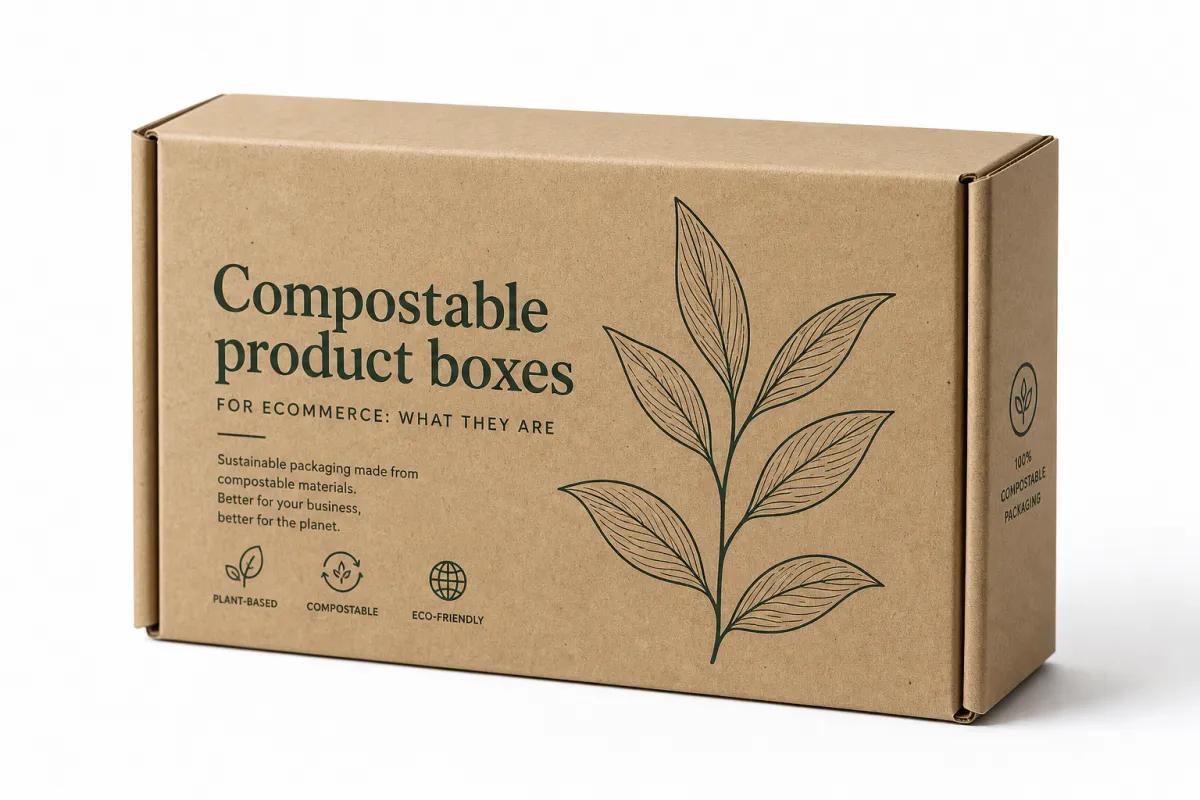
Compostable product boxes for ecommerce are designed to break down into natural components under composting conditions. That is different from “made with paper.” A paper-based box can still fail the compost test if it carries a plastic coating, synthetic adhesive, foil, or a window film that hangs around long after the board should be gone. The finished package has to be judged as a whole. A pile of parts is not the point.
People mix up compostable, recyclable, and biodegradable constantly. Those words are not cousins. They are not even close enough to share a toothbrush. Recyclable packaging belongs in a recycling stream when local systems can handle it. Biodegradable is fuzzy and often vague about timing and conditions. Compostable packaging, by contrast, should break down within a defined period under specified conditions, and that claim only works when the certification and material build support it. For ecommerce buyers, this matters because it affects customer instructions, marketing language, and the actual end-of-life outcome.
Compostable product boxes for ecommerce work best when the product is light, the presentation matters, and the brand wants packaging that feels more intentional than a plain shipper. Apparel brands use them for folded garments, accessory cards, and gift-ready items. Wellness companies use them for soaps, skincare, supplements, and small kits. Consumer goods sellers use them for candles, stationery, reusable tools, and compact home items. The common thread is control. Control over size. Control over print. Control over what happens after the unboxing.
The best box solves three problems at once. It protects the item. It supports the brand. It does not confuse the customer. That sounds easy until a team chooses a flimsy box that composts well but damages products, or a polished box that ships fine but carries the wrong coating, or a technically compostable box that leaves the buyer guessing where to toss it. Packaging fails most often in the gap between those three goals.
Compostable product boxes for ecommerce are not a replacement for every shipping format. Some products need corrugated mailers, edge protection, or inserts that can take heavier stacking. Others need moisture resistance for humid climates or cold-chain handling. Compostability is a material property, not a promise that the package will do every job. The better question is not only “Will it compost?” The better question is “Will it ship safely, present well, and still make sense when the customer is done with it?”
That is why compostable product boxes for ecommerce sit inside a larger move toward eco-friendly packaging and a more honest circular economy. The point is not to slap a green label on a box and call it progress. The point is to use less material, choose better material, and keep the end-of-life story believable.
How compostable product boxes for ecommerce break down
The way compostable product boxes for ecommerce break down depends on the full material stack. Molded fiber, compostable paperboard, starch-based coatings, and certified plant-derived liners each behave differently once they enter a composting environment. Molded fiber is often the most straightforward. It is usually made from recovered plant fibers and can be shaped into trays, clamshell-style supports, or protective inserts. Compostable paperboard gives more flexibility for printed cartons, but its compostability depends heavily on the coating, ink system, and adhesive choice.
Plant-based coatings can replace conventional plastic barriers when a box needs light moisture resistance or grease resistance. That does not make every bio-based coating compostable. Some coatings use renewable feedstocks but still require industrial composting. Some only perform properly in thin layers or with a specific board grade. This is where spec sheets matter. A supplier should show the actual build, not just wave a hand and say it is “green packaging.” If the answer stays vague, the package is probably doing the same thing.
Home-compostable and industrial-compostable are very different claims. Home composting runs at lower temperatures and with less controlled moisture and aeration, so the material has to be more forgiving. Industrial composting offers higher heat, managed oxygen flow, and a more controlled microbial environment, which helps certified materials break down more reliably. Many compostable product boxes for ecommerce are industrial-compostable rather than home-compostable because the print, coating, and structure are easier to qualify under that standard.
Disposal access decides whether the sustainability claim is useful or just decorative. If customers live in places with municipal organics pickup, the box has a real recovery path. If they do not, the package may still be compostable on paper and stranded in real life. That is why disposal instructions matter so much. A good box does not just claim compostability. It tells the user where it belongs after the product is out.
Adhesives can quietly make or break the claim. Water-based glues, compostable adhesives, and minimal glue points usually fit better than synthetic hot melts that hang on too long. Printing matters too. Heavy ink coverage, UV coatings, foil stamping, and film lamination can interfere with breakdown, especially when they create mixed layers that are hard to separate. For compostable product boxes for ecommerce, the cleanest build is often the one with the fewest unnecessary finishes.
A quick check helps: look at each layer and ask what happens after disposal. If the board is compostable but the label is not, the build is mixed-material. If the insert is compostable but the tape is polypropylene, the customer still has a sorting problem. True compostable product boxes for ecommerce should be designed with the full package path in mind, including tape, inserts, and any protective wrap.
For disposal logic and organics systems, the U.S. EPA has public guidance on composting and organics management at epa.gov. For shipping and transit validation, ISTA’s standards are a useful reminder that the package still has to survive distribution before it ever reaches an organics bin: ista.org.
Key factors that shape cost and pricing
Cost is where the conversation gets real. Compostable product boxes for ecommerce can cost more than a plain stock carton, but the unit price alone does not tell the full story. Material type, print coverage, structural complexity, and order volume all move the number up or down. A simple unprinted tuck-top made from certified compostable paperboard can land in a very different price band than a heavily printed setup with custom inserts and specialty coatings.
For small-to-mid production runs, the biggest cost drivers are often setup and tooling rather than paper fiber itself. Die-cutting, plate creation, sample iterations, and minimum order quantities can add meaningful overhead. If the run is 1,000 to 3,000 pieces, the per-unit price can feel steep because the fixed cost is spread across fewer boxes. Once you get into 5,000 to 10,000 pieces, that same setup cost can dilute enough to make the box far more workable from a budget standpoint.
The structure matters too. A two-piece carton, a mailer-style box, and a box with a custom molded fiber insert all carry different cost profiles. More folds, more glue points, and more waste on the sheet usually mean higher conversion cost. Printed coverage adds another layer. Light one-color branding is usually cheaper than full-bleed artwork, especially when the print line has to stay compatible with compostability claims. The more treatment you add, the more you need to confirm that the final box still belongs in your line of compostable product boxes for ecommerce and not in the mixed-material pile.
Here is a practical comparison that buyers often use when narrowing options:
| Option | Typical unit cost at 5,000 pcs | Best use | Main tradeoff |
|---|---|---|---|
| Compostable paperboard tuck carton | $0.22-$0.48 | Apparel, light accessories, skincare kits | Needs careful coating and print control |
| Molded fiber insert with paperboard outer | $0.35-$0.75 | Fragile items, premium sets, protect-and-present packaging | Higher tooling and assembly cost |
| Simple compostable mailer-style box | $0.18-$0.36 | Low-fragility ecommerce goods, repeat orders | Less premium feel than multi-piece formats |
| Custom printed compostable shipper with inserts | $0.55-$1.10 | Brand launches, gift programs, subscription kits | More freight and design complexity |
Those figures are directional, not universal. Freight, warehousing, and defect rates can push the real number up or down. I have seen buyers stare at the box price and ignore everything else, which is usually a mistake. A box that costs a few cents more may reduce void fill, cut damage, and improve the way the product arrives. That can lower replacement costs, customer service time, and the waste that comes from re-shipping orders.
Think in landed cost, not just factory cost. If a design ships flatter, stacks better, and weighs less, you may save on freight and storage. If it reduces filler by 20% or lets you eliminate a plastic insert, the total package cost may actually improve. That is one reason compostable product boxes for ecommerce are usually evaluated as part of the full packaging system, not as a stand-alone SKU.
There is also a brand economics angle. Good packaging can support perceived value, reduce “cheap box” disappointment, and make the unboxing experience feel more intentional. That does not mean overbuilding. It means choosing a format that gives the product enough structure and the customer enough confidence. If you are comparing formats, it helps to look at Custom Packaging Products with a landed-cost lens instead of asking only which one is cheapest per unit.
For seasonal programs, subscription fulfillment, or a product line that changes often, flexibility matters as much as price. A low MOQ may look attractive, but if the box will be reordered every month, a stable program can lower risk. Compostable product boxes for ecommerce become more economical when the design is repeatable, the print is clean, and the material spec does not force constant requalification.
Step-by-step process for choosing the right box
The cleanest way to select compostable product boxes for ecommerce is to start with the product, not the packaging catalog. Measure the SKU carefully, then note the weight, fragility, shelf life, and shipping path. A candle in a rigid jar is a different problem from a folded sweater or a glass serum bottle. The more exact the product data, the better the packaging decision.
Step 1: audit the product. Record length, width, height, and any irregular protrusions. If the item includes accessories, instruction cards, or samples, count those too. Weight matters because it affects compression, corner crush, and how much structure the box needs. Some products work fine in a thin board carton. Others need a corrugated mailer or a molded fiber cradle. The decision should come from the SKU and the damage risk, not from what looks best in a render.
Step 2: choose the structure. Mailer-style boxes work well for unboxing and direct ship programs. Tuck-top cartons are useful for retail-ready presentation and compact packing. Protective inserts make sense when the product needs to stay centered or isolated. The smallest box that still ships safely is usually the best answer, because extra space often increases both material use and filler. That matters even more with compostable product boxes for ecommerce, where the sustainability story gets stronger when you are not paying to ship air.
Step 3: select the material build. Ask whether you need compostable paperboard, molded fiber, or a hybrid structure. If the product is sensitive to humidity, look closely at coating performance. If the box will be printed, confirm that the ink system and any topcoat still fit the compostability claim. If you need inserts, verify that they are also compostable and that any fasteners or adhesives do not break the claim. Fixing the build on paper is cheap. Fixing it after the first production run is not.
Step 4: prototype and test. Sample the package before you commit. Do a fit check, a close-the-box test, a drop test, and a compression test if the boxes will stack in fulfillment. If the product ships in humid conditions or sits in a warm warehouse, test for moisture sensitivity. ISTA-style distribution testing is useful because it forces you to think about handling, vibration, and transit shock, not just shelf appearance. For a testing reference, ISTA publishes packaging standards and guidance at ista.org.
Step 5: confirm the timeline. A straightforward run can move from proof approval to production in roughly 12-15 business days, but more customized builds often take longer once you factor in artwork revisions, certification review, tooling, and freight booking. If the box needs a new die, a custom insert, or a special coating, add time to the schedule. That matters when the packaging launch sits next to a seasonal drop or a subscription start date. Packaging delays have a way of making everyone suddenly discover urgency.
Step 6: document the claims. The package should say exactly what it is and how to dispose of it. If the box is industrial-compostable, say that clearly. If the insert differs from the outer carton, disclose it. Confusion creates customer service questions and weakens trust in the brand’s sustainability story. Strong compostable product boxes for ecommerce are honest on pack, not vague.
If your team is still comparing options, request material specs, certification paperwork, and a full sample set before final pricing. A supplier should be able to tell you what board is being used, what coating is on it, what adhesive is in the build, and which part of the package is certified. Without that level of detail, you are comparing claims, not packaging.
Common mistakes when buying compostable boxes
One of the biggest mistakes with compostable product boxes for ecommerce is treating every eco-friendly label as if it means the same thing. It does not. Compostable, biodegradable, recyclable, recycled content, and plastic-free point to different material realities. A buyer who assumes those terms are interchangeable can end up with packaging that sounds responsible but does not actually fit the disposal route the brand is promising.
Another common issue is underbuilding the box. A package can be technically compostable and still fail in a fulfillment center if it crushes easily, scuffs too fast, or opens under stress. Once a damaged product is replaced, the environmental gain shrinks fast. A broken shipment often creates more waste than a slightly heavier, better-designed box ever would. The best compostable product boxes for ecommerce protect the product well enough that they do not create a second packaging event.
Disposal confusion does just as much damage. I have seen brands print “compostable” with no context, which leaves customers unsure whether the box can go in a backyard bin, an industrial compost stream, or nowhere at all. If your customer base does not have easy access to composting, the packaging claim has to be even clearer. That may mean simple disposal instructions, a QR code to local guidance, or a short note that explains the certification in plain language. Clarity is part of the package.
Branding mistakes can create problems too. Heavy lamination, oversized ink coverage, metallic accents, and vague sustainability badges weaken trust if they complicate end-of-life handling. The design should support the claim, not fight it. A cleaner, more restrained print approach often looks better anyway, especially for wellness and lifestyle brands that want a calm, premium feel. In practice, compostable product boxes for ecommerce work best when the material itself does most of the talking and the print simply frames it.
Another trap is forgetting the small parts. A compostable outer box paired with plastic tape, synthetic labels, or foam inserts is not a clean solution. The package may still be partly compostable, but the customer has to sort out what goes where. That confusion can reduce participation and make the whole sustainability message feel half-finished. If you want the box to support a zero waste story, the tape, inserts, and labels need the same level of attention as the board.
There is also a regulatory side to this. Compostability claims should line up with the certification and the material build. In many markets, buyers look for standards such as ASTM D6400, ASTM D6868, EN 13432, FSC chain-of-custody for paper sourcing, or BPI-style certification when relevant to the market and disposal route. The exact mix depends on where you sell and what you claim. If you are unsure, ask for documentation rather than assuming the supplier already has it sorted.
Finally, do not ignore the customer experience after purchase. If the box is hard to open, awkward to flatten, or unclear to dispose of, the brand has added friction where it wanted to add value. Compostable product boxes for ecommerce should feel easy in hand and easy at end of life. That is the sweet spot: strong enough to perform, simple enough to understand.
Expert tips for better compostable ecommerce packaging
Right-sizing is the first habit I would recommend. The greenest box is usually the one that eliminates unnecessary air, filler, and oversized dimensions. A tight fit reduces material use, lowers shipping weight, and improves the way the product moves through the box. That makes compostable product boxes for ecommerce more credible as eco-friendly packaging, because the sustainability gain starts with less material, not just better material.
Print disposal instructions directly on the pack. Do not leave the customer to guess. A short, plain-language note can say whether the box is industrial-compostable, home-compostable, or meant for a specific organics stream. If the local compost route matters, say so. If the package has one non-compostable element, call that out clearly. Most buyers appreciate honesty more than marketing polish when they are standing at the bin deciding what to do next.
Keep the whole structure in harmony. If the outer carton is compostable, the insert should be too. If the tape is not compostable, the package loses consistency fast. This is where many teams get stuck: they choose a good board, then undo the benefit with the wrong accessory materials. The cleanest compostable product boxes for ecommerce are built from compatible parts, not from one heroic component surrounded by exceptions.
Use the unboxing experience wisely. A compostable box does not need to feel plain or cheap, but it also does not need every possible finish. Strong typography, thoughtful structure, and a few well-placed print elements can create a premium feel without pushing the build into mixed-material territory. For brands selling repeat-order goods, especially apparel basics or skincare refills, simpler often performs better because it feels calm, efficient, and consistent.
Flat-pack efficiency matters more than people think. Boxes that nest well, ship compactly, and store without taking up too much volume can reduce warehouse headaches. That becomes important if you reorder often or hold inventory across multiple SKUs. A tidy box that is easy to stage and assemble can save time in fulfillment, which is another hidden cost of packaging that people love to ignore until they are drowning in it.
Test customer comprehension, not just durability. Ask a few people to open the package and explain what they think happens next. If they cannot tell whether it is compostable, recyclable, or both, the messaging needs work. A strong package should not require a sustainability lecture. It should guide the customer naturally. That is one reason compostable product boxes for ecommerce tend to perform better when the design is direct, the claims are specific, and the instructions are short.
Use the packaging to support the brand, but keep the ego in check. A thoughtful mark, a short message, or a simple inside print can feel more confident than a crowded box full of badges. The box should fit the product category and the customer’s expectations, not chase every trend in green packaging. A calm, well-made package usually ages better than a loud one.
If you want a quick benchmark while comparing formats, browse Custom Packaging Products and compare how different box styles handle structure, print, and assembly before you commit to a run. Side-by-side review tends to expose the weak options fast.
Next steps for choosing compostable product boxes for ecommerce
The most useful next step is to make a short list of your top SKUs and score each one for size, fragility, shipping method, and disposal clarity. Once you do that, it becomes much easier to see which products are strong candidates for compostable product boxes for ecommerce and which ones need a different structure first. Not every SKU needs the same pack. Some need presentation; some need protection; some need both.
Then ask for the details that separate a real solution from a nice-sounding promise. Request material specs, print method details, coating information, adhesive notes, and certification documents that match the disposal claim. If the supplier cannot tell you whether the full build is certified, that is a warning sign. Good sourcing means knowing what every layer does. That is especially true with compostable product boxes for ecommerce, because the claim lives or dies on the complete package, not a single board sample.
Before you place a large order, pilot one product line and track a few practical metrics: damage rate, fulfillment speed, customer comments, and whether the disposal instructions actually make sense to buyers. You do not need a huge launch to learn something useful. A smaller test can reveal whether the box is too loose, too stiff, too expensive, or too hard to explain. In my experience, those field notes beat a pretty mockup almost every time.
Compare the packaging decision against your broader waste strategy too. If the box reduces filler, lowers weight, and improves the way the product arrives, it supports the brand’s sustainability story in a credible way. If it only changes the surface claim while leaving the rest of the system untouched, the value is thin. The best compostable product boxes for ecommerce are the ones that make protection, cost, and disposal line up without drama.
For brands ready to move, the next conversation should be about fit, certification, and timeline. A supplier should be able to tell you whether the build supports your market, how long sampling will take, and what the production schedule looks like once artwork is approved. If you are planning a launch around a seasonal window or a subscription start date, build in enough lead time for proofs and test shipping. Rushing compostable packaging usually buys avoidable compromises.
When the box is done well, it does more than hold the product. It reinforces the brand, reduces waste, and gives the customer a clear path after unboxing. That is the real value of compostable product boxes for ecommerce: they connect performance and responsibility in one package, as long as the structure, the materials, and the instructions all work together.
Are compostable product boxes for ecommerce home compostable or industrial compostable?
Check the certification and the wording carefully, because many compostable product boxes for ecommerce need industrial composting conditions to break down properly. Home-compostable versions exist, but they usually have tighter limits on coatings, inks, and adhesives. If your audience does not have compost access, make the disposal guidance clear so the claim does not get misread.
How much do compostable product boxes for ecommerce usually cost?
Pricing depends on material type, box size, print coverage, finishes, and order quantity, so there is no single standard rate. In many programs, expect a higher unit cost than plain stock corrugate, but compare that against reduced filler, stronger branding, and less waste. Ask suppliers for landed cost, not just box price, so freight and packaging losses are included.
What certifications should I look for on compostable product boxes for ecommerce?
Look for certifications that match the disposal route you plan to claim, such as industrial compostability or home compostability. Make sure the certification covers the full package build, not only the base board or fiber content. If you sell in multiple regions, confirm the standard is recognized where your customers actually live.
Can I print logos and marketing copy on compostable product boxes for ecommerce?
Yes, but the ink system, coverage, and any coatings need to stay compatible with the compostable structure. Keep the design intentional and lightweight so branding supports the package instead of turning it into a mixed-material problem. Disposal messaging can reinforce your sustainability story without making the box feel cluttered.
How long does it take to source compostable product boxes for ecommerce?
Lead times vary based on sample approval, certification review, custom tooling, print complexity, and production queue. A simple run can move faster than a highly customized format, but prototype and testing time should always be built in. Plan early if the packaging switch is tied to a seasonal launch, subscription program, or broader redesign.
Start with one SKU, get the full material spec, and test it in real transit conditions before you scale. If the box protects the product, keeps the claim honest, and gives customers a clear disposal path, you have a packaging system worth repeating. If any of those pieces are fuzzy, fix the build first. The box is supposed to help the product, not just look better in the mockup.


