Buyer Fit Snapshot
| Best fit | Compostable Sandwich Pouches Wholesale for Food Brands projects where brand print, material claims, artwork control, MOQ, and repeat-order consistency need to be specified before quoting. |
|---|---|
| Quote inputs | Share finished size, material target, print colors, finish, packing count, annual reorder estimate, ship-to region, and any compliance wording. |
| Proofing check | Approve dieline scale, logo placement, barcode or warning zones, color tolerance, closure strength, and carton packing before bulk production. |
| Main risk | Vague material claims, crowded artwork, missing packing details, or unclear freight terms can make a low unit price expensive after revisions. |
Fast answer: Compostable Sandwich Pouches Wholesale for Food Brands should be specified like a repeatable production item. The safest quote records material, print method, finish, artwork proof, packing count, and reorder notes in one written spec.
Production checks before approval
Compare the actual filled-product size with the drawing, then confirm tolerance on folds, seals, hang holes, label areas, and retail display edges. Reserve space for logos, QR codes, warning copy, and material claims before decorative graphics fill the panel.
Quote comparison points
Review material grade, print process, finish, sampling route, tooling charges, carton quantity, and freight assumptions side by side. A quote is only useful when the supplier can repeat the same color, closure quality, and packing count on the next order.
Compostable Sandwich Pouches Wholesale for Food Brands
Compostable sandwich pouches wholesale begins with a practical test, not a branding exercise. Does the pouch seal cleanly, resist grease, and survive refrigerated storage without turning limp or blotchy? If it fails those checks, the compostable claim does not matter much. Weak packaging creates waste, rework, and complaints, which is exactly what buyers are trying to avoid.
The category has real value when the structure matches the food. Compostable sandwich pouches can support deli counters, cafes, campus foodservice, meal-prep brands, and grab-and-go retail without looking like an afterthought. They can also make a menu feel more intentional. But a pouch that sags around a turkey club or stains through on a pesto wrap is not a sustainability win. It is a problem with a green label on it.
Wholesale changes the equation because supply consistency starts to matter as much as the material itself. A sandwich program that runs every day needs repeatable specs, predictable pricing, and production capacity that does not disappear when raw material markets shift. That is why compostable sandwich pouches wholesale is really a sourcing decision first and a sustainability decision second.
Why compostable sandwich pouches wholesale make sense
Three pressures keep pushing food brands in this direction: positioning, procurement, and waste reduction. Packaging tells a story before a customer reads a menu board. Many shoppers already associate single-use plastic with scrutiny, even if local rules and disposal systems vary widely. A compostable sandwich pouch gives a deli program, office lunch service, or retail meal case a more deliberate presentation. The message does not need to be loud. It only needs to look considered.
Wholesale purchasing gives operators more control over supply. Regular production runs need more than an occasional carton order from a distributor. A supplier has to hold the spec, keep print consistent, and support reorder volumes without changing the feel of the pouch every time the market moves. That matters most with moist vegetables, oily spreads, or protein-heavy fillings, where weak packaging reveals itself fast.
Waste reduction adds another layer. A pouch that protects the sandwich reduces spoilage, replacement packs, and presentation failures in the display case. Those small savings add up. Better presentation also protects margin, because fewer damaged packs mean fewer remakes and fewer disputes at the counter. Environmental claims land better when the packaging actually supports the food operation instead of creating extra waste behind the scenes.
Compostable is not a magic shield. It describes a material and a disposal pathway, not a free pass to ignore performance. A pouch can carry a certification and still fail if the seal is weak, the grease barrier is wrong, or storage conditions are rough. Buyers should ask for test data and standards, not just a sustainability slogan. Packaging Europe offers a practical overview of packaging sustainability issues at Packaging Europe, and the EPA’s materials management resources are a useful reality check for disposal claims at EPA Sustainable Materials Management.
A compostable pouch that leaks in a cold case is not better packaging. It is a refund with a green label.
Wholesale volume matters most in deli counters, bakeries, cafes, grocery prepared foods, meal-prep brands, campus kitchens, and contract packers. Those buyers need repeat supply, enough scale to keep unit pricing in check, and packaging that keeps labor simple. One pouch for dry sandwiches, another for oily subs, and a third for wrap programs is not a system. It is a warehouse headache with a sustainability story attached.
Product details: what these pouches actually are
Compostable sandwich pouches are a category, not a single product. The group includes paper-based compostable pouches, film-lined versions, windowed formats, sleeves, and full pouches built for sandwiches, wraps, subs, and folded bakery items. Some are plain and minimal. Others include a seal, tear notch, or reclose feature. The right construction depends on whether the food is dry, oily, chilled, or displayed for hours at a time.
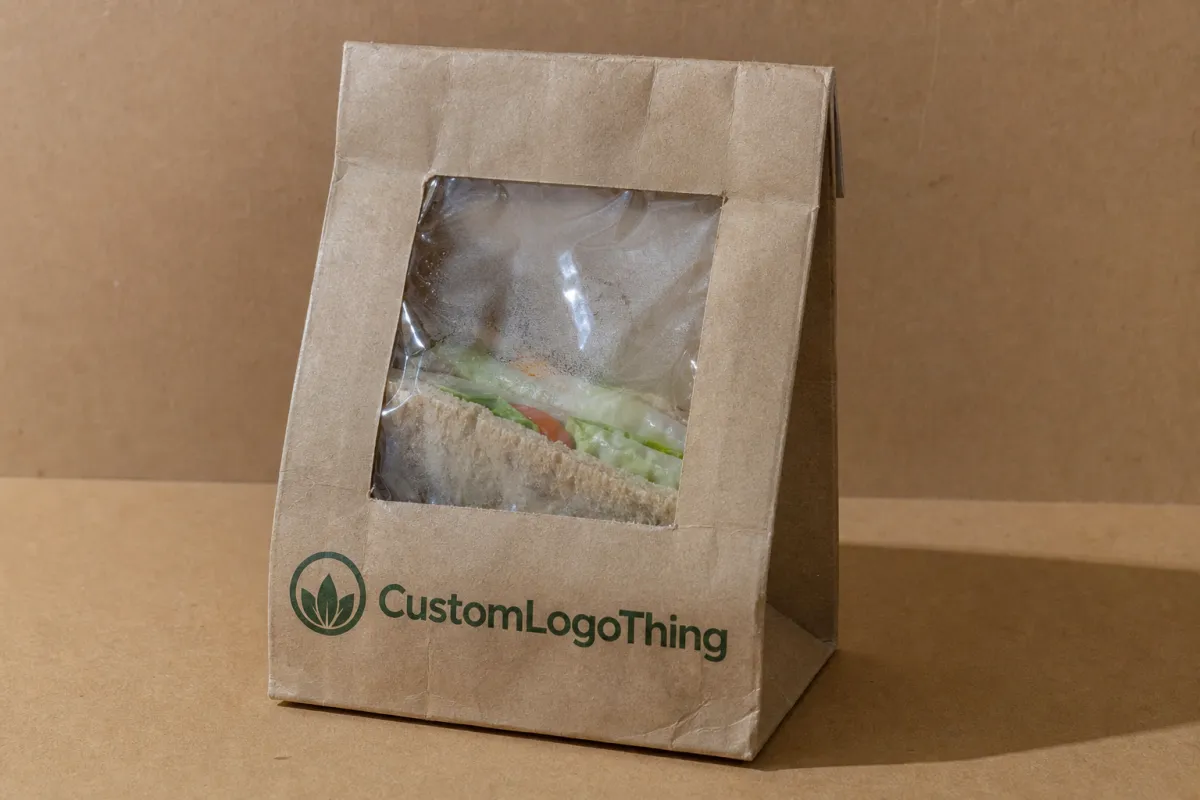
Paper-based formats are popular because they look natural and are easy to brand. Kraft and white stock both work well, especially when paired with a compostable barrier coating. That barrier is what separates a pouch that only looks good on day one from a pouch that survives refrigerated merchandising. Windowed formats can help retail presentation, but the window film needs to match the compostable claim if the package is supposed to stay consistent. Mixing materials without a plan usually creates more confusion than value.
Closure style matters just as much as the surface finish. A seal-only pouch is straightforward and often the least expensive option. A zipper adds resealability, though it usually raises cost and can complicate the compostability story depending on the material choice. Tear notches make opening easier. Vents can help with certain warm-fill or moisture-heavy items, though sandwiches usually benefit more from barrier than from airflow. For greasy fillings, the grease-resistant layer is the difference between a presentable pouch and one that stains, softens, and looks tired before lunchtime.
Printing changes the economics quickly. Stock white or kraft pouches are usually the simplest path. Add flexographic printing, and the unit price can still stay manageable at scale. Add custom digital print, full coverage, or specialty colors, and the quote climbs. That is not a trick. It is the result of setup time, ink coverage, proofing, and production waste. Premium shelf presence costs more because shelf presence takes work.
A better question than “what looks nice?” is “what food will this pouch actually carry?” A dry turkey sandwich behaves differently from a pesto chicken sub. A chilled wrap in a display case is not the same as a sandwich packed for same-day delivery. The structure has to fit the use case, not the optimistic version of it. Branding on the outside does not stop oil migration through a weak barrier.
In many food operations, the pouch is direct food contact, or it sits inside a larger packaging system. That changes the spec. If the pouch touches the sandwich, the material and inks need to be suitable for food contact. If it functions as part of a tray, wrap, or outer sleeve, the buyer should verify the packaging hierarchy and confirm whether the compostable claim still applies across the full assembly. A supplier should be able to explain that in plain language.
Specifications buyers should check before ordering
Spec sheets are where the guesswork ends. Before buying compostable sandwich pouches wholesale, check dimensions, gusset depth, thickness, seal width, barrier performance, and whether the pouch actually fits the sandwich build. A pouch can be technically correct and still be painful to fill. Labor cost shows up quickly when workers have to wrestle with packaging that should have been designed for the product in the first place.
Barrier questions should be direct. Does the pouch resist grease? Does it manage moisture? Does it preserve freshness long enough for your shelf life? Oxygen resistance can matter too, especially when ingredients are delicate or display times run long. Higher barrier usually means better performance and a higher price. That tradeoff is normal. Pretending otherwise is how procurement teams end up paying twice.
Compliance needs to be checked before the purchase order, not after a customer complaint. Ask whether the pouch is suitable for food contact, whether the compostability claim is industrial or tied to another disposal route, and whether the claim is backed by a recognized standard such as ASTM D6400, ASTM D6868, or EN 13432. If a supplier cannot explain which standard applies, stop there. Vague eco language is not documentation. It is decoration.
Storage and handling matter more than many teams expect. Compostable materials can be more sensitive to heat, humidity, and time than conventional plastic structures. Ask for storage guidance, shelf-life expectations before filling, and the temperature range the pouch can tolerate. If the answer is just “cool and dry,” translate that into actual warehouse behavior. Hot docks and damp back rooms shorten the life of packaging long before it reaches the sandwich line.
A sample test kit is not optional for a serious order. Run the pouch with real sandwiches, oily fillings, and refrigerated storage. Keep them in the exact conditions they will face in the field: case humidity, delivery vibration, and ordinary kitchen handling. If the pouch begins to sag, wrinkle, or stain after a few hours, the structure is wrong for the application.
Testing should include a few simple checks:
- Seal integrity: does the pouch stay closed through filling, handling, and transport?
- Grease resistance: does oil stain through the pack or soften the paper?
- Condensation control: does the pouch stay presentable in refrigerated display?
- Fit: does it handle the actual sandwich, not the idealized sample sandwich?
- Print durability: does branding remain readable after cold storage and handling?
If the product will be shipped, transit testing matters too. That applies whether you are shipping empty pouches to stores or packed sandwiches to end customers. Packaging testing standards from ISTA help buyers think beyond the shelf and into the rough edges of the supply chain. A pouch that survives a counter handoff but fails in transit is only half a solution.
Pricing, MOQ, and wholesale quote basics
Pricing comes down to a handful of variables, none of them mysterious. Material grade, barrier level, print coverage, pouch size, custom tooling, and order volume all shape the quote. Stock formats are usually cheaper because the tooling already exists. Custom-printed pouches cost more because setup, plates, proofing, and waste get folded into the pricing. That is not a surprise. It is basic production math.
For budgeting, low-MOQ orders usually carry a higher unit price. Higher volumes lower the cost per unit, but they also increase inventory commitment. A buyer placing 2,000 pouches should not expect the same pricing structure as one placing 20,000. If a supplier gives a flat answer without asking about specs, the answer is probably incomplete.
Typical wholesale pricing ranges can look like this, depending on size, print, and barrier:
| Option | Typical MOQ | Indicative Unit Price | Best For | Lead Time |
|---|---|---|---|---|
| Stock kraft compostable pouch | 500-2,000 units | $0.14-$0.28 | Testing, small launches, limited menus | 7-14 business days |
| Custom-printed paper pouch | 5,000-20,000 units | $0.18-$0.40 | Retail branding, deli programs, repeat use | 15-30 business days |
| Higher-barrier compostable pouch | 10,000+ units | $0.24-$0.55 | Greasy fillings, longer display, premium presentation | 20-35 business days |
| Fully custom structure | 20,000+ units | $0.30-$0.70+ | Large programs, specific fit, branded system rollout | 30+ business days |
Those ranges are planning figures, not promises. Final pricing can move based on print coverage, exact dimensions, freight, and whether the order is stock or fully custom. If a quote looks unusually low, ask what was left out. A cheap quote with weak barrier or unclear compliance can become the most expensive option in the room.
Quote structure should include the following:
- Unit price by SKU and volume tier
- Setup or plate fees if print is involved
- Sample costs and whether they are credited later
- Freight terms and whether shipping is included or billed separately
- Lead time from proof approval, not from first email
- Compliance documents such as compostability proof and food-contact statements
Compare suppliers on identical assumptions. Same size. Same print coverage. Same barrier. Same freight basis. That sounds obvious, yet buyers still compare a plain stock pouch against a fully printed custom one and call it due diligence. That is not a sourcing comparison. It is a mismatch with a spreadsheet attached.
If you want a simpler pricing conversation, our Wholesale Programs page is the place to start. It keeps the focus on volume, spec, and repeat ordering instead of vague sustainability language.
Process and lead time from quote to delivery
The order process should be straightforward. If it turns into a maze, the supplier is either disorganized or hiding complexity. A clean flow usually looks like this: request a quote, confirm the spec, review sample materials, approve artwork, start production, and book shipment. Better information at the beginning cuts down on back-and-forth later.
Lead time depends on whether the order is stock or custom. Stock formats move faster because the pouch already exists and fulfillment is the main task. Custom print adds proofing, production scheduling, and material sourcing. If a specific barrier film or paper stock has to be sourced, the clock stretches. Buyers who leave launch timing to luck often end up paying express freight to repair their own delay. That is a self-imposed cost.
The common delays are predictable: artwork revisions, missing compliance documents, slow sample approval, and freight booking. Half of that pain disappears when the first request is complete. A supplier cannot quote accurately without dimensions, target quantity, filling type, branding files, and delivery date. Give them the real numbers, not the ideal launch plan.
A strong first request should include:
- Sandwich dimensions or at least the product footprint.
- Filling type, especially whether the product is oily, moist, or dry.
- Target shelf life and display conditions.
- Monthly volume and expected reorder frequency.
- Print needs, including logo placement and color count.
- Delivery destination and any receiving restrictions.
Repeat orders should move faster than first orders. Once the structure is approved, the supplier already knows the material, print setup, and handling requirements. That saves time and lowers the chance of surprises. In a good wholesale relationship, the second run feels calmer, quicker, and less painful than the first. That is the point.
For larger operations, inventory buffer and production windows deserve attention. A three-month forecast is usually enough to prevent panic without tying up too much cash in storage. If artwork changes or volume shifts, re-quote before the reorder date. Do not wait until the last pallet disappears and then ask everyone to speed up. That is how teams end up paying for air freight and calling it strategy.
Why choose us for compostable sandwich pouch programs
We keep the discussion practical. No packaging theater. No vague green language with no spec behind it. If a buyer needs compostable sandwich pouches wholesale, the useful questions are simple: does it fit, does it perform, what does it cost, and how soon can it arrive? Everything else is noise.
That is why our approach begins with clear specifications and honest tradeoffs. Some programs want a lighter paper feel and minimal branding. Others need a stronger barrier for refrigerated display and oily fillings. A good packaging partner should explain those differences in plain language, then match the pouch structure to the sandwich instead of forcing a one-size-fits-all format.
Wholesale buyers also care about consistency. A pouch that shifts from run to run creates problems for filling crews, retail presentation, and procurement forecasting. Material control, repeatable print, and documented compliance are not luxury features. They are the foundation of a working program.
The service side matters too. Faster quote turnaround helps buyers move without stalling product launches. Sample support gives teams a chance to test before committing. Direct spec review saves money because it narrows the order before the expensive part starts. A surprising amount of packaging budget disappears in rework, not in the material itself.
Our Wholesale Programs are built for recurring deli, bakery, and meal-prep demand. Buyers with regular volume need a supplier that can handle pressure without turning every reorder into a new project. Clear reorders, fewer surprises, and packaging choices that actually hold up. That is the offer.
One more point belongs here: compostable packaging only helps if it fits the disposal route your audience can actually use. Industrial composting is not home composting, and regional infrastructure varies widely. A responsible supplier should say that plainly instead of waving the word compostable around as if it settles the issue. It does not. It narrows the material options and raises the need for clarity.
Next steps: build a clean wholesale order plan
The smartest way to buy compostable sandwich pouches wholesale is to define the sandwich first and the packaging second. That sounds backward to some teams, and it is still the right order. When the product build is fixed, the pouch spec becomes easier to choose. Start with filling type, sandwich size, shelf-life target, branding needs, and monthly volume.
Then order samples. If budget allows, test one stock option and one custom option side by side. The comparison gives you a more honest read on feel, price, print quality, and performance. Put the samples through the same treatment the actual product will face: refrigeration, case humidity, handling, and transit. A pouch that looks polished on a sample table but collapses in the display case is not a finalist. It is a prop.
Next, lock the decision path. Approve the pouch structure, confirm MOQ, verify pricing tiers, and reserve the first production slot before the launch date gets too close. If volume is likely to change, build a reorder trigger now. Many packaging problems begin with waiting until inventory is nearly gone before anyone starts paying attention.
A simple reorder plan should include:
- Three-month demand estimate based on actual sales, not optimism
- Safety stock for delays, artwork revisions, or surprise sell-through
- Requote threshold if volume changes enough to affect pricing
- Storage plan so older stock gets used first
That is how you keep the packaging program steady. Not glamorous. Just steady. And steady costs less than emergency shipping.
The clear takeaway is simple: choose the sandwich spec first, then request samples, verify compostability documents, and confirm cold-case performance before you place a wholesale order. If those four steps are done in order, the packaging decision becomes much easier to defend internally and much less likely to fail on the line.
Frequently Asked Questions
What is the MOQ for compostable sandwich pouches wholesale?
MOQ depends on whether the pouch is stock or custom printed. Stock formats often begin in the 500 to 2,000 unit range. Custom print, special sizing, or higher-barrier structures usually push the MOQ higher, sometimes to 5,000 units or more. Ask for the MOQ by SKU, not a general company number, because the SKU is what determines the actual order path.
Can compostable sandwich pouches handle greasy fillings?
Yes, if the barrier is designed for grease and moisture. Basic compostable paper is not enough for oily fillings. Test the pouch with the real sandwich build, because a pesto chicken sub will expose weak packaging faster than a plain turkey sandwich. If the pack stains, softens, or loses shape during handling, the structure is wrong for that menu item.
Are compostable sandwich pouches wholesale-safe for refrigerated display?
Many are, but only if the material and seal hold up in cold, humid conditions. Check shelf-life expectations, condensation resistance, and how the pouch looks after sitting in case. A pouch can pass a quick sample test and still look worn after several hours in refrigeration, so a live display test is the safer choice.
Can I add logo printing to compostable sandwich pouches wholesale orders?
Yes, custom printing is common. It changes Cost, Lead Time, and sometimes MOQ. Prepare artwork in the correct file format and ask whether the supplier supports spot color or full coverage printing. Confirm how print choices affect compostability claims and food-contact compliance, since those details carry more weight than the marketing gloss.
How should I store wholesale compostable sandwich pouches before use?
Store them cool, dry, and away from heat and humidity. Rotate inventory so older stock gets used first and does not sit past shelf-life expectations. If the supplier gives handling limits, follow them. Compostable materials are useful, but they are not invincible, and poor warehouse conditions will still damage them quickly.


