For wholesale buyers, a tea trucker caps Unit Cost Review is less about finding the lowest number and more about understanding what actually sits inside that number: the blank cap, mesh, closure, decoration, packing, and freight. Two truckers can look almost identical on a mockup and still land several dollars apart once stitch count, patch style, sampling, and carton handling are included. That difference matters if the caps are tied to a tasting event, a retail drop, or a branded merch program where margin has to survive shipping.
Tea brands usually want caps that feel relaxed, wearable, and easy to place beside the rest of the assortment without looking disposable. In practice, the right quote is the one matched to the use case. If the cap is meant to sit on a retail shelf next to tins and apparel, the build needs a cleaner finish than a one-day giveaway piece. If it is for staff uniforms or seasonal handouts, a simpler construction with tighter MOQ control may be the smarter buy.
That is where unit cost gets interesting. Buyers often start by comparing the cap price alone, then discover the apparent savings disappear once setup, decoration, and shipping are added. A good review catches that early. It also prevents the common mistake of choosing a premium build where the audience will never pay for it, or a stripped-down build where the product looks too light for the brand.
Why Small Build Choices Change Tea Cap Pricing
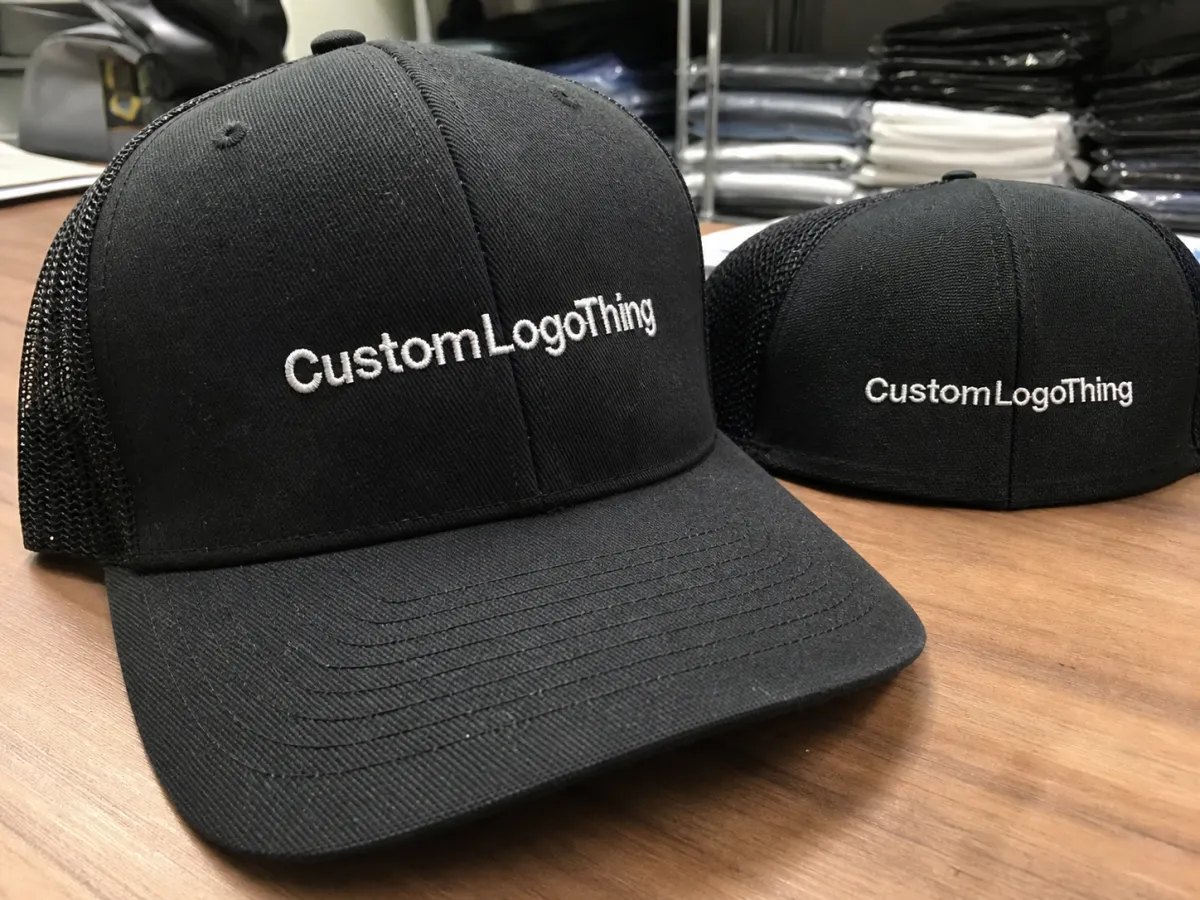
Small build choices move price faster than most buyers expect. A structured front with dense embroidery takes more material and more labor than a soft, unstructured crown with a small woven label. Mesh weight matters too. A lighter mesh body may shave a little cost, but a denser mesh often feels better in hand and keeps its shape longer, which matters if the cap will be worn all day at events. Closure hardware changes the number as well: plastic snaps are usually the leanest option, while metal sliders or custom straps add parts and assembly time.
The tea trucker caps Unit Cost Review should separate the blank from the decoration and then from the extras. That is the only way to see the real economics. A quote that looks attractive because the embroidery line is low can still become expensive once digitizing, sew-out corrections, individual polybags, and freight are included. I have seen buyers focus on one line item and miss the fact that landed cost decides whether the program works.
Tea and beverage merch programs favor trucker caps for a few practical reasons. They are visible in retail displays, the mesh back keeps them comfortable in warm tasting rooms or outdoor festivals, and the silhouette works for both staff and customers. They also sit naturally in seasonal collections, where sage, cream, black, or earth tones feel on-brand without limiting repeat wear. That makes them useful beyond a single activation, which is usually where wholesale value starts to show up.
“A cap that costs less on paper is not always the cheaper buy. If the decoration is awkward to place, the artwork needs extra revisions, or the carton pack-out is messy, the savings disappear fast.”
That is why a useful tea trucker caps Unit Cost Review stays anchored to the actual use case. A buyer ordering premium gift sets might choose cleaner stitching, a better sweatband, and custom packaging. A buyer replenishing staff stock may choose a simpler blank with a small front hit. Both can be sound purchases. They are solving different problems.
Another cost driver hides in artwork complexity. Thin lettering, tight spacing, or layered logos may look fine on a monitor but require more time in digitizing and more care on the machine. A design that uses two thread colors can be cheaper than one with five if the stitch layout is cleaner. That is one reason experienced buyers ask for production-ready art instead of judging only the mockup.
Product Details: Build Options That Affect the Look and Feel
The first decision is usually the front panel. Structured fronts hold their shape and present embroidery neatly, which helps if the tea brand logo has a clean wordmark or icon. Unstructured fronts feel softer and more casual, but they crease more easily and may not support a large patch as cleanly. Foam fronts are common in classic truckers and can create a bold profile, although they are not always the best fit for a refined tea merch line if the brand wants a more understated look.
Mid-profile crowns are the most flexible for wholesale because they fit a broad range of wearers without looking oversized. Low-profile caps can feel more fashion-led, while taller crowns create a stronger retro look. The brim shape matters too. A gently curved visor feels familiar and wearable; a flatter brim gives a sharper retail presentation. These are not cosmetic details only. They influence how the cap stacks, ships, and sits on the head.
Branding placement should follow the campaign goal. Front-panel embroidery is still the most common choice because it reads quickly and holds up well. Side hits are useful for a subtle secondary mark, while a back hit helps when the cap will be worn in social settings and seen from multiple angles. Woven labels, printed under-visor details, and custom patches all have a place when the logo needs finer detail or when the buyer wants a more premium finish without pushing the whole cap body into a custom build.
Color strategy matters more than many teams expect. Tea-related merch often looks strongest in sage, olive, black, cream, charcoal, oat, or washed brown because those shades photograph well and stay wearable after the event is over. Bright colors can work if the brand language supports them, but a loud cap can age quickly once the seasonal campaign ends. A practical buyer will ask whether the color supports long-term wear or just one launch moment.
If the cap is for a staff kit, comfort comes first: softer sweatband, stable closure, and a decoration method that will survive repeated use. If it is for resale, the build needs tighter finish control, better packaging, and a presentation that feels intentional on a shelf. If it is a sample giveaway, then cost discipline matters more than premium touches, as long as the logo reads cleanly.
There is also a difference between a cap that looks good in one photo and a cap that holds up across a run of hundreds or thousands. A slightly softer crown may photograph well but collapse in cartons. A firmer front can stay presentable longer, though it may cost a little more and feel less fashion-forward. Those tradeoffs deserve attention before the order moves past proofing.
Specifications: Panels, Mesh, Fit, and Decoration Areas
Before a quote becomes real, the spec sheet should pin down the basics: panel count, crown height, brim curve, mesh density, front panel reinforcement, and the closure range. A six-panel trucker behaves differently from a five-panel cap, and a reinforced front accepts embroidery with less distortion. Those details sound small, but they determine whether the logo sits flat or puckers at the seam.
Material callouts keep the order repeatable. Ask what the front panel is made from, whether the mesh is soft or firm, what thread type is being used, and whether the sweatband is cotton, polyester, or a blend. If the cap uses a patch, the buyer should know whether it is woven, embroidered, PVC, or printed, because each surface gives a different look and wear behavior. That matters especially when the cap is part of a long-running retail program and needs to reorder cleanly months later.
Fit ranges also deserve more attention than they usually get. One size fits most is only useful if the closure actually covers the wearers you expect. Staff kits, for example, often need a wider adjustment range than a fashion retail drop because they must fit a broader group. A cap that fits securely but pinches at the back will not stay in rotation, no matter how good the logo looks.
Reorder consistency is one of the most overlooked cost factors. The same art can look different if the cap body changes, the mesh shifts shade, or the closure hardware comes from a different source. That is how a buyer ends up with a second run that does not match the first, even though the mockup looked fine. A disciplined tea trucker caps Unit Cost Review should ask for the exact blank, the exact decoration method, and the exact packing method used on prior orders if continuity matters.
Common mismatch risks usually show up in four places: foam thickness, logo scale, mesh color variance, and artwork placed too close to a seam or crown curve. A front panel may accept a 3.5-inch embroidery wide enough for the mockup, yet the same logo can lose clarity if it crosses a stitch line. This is why a pre-production proof is so useful. Ask for front, side, and back views, not just one polished render.
For buyers who want a packaging-style quality check, it helps to treat the cap like a finished product with measurable tolerances, not a loose promotional item. That mindset reduces waste and rework. It also makes the supplier more accountable, because the expected standard is visible before bulk production begins. If shipping cartons or insert cards are part of the order, some buyers use transport-test thinking from organizations like ISTA to think through how the order will survive transit and stacking.
Specification discipline also helps with comparison shopping. If one quote is based on brushed cotton front panels and another on poly twill, the price gap may be real but not comparable. The same is true for sweatband quality and mesh firmness. Once those details are written down, suppliers can be evaluated on the same basis instead of on presentation alone.
Tea Trucker Caps Unit Cost Review, MOQ, and Quote Structure for Wholesale Orders
A useful tea Trucker Caps Unit Cost review breaks the quote into separate buckets so the buyer can see where the money goes. At minimum, ask for the cap blank, decoration, setup or digitizing, packaging, and freight. Once those are split out, it becomes much easier to compare suppliers honestly. A quote that looks expensive on the blank might actually be cheaper overall if the decoration is simpler and the packing is less labor-heavy.
MOQ changes the whole equation. Small runs carry a heavier share of fixed labor because setup charges do not shrink just because the order is short. Once you move into larger quantities, the unit cost usually falls because those fixed charges are spread across more pieces. For many custom trucker cap programs, a reasonable MOQ starts around 100 to 300 pieces for stock bodies and climbs higher if the build uses custom colors or specialty patch work. That said, MOQ is always tied to the supplier’s material sourcing and decoration method.
Here is a practical comparison of common decoration choices:
| Decoration method | Typical added cost per piece | Best use case | Notes |
|---|---|---|---|
| Flat embroidery | $0.60-$1.40 | Simple logos, durable retail and staff caps | Strong value when the artwork has clean shapes and limited colors |
| Woven patch | $0.90-$1.80 | Fine detail, premium feel, small text | Often better than embroidery for logos with thin lines |
| PVC patch | $1.10-$2.20 | Bold branding, weather resistance | Can feel heavier and less subtle on a tea brand cap |
| Print or under-visor print | $0.40-$1.00 | Secondary branding or promotional messages | Best for simple graphics, not always ideal for the front logo |
For most tea merch buyers, embroidery remains the best balance of appearance and durability for front-panel branding. Patches are smart when the logo needs a premium texture or when the art has fine detail that embroidery would simplify too much. Print works well for hidden or secondary branding, but it is usually not the first choice for a cap that has to hold up in repeat use. A solid tea trucker caps unit cost review should compare these methods using the same body spec; otherwise the numbers are not truly comparable.
Typical wholesale pricing can vary widely, but realistic ranges help. For a stock trucker with simple embroidery, buyers often see something like $2.20-$4.20 per piece at mid-volume, while more custom builds can move into the $4.50-$7.50 range once patches, specialty closures, or custom packaging are added. Setup charges commonly run from $30 to $120 depending on digitizing, stitch complexity, and revision work. Tooling fees are less common on stock caps, but they can appear on fully custom components or custom molds.
Do not forget the extras. Custom hangtags, woven labels, individual polybags, and special carton packing all affect bulk pricing. A buyer may accept a slightly higher cap price if the packaging is cleaner and the order arrives ready to distribute. On the other hand, if the caps are destined for event handout, simple bulk packing may be the better choice. The right answer depends on whether the order is retail-facing, employee-facing, or giveaway-driven.
One last detail: freight can erase a good-looking quote. The best tea trucker caps unit cost review always includes delivered cost, not just factory price. Ask for incoterms or a clear explanation of what is included so there is no surprise once the cartons are ready to move.
Production Process and Lead Time After Artwork Approval
Once artwork is approved, the production path usually follows a predictable sequence: artwork intake, digitizing, mockup, sample or proof approval, bulk production, quality check, packing, and shipment. If any of those steps are rushed, the risk moves downstream. A logo can be digitized correctly and still need a second pass if the stitch direction makes the mark too dense or the edge too heavy. That is normal production work, not a failure, but it does affect schedule.
Lead time depends on decoration method, blank availability, sample requirements, and whether the order needs custom labels or special packing. A stocked cap with simple embroidery may ship faster than a custom patch build with a multi-step proof process. In many wholesale programs, 12 to 15 business days from proof approval is a reasonable starting point for a straightforward order, while more complex builds can stretch longer. If the order is tied to a launch date, ask for standard and rush timing upfront so there is room for correction if needed.
Delays usually show up in the same places. Artwork that is not print-ready slows digitizing. Color matching takes longer if Pantone references are missing. Approvals stall when several people need to sign off but no one owns the timeline. A tight tea trucker caps unit cost review should identify these risks early, because time is money in wholesale, especially if the caps are part of a scheduled tasting, retail reset, or seasonal event.
Quality control should not be vague. Ask how many caps are checked per carton, what the acceptable stitch variation is, and whether the supplier reviews logo placement before packing. If shipping cartons are part of the order, the outer pack should be strong enough to protect crown shape and keep the caps from flattening. For paper inserts, hangtags, or sleeve cards, buyers concerned with responsible sourcing may ask for FSC-certified paper components. A useful reference is the FSC site, especially if the packaging is part of the brand presentation.
For buyers managing a launch calendar, the safest path is to plan around proof turnaround, not only production time. A sample that takes three days to review can move the shipment more than a week if the feedback loop is slow. The same is true for packaging approvals. Clean decision-making is part of cost control because delays create indirect expense even when the factory price stays fixed.
Why Experienced Cap Suppliers Reduce Rework and Waste
A good supplier does more than quote a price. They check fabric consistency, mesh quality, stitch alignment, logo placement, carton count, and revision control before bulk production moves forward. That saves money because the order is less likely to need rework, and rework is where margins vanish quickly. A supplier that understands cap production will also know when a design is too small for a patch, too wide for a seam, or too detailed for a particular decoration method.
Repeat-order consistency protects margin in a way that is easy to underestimate. If the first run established a certain fit, brim curve, and logo scale, a supplier with good records can reproduce that setup without starting over. That matters for tea brands building a continuing merch line, because a customer who buys a cap once expects the second order to look and feel the same. In a wholesale setting, that continuity is part of the product, not a bonus.
Transparency is a real value driver. Buyers need to know what is included, what is optional, and where a cost increase comes from. If a supplier explains setup charges, sampling, freight, and packaging clearly, the buyer can compare offers without guessing. A supplier should also be direct about the limits of a quote. If a color match is approximate because the blank is stocked, say so. If a special label adds lead time, say that too.
Experienced partners can handle a small pilot run and then scale to a replenishment order without changing the look of the product. That matters for tea companies that test merch demand before committing to larger volume. When the first batch sells well, the second one should not come back with a different fit or a weaker mesh. If the supplier has clean spec control, the buyer gets a better chance of repeatable quality and lower waste.
There is also a packaging discipline to this work. Good production teams think about carton strength, pack count, and how the order will be received, stored, and distributed. That lines up with the same practical logic used in other packaged goods categories: fewer surprises, less damage, less repacking. For buyers trying to lower waste, even simple choices like reducing excess polybagging or simplifying carton labeling can make the program easier to manage without hurting presentation.
One useful sign of experience is how a supplier responds to small technical questions. If you ask where the back seam sits relative to the logo, or whether the embroidery can clear the seam without distortion, the answer should be specific. Vague reassurance is not enough. Cap production is mechanical work, and the details are where quality lives or dies.
Next Steps to Request an Accurate Bulk Quote
Start with the essentials: target quantity breaks, cap style, decoration method, artwork files, Pantone or color references, and delivery location. If you already know the use case, say it plainly. A tasting event cap, a retail merchandise cap, and a staff uniform cap do not need the same build, and the quote should reflect that difference. That is the fastest way to get a true tea trucker caps unit cost review instead of a generic number.
Ask for a tiered quote that separates unit cost, setup, sampling, freight, and optional packaging. Then compare like for like. A lower cost per piece is only useful if the decoration, closure, and pack-out match the program. If the supplier offers several quantity breaks, review them side by side to see where the price drops become meaningful. Sometimes the jump from 250 to 500 pieces is where the economics finally start to work.
Confirm whether you need a digital proof, pre-production sample, or photo approval before bulk production begins. That decision affects both lead time and risk. If the cap will be sold at retail, ask for front, side, and back views so the team can check placement, logo scale, and crown balance. If the cap is for distribution at an event, make sure carton count and labeling are clear so receiving is simple.
Do not leave pack-out to chance. Ask how many units go in each carton, whether polybags are included, and how cartons will be marked. When the order lands, someone should be able to receive it quickly and distribute it without opening every case. That is a small detail, but it saves labor on the back end and keeps the order from becoming a headache for the operations team.
The cleanest request package is usually the simplest one: style reference, logo file, target quantity, finish level, delivery date, and packaging need. If any of those pieces are missing, the quote will drift. Once the details are fixed, buyers can compare offers on real terms instead of guessing which number hides the most risk.
Used properly, a tea trucker caps unit cost review helps you judge quantity, decoration, and timing before you commit. That is the point of a good wholesale buying process: fewer surprises, clearer pricing, and a cap program that fits the brand without wasting spend. The landed cost should be the final filter, not the factory quote alone.
What affects tea trucker cap unit cost the most?
The biggest drivers are cap construction, decoration method, setup labor, and how many units share those fixed costs. Packaging and freight can also change the final number, so the quote should show those separately.
What MOQ should I expect for custom tea trucker caps?
MOQ depends on the supplier, decoration method, and whether the blank is stocked or fully custom. For a cleaner comparison, ask for pricing at several quantity breaks so you can see where the per-unit cost improves.
Which decoration method gives the best value for tea merch caps?
Embroidery usually gives a strong balance of durability and appearance for front-panel branding. Patches can be better when the logo has fine detail or when you want a premium look without overcomplicating the cap body.
How long does production usually take after proof approval?
Timing depends on decoration method, material availability, and whether the order needs a sample or custom packing. Ask for a standard timeline and a rush option early, especially if the caps need to arrive before a launch or event.
What files do I need to get an accurate tea trucker caps quote?
Send a vector logo, preferred cap style, quantity targets, and any color references or Pantone codes. If you have packaging or label requirements, include those up front so the quote reflects the real build.

