Fitness Foam Trucker Hats Unit Cost: Wholesale Pricing, Specs, and Landed Cost
The real fitness foam trucker Hats Unit Cost usually looks lower than buyers expect until the quote starts carrying decoration, packaging, and freight. A blank foam-front trucker can be a smart wholesale buy, but only if the spec is tight and the supplier quotes the order in pieces instead of hiding everything inside one rounded number.
That difference matters. One quote can look attractive on a spreadsheet and still turn expensive once you add samples, print setup, carton protection, and shipping. Another may look a little higher at first glance, yet land better because the cap construction is more stable and the packing is less likely to trigger damage claims. Those are not small details in a category where margins can be thin and reorders need to behave predictably.
For buyers, the job is not finding the cheapest foam hat. It is finding the price that survives production without surprises. In practice, that means separating the cap cost from decoration, packing, and freight before comparing suppliers. If the quote is not itemized, the comparison is already distorted.
Why Foam Trucker Hats Stay Affordable at Scale
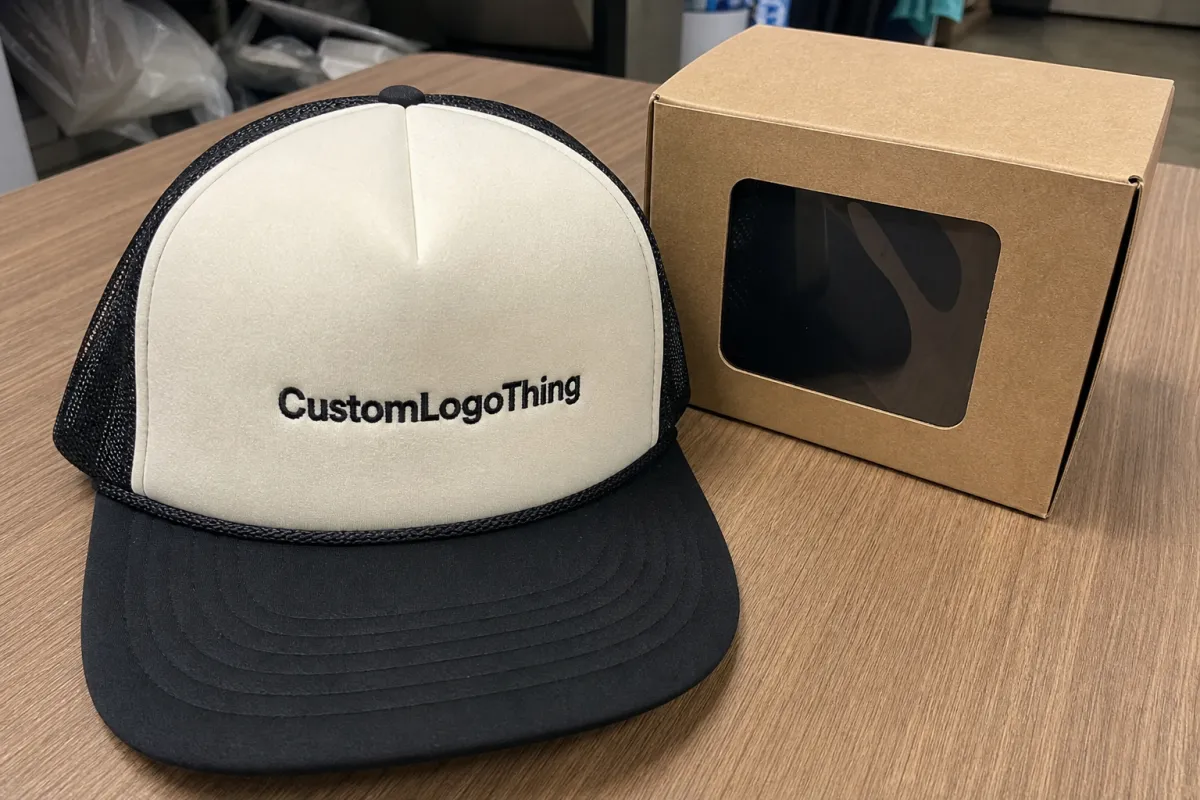
Foam-front truckers are cheap to make for a few simple reasons. The front panel uses light foam, the back is usually mesh polyester, and the snapback closure keeps the construction simple. Fewer materials and fewer stitched components usually mean lower base cost. That is why these hats work for gyms, supplement brands, fitness events, and merch tables where the visual impact needs to be high without pushing the budget into premium territory.
The front panel also gives the cap a retail-friendly look. It creates a broad surface for bold artwork, and bold artwork is cheaper to decorate than dense, detailed artwork. A large one-color mark often prints faster and cleaner than a complicated multi-stage design. That is part of the reason the category keeps showing up in large-volume promotions.
There is still a catch. The blank hat may be inexpensive, but the landed order is shaped by more than the shell materials. Buyers comparing fitness Foam Trucker Hats unit cost should separate five pieces of the quote:
- Blank cap cost - the hat itself, driven by foam density, mesh quality, closure type, and crown structure.
- Decoration - print, embroidery, patch application, or heat transfer.
- Packaging - polybag, carton count, inserts, labels, and any private-label details.
- Sampling - photo sample, pre-production sample, or physical approval sample.
- Freight - air, ocean, or domestic delivery, plus the packing method that protects the hats in transit.
That breakdown is the quickest way to see why two quotes with the same headline number can land very differently. One supplier may quote a low hat price and then add setup, packing, and freight later. Another may quote a slightly higher base cap but include better carton packing and fewer hidden assumptions. The second quote is often the one that holds up after the order is placed.
There is also a perception effect that helps foam hats sell. The front panel can make the product look more substantial than the materials suggest, especially when the logo is clean and the mesh back provides contrast. That means the cap can deliver a strong visual return even when the underlying build is straightforward. For merch programs and event runs, that ratio is the whole point.
If you want a cleaner landed comparison, ask whether the price is FOB, EXW, or delivered. Those terms change what the buyer is actually responsible for, and they can move the final number more than a decoration upgrade does. For packaging and transit standards, the ISTA framework is a useful reference when you want to think about carton protection in practical terms rather than marketing language.
Build Details That Change Feel, Fit, and Reorder Value
A foam trucker looks simple, but small construction choices change how the cap feels, how it photographs, and how it holds up after a few wears. Buyers often focus on artwork first. That is understandable. Still, a poor-fitting hat with a decent logo is a weaker product than a well-built hat with a modest mark.
Start with the front panel. Standard foam is soft and light, which keeps cost down and makes the cap easy to wear for event giveaways or short-run merch. A firmer front panel usually holds shape better after shipping compression and repeated handling. It can add a little to the unit cost, but that extra structure often improves perceived value more than people expect. On a display table, a cap that keeps its profile looks more expensive even before the logo is considered.
Fit is just as important. A snapback should adjust cleanly without feeling flimsy, and the crown depth needs to sit in a range that suits most heads. Too shallow and the cap rides oddly. Too tall and the front can look boxy. Either problem creates returns, complaints, or dead inventory. Cheap inventory is still expensive if it does not move.
Before pricing, lock the core specs:
- Foam thickness and density
- Mesh color and mesh openness
- Curved brim or flat brim
- Snapback color and finish
- Sweatband material and stitching quality
- Panel shape, seam visibility, and stitch count
Those details shape the product more than most buyers realize. Two hats can look nearly identical in a mockup and feel completely different in hand. One has enough structure to hold a logo cleanly; the other collapses slightly and makes the same artwork look tired. That is why sample review matters. A good spec sheet beats vague preferences every time.
For recurring programs, consistency matters more than novelty. A hat that repeats the same fit, panel shape, and front-panel behavior from order to order is easier to restock and easier to approve. That also reduces the risk of field teams and retail buyers treating the second batch like a different product. Stability is a value add, even if it never appears in the headline price.
Decoration Options That Match the Brand Without Wasting Budget
Foam fronts are best treated as bold canvases, not delicate surfaces. They work well with clean artwork, strong contrast, and limited color complexity. That usually means screen print, heat transfer, patch application, or embroidery when the logo is simple enough to survive the process. The wrong decoration choice can raise unit cost and make the hat look overworked.
If the goal is the lowest unit price, one- or two-color screen print is usually the easiest route. It keeps setup charges under control and is well suited to fitness branding, which often depends on sharp logos and direct messaging. When a buyer wants more perceived value, a woven or PVC patch can add structure and a retail feel without forcing the foam to carry tiny stitched details.
Embroidery can work, but it needs restraint. Foam is not the best surface for dense stitching or fine scripts. Small lettering compresses or distorts too easily, and tight fills can make the front panel buckle. Strong block logos handle embroidery much better than hairline fonts or complicated gradient artwork. The design may look good on screen and fail on the cap.
Here is the practical tradeoff:
| Option | Typical Use | Relative Cost | Best For |
|---|---|---|---|
| Screen print | Flat logo, 1-3 colors | Lowest | Promo runs, team events, tighter budgets |
| Heat transfer | Small runs, detailed art | Low to medium | Fast turnaround and flexible graphics |
| Woven or PVC patch | Retail look, stronger branding | Medium | Merch programs and higher perceived value |
| Embroidery | Simple logo, bold shapes | Medium to higher | Classic branding with a textured finish |
Decoration cost moves with more than just the method. Logo size, placement, and color count all matter. A small side mark is cheaper than a full-width front graphic. A one-color logo is easier to run than a three-color version. Add a woven label, hangtag, or private-label note and the quote changes again. None of this is mysterious; it is just labor and setup being priced honestly.
Buyers with sustainability requirements should also pay attention to packaging claims. Recycled cartons, paper inserts, and FSC-linked materials need proof, not just wording on a sample sheet. The FSC system is a useful reference point for paper-based packaging claims because it keeps the conversation grounded in traceable material sourcing.
Good art for foam hats is usually loud, simple, and built around contrast. That is the safest lane. Tiny gradients, thin outlines, and narrow type are where rework begins. If the design only works in that fragile territory, simplify it before the order goes to production. Fixing the artwork is cheaper than fixing a run of hats.
Fitness Foam Trucker Hats Unit Cost: MOQ and Pricing Tiers
Quantity is still the biggest lever in fitness foam trucker Hats Unit Cost. Minimum order quantity changes the economics fast because setup, labor, and sourcing are spread across more or fewer hats. A run of 100 pieces behaves very differently from a run of 1,000. Buyers know this in theory; the surprise is how quickly the curve flattens once the order gets large enough.
For a standard foam trucker with basic decoration, the following ranges are a practical planning tool rather than a fixed rule. Foam thickness, mesh quality, decoration method, and freight assumptions can move the final number in either direction.
| Quantity | Typical Blank Cap | Typical Decorated Cost | Common Notes |
|---|---|---|---|
| 100 pieces | $1.80-$3.20 | $3.40-$5.80 | Setup burden is heavy; price efficiency is limited |
| 300 pieces | $1.35-$2.40 | $2.55-$4.20 | Often a workable balance for events and startup merch |
| 500 pieces | $1.10-$1.95 | $2.05-$3.55 | The first tier where pricing often starts to settle |
| 1,000+ pieces | $0.95-$1.65 | $1.75-$3.10 | Best spread on labor, packing, and sourcing |
Those numbers are shaped by decoration complexity and packing requirements. A simple one-color print on a standard blank cap will sit lower than a patch build with custom labeling. Freight can also swing the total enough to make the cheaper quote lose its advantage. That is especially true when a supplier is pricing without a clear delivery term or is leaving carton handling vague.
There are a few charge items buyers often miss on the first pass:
- Sample fees - often $35-$100, sometimes credited back on the bulk order.
- Digitizing or setup - often $25-$75 per decoration position.
- Patch tooling fees - often $60-$180 for custom molded or PVC badge work.
- Freight assumptions - frequently quoted separately, especially on smaller runs.
The MOQ tradeoff is simple but not painless. Smaller orders reduce inventory risk, yet the unit cost rises because the setup charges are spread over fewer caps. Larger orders improve the math, but only if the spec stays stable and the supplier can repeat the same shape, print placement, and color handling on future runs. If the design changes every time, the savings disappear into reapproval and remaking.
Packing is another overlooked cost driver. Foam fronts can crush if they are packed too tightly or nested without enough protection. Ask how the hats are folded, stacked, or boxed, and how many pieces go into each carton. A slightly better packing method can save more money than a cheaper quote ever will if it reduces claims, replacements, or delayed replenishment.
Process, Timeline, and Production Steps From Proof to Delivery
A clean order follows a predictable sequence: artwork review, spec confirmation, proof approval, bulk production, quality control, packing, and shipment. Nothing about that is glamorous. What matters is whether each step is handled before the next one begins. Most delays come from skipped details, not from the factory itself.
For a standard foam trucker run, lead time often falls around 12-20 business days after proof approval. Simple print jobs sit closer to the low end of that range. Patch applications, custom colors, or special labeling move the schedule outward. Rush orders are possible in some cases, but only when the artwork is simple and the supplier already has the right components in hand.
Delay points are usually predictable:
- Missing vector art or low-resolution files.
- Slow approval on panel shape, color, or logo placement.
- Late design changes after proofing has begun.
- Shipping paperwork or carton-label mistakes.
If timing matters, send clean artwork, a precise quantity, the delivery deadline, and the exact decoration position at the start. The supplier should not have to guess whether the logo is meant to sit high on the crown, centered on the foam, or pulled lower for a more retail-like look. Guessing creates rework, and rework creates cost.
Rush production has a place, but it is fragile. A simple one-color print can move fast. A multi-layer patch build or a tightly color-matched run usually cannot. In practice, a buyer can often save more time by simplifying the design than by pushing the supplier harder. That is especially true when the artwork includes thin lines, small type, or layered decoration.
QC is the step people ignore right up until a box of wrong hats arrives. Ask for approval photos, count verification, and carton photos before shipment. For transit-sensitive orders, align packing expectations with recognized procedures such as ISTA protocols so the carton protection is measured against a real handling baseline rather than someone’s guess.
One practical habit helps more than most buyers realize: keep production notes short and exact. A line like “foam front, white mesh, curved brim, black snapback, one-color front print, 500 pieces” is much better than “make it look good.” Clear instructions reduce interpretation, and interpretation is where expensive mistakes start.
What to Check Before You Choose a Foam Hat Supplier
The quickest way to separate a real supplier from a polished sales pitch is to ask for proof. Real sample photos, spec sheets, carton examples, and previous decoration work tell you more than a clean homepage ever will. If the supplier can only show mockups, the order may still be possible, but the risk is higher.
Response quality matters too. Fast replies are useful, but clear replies are better. A supplier who can explain why one quote is higher than another is usually closer to the actual production process. A supplier who avoids that explanation is likely guessing on at least part of the job. That is how buyers end up with color drift, odd fit, or surprise charges after approval.
Compare suppliers on these points:
- QC consistency across repeat orders.
- Fit stability from sample to bulk production.
- Packing quality and carton protection.
- Clear pricing with setup charges shown separately.
- Reorder reliability without changing the spec every time.
Ask how they handle crushed cartons, print misalignment, and size variance. A supplier should be able to explain what happens if the front panel shifts, the logo misses its approved position, or the carton count is short. If the answer stays vague, the risk does not disappear; it just moves onto your side of the order.
Packing quality is worth paying for. Foam fronts crush more easily than rigid caps, especially when cartons are overfilled or under-supported. Even on budget promo runs, carton count, inner packing, and exterior labeling need attention. The replacement cost for damaged goods is usually higher than the cents saved by sloppy packing.
Repeat-order stability is another quiet test. The first run is rarely the hardest part. The harder job is making the second order look and feel like the first. A supplier with real process control understands that consistency is part of the product, not an afterthought.
How to Lock Specs and Request an Accurate Quote
If you want a real quote, send one message with quantity, target price, logo file, hat color, decoration method, and delivery deadline. That gives the supplier enough information to price the actual order instead of a vague version of it. The cleaner the input, the less room there is for guesswork later.
Ask for an itemized quote that separates blank cap cost, decoration, packaging, and freight. If those pieces are blended together, the comparison becomes weak. You need to know whether the price is being driven by the hat, the print, the carton, or a combination of all three.
Before bulk production, request one of these approvals:
- A pre-production proof with placement marks.
- A photo sample showing logo size and color balance.
- A physical sample if the order depends on fit or texture.
Then confirm the landed cost, not just the unit price. The fitness foam trucker hats unit cost only matters if it matches the final bill after packing and freight. A low number on a screen is not useful if it arrives with missing setup, weak packing, or a shipping method that does not match the timeline.
For team orders, promo drops, and retail merch runs, the safest path is a tight spec, simple artwork, and a clean pricing split. That keeps the order readable from the first sample through the final carton and lowers the chance of surprise charges at the end.
What affects the unit cost of foam trucker hats most?
MOQ is usually the biggest lever because setup and labor get spread over fewer or more caps. Decoration method comes next, especially if the logo uses multiple colors, a large front print, or a patch build. Freight, packing, and sample fees can also shift the final landed number more than buyers expect.
How does MOQ change pricing on fitness foam trucker hats?
At small runs, fixed charges are divided across fewer hats, so the price per piece rises quickly. At larger runs, those same charges dilute and the unit price drops. If the order is likely to stay between several hundred and a thousand pieces, ask for breakpoints at 100, 300, 500, and 1,000 so you can see where the curve improves.
Is print or embroidery cheaper on foam trucker caps?
Simple print is often cheaper when the artwork is flat and the logo is not oversized. Embroidery usually costs more on foam because the front panel limits stitch density and can distort fine details. Patch applications can sit in the middle if you want a cleaner retail look without pushing the hat into heavy stitching.
How long does production usually take after approval?
Standard orders often move through proofing, production, QC, packing, and shipment in about 12-20 business days after approval. Complex decoration, custom colors, or slow feedback can extend that timeline. If the delivery window matters, get the lead time confirmed in writing before payment.
What should I send for an exact foam hat quote?
Send the quantity, target delivery date, logo file, exact hat color or color range, and the decoration method you want. Include whether you need blank caps, printed caps, patches, or private-label details. Ask for an itemized quote so you can compare real pricing instead of a vague headline number. That is the simplest way to pin down the fitness foam trucker hats unit cost without guessing.


