Buyer Fit Snapshot
| Best fit | Corner Boards Bulk projects where brand print, material claims, artwork control, MOQ, and repeat-order consistency need to be specified before quoting. |
|---|---|
| Quote inputs | Share finished size, material target, print colors, finish, packing count, annual reorder estimate, ship-to region, and any compliance wording. |
| Proofing check | Approve dieline scale, logo placement, barcode or warning zones, color tolerance, closure strength, and carton packing before bulk production. |
| Main risk | Vague material claims, crowded artwork, missing packing details, or unclear freight terms can make a low unit price expensive after revisions. |
Fast answer: Corner Boards Bulk: Material, Print, Proofing, and Reorder Risk should be specified like a repeatable production item. The safest quote records material, print method, finish, artwork proof, packing count, and reorder notes in one written spec.
Production checks before approval
Compare the actual filled-product size with the drawing, then confirm tolerance on folds, seals, hang holes, label areas, and retail display edges. Reserve space for logos, QR codes, warning copy, and material claims before decorative graphics fill the panel.
Quote comparison points
Review material grade, print process, finish, sampling route, tooling charges, carton quantity, and freight assumptions side by side. A quote is only useful when the supplier can repeat the same color, closure quality, and packing count on the next order.
Need Corner Boards Bulk for freight protection, warehouse transfers, or repeat palletized shipping? The choice usually looks simple on paper. The cost of getting it wrong rarely is. A narrow strip of edge protection can stop corner crush, strap bite, and stack failure before they turn into claims, rework, and write-offs that cost far more than the board itself.
From a packaging buyer's angle, the question is not whether corner boards help. The real issue is whether the spec, volume, and lead time fit the lane you are trying to protect. Buy too light, and the load fails. Buy too much, and cash plus floor space get tied up in inventory. The useful bulk order sits in the middle: enough stiffness to hold the shipment together, enough consistency to keep packing lines moving, and enough quantity to reduce the delivered cost per unit.
If your operation ships mixed pallets, export loads, or recurring product lines, bulk edge protection can carry more weight than its size suggests. For buyers comparing Wholesale Programs with spot buys, the difference usually shows up in fewer damaged arrivals, steadier pallets, and a cleaner cost model over time.
Why Corner Board Orders Save More Than Freight Damage
Small packaging components tend to disappear into the workflow until damage shows up on receiving reports. Corner boards are a good example. They look plain, yet they absorb the first hit from stretch wrap tension, strapping pressure, dock handling, and the vibration that travels through a truckload over long lanes. Corners are often the weakest part of a pallet stack. Once the edge collapses, the load shifts, the wrap loses tension, and carton damage starts to spread.
The first mistake is judging the product by unit price alone. A cheaper shipment of corner protection can save pennies per piece and still create thousands in losses if it causes one rejected pallet, one rework cycle, or one customer claim. A better comparison uses total landed cost: product price, freight, storage, handling time, and the damage avoided. Bulk pricing usually earns its place there. A slightly heavier-duty board can be the better value if it cuts return freight, repacking labor, or insurance friction.
Corner boards bulk orders matter most on mixed pallet programs, warehouse transfers, export shipments, and any route where compression and vibration work against the package. Mixed cartons create uneven load distribution. Export transit adds more handling stages. Long truck lanes bring more movement into the equation. Each variable raises the chance that a clean carton arrives looking tired, scuffed, or crushed at the edges.
Picture a distributor shipping a full truckload with carton sizes that change by order cycle. One week the load is dense and stable; the next week it has gaps, soft zones, and a few tall stacks that shift under strap pressure. Without corner protection, that load may survive a short local lane and fail on a longer interstate run. With bulk corner boards cut to a repeatable spec, the same operation can stabilize the load edges, spread pressure more evenly, and reduce the odds that one weak corner turns into a claim.
“The cheapest corner protection is the one you never notice because it prevented a damage event.” That is the conclusion many packaging buyers reach after the first serious freight claim.
Consistency matters just as much as cost. A bulk supply of corner boards lets operations standardize packing methods. Fewer surprises for warehouse staff. Fewer spec exceptions. Fewer debates over whether a shipment was packed correctly. For buyers tracking performance against packaging standards, that consistency can matter as much as the board itself. Industry groups such as ISTA and the EPA recycling guidance keep pointing to the same underlying point: distribution damage is usually a system problem, not a single-material problem. The packaging material matters, but so does the way it fits the load, the lane, and the handling process.
Corner Board Product Details: Materials, Profiles, and Uses
Not all corner boards are built the same way. Buyers usually choose between recycled paperboard, laminated constructions, and heavier multi-ply profiles. Recycled paperboard is often the most economical choice for light to moderate compression needs. Laminated board adds stiffness and tends to hold a cleaner profile under load. Multi-ply constructions fit taller stacks, heavier product, or shipments that face tighter strapping and longer dwell times in transit.
Material choice changes more than strength. It affects how the board behaves under pressure, how it absorbs moisture, and how reliably it performs in a warehouse setting. A board that looks fine at the dock can still deform if the packout sits in humidity or if the load waits for days before movement. That is why many buyers request bulk runs that match a known shipping lane instead of treating corner boards as a one-size-fits-all accessory.
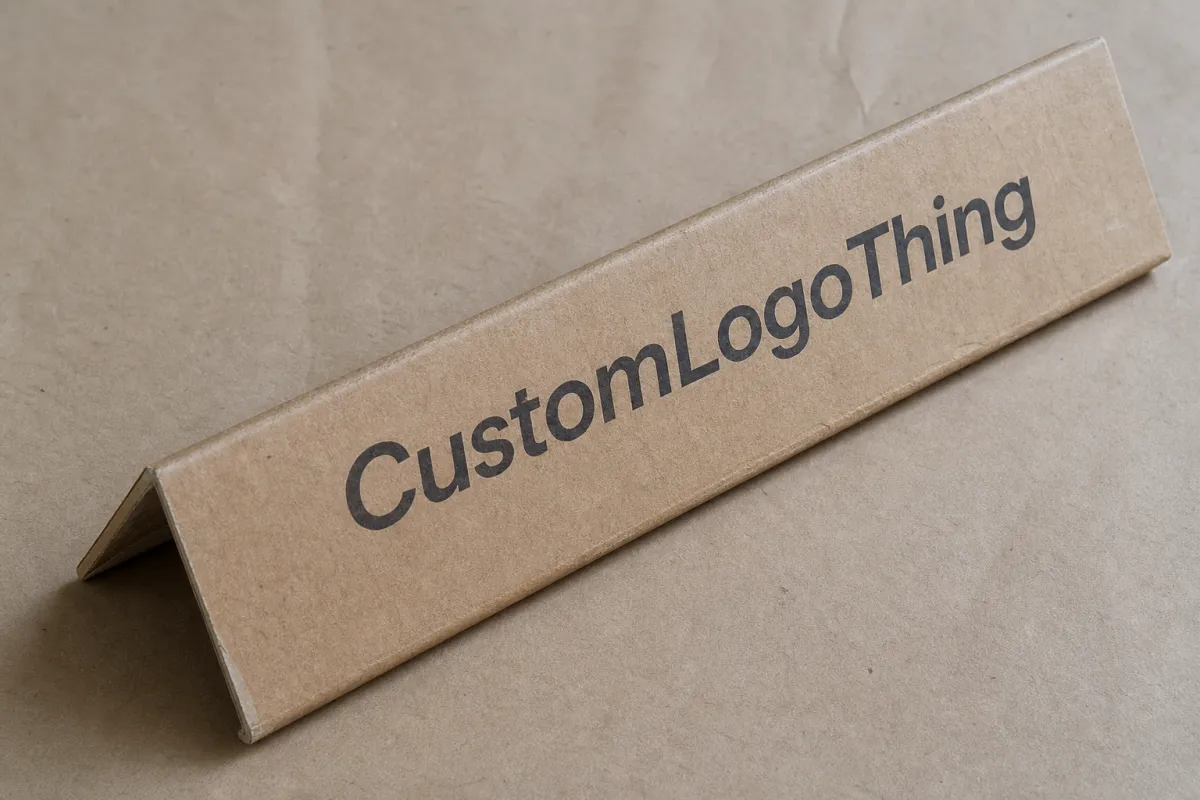
Profile shape matters too. L-shaped edge protection is the most common format because it covers the vertical corner and spreads compression across both faces of the carton or pallet. Reinforced corners add another layer of stiffness for demanding freight. Custom lengths can be cut to pallet height, carton stack height, or a specific strapping zone so the board lands exactly where pressure is highest.
Common uses in real packing operations
- Pallet stabilization: Corner boards help keep the load square under wrap and strap tension.
- Load distribution: They spread force across a wider surface instead of concentrating it on a carton edge.
- Carton reinforcement: They reduce edge crush on cartons that would otherwise deform during transit.
- Export protection: They help loads survive multiple touchpoints, longer travel times, and hotter or wetter conditions.
- Warehouse transfers: They protect shipments moving between facilities where handling is repeated and stacking changes often.
Bulk ordering also gives buyers a chance to match the board to the operation itself. A branded retail program might want Printed Corner Boards for identification and warehouse sorting. A high-volume fulfillment center may prefer color coding so staff can spot the correct spec at a glance. Some operations request moisture-resistant treatments for cold-chain or humid lanes. Others want pre-cut lengths that fit a standard pallet pattern with minimal waste. Repetition is what makes a fixed bulk specification useful.
| Material Option | Typical Strength Profile | Best Fit | Buyer Tradeoff |
|---|---|---|---|
| Recycled paperboard | Light to moderate compression | General pallet protection, low-cost repeat use | Lower price, but less margin for heavy loads |
| Laminated board | Moderate to high stiffness | Mixed pallets, recurring freight lanes, retail distribution | Higher unit cost, better dimensional stability |
| Multi-ply construction | High compression resistance | Heavy product, export transit, tall stacks | More storage space and a higher price point |
| Moisture-resistant treated board | Varies by base construction | Cold-chain, humid warehouses, long dwell times | Added cost, useful when humidity is a real risk |
For buyers who care about sustainability, recycled content and sourcing certification can enter the decision too. If your customer or retailer asks for traceable fiber claims, look for suppliers who can support FSC chain-of-custody requirements where applicable. If recyclability matters, local recovery capacity still determines what actually happens after use. A board can be technically recyclable and still end up in disposal if local facilities will not accept it, or if it is heavily contaminated. Packaging looks simple from the outside. In procurement, the details carry the weight.
Specifications That Affect Performance and Fit
The first spec to lock down is geometry. Buyers need leg length, board thickness, and total length before asking for a quote. Leg length tells the supplier how much surface area will be protected on each side. Thickness drives rigidity and compression performance. Total length determines whether the board protects only the carton stack or the full pallet height. If the board is too short, the strap may cut into the product. If it is too long, material gets wasted and handling friction rises.
Placement matters as much as size. Some programs need the board to fit inside the carton footprint. Others need it outside the footprint so the outer edge of the load stays protected during transit. A board designed for inside placement may be the wrong choice for export freight, where the goal is to shield the perimeter from forklift bumps, strap bite, and uneven pallet corners. A useful spec sheet should describe the load geometry, not just the board dimensions.
Compression strength deserves more attention than appearance. A clean-looking board can fail early if it is too light for the load. Tall stacks, dense product, and tightly banded pallets all create more pressure than most buyers expect. In a long-haul truck lane, vibration and compression work together. Add a few hours of warehouse dwell time and the load can settle enough to change the pressure points. The board has to fit the real load, not the idealized one.
Tolerances matter in bulk runs. Even small dimensional drift can slow packing lines, force operators to pause and sort, or create uneven pressure distribution across a pallet. That is especially true in automated or semi-automated environments. If the board dimensions are inconsistent, the line loses speed. If the board thickness varies too much, compression becomes unpredictable. Buyers who ship at scale usually notice this quickly, because the problem shows up as labor time before it shows up as damage.
Buyer checklist before requesting a quote
- Carton size: Record the top and bottom dimensions, not just one sample box.
- Pallet pattern: Note how many cartons sit per layer and how many layers are typical.
- Product weight: Include average and maximum load weight.
- Shipping method: Confirm domestic freight, parcel, export, or warehouse transfer.
- Environmental exposure: Note humidity, cold storage, or outdoor staging.
- Finish requirements: Specify coating, recycled content, or print if needed.
One practical detail gets missed often: if your product assortment varies, choose the spec that fits the full range rather than the easiest single SKU. Buyers regularly underestimate how often an “almost right” corner board turns into a process exception. A little extra height or stiffness can protect the slower-moving, heavier, or odd-sized shipment without forcing a second part number. That tradeoff usually beats trying to optimize for one carton family and failing on the rest.
Cost, Pricing, MOQ, and Quote Drivers
Price is driven by a small set of variables, and buyers save time when they name them clearly. Board grade, thickness, dimensions, print coverage, coating, and order volume usually matter more than the generic label “corner board.” Two products that sound similar can price very differently if one uses heavier fiber, a custom profile, or a moisture-resistant finish. Freight matters too. A good unit price can look less attractive once pallet density, shipping zone, and dock constraints are added.
MOQ is another point worth clarifying early. Some suppliers quote by bundle. Others need a palletized minimum. Custom dimensions or printed runs may require a larger production batch to reach efficient converting and setup economics. That does not automatically mean the order is too large. It means the buyer should understand how the minimum affects inventory, storage space, and reorder timing. In many cases, a larger bulk order lowers unit cost enough to justify the extra floor space, but only if usage is steady.
Bulk pricing logic is straightforward: the more consistent the run, the lower the unit cost tends to be. The catch is that buyers should not stop at the quoted number. A lower price can come with longer lead time, lighter board, or tighter shipment requirements. If those constraints increase handling cost or damage risk, the “cheaper” order becomes more expensive. The best quote balances spec, lead time, and delivery reliability.
When suppliers quote quickly, they are usually working from complete information. The fastest quote requests include board size, quantity, destination, use case, and any special finish requirement. If the shipment will go export, say so. If the boards need branding, note the print area. If the packaging will sit in humid storage before use, mention that too. Accurate inputs lead to fewer revisions, and fewer revisions shorten the path to a usable price.
What affects the quote the most?
- Volume: Higher quantities usually reduce unit cost.
- Size: Taller or wider boards consume more material.
- Strength requirements: Heavier construction raises raw material use.
- Print or color: Branding and color coding add setup and finishing cost.
- Coating or treatment: Moisture resistance and specialty finishes cost more.
- Freight destination: Shipping lane and dock access affect delivered cost.
For buyers comparing suppliers, the fastest way to avoid false economy is to ask what the quote includes. Does it include truck freight? Is there a pallet charge? Is the board wrapped for protection? Are samples included? Does the supplier support repeat ordering without retooling every time? That level of detail separates a useful purchasing comparison from a number on a screen.
| Buying Method | Typical Cost Behavior | Best For | Watch Out For |
|---|---|---|---|
| Small-run spot buy | Highest unit cost | Testing a new lane or short-term need | Freight can erase the savings |
| Bulk order | Lower unit cost | Steady usage and repeat shipments | Storage and cash flow require planning |
| Scheduled replenishment | Often stable cost over time | High-volume operations with predictable demand | Requires accurate forecasting |
If you want a practical benchmark, think in terms of damage avoided rather than just purchase price. One damaged pallet can wipe out the margin from a large stack of “cheap” corner boards. Experienced packaging buyers treat edge protection as an insurance line with a measurable payoff. The material is simple. The economics are not.
Process, Lead Time, and Production Steps for Bulk Orders
The cleanest bulk orders move through a predictable sequence. First comes inquiry and spec review. Then the supplier confirms material, dimensions, quantity, and shipping destination. If the job is custom, sample approval may follow. After that, production scheduling, converting, quality checks, packing, and freight booking finish the cycle. Buyers who understand this sequence usually get faster answers and fewer surprises.
Lead time changes based on three things: how custom the part is, how much capacity is already booked, and whether the raw material is on hand. A repeat order with standard dimensions can move much faster than a new spec with print, coating, or an unusual profile. If the supplier has to source material or adjust a converting line, the schedule expands. That is normal. The key is to build the order around a realistic window, not an optimistic one.
Sample approval is useful even for a simple product. A physical sample confirms fit, stiffness, and handling before the full run is committed. That matters when the board needs to fit a specific carton family or pallet pattern. A one-inch difference can change the pressure zone more than most buyers expect. Pre-production signoff prevents those errors from becoming a warehouse problem later.
Here is the production sequence buyers should expect in a well-run order:
- Spec confirmation and quote approval.
- Material selection based on strength and finish requirements.
- Sample or proof review if the job is custom.
- Converting and cutting to the agreed dimensions.
- Quality inspection for size, profile, and consistency.
- Packing and palletization for shipment.
- Freight scheduling and delivery coordination.
The fastest orders are usually the most complete orders. Send final measurements, delivery windows, dock notes, and any export documentation up front, and the supplier can move without rework. That helps especially when shipments cross borders or need appointment scheduling. A missed delivery window can cost more than the board itself, so transportation details deserve the same attention as the material spec.
How to avoid delays
- Approve the final dimensions early: Changes after material prep slow everything down.
- Share usage conditions: Humidity, cold storage, and export lanes affect the build.
- Confirm shipping needs: Liftgate, dock, residential, and appointment delivery all change freight planning.
- Keep the spec stable: Repeated changes create schedule slippage and price revisions.
Buyers also benefit from asking whether the supplier can support recurring replenishment. If the same corner board spec will be used every month, the goal should be repeatability, not one-off customization. A stable spec lets procurement compare usage against annual demand, which helps with budgeting and storage planning. That is one reason Wholesale Programs can be useful for operations that want consistency without rebuilding the order from scratch each time.
Why Choose Us for Bulk Orders and Next Steps
For bulk protective packaging, the strongest supplier advantage is not flashy language. It is consistency. Buyers need the same dimensions, the same build quality, and the same communication every time the order repeats. That matters more than a polished pitch because protective packaging earns its keep by disappearing into the shipment and doing the job without drama.
Working with a packaging partner that understands shipping damage, pallet behavior, and packaging economics can improve the whole buying process. A supplier focused only on manufacturing may quote the part and miss the freight implications. A supplier who understands the shipping lane can help you choose a board that protects the load without overbuilding it. That is the difference between a component purchase and a packaging decision.
Buyers also value stable supply. If your operation needs the same corner board every week or month, the risk is not just price fluctuation. It is inconsistency in size, quality, or availability. A bulk program helps reduce that risk by tying the purchase to a repeatable spec and a known replenishment rhythm. That is especially helpful for teams trying to control claims while keeping inventory lean.
Before requesting a quote, gather the basics: pallet dimensions, carton sizes, product weight ranges, shipping lane details, and target annual usage. If you have multiple SKUs, list the heaviest and tallest ones. If you ship export, say so. If your load sees humidity or refrigeration, include that too. Those details let the supplier recommend a board that fits the actual use case rather than guessing from a generic freight description.
If you are comparing suppliers, ask for a price that reflects the whole picture: material, dimensions, freight, lead time, and repeat order support. Then test the first shipment against real receiving results. Did damage drop? Did straps hold better? Did the load arrive with cleaner corners and fewer claims? Those are the metrics that matter. If the answer is yes, you have a spec worth repeating. If not, adjust the build before scaling.
For buyers managing ongoing freight risk, corner boards bulk is not just a search phrase. It is a practical purchasing strategy that can lower claims, improve pallet stability, and simplify repeat shipping across lanes. Start with a clear spec, a realistic volume forecast, and a supplier who understands the economics behind the load. The right corner boards bulk order should be measured against fewer losses, cleaner arrivals, and less time spent fixing preventable damage.
FAQ
What information do I need for a corner boards bulk quote?
Share the board dimensions, thickness, quantity, shipping destination, and whether the order needs printing, coating, or moisture resistance. Include product weight, pallet height, and whether the boards will be used for export, storage, or domestic freight so the quote matches the real use case. If possible, send carton photos or pallet diagrams; that often helps the supplier recommend the right profile faster.
How do I choose the right corner board size for bulk shipping?
Match leg length to the area that needs protection, and make sure the board covers the compression zone from strap contact to pallet edge. For tall or heavy loads, prioritize thickness and compression strength over the smallest possible footprint. If your product sizes vary, choose a spec that works across the full range instead of optimizing for only one carton size.
Is there usually a MOQ for corner boards bulk orders?
Yes, most suppliers set an MOQ based on production efficiency, packaging format, or palletized freight economics. MOQ can change with custom dimensions, print, or special coatings, so the lowest-cost option is not always the lowest minimum. Ask whether the supplier can price by bundle, pallet, or recurring schedule if you are trying to manage inventory carefully.
How long does production usually take for bulk corner boards?
Lead time depends on whether the order is standard or custom, plus how much material and converting capacity is already scheduled. Simple repeat orders move faster than jobs with custom printing, unusual sizes, or moisture-resistant finishes. The fastest way to reduce delay is to approve specs early and provide complete shipping details up front.
Can corner boards bulk shipments be customized for my brand?
Yes, many bulk orders can include printed branding, color coding, or custom sizing for specific carton and pallet setups. Customization is most useful when you want easier warehouse identification, clearer handling instructions, or a more polished unboxing presentation. Ask for samples before committing if the printed finish or color needs to match an existing packaging system.