A logo patch beanie can look polished and retail-ready, or it can read like a rushed giveaway. The difference is usually not the logo alone. Knit density, cuff structure, patch size, and how those parts behave after shipping and wear matter just as much. That is the point of a Logo Patch Beanies material and sizing guide: help the branding sit on a hat that actually supports it.
Buyers often approve artwork first because it is easy to visualize. Production is less forgiving. If the crown is shallow, the cuff is too short, or the yarn is too loose, even a sharp patch can pucker, drift, or sit on a surface that never lies flat. Good specs prevent that before sampling starts.
A useful spec sheet does more for a beanie than a prettier mockup. The right material and size choices let the patch work with the knit instead of against it.
What Logo Patch Beanies Actually Are
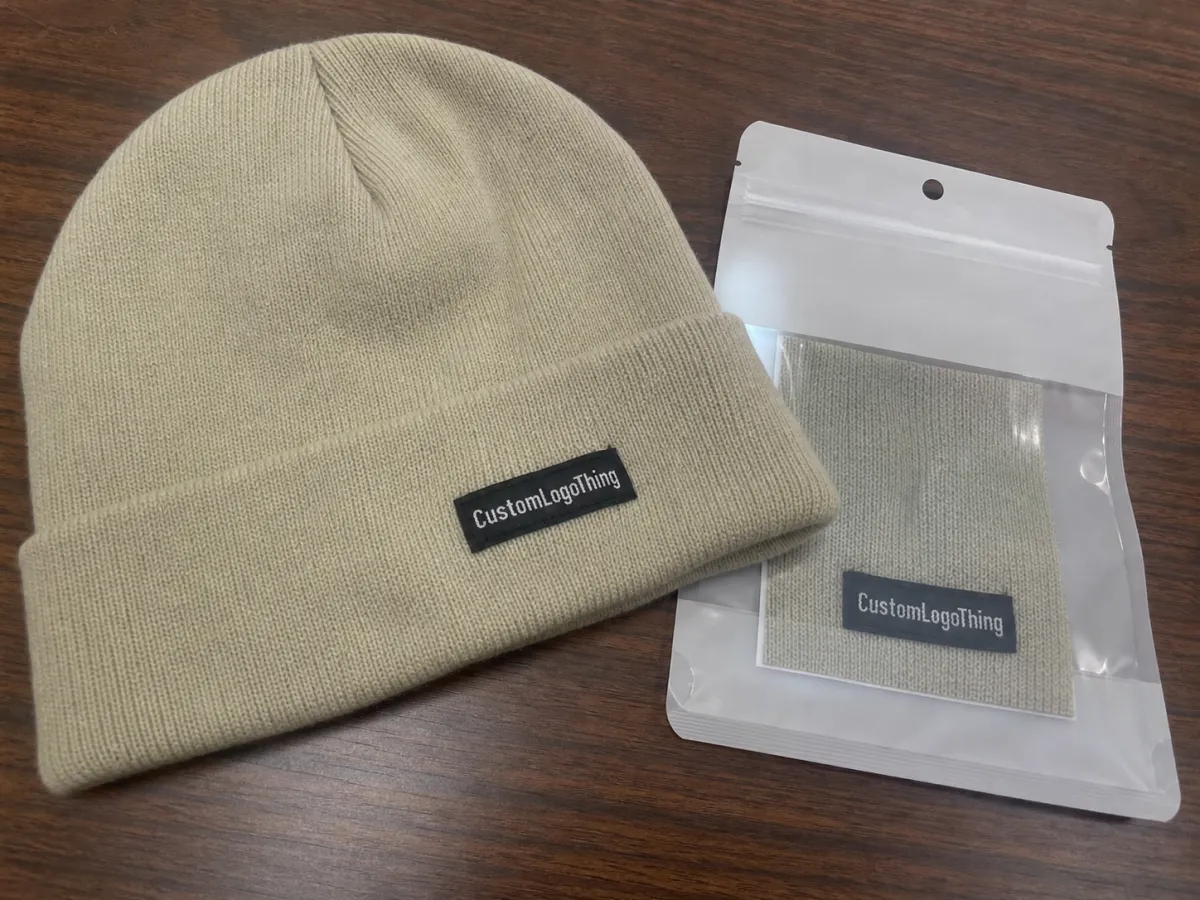
Logo Patch Beanies are knit hats with a branded patch attached to the front panel or cuff. The patch can be woven, leather, felt, PVC, or embroidered, and each version changes look, texture, and unit cost. Woven patches feel versatile, leather leans premium, felt reads softer, and PVC creates a more structured badge.
The patch gets attention, but the beanie body controls how it wears. A soft, unstable knit can make a premium patch look improvised. A firmer knit gives the logo a flatter, more intentional surface and holds that shape better when packed or folded.
For sourcing, lock four details early: patch type, body material, cuff height, and patch placement. If any of those are vague, suppliers will fill in the blanks differently and the quotes will stop being comparable.
Logo Patch Beanies Material and Sizing Guide
A practical logo patch beanies Material and Sizing guide starts with the knit. The material affects warmth, structure, hand feel, and how much visual noise the patch has to overcome. The sizing determines whether the beanie sits cleanly on the head or looks oversized and unstable.
Materials That Hold Shape and Photograph Well
Acrylic is still the budget standard because it is warm, easy to source, and straightforward to color-match. It works well for promotional runs, but lower-grade acrylic can pill and lose the crisp look that makes a patch beanie feel intentional.
Acrylic-wool blends are the most common middle ground. They usually hold shape better, feel more substantial, and photograph with less shine. For many brands, the small price increase is worth the better perceived quality.
Wool and merino blends sit at the premium end. They feel warmer and richer, but they need clearer care instructions because shrinkage and felting become more likely if customers wash them like basic sweatshirts.
Recycled polyester and recycled yarn blends make sense for utility or sustainability-led collections. They can work very well, but patch backing matters more on denser or slicker knits, so ask how the decoration will bond to the face fabric.
Sizing and Fit: Crown, Cuff, and Patch Area
Most adult beanies fall in the 20 to 24 inch head-circumference range, but circumference alone does not define fit. Crown depth, stretch recovery, and cuff height control how the hat actually wears. Two beanies can share the same width and still feel completely different on head.
Cuff height creates the branding zone. Too short, and the logo has nowhere flat to live. Too tall, and the patch can dominate the front of the beanie. For many adult styles, a visible patch width of 2.5 to 3.5 inches works well, while smaller or slouchier styles usually need a smaller mark.
Crown depth is the detail buyers miss most often. A shallow crown can feel tight once worn, while a deeper crown can drift into an overly slouchy look. The right balance depends on audience, season, and whether the beanie is meant to sit high, low, or folded once.
Measure against real heads and worn samples, not just flat dimensions. A spec sheet can confirm width, but it cannot show how the beanie shifts after being pulled down, adjusted, or packed into a carton.
| Build Option | Typical Use | Common Price Range | Fit / Look Notes |
|---|---|---|---|
| Basic acrylic + woven patch | Promotional drops, entry retail | $2.40-$4.20 per unit at 1,000+ pcs | Good value, lighter hand feel, patch size should stay modest |
| Acrylic-wool blend + felt or woven patch | Core retail, brand merch | $4.10-$6.80 per unit at 1,000+ pcs | Better structure, richer texture, easier to justify in-store and on camera |
| Wool or merino blend + leather or PVC patch | Premium retail, colder markets | $6.50-$11.00 per unit at 1,000+ pcs | Best hand feel, tighter care instructions needed, often higher MOQ |
| Recycled yarn + specialty patch | Sustainability-led brands | $5.20-$9.50 per unit at 1,000+ pcs | Strong story if documentation is in order, but sourcing can stretch timing |
A fast quality check is simple: look for even rib tension, a cuff that lies flat, and a patch area with enough structure to resist puckering. If the fabric ripples before the patch is attached, the logo will inherit that problem.
Cost, MOQ, and Quote Drivers
Pricing usually comes down to four levers: body material, patch complexity, decoration method, and order quantity. Change one and the quote moves. Change two and it moves more. Add a custom knit body, a shaped patch, and a low order count, and the price quickly stops behaving like a commodity item.
MOQ depends on construction. A stock blank beanie with a custom patch can often start lower than a fully custom knit body. Once you ask for special yarns, custom rib patterns, multiple patch colors, or a nonstandard patch shape, suppliers usually need more volume to make setup worthwhile.
Small orders are most sensitive to sample charges, setup fees, and freight. Ask for the landed cost per piece, not just the factory price. That is the number that actually lets you compare vendors.
| Cost Driver | Lower-Cost Choice | Higher-Cost Choice | What Changes |
|---|---|---|---|
| Body material | Basic acrylic | Wool or merino blend | Warmth, hand feel, shrink risk, and raw material cost |
| Patch type | Woven or felt patch | Leather, PVC, or multi-layer patch | Setup, tooling, and visual impact |
| Decoration complexity | Single-color patch | Multiple colors, embossing, special backing | Artwork prep time and production steps |
| Quantity | 1,000+ pcs | Lower-volume custom order | Unit price rises quickly as setup gets spread across fewer hats |
At scale, simple stock builds can land under five dollars, while premium blends and specialty patches move into the upper single digits. A quote without material, patch, and quantity details is usually just a placeholder.
Process, Timeline, and Production Steps
A clean production flow usually has five steps: artwork review, material selection, sample approval, bulk production, and final packing. Each stage reduces risk for the next one. Skipping a step usually means rework later.
Sample timelines often run 7 to 14 days depending on patch type and whether the yarn or backing is already available. Bulk production commonly takes 2 to 4 weeks after approval. Those ranges stretch when the logo changes late, a yarn color needs replacing, or the patch shape changes after sampling.
The most useful schedule document is a dated milestone list: sample due date, approval deadline, bulk start date, packing date, and ship date. If a supplier only gives a broad window, there is not much control over the launch timeline.
Packing deserves attention because knitwear is easy to deform. Corrugated cardboard cartons with kraft paper void fill are usually enough. If the order needs a cleaner environmental profile, ask about recycled materials, FSC certified cartons, or inserts made from post-consumer waste. The pack-out should protect the shape first.
Transit testing matters for retail or distributor channels. ISTA standards help check carton strength and drop behavior before product leaves the line. If sustainability claims are going on the hangtag, FSC certification is worth asking for so the paperwork matches the promise.
Common Mistakes Buyers Make
The biggest mistake is choosing a patch that is too large for the cuff. Oversized branding can look bold on a mockup, but on a moving head it can look clumsy or overbuilt. The logo should sit inside the flattest part of the cuff.
Another common error is pairing a heavy patch with a loose knit. The result is sagging, curling, or a front panel that never lies flat after shipping. A refined patch cannot rescue weak structure.
Color contrast gets mishandled as well. If the hat body, thread, and patch are too close in tone, the logo disappears. If the contrast is too aggressive, the beanie starts to feel loud and cheap.
Wash behavior is another blind spot. A beanie can arrive looking perfect and still shrink, stretch, or fuzz after a few wears if the yarn and care instructions are not aligned. For retail programs, ask for a wear or abrasion check before locking the order.
Finally, some buyers approve a sample on a flat table and never test it on a head. That is a mistake. A patch can look centered when the beanie is laid out perfectly and still drift once the cuff stretches.
Sustainability, Packaging, and Retail Readiness
Many brands talk about sustainability; fewer specify it clearly enough to manufacture against. For patch beanies, the easiest improvements are usually in fiber choice and packaging. A recycled yarn means more if the carton, insert, and pack-out are also specified with care.
If the order is shipping to stores or distributors, ask whether the outer cartons can use FSC certified board and kraft paper instead of mixed plastics. For some collections, biodegradable packaging can make sense, but only if it protects the product through transit.
Beanies are relatively easy to pack well because they fold, stack, and compress without much drama. That makes them a good candidate for lower-waste pack-outs. If the product story includes recycled materials or post-consumer waste, ask for source documentation early so marketing claims match the production file.
Retail buyers also notice consistency immediately. Clean folding, labeled cartons, and a patch that sits square signal control. Sloppy folding, crushed boxes, and off-center logos suggest the opposite.
One practical rule helps a lot: if the beanie will be displayed folded, ship it folded the same way. That keeps the patch placement honest and prevents the awkward surprise of a logo that only looks centered under perfect light.
Expert Tips for Better Fit and Longer Wear
Choose matte patch materials for casual retail, sharper woven details for everyday merch, and leather or PVC only when the audience wants a more rugged or premium look. The patch should fit the brand, not the trend board.
If the product is meant for colder markets or outdoor use, ask for a denser knit and a deeper crown. Those choices help the beanie keep its shape after stretching, folding, and being stuffed into a pocket.
Test the patch on a worn sample, not just a flat one. A beanie can look centered on a table and slightly off once it is on the head. That small shift is enough for customers to notice.
If the order is headed to retail, request a wash or abrasion check. The point is not lab perfection. The point is to avoid a logo that survives the carton and fails in ordinary use.
The strongest beanie spec is the one that feels almost boring. It should be easy to produce, easy to wear, and hard to distort in transit.
Next Steps Before You Request a Quote
Before asking for pricing, build a short spec sheet with four non-negotiables: beanie material, cuff height, patch size, and order quantity. If those are open-ended, every supplier will quote a different version of the hat.
Then measure three target heads or compare against a beanie your audience already wears and likes. Real-world fit matters more than guesses. A beanie that feels ideal in a sketch can wear strangely once it is folded, pulled down, or worn higher over the ears.
Ask for three things in writing: sample timeline, bulk production timeline, and landed price. Compare all vendors against the same spec so the discussion stays on what you are actually buying.
For brand teams planning a launch, the most reliable path is to start with one material, one patch style, and one clear size target. Once the base spec works, the next run can test a premium yarn or alternate patch finish.
The result of a well-built Logo Patch Beanies material and sizing guide is not just a cleaner quote. It is fewer sample revisions, fewer surprises at packing, and a product that still looks deliberate after it has been worn repeatedly.
Frequently Asked Questions
What size patch works best on logo patch beanies for adults?
A useful starting point is 2.5 to 3.5 inches wide on the front cuff. Use the smaller end for shallow crowns, smaller heads, or minimal branding. Keep the patch inside the flattest part of the cuff so it does not wrinkle when worn.
Are logo patch beanies better in acrylic or wool blend?
Acrylic costs less, sources faster, and is easier to color-match at scale. Wool blends feel more premium and hold warmth better, but they cost more and need clearer care instructions.
How do I size a beanie so it fits most buyers?
Start with an adult range around 20 to 24 inches in head circumference. Then check crown depth and cuff height, because those control wear more than width alone. A fit sample on real heads is the safest approval step.
What affects logo patch beanies pricing the most?
Material choice, patch type, and order quantity move pricing the fastest. Custom knit bodies, multi-color patches, and rush production add cost quickly. Freight and sampling matter more on smaller orders, so always ask for landed cost.
How long does production usually take for logo patch beanies?
Samples often take 7 to 14 days depending on the patch and stock availability. Bulk production often takes 2 to 4 weeks after approvals are locked. Late art changes or material swaps are the fastest way to create delays.


