Buyer Fit Snapshot
| Best fit | Printed Corner Boards Bulk Order projects where brand print, material claims, artwork control, MOQ, and repeat-order consistency need to be specified before quoting. |
|---|---|
| Quote inputs | Share finished size, material target, print colors, finish, packing count, annual reorder estimate, ship-to region, and any compliance wording. |
| Proofing check | Approve dieline scale, logo placement, barcode or warning zones, color tolerance, closure strength, and carton packing before bulk production. |
| Main risk | Vague material claims, crowded artwork, missing packing details, or unclear freight terms can make a low unit price expensive after revisions. |
Fast answer: Printed Corner Boards Bulk Order: Specs, Pricing, Timing should be specified like a repeatable production item. The safest quote records material, print method, finish, artwork proof, packing count, and reorder notes in one written spec.
Production checks before approval
Compare the actual filled-product size with the drawing, then confirm tolerance on folds, seals, hang holes, label areas, and retail display edges. Reserve space for logos, QR codes, warning copy, and material claims before decorative graphics fill the panel.
Quote comparison points
Review material grade, print process, finish, sampling route, tooling charges, carton quantity, and freight assumptions side by side. A quote is only useful when the supplier can repeat the same color, closure quality, and packing count on the next order.
Printed Corner Boards Bulk Order: Specs, Pricing, Timing is not a niche topic once pallets start moving in volume. A printed corner boards bulk order can be the first branded surface a receiver notices, sometimes before the carton seal is even checked. That matters because edge protection does more than resist crush. It shapes how a load looks in transit, makes mixed freight easier to identify, and helps warehouse teams sort shipments that would otherwise arrive with vague or damaged outer cues.
The real decision is rarely whether corner boards have a job to do. The harder part is Choosing the Right construction, keeping the print readable after stretch wrap goes on, and buying enough volume to make the unit cost work without filling the warehouse with unusable inventory. Those details determine whether the board is a practical packaging component or just another line item on a spec sheet.
A well-made corner board does three things at once: it protects the edge, steadies the load, and signals that the shipment was prepared with care.
Why printed corner boards bulk order changes how shipments look
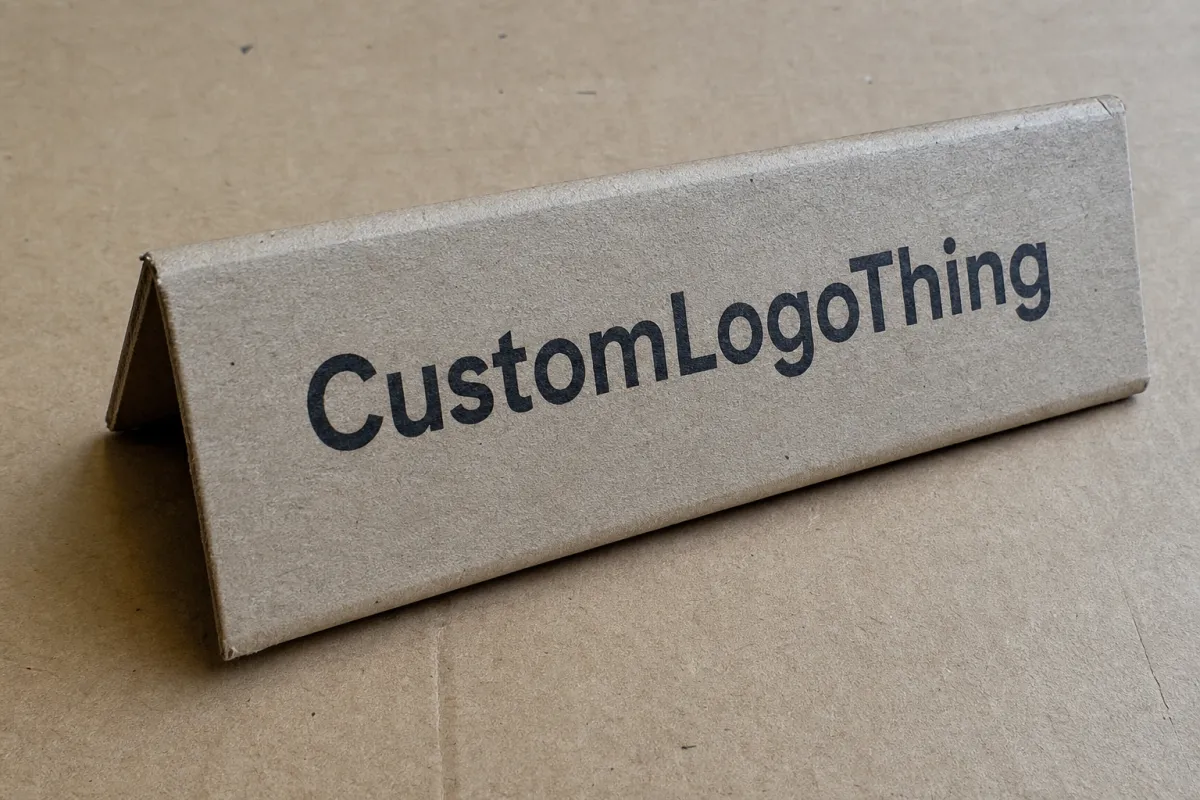
A printed corner boards bulk order changes the visual language of a shipment before anyone cuts the wrap. Clean printed edges make a pallet face look planned instead of improvised, and that difference is easy to spot at the dock, in a warehouse aisle, and in a retailer's back room. Even a simple logo block, product family name, or handling mark gives the load a more finished appearance than plain kraft edges usually can.
The functional value starts with damage control. Corner boards spread pressure along the pallet edge, which reduces crush at the corners, improves stack stability, and helps the load keep its shape through vibration, cross-docking, and hand-truck movement. When cartons are stacked high, a solid board can also reduce outward bowing after the first compression cycles. A load that stays square generally travels better than one that starts to lean.
There is a labor angle too. Standardizing one repeated format across multiple shipments cuts down on last-minute relabeling, shortens training for outbound packs, and reduces the time spent repairing bent corners after the load is already wrapped. If a pallet carries a product code, lane mark, or routing instruction on the board, the receiver can identify it faster. That becomes useful when mixed loads arrive from contract manufacturers, seasonal programs, or several warehouses at once.
Packaging buyers tend to notice the economics quickly. Fewer corner failures mean fewer claims. Cleaner pallet faces improve how a retailer or distributor reads your operation. Faster outbound handling has a real labor value when the same format ships every week. The gain may look small on one pallet, yet on a repeated lane it can be the difference between a tidy process and a recurring cleanup task.
Best-fit uses are easy to spot. Palletized retail goods, contract packaging, export freight, seasonal promotions, and any shipment that needs clear external identification are strong candidates. Products with high presentation standards belong on the list too: branded consumer goods, subscription replenishment, and bundles moving through a distributor network. If the outer load needs to communicate something before the carton is opened, printed corner boards are usually a sensible part of the pack plan.
Printed corner boards also fit into a broader outbound system. They work alongside stretch wrap, top caps, load bars, and unit-load labels to create a shipment that is easier to read and easier to trust. That is one reason bulk buying makes sense. The value is not in a single board. The value sits in a repeatable format that supports the lane every time it moves.
Product details: what printed corner boards are made to do
Printed corner boards are rigid edge protectors built to reinforce pallet corners, stabilize stacked cartons, and give the load a more finished look during transport and storage. Depending on the construction, they may be formed from laminated paperboard, recycled fiberboard, or a multi-ply structure that holds a crisp angle while still accepting print cleanly. The aim is direct: protect the edge and present the load clearly.
The print area is usually placed along one or both legs of the board. That sounds simple until the crease line enters the picture. Any design that crosses the bend has to account for distortion, panel wrap, and the way the board sits once stretch film is applied. Logos, product names, and handling marks need enough clear space so they do not disappear into the fold or get lost in wrap glare. Careful layout planning prevents a lot of reproofing later.
Common print content includes product family names, lot or routing codes, barcodes, pallet IDs, recycling notes, and handling symbols. Some buyers keep the design minimal so the board stays readable after wrapping; others choose a stronger brand block because the corner board should be visible from across the dock. Both approaches work if the information is placed with the final use in mind.
Practical formats matter as well. Many orders ship flat-packed so they store efficiently and are easy to pull into the packing line. Others are used by hand at a packing station, where the crew folds and places them during load build. Semi-automated lines may need tighter size tolerance so the boards feed smoothly and do not catch on guides. In each case, the board should fit under stretch wrap without bulges that snag or make the load look sloppy.
Optional build choices make a real difference. Height, leg width, angle profile, moisture resistance, recycled content, and surface treatment all affect field performance. A warehouse with humid summer conditions may need a different construction than a dry regional distribution center. A shipment moving through export freight may need stronger edge retention than a local pallet delivered the same day. The best board matches the actual shipping environment, not just the artwork.
For buyers comparing packaging categories, printed corner boards sit between protection, identification, and presentation. That means a supplier needs more than a logo file. They need the pallet pattern, the carton profile, and the shipping conditions the load will face. A good board design starts with the load, not with the graphic.
Specifications that affect performance and print quality
The first step in any printed corner boards bulk order is locking down the specifications that govern both performance and appearance. If those basics are vague, quoting slows down, the proof takes longer, and the finished boards may not behave the way the operation expected. The main specs are not exotic, but they carry real weight.
Buyers should define leg length, thickness or caliper, angle profile, print coverage, number of ink colors, and the finish. Matte, natural, and coated surfaces all print differently. A coated face may give sharper graphics and better contrast, while a natural board can offer a more utilitarian look and a different cost structure. Thickness needs to match the load weight, the pallet height, and whether the corners are meant to resist compression over time or simply improve alignment during handling.
Heavier loads usually need stronger board construction and tighter angle control. Taller freight sees more top-load pressure, especially if it is stacked high or stored for any length of time before shipment. If a board is too light, it may bow at the edge or lose its clean appearance under wrap. If it is too stiff in the wrong way, crews may struggle to fit it around a mixed load. That is a small production detail that can become a real labor issue.
Artwork details deserve the same care. A proper prepress package includes vector files, approved color references, barcode data, bleed allowances, and clear placement notes. If a barcode must scan after wrapping, the line weight and contrast need to be checked early. If a logo sits too close to the crease, it may distort when folded. A careful proof catches those problems before production starts.
Compatibility questions matter as much as the board itself. Does the board need to sit flush under film? Will it face damp storage? Must it match carton graphics or a retailer labeling rule? Will it be used on mixed SKUs that need a common layout, or on one product line that can support a dedicated print version? Those answers determine whether the order is straightforward or needs a more layered spec.
It helps to document the full pack-out spec so the order can be repeated without guesswork. Include bundle counts, pallet counts, shipping destinations, storage limits, and any retailer or customer standards. If the same board will be reordered later, the file should read like a production instruction sheet, not a loose design brief.
For reference, packaging teams often compare these jobs to broader industry guidance. The ISTA transit testing methods help explain how loads face vibration, compression, and handling, while organizations such as FSC matter when paper sourcing or recycled fiber claims are part of the buying decision. ISTA testing does not guarantee field results, but it gives a useful frame for comparing load stress. FSC certification, similarly, speaks to sourcing claims rather than how a board performs under wrap and pressure. If the shipment is moving through retail channels, those references help turn a print concept into a packaging specification.
| Option | Best for | Typical build | Relative unit cost | Notes |
|---|---|---|---|---|
| Light-duty printed corner boards | Short runs, lighter cartons, internal transfers | Moderate caliper, one-color print, standard angle | $0.18-$0.28 each | Good for straightforward loads that do not face heavy compression |
| Standard bulk-order boards | Retail pallets, mixed freight, repeat shipping lanes | Stronger construction, one to two colors, improved face finish | $0.24-$0.42 each | Often the best balance of print quality and shipping performance |
| Export or heavy-duty boards | Tall loads, long transit, high compression, humid lanes | Higher caliper, tighter angle control, optional moisture resistance | $0.35-$0.65 each | Higher cost, but lower risk of edge failure and handling damage |
The table above is directional, not a quote, but it mirrors the way pricing tends to move. The stronger the board and the more complicated the print, the further the job moves away from a commodity edge protector and toward a custom production run. A clear spec sheet saves money because it keeps the supplier from guessing and keeps the buyer from paying for features that do not add value.
- Define the load first: carton weight, pallet height, and shipping lane.
- Define the print second: logo, code, handling mark, or barcode.
- Define the environment last: humidity, wrap tension, storage time, and handling method.
Cost, pricing, MOQ, and quote planning
Cost in a printed corner boards bulk order is driven by a handful of practical factors: board grade, thickness, print complexity, number of colors, setup work, finishing steps, bundle counts, and whether the order is one standard size or several SKU-specific versions. Buyers can control most of those factors if the job is scoped early. A vague request tends to cost more because the quoting team has to price uncertainty.
Minimum order quantity, or MOQ, usually ties back to press setup, sheet yield, and converting efficiency. That is not a trick. It is the production math. Once a press is set and the die or cutting line is configured, a larger repeat order usually lowers the unit cost. A very small run can still make sense for a launch, a retailer program, or a special promotion, but the cost structure will look different from a recurring lane order.
Packaging buyers often ask for the shortest quote possible. The better request is the most complete one. Send dimensions, artwork, estimated annual usage, delivery schedule, target pallet counts, and any storage limits that affect whether the order ships all at once or in stages. If the same board will be reordered every month, say so. If the first release is only part of a larger forecast, include the forecast. That information can change the production plan and the price tier.
The quote should be tested against the operational savings too. A board that reduces relabeling, lowers hand assembly, cuts damage claims, and saves labor on crushed corners may be worth more than a cheaper version that creates work downstream. Buyers often focus only on piece price, but the real cost lives in the whole handling chain. A board that costs a little more can still be the better buy if it stabilizes freight and reduces rework.
Ask for tiered pricing whenever the volume might grow. Ask for alternate material options if the job could be printed on a lighter or heavier build. Ask about split-shipment pricing if you cannot store all the boards at once. Those questions make the quote more useful. If the supplier can show how the cost changes at different volume bands, the buyer can make a better choice with less guesswork.
One point matters in real purchasing. If there are several SKUs, ask whether the jobs can be grouped into one production plan so setup costs are shared across the order. That is often the cleanest way to keep pricing reasonable without forcing every product line into the same physical board. The best supplier will help separate the things that must stay separate from the things that can be combined.
For buyers who manage repeated sourcing, our Wholesale Programs page can help frame how larger and recurring runs are handled. If you are still sorting out proofing, shipping, or reorder questions, our FAQ covers the basics in plain language.
Process and timeline: from artwork to shipment
The production flow for a printed corner boards bulk order should be easy to follow. Start with a specification review and artwork intake, then move to dieline confirmation, proof approval, production, finishing, packing, and final shipment scheduling. When that sequence is clear, the buyer knows what is happening and when. When it is not, even a straightforward job can stall in prepress or get held up by avoidable revisions.
Several things can slow the timeline. Missing dimensions are one of the most common. Color corrections come next, especially when a logo has to match an existing carton print or retail standard. Barcode checks take time because they need to scan cleanly and fit within the usable print area. Revision cycles can stretch the schedule if the design keeps changing after the proof is already in motion. Late approvals are a frequent cause of delay because they keep the order in prepress longer than most buyers expect.
Samples and digital proofs reduce that risk. A digital proof is usually enough to confirm layout, placement, and general artwork flow. A physical sample can be useful when the board size, fold behavior, or surface finish needs closer inspection. If the board will sit under tight wrap or be visible from a retailer-facing side, a sample gives the buyer a better sense of how the printed area will read on an actual load.
Typical lead times depend on several factors, but standard orders move faster when the design is simple, materials are available, and proofs are approved quickly. A straightforward run with one or two colors and a repeat board size often moves much faster than a job with multiple artwork versions, special finishing, or a new board structure that has not been produced before. The timeline is not a guess if the inputs are complete. It becomes a schedule.
One practical way to keep the order moving is to treat the proof as a production document, not a design discussion. Check the print placement, board dimensions, color references, barcode positions, and crease behavior before approval. That five-minute review can save days later. It also makes the final shipment more predictable because everyone is working from the same approved version.
The last step is logistics. Finished boards are usually bundled, palletized, and labeled for delivery so the shipment arrives ready to use rather than creating extra receiving work. If the boards are meant for flat storage, that should be reflected in the pack method. If the receiving dock needs a specific label or count by pallet, that should be called out before the order is produced. Good packaging is not finished when the print cures; it is finished when the boards are ready for the line.
For buyers planning production releases, the most useful timeline includes proofing, manufacturing, packing, and freight booking. That way, the board arrival date lines up with the shipping calendar instead of landing after the production run has already started.
Why choose us for printed corner boards bulk order
At Custom Logo Things, the value of a bulk-order packaging partner is not limited to printing a logo. It is in understanding how structure, print, and freight conditions work together. A board can look excellent in a mockup and still fail the job if the angle is wrong, the coating does not fit the environment, or the print placement gets lost after wrap. The right partner catches those problems before they get expensive.
That matters because buyers are not only ordering a graphic. They are buying a piece of shipping hardware that also carries a brand message. A solid supplier should be able to recommend a board profile, flag obvious spec problems, and suggest changes that reduce waste without weakening the load. In real operations, a small adjustment in thickness or board height can improve performance more than a cosmetic change in artwork.
Consistency is another reason buyers care about the source. When the same dimensions, color, and print placement need to repeat across multiple shipments or multiple facilities, the production standard has to stay tight. A good partner helps keep that repeatability under control so the boards for one quarter look and fit like the boards from the previous run. That is especially useful for companies with regional warehouses, co-packing schedules, or retail account requirements.
Communication matters too. Proof timing, revision feedback, lead-time updates, and freight coordination should be easy to follow. If the order is moving through several stakeholders, the buyer needs clear milestones, not vague assurances. Packaging programs tend to go better when the supplier treats the order like a production plan and not just a print job.
That is the kind of practical support many teams want from printed corner boards bulk order sourcing. They need accurate quoting, dependable quality control, and packaging support that helps them make a buying decision with confidence. They also need a supplier who understands that the cheapest board is not always the best board once the load is on the truck.
If you want to compare options, a smart starting point is to gather the real dimensions, pallet pattern, and shipping conditions, then ask for a sample plan and a proof together. That gives the buyer a clear picture of how the board will perform before the full production run starts. It also keeps the project grounded in measurable details instead of broad promises.
Strong packaging decisions are built on repeatable specs, clear proofing, and honest pricing, not on guesswork.
Next steps to place your bulk order
If you are planning a printed corner boards bulk order, start by gathering the practical facts: board dimensions, pallet pattern details, load weight, print files, and the monthly or yearly quantity you expect to order. Those are the inputs that shape everything else, from the quote to the proof to the production schedule. Without them, even a good supplier has to make assumptions.
Next, decide whether you need one standard board size or several versions for different product lines. That choice affects pricing, inventory space, and how efficiently the order can be produced. A single common size can simplify storage and reorder planning. Multiple versions may be necessary if the load weights or carton footprints are too different to share one board design. Either path can work; the point is to choose it deliberately.
Then send the real-world shipping details. Mention humidity exposure, warehouse handling method, whether the boards must sit under stretch wrap, and whether they will travel beside mixed cartons or on one dedicated pallet pattern. Those details help select the right construction and reduce the chance of surprises after delivery. A board that lives in a dry staging area does not need the same treatment as one that spends time in a damp export corridor.
Ask for a quote, proof, and sample plan together. That keeps the buying process moving in one direction and reduces back-and-forth. It also lets you compare material options on the same basis, confirm print placement before production, and schedule the order around your actual shipping calendar. The sooner those choices are set, the easier the rest of the run becomes.
For teams ready to move, the most useful next step is straightforward: share the specs and artwork so the supplier can build a clear production plan around them. If you need help supporting repeat purchasing, the team can also help organize the order into a format that is easier to reorder later. That is the point of a well-run printed corner boards bulk order: the board protects the freight, presents the brand, and fits the pace of the operation.
FAQs
What is the usual MOQ for a printed corner boards bulk order?
MOQ depends on board size, print complexity, and material grade, but bulk pricing usually improves once the run reaches efficient sheet or converting quantities. If you need multiple SKUs, ask whether they can be grouped in one production plan so setup costs are shared across the order. Send your forecast, not just your first shipment count, because higher repeat volume can change the best production plan and unit cost.
How do I prepare artwork for printed corner boards bulk order production?
Provide vector artwork when possible, along with any color references, barcode data, and exact placement notes for each printed panel. Confirm the crease lines and usable print area before approving the proof so logos and critical text do not fall too close to a bend. If you need routing marks or handling icons, supply them in the same file package so prepress can check everything together.
Which board specification should I choose for heavier shipments?
Heavier loads usually need stronger board construction, tighter angle control, and enough thickness to resist edge crush during stacking and transport. Match the spec to carton weight, pallet height, and whether the load will be stretch wrapped, strapped, or handled repeatedly in a warehouse. If you are unsure, request two material options and compare performance, price, and storage needs before placing the full order.
How long does a printed corner boards bulk order usually take?
Timeline depends on proof approval, material availability, print complexity, and order size, so the fastest path is to submit complete specs at the start. Simple runs move quicker than orders with multiple colors, special finishes, or repeated artwork changes. Ask for a production schedule that includes proofing, manufacturing, packing, and freight booking so you can align it with your shipping calendar.
Can printed corner boards be stored flat before use?
Yes, most printed corner boards are shipped flat and can be stored efficiently until packing time, which helps reduce warehouse space usage. Keep them in a clean, dry area so the boards maintain their shape, print quality, and performance when they are pulled for use. If your warehouse has humidity or temperature swings, mention that when you request a quote so the material recommendation fits the environment.
If you are ready to move forward with a printed corner boards bulk order, share the dimensions, print files, quantity forecast, and shipping conditions together so the quote, proof, and production plan all line up on the first pass. The clearest orders are usually the fastest to price, easiest to proof, and least likely to create surprises once production starts.


