For corporate gifting cuffed knit Beanies Bulk Order Planning, the best results usually come from locking the specs before the art file starts bouncing between teams. The product looks simple, but the order can get complicated fast once quantity changes, logo approvals, packaging edits, and ship-to lists enter the picture.
Corporate gifting cuffed knit beanies bulk order planning works especially well for employee gifts, client mailers, and event giveaways because cuffed knit styles are practical, broadly sized, and easy to brand. The cuff creates a cleaner decoration zone than the knit body, which helps the logo read clearly without forcing a complicated fit conversation.
If you are comparing beanie programs against other branded merchandise, the Wholesale Programs page is a useful starting point for bulk ordering options. For common ordering questions, the FAQ page can clear up timelines, proofing, and shipping basics before you request quotes.
Why corporate gifting cuffed knit beanies bulk order planning matters
For corporate gifting cuffed knit Beanies Bulk Order Planning, the main risk is not usually a major production failure. It is the collection of small delays that build on each other: a proof gets stuck in review, someone asks for a second logo placement option, or procurement wants another quote tier while the delivery date stays fixed.
That matters because winter gifting has a short useful window. A beanie delivered after the event still functions as apparel, but it misses the moment that made it valuable as a gift. Planning early gives the supplier time to reserve materials, align the artwork, and keep the production schedule from slipping into the holiday rush.
For corporate gifting cuffed knit Beanies Bulk Order Planning, one of the biggest advantages is the fit. The one-size-fits-most format reduces exchange requests and removes the need to sort by size. That keeps the post-delivery workload low for HR, marketing, and operations teams.
Color control also deserves attention. Knit products can vary by dye lot, yarn source, and lot-to-lot tension, so a reorder may not match the first run perfectly unless the supplier manages the materials carefully. If brand color is a priority, confirm whether the entire quantity will come from the same lot and whether future reorders can be matched closely.
Picking the right cuff, yarn, and decoration method
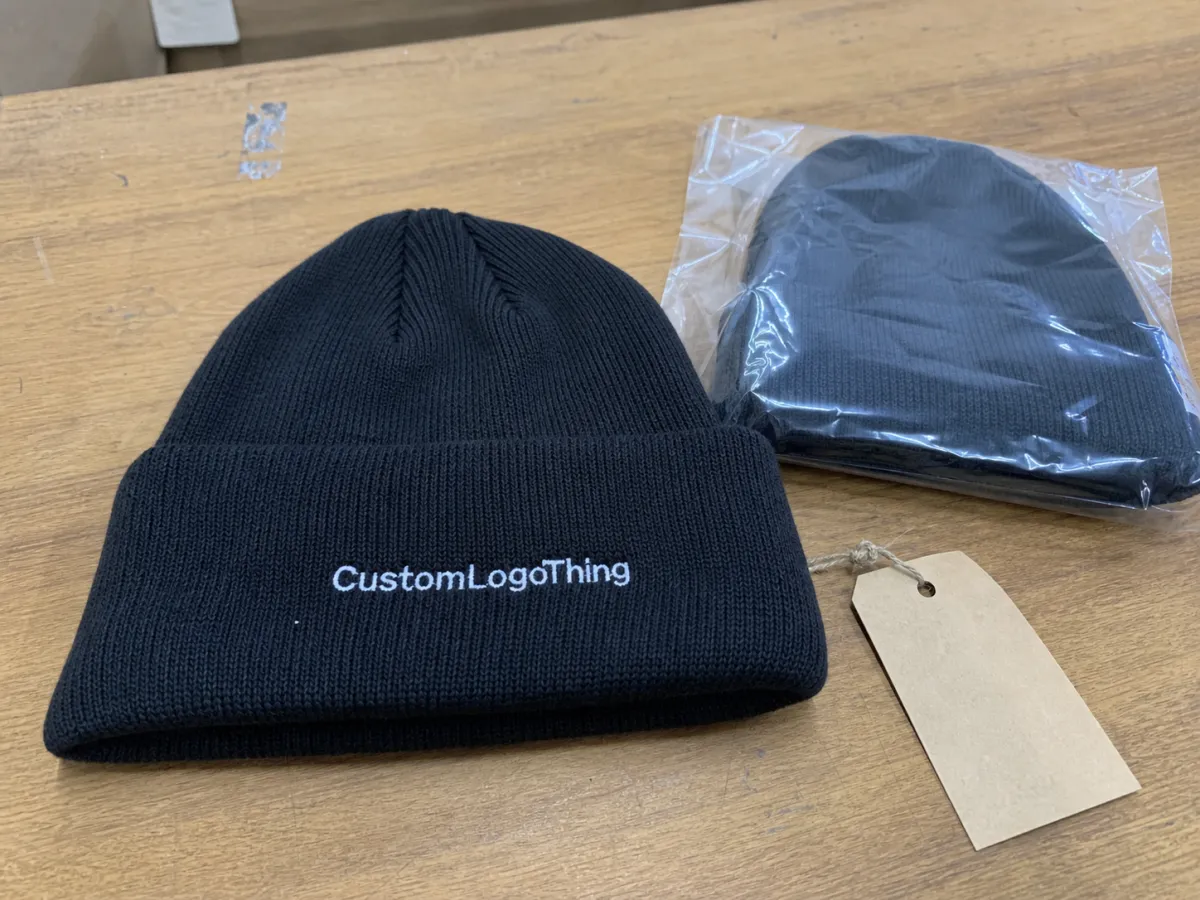
The cuff is what makes this style so useful for corporate gifting cuffed knit beanies bulk order planning. It gives the logo a flatter, more readable surface than the body of the beanie, which is especially helpful when the art needs to hold up in photos or at event check-in.
Yarn choice affects hand feel, durability, and cost. Standard acrylic remains the most common bulk option because it is predictable, easy to source, and usually the most budget-friendly. Acrylic blends can feel softer and a little more refined, while recycled yarns work well for sustainability-led programs where the material story matters as much as the decoration.
Decoration should follow the artwork, not the other way around. Embroidery is still the default for bold, simple logos because it is durable and clean. Woven patches are a better fit when the logo includes fine detail, thin lines, or small type that would blur on knit fabric. Faux-leather and leather patches can elevate the look, but they are strongest when the artwork is simplified.
Color strategy matters too. Neutral shades such as black, charcoal, navy, oatmeal, and forest green are easier to distribute across large teams because they fit more wardrobes. Brighter brand colors can create stronger photos, but they usually need tighter color control and a faster approval cycle. For corporate gifting cuffed knit beanies bulk order planning, a neutral base with a clear logo is often the lowest-risk choice.
There is a real limit to how much detail knit fabric can support. Fine gradients, tiny serif type, and thin rules often break down once they are stitched or applied to a textured surface. If the logo is complex, simplify it before production so the final result still reads clearly from a few feet away.
Fit, gauge, and logo placement specs that affect the final result
One-size-fits-most is standard, but that phrase hides a lot of variation. Crown depth changes how the beanie sits, cuff height changes how much branding space is available, and stitch density changes how crisp the decoration appears. For corporate gifting cuffed knit beanies bulk order planning, those details are just as important as the logo file itself.
Before requesting pricing, send the full spec list instead of only a logo. Helpful details include yarn weight, stitch density, cuff width, logo size, decoration method, placement, and packaging style. The more of those choices that are finalized early, the more reliable the quote will be and the fewer proof revisions you will need.
Logo placement deserves its own decision. Center-cuff placement is the most visible and usually the safest option for employee programs. Side-cuff placement feels quieter and can look more premium, while lower placement is subtle but less visible in group photos. For corporate gifting cuffed knit beanies bulk order planning, the right placement is the one that matches how the gift will actually be used.
Gauge affects how the logo appears. On a tighter knit, embroidery sits more cleanly. On a looser or ribbed knit, the texture can distort small details. A proof should answer one practical question: will the logo still read clearly from six feet away?
Packaging should be reviewed at the same time. A beanie that looks flat in a mockup can look bulkier once it is folded and bagged, especially if the order uses gift boxes or insert cards. That shift matters more than many first-time buyers expect.
Cost, pricing, MOQ, and unit cost drivers
For corporate gifting cuffed knit beanies bulk order planning, pricing usually comes down to yarn type, decoration complexity, color count, packaging, split shipping, and whether sampling is required. A standard acrylic cuffed beanie with one-color embroidery will usually price lower than a recycled yarn version with a woven patch and custom presentation packaging.
MOQ should be read as a production threshold, not a penalty. Custom decoration has fixed work attached to it: art review, setup, testing, proofing, and line time. When the quantity is too small, those fixed costs are spread across too few pieces, which pushes the unit price up.
For planning purposes, broad pricing ranges are still helpful. In many bulk programs, a basic acrylic beanie with simple embroidery can land in the low single digits per piece before freight, while higher-end yarns, patches, or custom packaging can move the piece price into the upper single digits or low teens. Exact numbers depend on the factory, artwork, and delivery structure.
There are easy ways to keep the order efficient without making the gift feel cheap. One yarn type, one decoration location, one logo color, and straightforward packing usually give the best cost-to-value balance. If the event does not need premium presentation, avoid extras that do not change the recipient experience.
| Option | Typical Use | Price Impact | Notes |
|---|---|---|---|
| Standard acrylic, embroidered logo | Employee gifts and large internal programs | Lower | Best balance of cost, wearability, and setup simplicity |
| Acrylic blend, woven patch | Client gifts or higher-touch onboarding kits | Moderate | Better hand feel and sharper small detail |
| Recycled yarn, patch, custom packaging | Sustainability-led programs | Higher | Useful when environmental positioning is part of the brief |
| Multiple ship-to locations | Regional offices or event distribution | Higher | Freight, labeling, and handling increase total program cost |
Tiered quotes help buyers see where the break points sit. Pricing at 100, 250, 500, and 1,000 units often shows whether a slightly larger order meaningfully lowers the piece rate.
2026 trends, pricing, and new options
For corporate gifting cuffed knit beanies bulk order planning in 2026, the market is moving toward more material transparency and slightly more polished presentation. Buyers are asking for recycled acrylic, RPET blends, and lower-waste packaging more often than they did a few years ago, especially for employee appreciation programs and client onboarding kits. That shift is not just about sustainability language; it is also about giving the gift a more intentional finish.
Recent 2026 supplier quotes show a modest premium for recycled or specialty yarns, usually around 10-20% above standard acrylic depending on yarn availability and the decoration method. Custom packaging adds more. A simple polybag remains the most cost-effective option, while a branded insert card, belly band, or presentation box can raise landed cost by roughly $1-$3 per unit before freight. That range is why corporate gifting cuffed knit beanies bulk order planning works best when packaging is decided early, not after the art proof is approved.
Newer production options are also helping buyers balance speed and brand impact. Tonal embroidery, matte patch materials, and two-tone cuff treatments can make the beanie feel premium without turning it into a fully custom fashion project. For teams that want a quick benchmark, the unit cost review is a helpful comparison point, and the Wholesale Programs page can frame the broader bulk buying structure. The strongest 2026 orders usually keep one hero decoration method, one packaging style, and one clear delivery plan.
Process, timeline, and production steps from proof to delivery
A clean order usually moves through a familiar sequence: quote, spec confirmation, artwork review, digital proof, sample approval if needed, production, packing, and freight. The fastest projects are the ones where the buyer sends complete information from the beginning and answers proof questions quickly. For corporate gifting cuffed knit beanies bulk order planning, speed comes from clarity more than urgency.
Lead time changes for a few predictable reasons. Artwork revisions add days, sample requests add more, and stock availability matters. Stocked blanks move faster because the beanie body already exists, while fully custom knit programs take longer because the pattern or color work has to be produced for that order.
Quality control should not be treated as optional. Before production starts, the proof should confirm decoration size, placement, yarn color, and packaging format. During production, the supplier should check stitch consistency, logo alignment, and color continuity. Before shipment, carton counts, labeling, and destination details should be verified.
If the shipment needs to support several delivery points, finalize the address list before production begins. Split shipping can work well, but it should be quoted up front so freight and handling are real numbers rather than assumptions. For winter programs, the safest timeline includes buffer because holiday approvals and event schedules often move.
For broader shipping and packaging context, ISTA provides useful references on transit and handling standards, especially when the goods need to survive longer freight routes or repeated handoffs. That kind of handling discipline is a practical advantage for corporate gifting cuffed knit beanies bulk order planning because the final delivery is part of the product experience.
Why a packaging-first supplier helps winter gifting run smoothly
A supplier with packaging and fulfillment experience tends to keep the order more orderly from the first proof to the final carton. That matters because a beanie program is not only about decoration. It is also about folding, bagging, boxing, labeling, and routing, and each of those steps can affect how the gift is received.
Spec clarity is a practical advantage. A good mockup shows how the logo reads on ribbed knit, not just how it looks on white space. A good spec sheet shows cuff width, patch size, yarn type, and packing format in plain terms, which makes approval easier for non-merchandising stakeholders.
Packaging also changes the impression of the gift. A neatly folded beanie in a clean insert box feels different from the same item in a loose polybag. Neither is wrong; they serve different programs. The point is to match the format to the occasion instead of treating presentation as an afterthought.
For corporate gifting cuffed knit beanies bulk order planning, a packaging-first supplier can also help protect consistency across multiple drop points. When the same folding method, carton labels, and insert notes are used throughout the run, the program feels more polished and is easier to manage on the receiving end.
What to finalize before you request quotes and proofs
Before asking for pricing, confirm the recipient count, target in-hand date, and delivery structure. Those three details shape the quote more than most buyers expect. If they are still moving, the numbers will move too.
Gather the logo files, brand colors, and any artwork preferences before sending the request. A vector file is usually the right starting point. If the logo contains thin lines or small text, flag that early so the supplier can tell you whether embroidery, a patch, or a simplified mark is the better option.
A useful pre-quote checklist usually includes quantity, logo file, yarn preference, decoration method, packaging style, and delivery window. With those set, corporate gifting cuffed knit beanies bulk order planning becomes easier to price, proof, and produce.
For teams that need a quick reference during approvals, the FAQ page can answer common questions before proofing begins. If the beanie order is one piece of a larger branded merchandise program, the Wholesale Programs page can help frame broader purchasing options.
How far in advance should corporate gifting cuffed knit beanies bulk order planning start?
Start as soon as the quantity and delivery window are known. Proofing, artwork review, and internal approvals can add time before production begins. Holiday gifting and multi-location shipping need even more buffer because freight and sign-off delays are common. For corporate gifting cuffed knit beanies bulk order planning, an earlier start usually protects both the schedule and the budget.
What decoration method works best for cuffed knit beanies in bulk orders?
Embroidery is the most common choice for bold, simple logos because it is durable and reads well on textured knit. Woven patches are a better fit for fine detail, small text, or a more premium presentation. For corporate gifting cuffed knit beanies bulk order planning, the best method is the one that keeps the logo legible on the finished knit surface.
What changes the MOQ and unit cost on corporate gifting beanie orders?
Yarn choice, logo complexity, color count, packaging, and shipping setup all affect pricing. Larger quantities usually lower unit cost because setup and decoration costs are spread across more pieces. In 2026, recycled materials and upgraded packaging are still the most common reasons a quote moves upward.
Can cuffed knit beanies be shipped to multiple office locations?
Yes, but the address list should be finalized early so freight and handling can be quoted correctly. Split shipping adds cost, so it should be built into the budget before approval. For corporate gifting cuffed knit beanies bulk order planning, multi-location shipping works best when the routing plan is locked before production starts.
What should be checked before approving a bulk beanie proof?
Confirm logo size, placement on the cuff, color match, and whether the artwork will read clearly on knit fabric. Also verify quantity, packaging, and delivery address so production can begin without avoidable delay. For corporate gifting cuffed knit beanies bulk order planning, the proof should answer both branding and fulfillment questions.