Corporate gifting frosted zipper Plastic Bags Wholesale order planning works best when the bag is treated as part of the gift, not as a last-minute container. The frosted finish gives enough visibility to hint at the contents while keeping the presentation controlled. That balance matters for kits that combine a product, card, tissue, insert, or sample set, because the bag has to make the package look deliberate before anyone opens it.
For buyers, the main decision is not whether the bag looks good in isolation. It is whether the size, film thickness, zipper style, print area, and packing format will support the actual contents at the right cost and with the right lead time. A good spec keeps the quote stable, reduces proof revisions, and avoids presentation issues later.
Why frosted zipper bags get opened before the gift
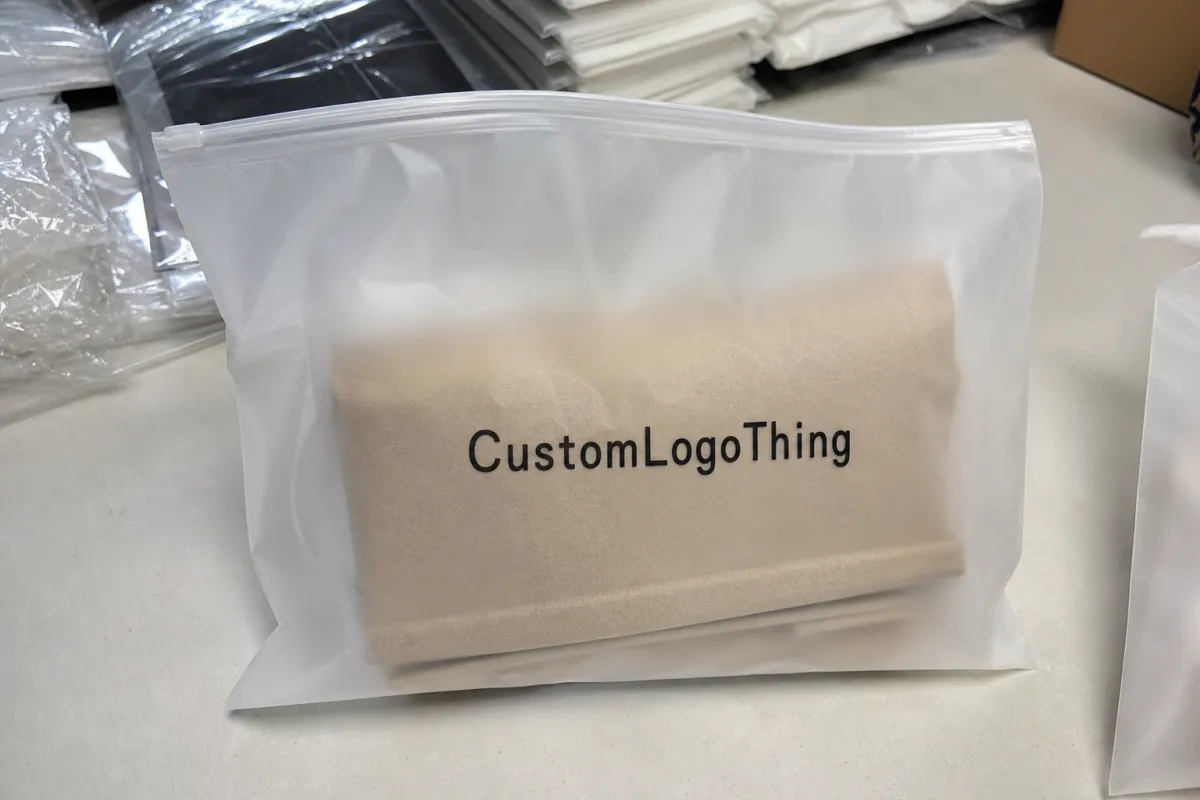
Frosted film softens what the recipient sees, which helps the package look cleaner in photos, on desks, and inside shipping boxes. It is a practical middle ground between a clear bag that reveals everything and an opaque bag that hides too much. For corporate gifts, that middle ground often reads as more polished because it controls clutter without making the package feel closed off.
The zipper adds repeat use and makes the bag easier to pack, inspect, and reopen. A reliable zipper should close smoothly, stay straight across the top, and hold without catching. If it is too loose, the package feels cheap. If it is too stiff, packing slows down and the film can wrinkle near the seal.
Material thickness affects both structure and cost. Many frosted PE-based bags fall roughly in the 0.12 mm to 0.20 mm range, with heavier film used when the contents are dense or when the bag needs to keep its shape. Thinner film lowers price, but it can also collapse at the corners and make the package look less finished. Heavier film improves body and durability, though it raises unit cost and may change how the zipper feels in production.
That is why a wholesale gift bag order should be planned from the contents outward. The film, closure, and packing method all affect whether the final package feels neat, premium, and easy to assemble.
Product details buyers should confirm before quoting
A useful quote starts with the bag construction. Confirm whether the style is flat, bottom gusset, or side gusset, because the shape changes how the contents sit and how much usable volume the bag offers. Then confirm the zipper type, whether the film is PE or a blend, and whether the bag will be opened only once or handled repeatedly during packing.
The contents matter just as much as the bag itself. A small item in an oversized bag can look loose and underfilled, while a tight kit can bow the front panel or distort the zipper line. If the order includes a card, insert, label, or hang tag, those pieces should be included in the spec from the start so the printable area is accurate before proofing begins.
Include these details in the request for quote:
- Bag style - flat, bottom gusset, or side gusset.
- Film thickness - enough stiffness for the intended presentation without creating packing problems.
- Printing method - one-color print, multi-color print, or unprinted.
- Packing format - bulk packed, carton packed, or pre-kitted with inserts.
- Special features - hang hole, euro slot, labels, or an internal pocket.
If those points are still undecided, the quote is only a rough estimate. That is enough for early budget planning, but not enough for production scheduling or approval. Buyers who want fewer delays should treat the spec sheet as the real starting point.
Sample review should also be specific. Ask whether the sample reflects the exact film, zipper profile, and frost level, or whether it only represents the general look. Small differences in sheen, opacity, or zipper tension can change how the finished package feels in the hand.
Size, finish, and branding specs that affect the final look
Size should be based on the assembled contents, not on the idea of the gift. Measure the widest item, the tallest item, and the stacked depth together, then add room for the zipper top and any insert or protective layer. A bag that looks generous on paper can feel cramped once the kit is packed.
Finish changes how the package reads. A stronger frost reduces transparency and creates a more private, premium look. A lighter frost keeps the contents more visible and may suit launch kits or samples that need to show more of what is inside. The right finish should be checked against the actual contents, because empty bags can be misleading.
Branding needs to work with the surface, not fight it. Dark logos usually print well on light to medium frost, while softer colors can disappear if the film is too opaque. Fine lines are more vulnerable than solid marks, and small text can blur if the artwork sits too close to seams or the zipper track.
These four specs should be locked early because they affect both appearance and cost:
- Artwork placement - front panel, centered, offset, or repeated across panels.
- Printable area - the usable space after seam and zipper allowances.
- Tolerance range - acceptable variation in width, height, and film gauge.
- Carton pack count - how many units ship per carton and how they are nested.
Printing method matters too. One-color artwork is usually the safest choice on frosted film because it keeps cost down and reduces registration risk. Multi-color graphics can work, but they need more proofing time and more forgiving artwork. If the logo depends on fine typography or subtle gradients, ask whether those details will survive the production method cleanly.
For shipments that move through distribution centers or parcel networks, transit testing can prevent avoidable damage claims. If the gift contains fragile components or rigid inserts, an ISTA method can reveal weak points before cartons leave the facility. If the kit includes paper inserts, the FSC framework is a familiar reference when buyers want a responsible fiber option.
Pricing, MOQ, and unit cost drivers in corporate gifting frosted zipper plastic bags wholesale order planning
Pricing is usually predictable once the spec is complete. The main cost drivers are bag size, film thickness, print complexity, quantity, and any special packing or setup requirements. Stock sizes are generally the lowest cost. Custom dimensions, heavier film, and multi-step packing increase the price quickly.
For budgeting, these ranges are a practical starting point:
| Order profile | Typical unit price range | What usually drives the cost | Best use case |
|---|---|---|---|
| Stock size, unprinted | $0.18-$0.30 | Material thickness, bag size, carton packing | Internal events, sample sets, or simple gift kits |
| Stock size, one-color print | $0.24-$0.42 | Setup, ink coverage, print area, proofing | Client gifts, onboarding packs, and campaign mailers |
| Custom size or special finish | $0.32-$0.60+ | Tooling, film spec, gusset changes, sample rounds | Programs with stricter presentation requirements |
MOQ affects the buying strategy as much as the unit price. Many custom-print runs begin around 500 to 1,000 pieces, but larger formats, multi-color artwork, or nonstandard structures can raise the minimum. If the program may scale across offices or departments, ask for pricing at two or three quantities so finance can compare a test run with a larger rollout.
The real cost question is not whether the bag is the cheapest. It is whether the bag gives the cleanest presentation at the lowest landed cost after setup, freight, packing, and the cost of fixing avoidable errors. A lower unit price can become expensive if it creates more revisions or a late redesign after sampling.
Thin film can save money up front, but if it wrinkles, bows, or fails transit checks, the savings disappear. A slightly heavier spec can protect the order, especially when gifts are shipped rather than handed out on-site.
Process and timeline from proof to shipment
The order path should be simple enough to fit on one sheet. Start with the spec review, then artwork checking, then the digital proof. If the size is new or the presentation is sensitive, a physical sample is worth the extra time. After approval, production starts, followed by quality control and freight booking. If the shipment will go to multiple addresses, confirm those addresses before release.
Typical timing for a standard custom run is often 1 to 2 business days for proof review, 3 to 7 business days for sample making if a sample is required, and about 12 to 15 business days for production after approval. Freight depends on destination and carrier, so it should be planned separately from manufacturing. Expedited orders can move faster when the spec is simple and stock materials are available, but late artwork changes can erase that advantage quickly.
Quality control should check film thickness, zipper function, seal consistency, print alignment, carton count, and the absence of scratches or dirt inclusions. For branded programs, alignment errors are often more visible than minor color shifts. A logo that prints correctly but sits too low on the bag can still make the whole package feel off.
Fast approvals matter as much as fast production. Missed deadlines usually come from unresolved artwork, missing ship-to details, or a late size change after the proof has already been built. One decision maker, one backup contact, and one confirmed delivery date are usually better than a long chain of comments.
"The safest quote is not always the cheapest one. It is the one that leaves room for proofing, packing, and freight without forcing the team to guess."
Planning mistakes that inflate corporate gift order risk
The first mistake is ordering to exact headcount with no overage. A sensible buffer is usually 3% to 7%, depending on order size and the number of destinations. Damaged units, sample requests, and last-minute replacements happen, and a small cushion can prevent a rushed reprint or emergency shipment.
The second mistake is sizing the bag before the contents are fully confirmed. A bag may look large enough until the zipper, gusset, and stacked items are measured together. Physical fit testing matters for folded garments, bottles, rigid inserts, and card sets because the package can bulge or the zipper can stop sitting flat when the kit is packed.
Another common issue is proofing the wrong thing. Artwork gets approved before dimensions are final. Labels and barcodes are added after the printable area is set. Shipping marks are decided only after cartons are packed. Each one is fixable, but together they create delays that could have been avoided with a complete brief.
Sample confusion also creates risk. A sample built from different film or zipper tension can look fine while hiding the exact issue that later appears in bulk production. Buyers should ask what is locked and what can still change before they approve the run.
Packing assumptions matter as well. A bag that holds one gift set neatly may not behave the same way when dozens are packed, stored, and distributed. The package should be planned as a system: bag, contents, insert, carton, and transit conditions all influence the outcome.
Why buyers choose our wholesale production support
Wholesale support is useful when it reduces friction. That means tighter specs, consistent appearance across batches, and communication tied to the actual order instead of vague promises. For recurring corporate programs, consistency matters more than a one-off sample that only looks good once.
Process discipline helps buyers decide whether a small change in size, thickness, or frost level is worth the cost. A slightly wider bag may solve packing issues. A slightly heavier film may improve shape retention. A simpler one-color print may outperform a more complicated graphic. Those are practical tradeoffs, not cosmetic preferences.
Support also matters for carton counts, nesting method, and packing flow. If the shipment needs to move to several destinations, the packing plan should reflect that from the start. If the kit includes paper pieces, an FSC-aligned component can help during internal sustainability review. If the shipment will move through parcel networks, an ISTA-based test can lower the risk of damage claims.
Once the first run is documented, repeat orders get easier. The bag size, print zone, carton count, and delivery plan can be reused instead of rebuilt, which shortens approvals and makes budgeting more stable for annual gifts, onboarding cycles, and seasonal campaigns.
Next steps to lock artwork, samples, and delivery
The fastest way to move a quote forward is to send the full package at once: quantity, exact bag dimensions, contents weight, finish preference, artwork files, and the required delivery date. Include whether samples are needed, whether the shipment splits across addresses, and whether pricing should be shown at multiple quantity breakpoints.
Before release, confirm three things: one approval window, one backup quantity, and one ship date. That keeps the order from stalling while everyone waits on another email chain.
If the contents are still changing, lock those first and choose the bag around them. That sequence protects presentation, budget, and timeline at the same time. For teams that run recurring programs, the best results usually come from treating the package as a fixed system rather than a series of unrelated decisions.
Handled that way, corporate gifting frosted zipper plastic bags Wholesale Order Planning becomes a controlled production task instead of a scramble. The bag spec, artwork, carton plan, and freight date line up before the deadline starts to tighten.
What size works best for corporate gifting frosted zipper plastic bags wholesale orders?
Choose the size from the assembled contents, not from the idea of the gift. Measure the widest and tallest item together, then add room for the zipper top, gusset depth, and any insert card so the bag closes cleanly without stressing the seal.
How does MOQ affect frosted zipper plastic bag pricing for corporate gifts?
Higher quantities usually lower the unit cost because setup, material sourcing, and production time are spread across more bags. If the campaign may scale up, ask for breakpoint pricing so you can compare one larger run with several smaller ones.
Can frosted zipper bags be branded for wholesale corporate gifting?
Yes. The best method depends on the artwork size, the usable print area, and how much of the contents should remain visible. Confirm the branding zone before proofing so logos, labels, and text stay away from seams and the zipper track.
How much lead time should I plan for a wholesale order?
Build time around proof approval, production, quality control, and freight rather than production alone. Add extra buffer if the order is tied to a fixed event date, because artwork revisions and carrier delays are the two most common schedule risks.
What should I send for the fastest quote?
Send quantity, exact bag dimensions, contents weight, finish preference, artwork files, and the required delivery date. Include whether samples, split shipping, or multiple quantity options are needed so the quote reflects the real order plan.


